 Preview
 Send
Send Share
Share
 Details

 Download
 Similars
 X-Ray
X-Ray Diaporama
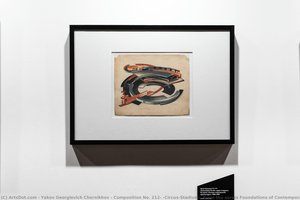
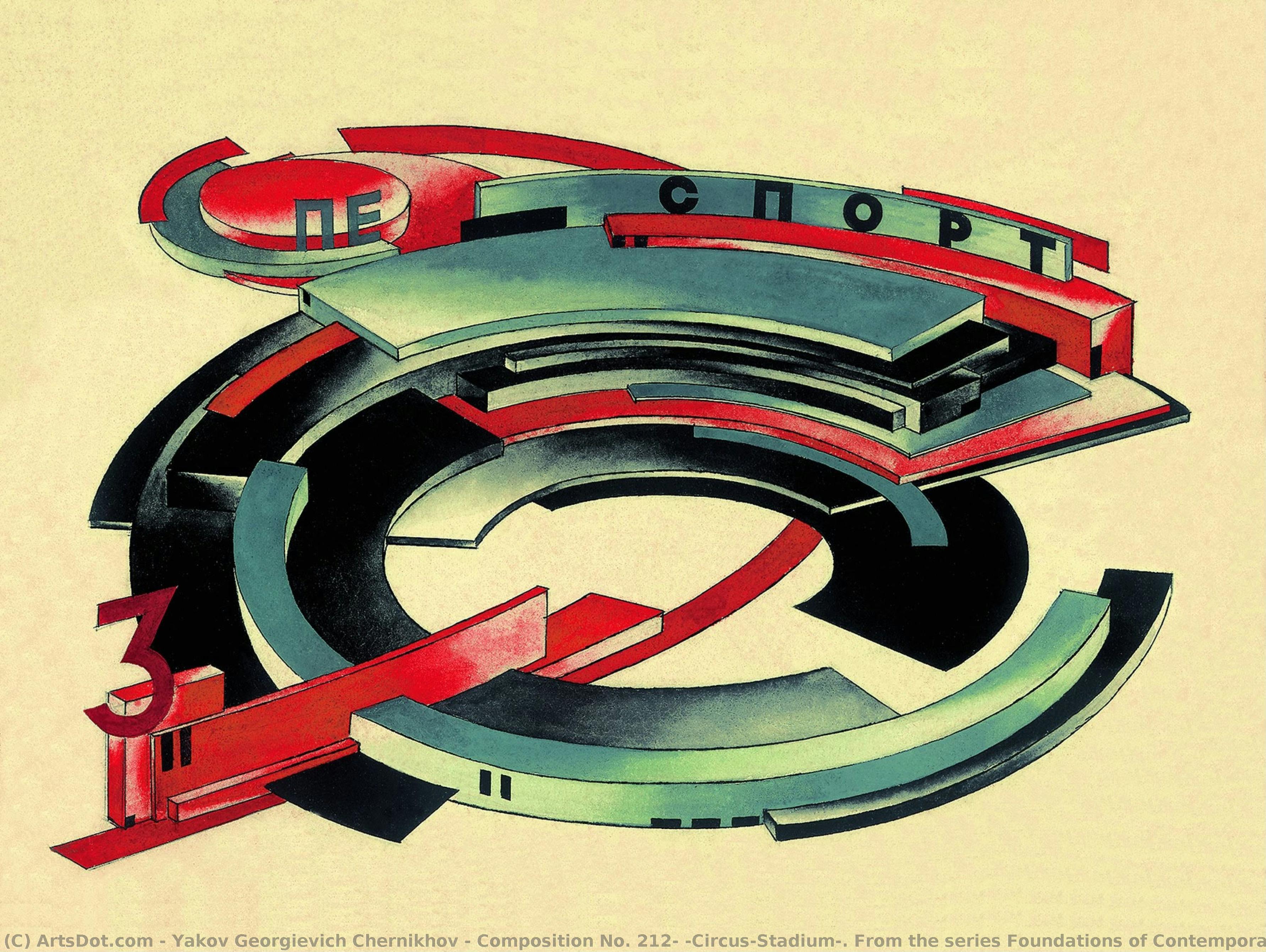
Composition No. 212: “Circus/Stadium”. From the series Foundations of Contemporary Architecture


 Read More
Hand Made Oil Reproduction
Hand-painted oil on canvas in your size and frame, made to order by our artists. ( Buy Print Buy Image)




































Pick from our preset sizes that match the artwork's original proportions.

You may enter your own dimensions to fit a specific frame or space. If your selected size does not match the original image's proportions, we will either crop the artwork or extend the painting with additional hand-painted elements. A digital mockup will be sent for your approval before production begins.
Please note that the on-screen preview does not reflect the actual cropping or extension. Only the mockup will accurately show the final composition.
While custom sizes are available, we recommend selecting a dimension from the predefined list to preserve the original proportions.
After order, ArtsDot.com team will email client for instructions and provide a mockup preview
Worldwide Delivery () in 3/4 weeks instead of standard 5 weeks. (16 August). No compromise on quality.

Free Worldwide Express Shipping

High-Quality Linen Canvas

Full Shipping Insurance

Customs Tax Refund Guarantee

True Color Matching Guarantee

60-Day Return Policy (Defects Only)

100% Money-Back Guarantee

Bulk Discount Offer
 Glass option is only available in size under 110 CM

Composition No. 212: “Circus/Stadium”. From the series Foundations of Contemporary Architecture
Reproduction Medium
Reproduction Size
-


Total Price
$ 263
Artwork Description
A Visionary Blueprint of the Future
In the quiet intersection of architectural precision and avant-garde imagination lies Iakov Georgievich Chernihov’s Composition No. 212: “Circus/Stadium”. Created in 1929, this striking work serves as a profound window into a lost era of utopian optimism. As part of his seminal series, Foundations of Contemporary Architecture, the piece transcends mere technical drawing to become a poetic manifesto of form and space. The viewer is immediately drawn into a monochromatic world where the boundaries between structural engineering and abstract art dissolve, presenting a vision of a stadium that feels both ancient in its circular geometry and startlingly futuristic in its execution.
The composition is anchored by a commanding central circular structure, a motif that speaks to the eternal human desire for communal gathering. Chernihov masterfully utilizes a stark black-and-white palette, punctuated only by subtle, deliberate red accents that guide the eye across the architectural landscape. These crimson highlights breathe life into the rigid geometry, suggesting movement and vitality within the static lines. The interplay of light and shadow creates a sense of immense scale, as if the viewer is peering down upon a monumental achievement of a civilization yet to be built. Smaller, orbiting circles are scattered throughout the frame, adding layers of complexity and depth that suggest an interconnected, rhythmic urban ecosystem.
The Geometry of Utopian Dreams
To understand this piece is to understand the pulse of the early 20th-century avant-garde. Influenced by the radical explorations of Suprematism and the functionalist rigor of modernism, Chernihov utilizes geometric abstraction not merely as a stylistic choice, but as a language of progress. The "Circus/Stadium" motif represents more than just a building; it symbolizes the heart of the modern city—a place of shared spectacle and collective identity. Every line and arc in this drawing is calculated to evoke a sense of structural harmony, reflecting the artist's belief that architecture could shape the very soul of society through balance and mathematical beauty.
For the discerning collector or interior designer, this artwork offers an unparalleled opportunity to introduce a sense of intellectual depth and historical gravity into a space. The piece possesses a unique versatility; its clean lines and high-contrast aesthetic allow it to integrate seamlessly into minimalist, industrial, or contemporary settings. As a hand-painted reproduction, the texture and nuance of Chernihov’s original vision are preserved, offering a tactile connection to the era of Soviet architectural experimentation. It is more than a decoration; it is an invitation to contemplate the enduring power of human imagination and the timeless allure of the geometric ideal.
Related Artworks

Artist Biography
Iakov Chernihov: Pioneer of Soviet Architectural Vision
Iakov Georgievich Chernihov (1889-1951) stands as a singular figure in Ukrainian art history, recognized primarily for his monumental architectural drawings and designs that profoundly shaped the aesthetic landscape of Soviet Russia. Born in Pavograd, Ukraine, Chernihov’s artistic journey began amidst the burgeoning modernist movement, yet he swiftly distinguished himself through an uncompromising dedication to geometric abstraction—a stylistic choice that would become synonymous with the ideals of functionalism and utopian optimism prevalent during his era.- Early Influences: Chernihov's formative years were marked by exposure to European avant-garde artists like Piet Mondrian and Kazimir Malevich, whose explorations into pure geometric forms undeniably impacted his artistic sensibilities.
- The Circus/Stadium Motif: Perhaps Chernihov’s most enduring legacy resides in his series of drawings depicting ‘Circus/Stadium,’ a concept he conceived as an embodiment of the future city. These compositions—characterized by interlocking circles and squares—were not merely decorative exercises; they represented Chernihov's belief that architecture should serve as a catalyst for social progress, fostering unity and dynamism.
- Architectural Practice: Beyond his artistic output, Chernihov actively engaged in architectural design, contributing to the construction of several notable buildings across Ukraine and Russia. His designs prioritized simplicity, clarity, and structural integrity—principles that reflected the broader ethos of Soviet Constructivism.
Major Achievements & Recognition
Chernihov’s contribution to Soviet architecture extended beyond individual projects. He served as professor at Kyiv State University, nurturing generations of architects who embraced his geometric aesthetic. Furthermore, he was awarded the Order of Lenin for his work in designing urban planning schemes and promoting architectural innovation. His drawings gained considerable acclaim within the artistic community and were exhibited internationally, cementing his reputation as a visionary artist and influential educator.Historical Significance & Legacy
Iakov Chernihov’s oeuvre represents more than just stylistic experimentation; it embodies the spirit of an epoch—the fervent belief in technological advancement and social reform that defined Soviet Russia during its formative years. His ‘Circus/Stadium’ drawings continue to inspire architects and artists alike, serving as a reminder of the power of abstraction to communicate complex ideas about urban space and human potential. Chernihov's unwavering dedication to geometric precision and his conviction that architecture could shape society solidified his place in art history as a pivotal figure in the development of Soviet modernist design.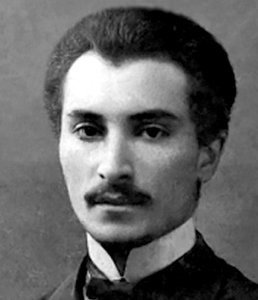
yakov georgievich chernikhov
1889 - 1951 , Ukraine
Quick Facts
- Artistic Movement Or Style: Contemporary Architecture
- Date Of Birth: 1889
- Full Name: Yakov Georgievich Chernihov
- Nationality: Ukrainian
- Notable Artworks: ['Composition No. 212: “Circus/Stadium”. From the series Foundations of Contemporary Architecture']
- Place Of Birth: Pavograd, Ukraine
Related Articles

Geometric Abstraction's 10 Defining Masterpieces | Art for Your Home - ArtsDot
Explore 10 defining masterpieces of Geometric Abstraction! Discover Kandinsky, Mondrian & Malevich’s iconic works. Find museum-quality art reproductions and curated decor ideas to elevate your home at ArtsDot.com.
Kandinsky's Masterpieces: 25 Paintings That Define Abstract Art | ArtsDot
Journey through Wassily Kandinsky's 25 most iconic abstract paintings. Explore his revolutionary use of color, form & spiritual expressionism. Find museum-quality Kandinsky reproductions and elevate your home decor with ArtsDot.com. Discover all masterpieces on ArtsDot.com!
Beyond Form & Color: Geometric Abstraction's Evolution in 20th/21st Century Art
Explore the evolution of geometric abstraction from Cubism to contemporary art. Discover key artists like Malevich & Mondrian, investment insights, and expert collecting advice at ArtsDot.
Beyond Form & Color: Geometric Abstraction's Enduring Legacy in Art History
Explore the captivating world of geometric abstraction! Discover its origins, key artists like Malevich & Mondrian, and why this movement remains highly valued by art collectors today. Expert insights at ArtsDot.
Kazimir Malevich: 25 Masterpieces of Suprematism & Abstract Art | ArtsDot
Explore 25 iconic artworks by Kazimir Malevich, pioneer of Suprematism & abstract art. Discover the stories behind 'Black Square' and more! Find museum-quality prints & elevate your home decor with ArtsDot.com.