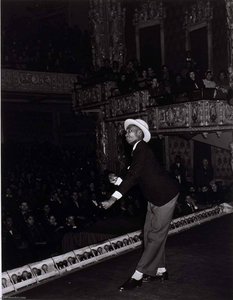
From Documentary Roots: Siskind’s Early Career and Social Realism
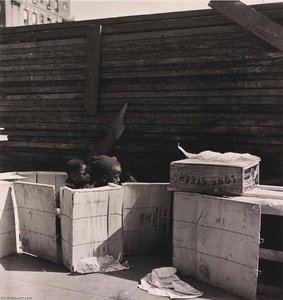
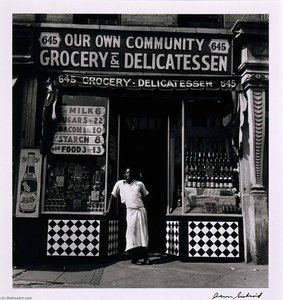 Untitled, from the project The Most Crowded Block
Aaron Siskind’s "Untitled" captures Harlem life in 1940. A powerful black & white photo showcasing abstract expressionism & social realism. Explore this iconic piece!
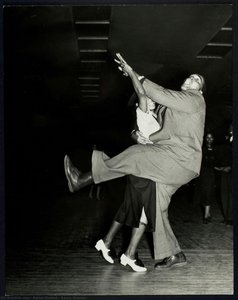
Aaron Siskind, a name synonymous with the power of abstraction in photography, didn't begin his artistic life seeking to dismantle form; rather, he initially dedicated himself to its meticulous documentation. Born in 1903 on New York City’s Lower East Side, Siskind’s early work was deeply rooted in social realism, a direct response to the hardships of the Great Depression and the political fervor of the 1930s. As a member of the Photo League, he wielded his camera as an instrument of change, capturing the lives of ordinary people with unflinching honesty. His “Harlem Document” (1937-1940), a series of stark black and white images, stands as a testament to this period – not merely photographs, but powerful statements about poverty, resilience, and the human spirit. These weren’t detached observations; Siskind immersed himself in the communities he photographed, fostering a sense of empathy that permeated his work. The compositions, though grounded in reality, already hinted at an underlying interest in pattern and structure, foreshadowing the aesthetic explorations to come. Images like “Untitled, from the project The Most Crowded Block” reveal a keen eye for geometric arrangements within the chaos of urban life, a subtle premonition of his later focus on the inherent beauty of fragmented forms.
The Shift Towards Abstraction: Finding ‘The Drama of Objects’
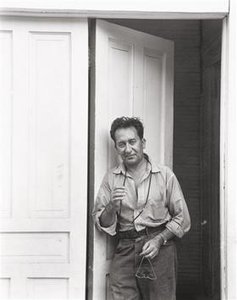 Aaron Siskind
Aaron Siskind (1903-1991) was an American photographer renowned for bridging documentary & abstract expressionism. Explore his iconic "Harlem Document" and innovative explorations of form, texture, and light.
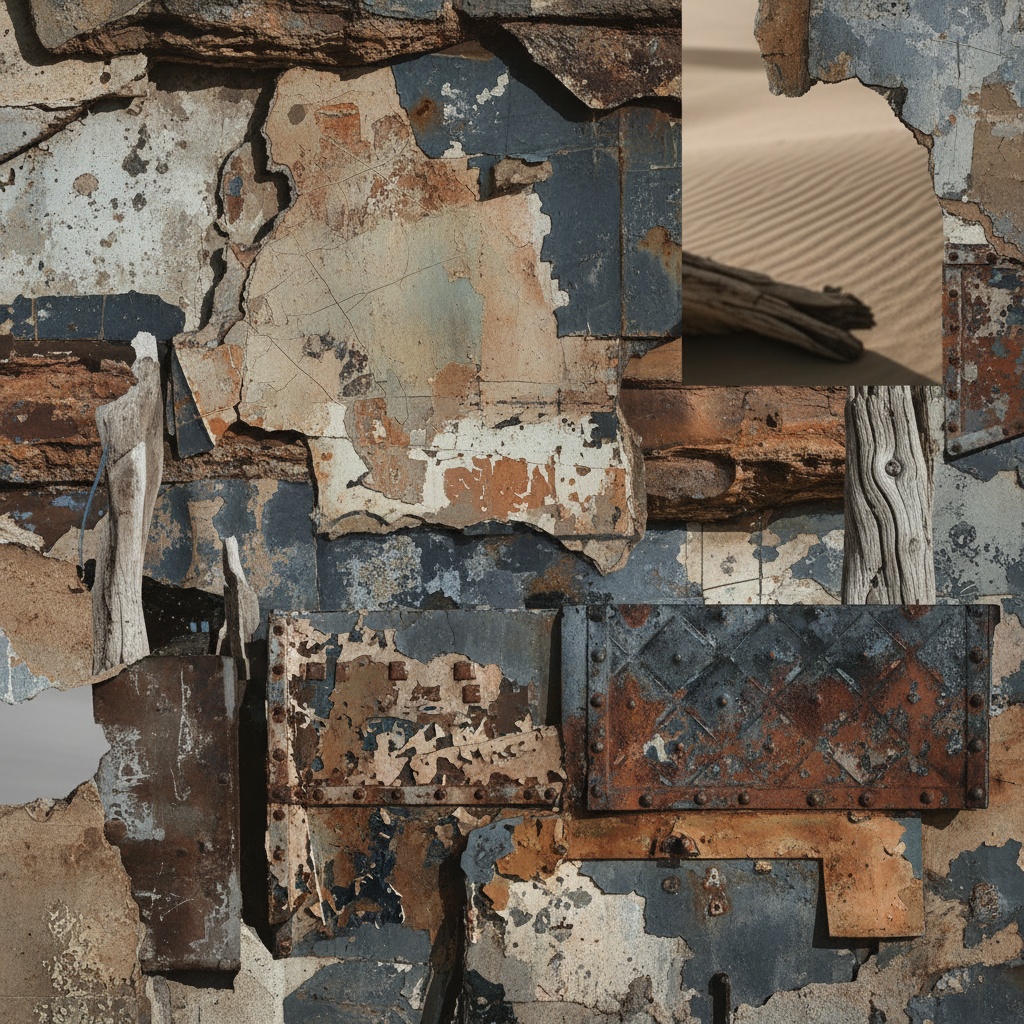
The turning point in Siskind's artistic trajectory wasn’t abrupt but rather a gradual evolution fueled by an increasingly introspective approach. By the late 1940s, he began to question the efficacy of direct social commentary and sought a more universal language – one that transcended specific narratives and tapped into the fundamental elements of visual experience. This led him down a path of abstraction, not as an abandonment of reality but as a deeper engagement with it. He famously stated his intention to explore “the drama of objects,” believing that inherent beauty and meaning resided within their textures, surfaces, and forms. This wasn’t about *representing* the world; it was about revealing its underlying structure and emotional resonance. Siskind began isolating details – weathered walls, cracked pavement, peeling paint – transforming them into abstract compositions that invited contemplation rather than immediate interpretation. He moved away from wide-angle views to close-ups, focusing on the interplay of light and shadow, the subtle nuances of material, and the inherent poetry of decay.
Materiality and Form: Exploring Texture, Surface & Photographic Space
Central to Siskind’s abstract work is a profound sensitivity to materiality. He wasn't simply photographing objects; he was photographing *the essence* of those objects – their weight, their age, their history etched onto their surfaces. Consider his series from Martha’s Vineyard, where he focused on the patterns created by seaweed and sand, or his explorations of architectural details in Bucks County. These images aren't about recognizable landmarks; they are investigations into the tactile qualities of stone, wood, and earth. The photographic space itself becomes a crucial element, flattened and compressed to emphasize the two-dimensionality of the image. Siskind deliberately minimized depth, creating compositions that resemble paintings – fields of color, texture, and form. This deliberate flattening wasn’t accidental; it was a conscious effort to break free from the constraints of representational photography and embrace the inherent qualities of the medium itself. He sought to create images that existed as self-contained worlds, independent of their original context.
Siskind and Abstract Expressionism: A Dialogue with Painting
The timing of Siskind’s shift towards abstraction coincided with the rise of Abstract Expressionism in New York City. He became deeply connected to a circle of artists – Franz Kline, Mark Rothko, Willem de Kooning – forging friendships that profoundly influenced his work. While he resisted being labeled an “Abstract Expressionist photographer,” there was undoubtedly a dialogue occurring between his photography and the painting of the era. Both movements shared a rejection of traditional representation in favor of emotional expression and formal experimentation. Siskind’s compositions, with their bold gestures, dynamic energy, and emphasis on surface texture, often echo the qualities found in Kline’s paintings. However, Siskind's approach differed significantly. Unlike painters who created their own compositions from scratch, he worked *with* existing forms, finding beauty and meaning within the world around him. His “Homage to Franz Kline” series exemplifies this connection – a tribute to his friend that simultaneously celebrates the power of painting and asserts the unique possibilities of photography.
Key Works and Series: 'Harlem Document,' 'Martha's Vineyard,' and Beyond
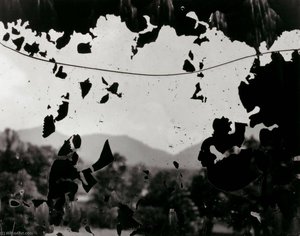
Throughout his career, Siskind produced several key bodies of work that demonstrate the evolution of his artistic vision. “Harlem Document,” as previously mentioned, represents his early commitment to social realism. The “Martha’s Vineyard” series (1940s-50s) marks a crucial transition period, where he began to isolate details and explore abstract patterns within natural forms. “North Carolina 9” (1949), featuring shattered glass, exemplifies his growing interest in fragmentation and texture. Later series, such as “Gloucester” (1950s) and “Pleasures and Terrors of Levitation” (1960s-70s), pushed the boundaries of abstraction even further, exploring the interplay of light, shadow, and form with increasing intensity. “St. Louis”, a striking example of his black and white abstract expressionist photography, showcases layered letters and figures, demonstrating his ability to find compelling compositions within seemingly mundane subjects. These series weren’t isolated experiments; they were interconnected explorations of the same fundamental themes – the beauty of form, the power of texture, and the inherent drama of objects.
Legacy and Influence: Siskind’s Impact on Contemporary Photography
Aaron Siskind's influence on contemporary photography is undeniable. He challenged conventional notions about what a photograph could be, pushing the boundaries of the medium and paving the way for generations of abstract photographers. His work demonstrated that photography wasn’t limited to representing reality; it could also be a powerful tool for self-expression and formal experimentation. He inspired artists to look beyond the surface of things, to find beauty in unexpected places, and to embrace the inherent qualities of their chosen medium. Siskind's emphasis on materiality and texture continues to resonate with contemporary photographers exploring abstraction, minimalism, and conceptual art. His legacy extends beyond his individual photographs; it lies in his unwavering commitment to artistic vision and his belief that photography could be a profound form of visual poetry. For collectors seeking works that challenge perceptions and celebrate the power of form, Aaron Siskind’s photographs offer a timeless and intellectually stimulating experience.