The Architect of Ambiguity: Magritte’s Early Life and the Shadows of Belgium
 René Magritte
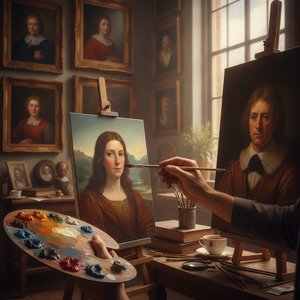
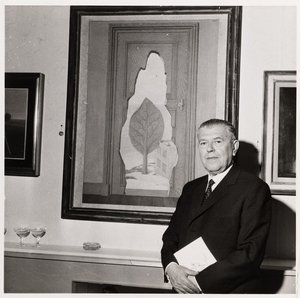
Early Life and the Seeds of Surrealism René Magritte, born René François Ghislain Magritte on November 21, 1898, in Lessines, Belgium, emerged into a world that would profoundly shape his enigmatic artistic vision. His early years were marked by an u...
To truly grasp the enigmatic gaze of René Magritte, one must first wander through the somber, mist-laden landscapes of his youth in Belgium. Born in 1898 in Lessines, Magritte emerged into a world marked by a quiet, unsettling gravity that would later define the very essence of his Surrealist vision. The landscape of his formative years, characterized by the industrial shifts of the late 19th century and the looming specter of global conflict, provided a fertile yet turbulent soil for an artist obsessed with what lies beneath the surface. His entry into the world was shadowed by a profound personal tragedy; the loss of his mother, whose body was recovered from the River Sambre with her dress obscuring her face, introduced a haunting motif of veiled identities and hidden realities that would permeate his later masterpieces.
While many associate Surrealism with spontaneous, dream-like outbursts of the subconscious, Magritte’s approach was far more cerebral, rooted in a meticulous questioning of the visible world. His early artistic journey was not immediate or straightforward; he initially explored the structured languages of Impressionism, Cubism, and Futurism during his studies at the Académie Royale des Beaux-Arts in Brussels. However, these movements provided only the technical scaffolding for his true calling. It was not until his encounter with Giorgio de Chirico’s work in 1922 that Magritte found his true artistic compass, discovering a resonance in dreamlike landscapes and unsettling juxtapositions that would irrevocably alter his course toward the surreal.
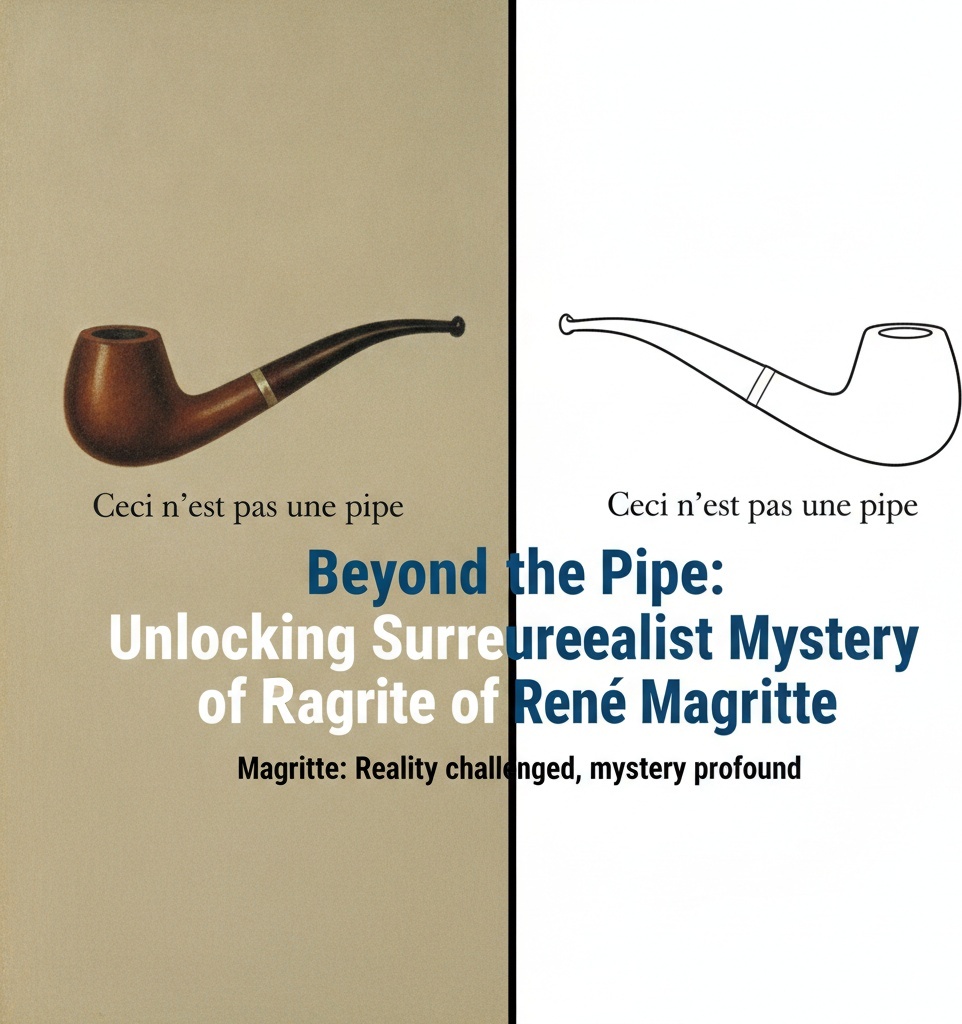
The Treachery of Representation: Decoding the Paradox of the Pipe
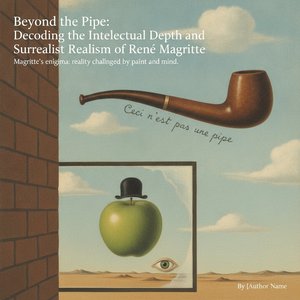
The Treachery of Images is a 1929 painting by Belgian surrealist painter René Magritte. It is also known as This Is Not a Pipe, Ceci n'est pas une pipe and ...
Perhaps no single image captures the intellectual provocation of Magritte as effectively as The Treachery of Images. To the casual observer, it is a simple depiction of a pipe; to the discerning collector, it is a profound philosophical inquiry into the nature of representation itself. By inscribing the phrase Ceci n'est pas une pipe—This is not a pipe—beneath the object, Magritte shatters the illusion of the canvas. He forces us to confront the gap between the object and its image, reminding us that the painting is merely a collection of pigments on canvas, a mere signifier rather than the thing itself.
This subversion of the familiar is the hallmark of his genius. Magritte does not seek to depict dreams so much as to question reality through their depiction. He employs hyperrealistic techniques—a smooth, almost academic application of oil paint—to render illogical scenes with an unsettling clarity. This precision creates a high-definition glitch in the fabric of our perceived world. When we look at his work, we are not merely viewing a landscape or a still life; we are entering a realm where reality becomes a question mark, and the boundaries of what we believe to be true begin to dissolve into the enigmatic.
Veiled Realities: Exploring Themes of Concealment and Identity
 The Lovers (Magritte)
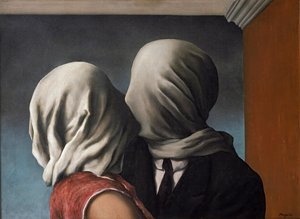
The Lovers (French: Les Amants (French pronunciation: [lez‿amɑ̃])) is a surrealist painting by René Magritte, made in Paris in 1928. It is the first in a series of four variations, and in the painting two people can be seen kissing passionately with ...
A recurring thread in Magritte’s tapestry is the tension between presence and absence, a fascination born from his early encounters with loss. His work frequently features figures whose identities are deliberately obscured, most notably in The Lovers, where two figures attempt to kiss through layers of white cloth. This barrier transforms an act of profound passion into one of frustration and isolation, representing the inherent difficulty of truly knowing another person. The fabric serves as a visual metaphor for the veils we place over our true selves and the mysteries that remain perpetually out of reach.
This preoccupation with concealment extends to his use of objects and landscapes. In works like The Triumphal March, figures are positioned against dark backdrops, their identities ambiguous and haunting. Even in his more luminous pieces, such as Portrait de Georgette Magritte, there is a sense that truths are hidden beneath surface appearances. For the art lover, these paintings offer an invitation to look beyond the visible, to embrace the unsettling power of what remains unseen, and to find beauty in the layers of mystery that define the human condition.
A Symphony of Contradictions: The Interplay of Light, Dark, and Dream
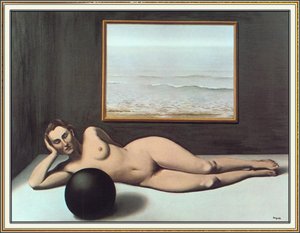 Bather between Light and Darkness
A Surrealist Meditation on Perception René Magritte’s “Bather Between Light and Darkness,” painted in 1935, stands as a quintessential example of Surrealism—a movement that sought to liberate the imagination from rational constraints and explore the ...
Magritte was a master of duality, often playing with the stark contrasts between light and darkness to create a sense of psychological depth. In Bather Between Light and Darkness, he presents a profound contemplation on illusion versus reality, where a luminous expanse of ocean merges seamlessly with an interior room bathed in muted tones. This juxtaposition disrupts our perception of space, forcing us to question the stability of our own senses. Similarly, his Empire of Light series presents the impossible sight of a sunlit midday sky resting atop a nocturnal streetscape, creating a visual metaphor for the coexistence of contradictory truths.
This mastery over contradiction is achieved through a deliberate, thoughtful process of visual inquiry. Magritte’s use of color is never merely decorative; it is symbolic and structural. He uses light to draw the eye toward unsettling distortions, much like the way his contemporary de Chirico used shadows to evoke a sense of dread. By manipulating the elements of nature—sky, sea, and stone—he creates a playground of the unexpected, where the familiar is rendered strange and the ordinary is imbued with a profound, dreamlike mystery.
The Enduring Legacy: How Magritte Redefined Modern Perception
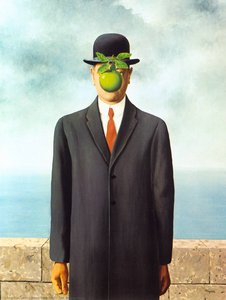
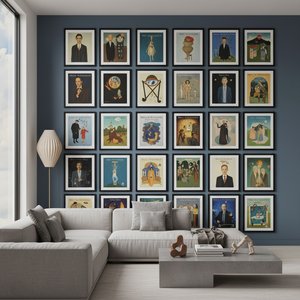 René Magritte's Masterpieces: 25 Surrealist Paintings for Art Lovers | ArtsDot
Introduction To embark on a journey through the top 25 artworks of René Magritte is to enter a realm where the familiar dissolves into the enigmatic, and reality itself becomes a question mark. These paintings are not merely images; they are portals—...
The enduring power of René Magritte’s work lies in its ability to resonate across generations, transcending the era of his creation. His imagery has left an indelible mark on the trajectory of modern art, influencing everything from Pop Art and Minimalism to Conceptualism. In a world increasingly saturated with images and information, Magritte’s art serves as a vital reminder that seeing is not always believing. He teaches us that our perceptions are subjective, malleable, and often deceiving.
For the contemporary collector, Magritte offers more than just aesthetic beauty; he offers a way to engage with the world through a lens of curiosity and skepticism. His paintings are portals—windows into a meticulously crafted world that challenges the very foundations of our reality. Whether through the heavy textures of a hand-painted oil reproduction or the thoughtful placement of a museum-quality print, bringing Magritte’s vision into one's space is an act of embracing the inherent mystery of existence. His legacy remains a testament to the power of art to transform the canvas into a profound exploration of the human psyche.