The Dawn of Impressionism: Breaking the Chains of Academic Tradition
The 19th century began on 1 January 1801 (represented by the Roman numerals MDCCCI), and ended on 31 December 1900 (MCM). It was the 9th century of the 2nd millennium. It was characterized by vast social upheaval. Slavery was abolished in much of Eur...
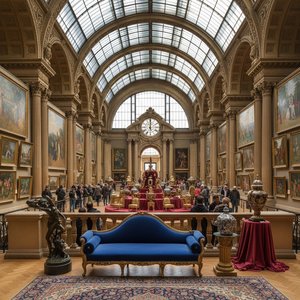
To understand the seismic shift that occurred in the mid-19th century, one must first envision the rigid, somber world of the French Academy. For decades, the art establishment—the Salon—dictated a strict hierarchy of subjects, favoring grand historical narratives, mythological allegories, and meticulously smooth finishes that left no trace of the artist's hand. This was an era of controlled perfection, where every brushstroke was hidden beneath layers of glaze to achieve a photographic, almost sterile, realism. However, beneath this veneer of tradition, a quiet rebellion was brewing among a group of young, spirited artists who felt stifled by these academic constraints.
This movement, which would eventually be deriscentally labeled "Impressionism" by critics, sought to dismantle the walls of the studio. These painters rejected the heavy, dark palettes of their predecessors in favor of something far more vibrant and alive. They were not interested in the frozen perfection of a myth; they were captivated by the pulse of contemporary life and the shifting atmosphere of the natural world. By challenging the Salon's authority, these artists paved the way for a new era of subjectivity, where the artist's personal perception became just as important as the subject itself. It was a bold declaration that reality is not a fixed, static entity, but a shimmering, ever-changing experience.
Claude Monet: The Poet of Light and the Art of the Fleeting Moment
 Claude Monet
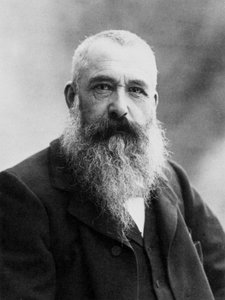
A Life Immersed in Light: The World of Claude Monet Oscar-Claude Monet, a name synonymous with Impressionism, wasn't merely a painter of landscapes; he was a chronicler of fleeting moments, a poet of light and color. Born in Paris on November 14, 184...
At the very heart of this revolution stood Oscar-Claude Monet, a man whose name has become synonymous with the movement itself. Born in Paris but deeply influenced by the coastal landscapes of Normandy, Monet was far more than a mere painter of scenery; he was a chronicler of time. His early life, marked by an innate talent for charcoal caricatures and an entrepreneurial spirit, eventually led him to a profound encounter with Eugène Boudin. It was Boudin who introduced Monet to the transformative power of capturing nature directly, instilling in him the revolutionary idea that light is the true protagonist of every landscape.
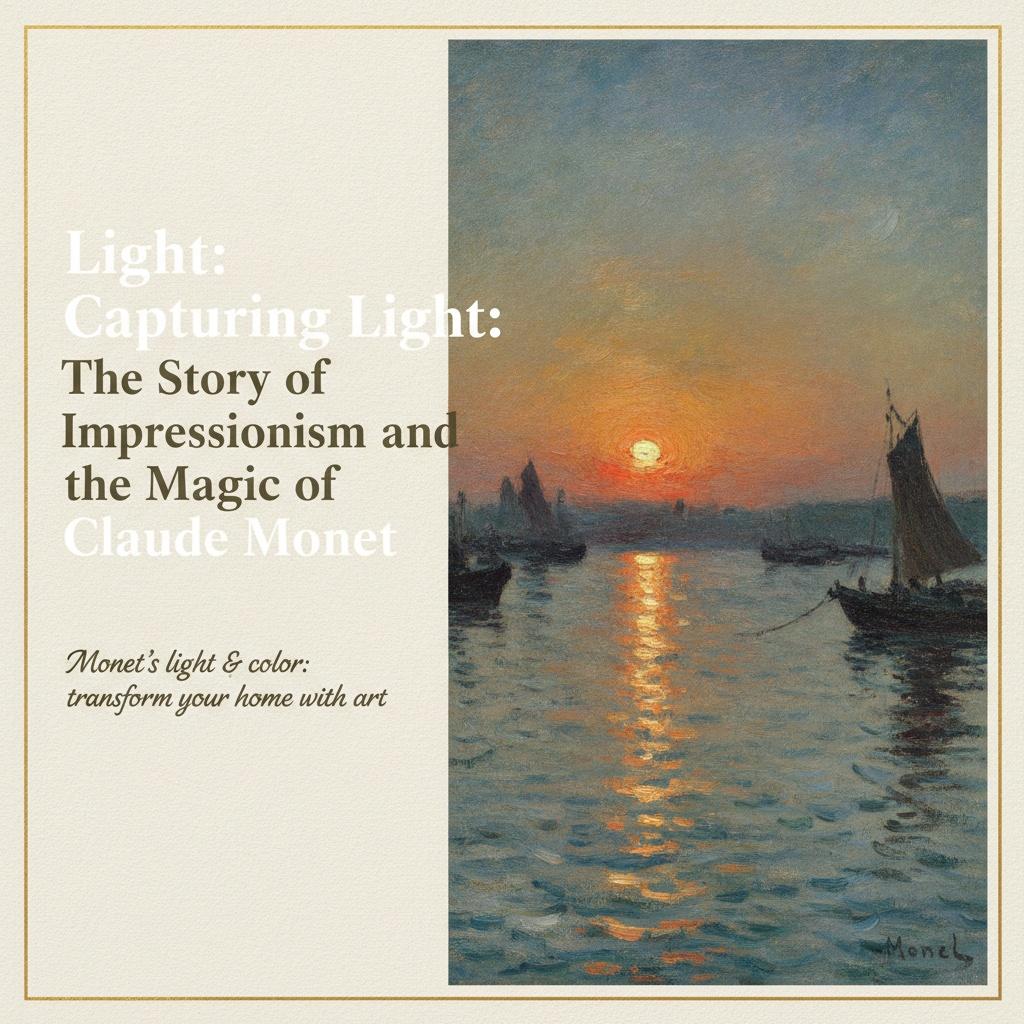
Monet’s work functions as a visual diary of ephemeral moments. He possessed an almost supernatural ability to observe how a single haystack or a cathedral facade could be completely reimagined by the sun's movement from dawn to dusk. His paintings do not merely depict objects; they capture the impression—the way light dances upon water, the way mist softens a horizon, and the way color vibrates in the heat of midday. Through his eyes, we learn to slow down and breathe deeply, finding beauty in the transient and the temporary. His dedication to studying these atmospheric effects allowed him to transcend mere representation, turning the canvas into a poetic exploration of pure visual sensation.
En Plein Air: Revolutionizing the Canvas through Nature's Lens
 Capturing Ephemeral Light: Plein Air Painting from Impressionism to Today
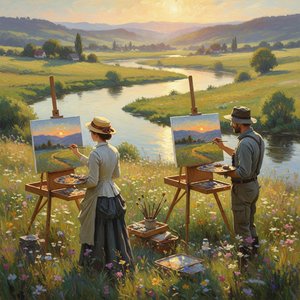
The Genesis of 'En Plein Air': From Studio Tradition to Landscape Portraiture Wikipedia: En plein air En plein air (pronounced [ɑ̃ plɛ.n‿ɛʁ]; French for 'outdoors'), or plein-air painting, is the act of painting outdoors. This method contrasts with s...
The technical engine of the Impressionist revolution was the practice of en plein air painting. For centuries, the studio had been a sanctuary of controlled light and premeditated composition, where artists labored over sketches born from memory. The Impressionists, however, took their easels into the wild, braving the elements to paint outdoors. This method demanded a radical change in technique; because the sun moves so quickly, the artist could no longer afford the slow, meticulous layering of traditional academic painting. Instead, they embraced short, broken brushstrokes and a rapid application of pigment.
This spontaneous approach allowed for a much more authentic interaction with the environment. By working directly in nature, artists like Monet, Renoir, and Pissarro could observe the true colors of shadows—which are rarely black or grey, but often composed of deep blues and violets—and the way sunlight filters through leaves to create dappled patterns on the ground. This technique brought a sense of immediacy and energy to the canvas that had never been seen before. The visible texture of the paint, the impasto thickness in certain areas, and the vibrant, unblended colors all contributed to a sense of movement, making the viewer feel as though they are standing right beside the artist, witnessing the world unfold in real-time.
The Giverny Legacy: Water Lilies and the Mastery of Color
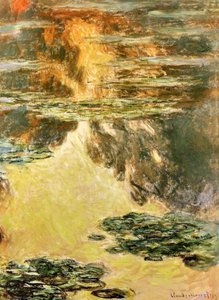
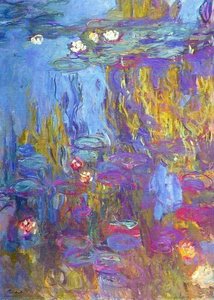
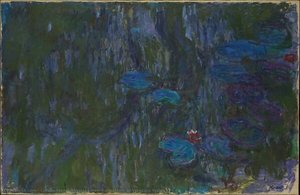
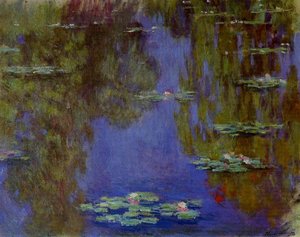
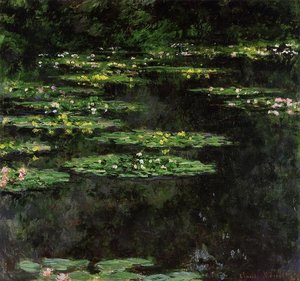
Water Lilies (French: Nymphéas [nɛ̃.fe.a]) is a series of approximately 250 oil paintings by French Impressionist Claude Monet (1840–1926). The paintings depict his flower garden at his home in Giverny, and were the main focus of his artistic product...
As Monet’s career progressed, his focus narrowed toward a singular, deeply personal obsession: his garden at Giverny. In the final thirty-one years of his life, the artist transformed his estate into a living laboratory of color and light. The Nymphéas, or Water Lilies series, represents the pinnacle of this devotion. Comprising approximately 250 oil paintings, these works move away from traditional perspective, inviting the viewer to lose themselves in a sea of floating blossoms and reflective water. It was a period of profound artistic maturity, even as Monet faced physical challenges such as cataracts, which only served to further abstract his vision into a dreamlike realm of pure color.
The Giverny landscapes are not just paintings; they are immersive environments. In these works, the distinction between sky, water, and flora begins to dissolve. The reflections of clouds in the lily ponds create a sense of infinite depth, blurring the boundaries between the earth and the heavens. This series serves as a bridge toward modern abstraction, focusing on the emotional resonance of color rather than the literal depiction of form. To gaze upon his water lilies is to experience a state of tranquility and contemplation, a testament to how Monet used his immediate surroundings to touch upon something universal and eternal.
Impressionism in the Modern Home: Bringing Timeless Serenity to Your Space
 Impressionist Landscapes: 10 Masterpieces for Your Home | ArtsDot
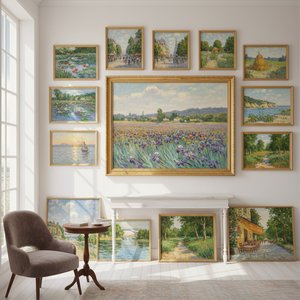
Introduction Imagine stepping into a world bathed in dappled sunlight, where colors dance and shimmer with an ethereal quality. This is the realm of Impressionism – a revolutionary art movement that forever altered how we perceive light, color, and t...
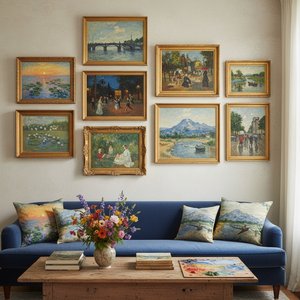
The enduring appeal of Impressionism lies in its ability to evoke emotion and foster a sense of peace. In our fast-paced, modern world, the soft textures and luminous palettes of Monet’s era offer a much-needed sanctuary. Integrating these masterpieces into contemporary interior design is not merely about decoration; it is about creating an atmosphere of thoughtful beauty. Whether through a large-scale multi-panel canvas that spans a wide wall or a delicate, framed print that serves as a focal point in a reading nook, Impressionist art brings a sense of organic warmth to any room.
When selecting art for your home, consider the mood you wish to cultivate. A landscape filled with the blues and greens of Giverny can instill a sense of calm in a bedroom, while more vibrant, sun-drenched scenes might energize a living area. The beauty of these works is their versatility; they pair exquisitely with both classic and modern aesthetics, bridging the gap between historical grandeur and contemporary minimalism. By bringing these light-drenched moments into our personal spaces, we invite the timeless elegance of the 19th century to reside with us, reminding us daily of the profound magic found in the simplest, most fleeting moments of life.
At ArtsDot.com, we believe that fine art should be accessible to everyone. We specialize in creating exquisite, hand-painted oil reproductions that capture the very soul of these historical masterpieces. Our master artists use traditional techniques on 100% cotton canvas to ensure that every brushstroke and color vibration is preserved, allowing you to bring the revolutionary spirit of Monet into your own home with unparalleled quality and authenticity.