The Architect of Form: Paul Cézanne’s Quest for Structure
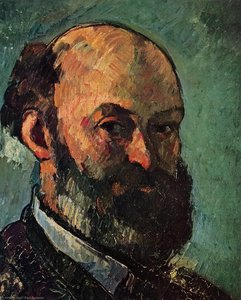 Self Portrait
Self Portrait Paul Cézanne’s Self Portrait , created in 1879, is a seminal piece that not only reflects his artistic vision but also provides a glimpse into his personal world. This painting, housed in the esteemed Oskar Reinhart Collection in Winter...
To understand the seismic shift that brought us into the modern era, one must first look toward the sun-drenched landscapes of Provence and the quiet, relentless determination of a man named Paul Cézanne. Born in 1839, Cézanne was not merely a painter; he was an investigator of reality. While his contemporaries were often swept up in the ephemeral beauty of light and atmosphere, Cézanne sought something far more enduring. He possessed a profound desire to find the permanent, underlying architecture of the natural world. His journey was a slow burn of artistic exploration, marked by periods of self-doubt and critical dismissal, yet it was this very refusal to accept the superficial that would eventually change everything.
In his early works, one can see the lingering shadows of Romanticism and Realism, but as his vision matured, he began to move toward a more analytical approach. He did not want to simply replicate what the eye saw in a fleeting moment; he wanted to capture how things felt—how they resonated within the space between observation and memory. This pursuit led him to treat nature not as a collection of pretty vistas, and certainly not as a mere backdrop for light, but as a series of fundamental volumes. By focusing on the solidity of objects, he began to strip away the illusionistic depth that had dominated Western art since the Renaissance, replacing it with a sense of weight and structural integrity that felt almost sculptural.
Beyond the Fleeting Moment: Breaking Away from Impressionism
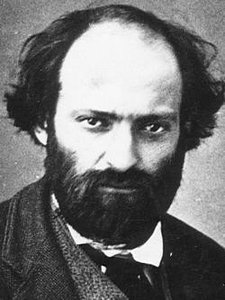 Paul Cézanne
A Revolutionary Vision: The Life and Art of Paul Cézanne Paul Cézanne, born in Aix-en-Provence in 1839, stands as a monumental figure bridging the gap between the fleeting impressions of Impressionism and the fragmented forms of Cubism. His journey w...
The Impressionist movement had revolutionized the art world by capturing the transient effects of light, yet for Cézanne, this approach felt incomplete. He found the preoccupation with the "fleeting impression" to be somewhat hollow, lacking the permanence required for true greatness. While he respected the vibrant color palettes and the liberation from academic rigidity brought by his peers, he sought a new pictorial language—one that could bridge the gap between the sensory experience of light and the intellectual understanding of form. This transition marked the birth of Post-Impressionism, a movement that would eventually provide the foundation for the avant-garde revolutions of the 20th century.
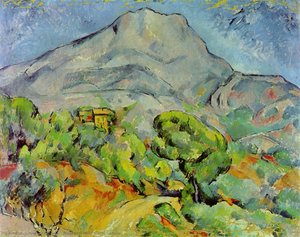
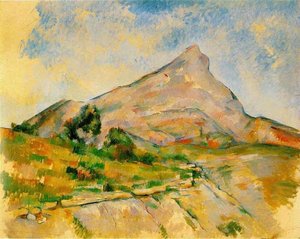
One can observe this evolution clearly in his landscapes, such as his celebrated series of Mont Sainte-Victoire. In these works, the mountain is not just a subject; it is a study in color modulation and geometric presence. He moved away from the soft, hazy edges of Impressionism toward a technique involving thick impasto and deliberate, repetitive brushstrokes. These strokes were not random; they were building blocks used to construct complex fields of color that emphasized the contours and volumes of the landscape. By prioritizing the formal qualities of art over photographic accuracy, Cézanne began to dismantle the traditional rules of perspective, inviting the viewer to see the world as a structured, interconnected whole rather than a single, fixed viewpoint.
The Geometric Revolution: How Cézanne Inspired the Cubist Vision
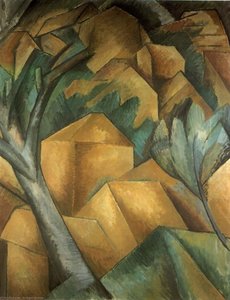
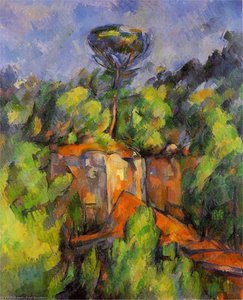
Paul Cézanne's landscapes deeply inspired the Cubists in their initial development. which deeply inspired the Cubists in their first stage of ...
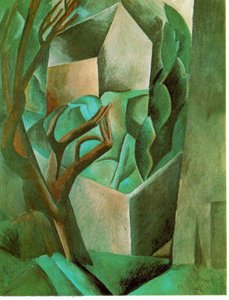
It is often said that Cézanne was the "father of us all," a sentiment echoed by both Henri Matisse and Pablo Picasso. This was no mere hyperbole; his influence was the very catalyst for the birth of Cubism. The seeds of this revolution were sown in Cézanne’s fascination with the geometric essence of nature. He famously suggested that everything in nature could be reduced to the cylinder, the sphere, and the cone. This was a radical departure from tradition. By breaking down natural shapes into these fundamental geometric equivalents, he provided a roadmap for future artists to move toward abstraction.
This geometric obsession began to manifest in his later works as a fragmentation of forms into interlocking planes. He started painting subjects from slightly different points of view within a single composition, creating a sense of movement and depth that was entirely new. This technique challenged the long-held belief in a single, static perspective. For an art lover looking back at this era, seeing a Cézanne landscape is like witnessing the first cracks appearing in the facade of traditional representation. He had successfully introduced a way to represent the subject in a greater context, paving the way for an art that was as much about the process of perception as it was about the subject itself.
Dismantling Reality: Picasso, Braque, and the Birth of Cubism
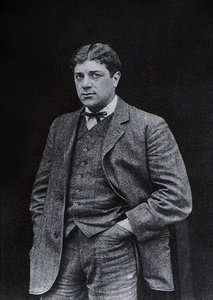
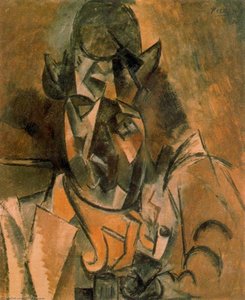 Portrait of Georges Braque
Subject and Composition The artwork, "Portrait of Georges Braque," created by Pablo Picasso in 1910, presents an intimate depiction of the artist's close friend and fellow pioneer of Cubism, Georges Braque. The portrait is not a traditional represent...
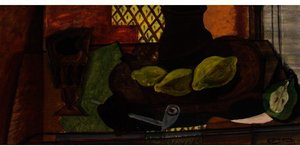
As we move into the early 20th century, the structural seeds planted by Cézanne blossomed into the full-scale revolution known as Cubism. Led by the brilliant and restless Pablo Picasso and the thoughtful Georges Braque, this movement took Cézanne’s fragmentation to its logical, radical conclusion. If Cézanne provided the blueprint of structure, Picasso and Braque were the architects who decided to dismantle the building entirely. They were not interested in mirroring the world; they were interested in questioning its very nature—how we see, how we represent, and what constitutes art itself.
In the works of Analytic Cubism, such as Picasso’s Portrait of Georges Braque, the subject is deconstructed into a complex web of interlocking planes and angles. The traditional, monochromatic palette of browns, grays, and ochres served to focus the viewer's attention on the interplay of form rather than the distraction of color. This was an intellectualized approach to painting, where objects were analyzed, broken up, and reassembled in an abstract form. Braque, whose upbringing among house painters gave him a unique mastery of texture and structure, worked so closely with Picasso during this period that their works were often indistinguishable. Together, they shattered the single viewpoint, presenting subjects from multiple perspectives simultaneously to represent them in a more complete, albeit fragmented, reality.
A Lasting Legacy: How This Artistic Shift Shaped Modern Perception
 Cubism
Cubism is an early-20th-century avant-garde art movement which began in Paris. It revolutionized painting and the visual arts, and sparked artistic innovations in music, ballet, literature, and architecture. Cubist subjects are analyzed, broken up, a...
The journey from the structured landscapes of Cézanness to the fractured realities of Cubism represents one of the most profound shifts in human history. It was a period of immense cultural upheaval, marked by rapid industrialization and scientific breakthroughs that changed how humanity understood time and space. The art of this era reflected that change, moving away from the comfort of recognizable beauty toward a more complex, often dissonant, way of seeing. This revolution did not stay confined to the canvas; it sparked innovations in music, literature, architecture, and even design.
Today, when we look at modern art, we see the echoes of this struggle between observation and memory. The legacy of Cézanne and the Cubists lives on in every artwork that dares to challenge convention and explore the fundamental nature of form. For those of us who find beauty in the layers of history, this era serves as a reminder that progress often requires the courage to break things apart in order to rebuild them into something more profound. Whether through a carefully curated collection of museum-quality reproductions or the discovery of a new original piece, we continue to engage with the revolutionary spirit that redefined our very perception of the world.