The Third Dimension: Understanding the Magic of Relief Sculpture
 Mastering Dimension: An Art Historian's Guide to the Elegance of Sculptural Relief Art
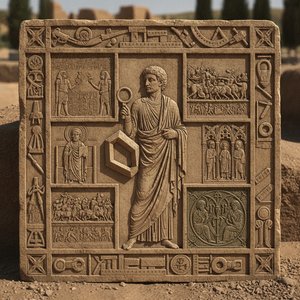
The Emergence of Depth: Defining the Art of Relief Sculpture To contemplate relief sculpture is to engage in a profound dialogue between the two-dimensional plane and the three-dimensional world. Unlike the free-standing statue, which commands space ...
To step into the presence of a relief artwork is to witness a profound dialogue between the two-dimensional plane and the three-dimensional world. Unlike a traditional free-standing sculpture that commands space from every angle, relief art exists in a beautiful, liminal state, emerging from its background to meet the viewer halfway. The very essence of the term finds its roots in the Latin verb
relevare, meaning "to lift back," a literal description of the artist's intent to raise the subject above the surface. Whether it is the delicate, shallow carvings known as
rilievo schiacciato or the dramatic, high-relief forms where figures seem to break free from their stone or wood prisons, this method creates an illusion of depth that breathes life into a flat surface.
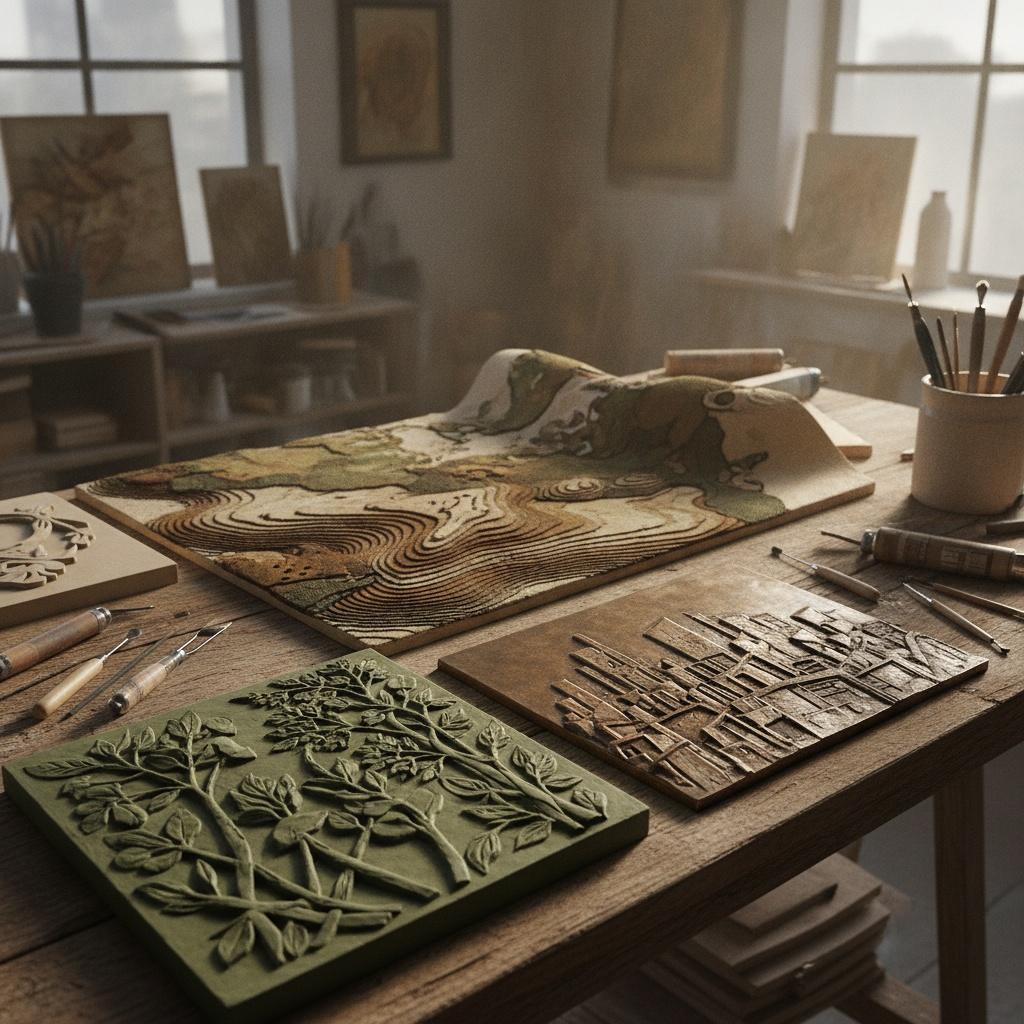
The magic of relief lies in its ability to manipulate the viewer's perception through the clever use of shadows and physical elevation. In many traditional works, such as those carved into stone or wood, the artist achieves this by meticulously chiseling away the background, lowering the field so that the remaining unsculpted areas appear to rise toward us. Conversely, in more modern applications using materials like clay, plaster, or heavy oil pigments, the form is built upward, layer by layer. This physical presence creates a subtle tension; the artwork is neither purely a painting nor fully a sculpture, but a captivating hybrid that invites us to contemplate the weight and resistance of the medium itself.
A Sensory Journey: How Texture and Light Transform Your Living Space
Imagine walking into a room where the walls do not merely hold color, but breathe with texture. In an era increasingly dominated by the flat, ephemeral glow of digital screens, there is a profound, grounding comfort in encountering art that possesses true physical presence. Textured art—particularly works utilizing heavy impasto and relief techniques—transforms a static interior into a living landscape of shadow and light. As you move through a room, the artwork changes; soft, diffused lighting casts micro-shadows within rugged, organic grooves, creating a luminous depth that shifts with your perspective.
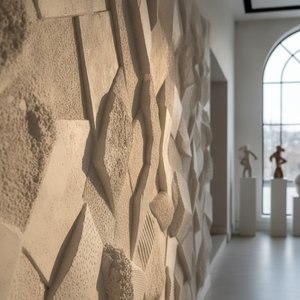
This tactile experience offers more than just visual interest; it provides a sensory anchor for the home. A piece like
Monolithic Serenity, for instance, uses rhythmic horizontal ridges of deep taupe and beige to create a three-dimensional topography. Such works do not simply decorate a wall; they redefine the space they inhabit, bringing an architectural soul to a modern room. The interplay of light within the valleys and peaks of the paint creates a sense of movement and vitality, turning a quiet corner into a focal point of meditative tranquility. For the collector seeking to create a meaningful atmosphere, relief art offers a way to invite the tangible and the imperfect into the sanctuary of the home.
From Classical Roots to Modern Mastery: The Evolution of Sculptural Painting
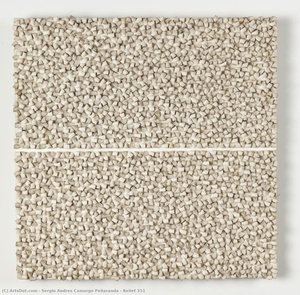 Relief 351
Sergio Camargo: A Bridge Between Brazil and Modernism Sergio Camargo (born Sergio Andrés Camargo Peñaranda in Rio de Janeiro, Brazil, 1930 – 1990) was a renowned sculptor and relief maker. He began his artistic journey at the Academia Altamira in Bue...
The history of relief is a grand tapestry woven from ancient traditions and modern innovation. We see its monumental echoes in the bronze works of Gaston Lachaise, where the human form is celebrated through powerful, volumetric relief, or in the intricate stone carvings that have graced cathedities for centuries. This structural tradition provides the foundation upon which contemporary visionaries build. Artists like Sergio Camargo bridged the gap between Brazilian traditions and European modernism, using relief to explore geometric precision and the philosophical implications of space.
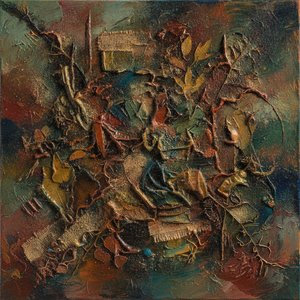
In the contemporary landscape, this evolution has taken a thrilling turn toward the "architecture of texture." Modern masters such as David Moreau have reimagined the canvas as a sculptural site, treating oil and medium as physical building materials. Moreau’s practice sits at a beautiful crossroads, pulling from the deep, structural traditions of European classical techniques while injecting them with the raw, visceral energy of modern abstraction. He does not merely paint; he sculpts with pigment, building dense, tactile universes that demand you look closer. This movement represents a bridge between the old world and the new, where the permanence of heavy impasto meets the fluid, emotional language of contemporary expression.
Curating Depth: Tips for Integrating Textured Art into Your Interior Design
Integrating relief or highly textured artwork into your home requires an eye for balance and an appreciation for how light interacts with surfaces. Because these pieces possess a significant physical presence, they act as anchors within a room. For those decorating a large, wide wall or a grand staircase, the "multi-panel" trend—splitting a single textured composition across three, four, or even five panels—can create a breathtaking architectural effect that guides the eye through the space.
When selecting pieces, consider your existing color palette and the lighting of your room. Textured art thrives in environments where light can dance across its surface; therefore, placing such works near natural light sources or under soft, directional lamps will maximize their dramatic potential. If you are working with a minimalist aesthetic, a monochromatic relief in alabaster or cream can provide sophisticated depth without overwhelming the room. For more daring interiors, a high-contrast piece with heavy, colorful ridges can serve as a bold, sculptural centerpiece. The key is to treat the artwork not as an afterthought, but as a structural element of your interior design, much like a fine piece of furniture or a bespoke architectural detail.
The Artist's Touch: Exploring Impasto, Plaster, and the Architecture of Paint
At the heart of the most captivating relief works lies the mastery of materiality. The technique of impasto—the thick, heavy application of paint—is where the canvas ceases to be a flat surface and becomes a landscape of ridges and valleys. This method requires an artist to possess not only a painterly eye but also a sculptor's understanding of weight and resistance. By building up layers of oil or plaster, the artist creates a physical topography that captures light in its many facets.
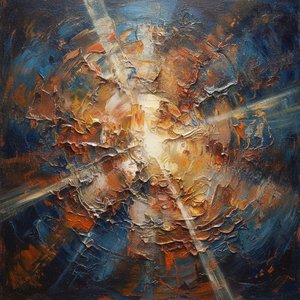
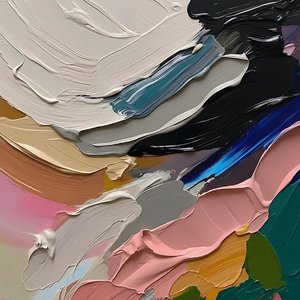
This process is an act of construction. The artist must consider how each stroke will hold its shape, how the edges of a ridge will cast a shadow, and how the accumulation of matter will affect the overall composition. In works like
Alabaster Rhythms, we see an asymmetrical dance of organic, blade-like forms that sweep across the canvas in a rhythmic arc. This is the true "architecture of paint"—a meticulous layering process where every deep groove and raised peak tells a story of movement and controlled spontaneity. To touch or even visually trace these textures is to engage in a tactile dialogue with the artist's hand, celebrating the beautiful, enduring power of the physical medium.
Discover more at ArtsDot.com — The Welcoming Discovery Store. Whether you are looking to transform a memory into a textured masterpiece through our custom portrait services or seeking to find your next favorite textured landscape, we invite you to explore our curated collections and expert consultations.


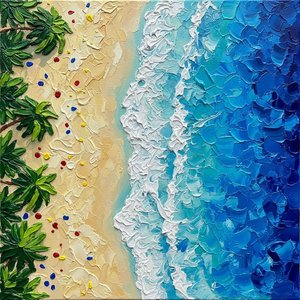
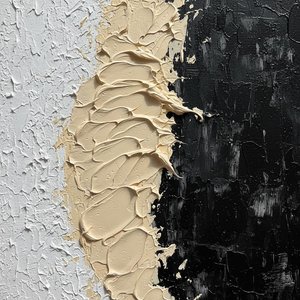
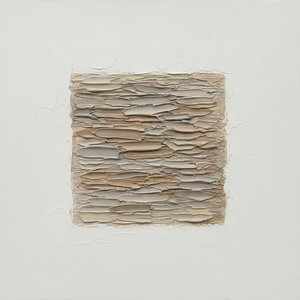 Monolithic Serenity: A Sculptural Study in Textured Taupe and Minimalist Relief
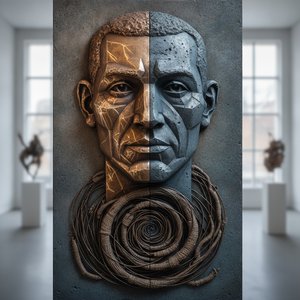
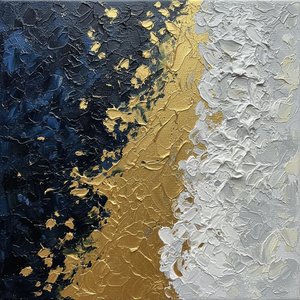
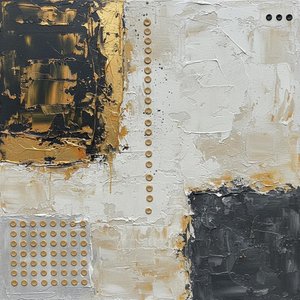 Fragmented Monolith: A Singular Study in Gilded Texture and Obsidian Depth
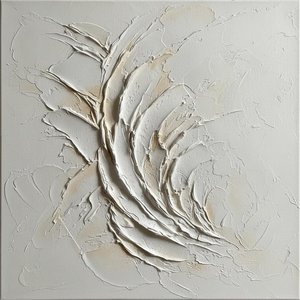 Alabaster Rhythms: A Monumental Study in Sculptural Relief and Ethereal Motion