The Primal Essence: Understanding Charcoal as an Elemental Medium
 Charcoal
Charcoal is a lightweight black residue made of carbon that is produced by strongly heating wood (or other animal and plant materials) in minimal oxygen to remove all water and volatile constituents. In the traditional version of this pyrolysis proce...
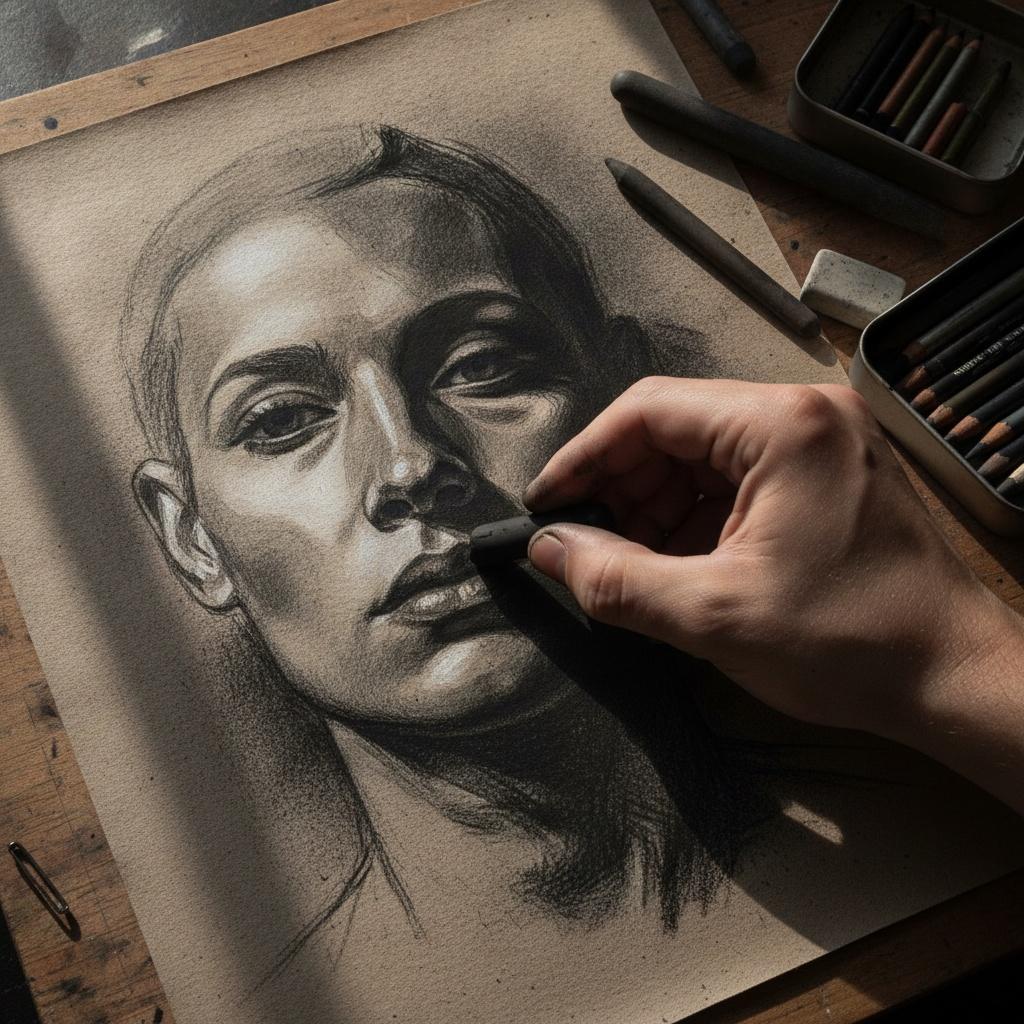
There is a profound, quiet intimacy found in the smudge of carbon against paper—a sensory experience that feels almost as ancient as the first marks made by human hands in the shadows of caves. Before the vibrant pigments of oil or the complex layers of watercolor could capture our imagination, there was charcoal. It is perhaps the most honest medium in existence, stripped of all artifice, leaving only the stark contrast of black and white to define the contours of human emotion and the weight of the physical world. To touch charcoal is to engage with a piece of history; it is a lightweight black residue made of carbon, produced by the transformative process of heating wood in minimal oxygen. This elemental simplicity offers a raw, visceral connection to the subject that even the most complex oil paintings struggle to replicate.
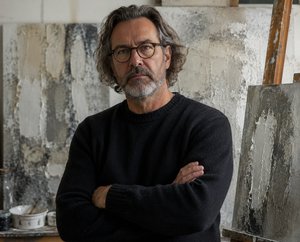
When we look at the work of contemporary masters like Pedro Sousa Vieira, we see how this medium can be pushed beyond mere sketching into a universe of profound exploration. Charcoal allows for a unique sensory experience: the ability to create deep, velvety blacks that seem to swallow the light, and delicate, smoky grays that mimic the softest breath of mist. It is an art of truth, where there is no hiding behind thick layers of glaze or bright pigments. Every stroke, every smudge, and every deliberate erasure tells a story of intention, making it the perfect medium for those who seek to capture the very atmosphere in which their subjects exist.
The Art of Chiaroscuro: Mastering the Dance of Light and Shadow
 Chiaroscuro
In art, chiaroscuro (English: kee-AR-ə-SKOOR-oh, -SKURE-, Italian: [ˌkjaroˈskuːro]; lit. 'light-dark') is the use of strong contrasts between light and dark, usually bold contrasts affecting a whole composition. It is also a technical term used by a...
At the heart of charcoal’s magic lies the concept of
Chiaroscuro—the Italian term for "light-dark." This technique is much more than a simple use of contrast; it is the intentional use of strong light and dark to achieve a sense of volume and three-dimensional form. In the hands of a skilled artist, chiaroscary allows objects to emerge from an obsidian void, creating an illusionistic space that feels both familiar and deeply atmospheric. By manipulating the interplay between brilliant highlights and deep shadows, one can direct the viewer's eye and imbue a simple figure with a sense of monumental weight.
Mastering this dance requires a heightened awareness of tone. It is not merely about placing black next to white, but about navigating the infinite spectrum of grays in between. Consider the way light is captured in classical studies, where shadows define musculature and drapery through careful layering. This technique creates a sculptural quality, as if the subject is physically breathing upon the page. When we embrace the darkness, we find that shadow is not merely the absence of light, but a powerful tool used to define shape, texture, and even the emotional temperature of a composition.
Essential Tools of the Trade: From Vine to Compressed Charcoal
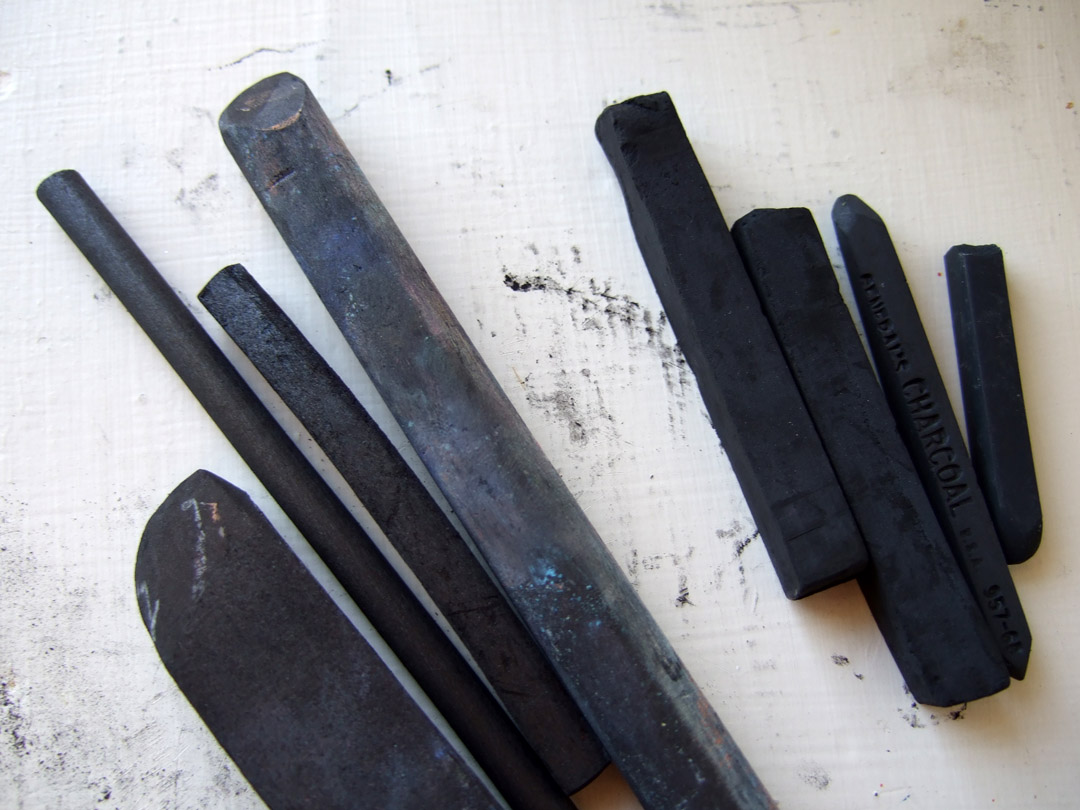 Charcoal (art)
Artists' charcoal is charcoal used as a dry art medium. Both compressed charcoal (held together by a gum or wax binder) and charcoal sticks (wooden sticks burned in a kiln without air) are used. The marks it leaves behind on paper are much less perma...
For the beginner embarking on this monochromatic journey, understanding your toolkit is the first step toward mastery. Not all charcoal is created equal, and each variety offers a different "voice" for your artwork.
Vine charcoal, produced by burning grapevines in a kiln, is long, thin, and incredibly delicate. It produces soft, ethereal grazy tones that are easily erased, making it the ideal companion for preliminary sketches and establishing basic compositions. Because its marks are less permanent, it allows for a fluid, experimental approach to form.
In contrast,
Willow charcoal offers a slightly darker, more intense shade, while
Compressed charcoal provides the dramatic punch required for deep, velvety blacks. Compressed charcoal is held together by a gum or wax binder, resulting in a much firmer stick that can produce intensely dark, heavy markings. For even finer control,
Charcoal pencils—which consist of compressed charcoal enclosed in a wooden jacket—allow for precise detail work similar to graphite. To complete the toolkit, one must also consider the role of white chalk or conte crayon, which can be used to highlight the peaks of light, much like the masterful studies seen in the works of Domingo Antonio de Sequeira.
Techniques for Depth: Exploring Additive, Subtractive, and Blending Methods
 Subtractive drawing
Subtractive drawing is a technique in which the drawing surface is covered with graphite or charcoal marks and then erased to make the image. This technique is often used to add texture, establish tonal shapes, or create the appearance of reflected l...
The true versatility of charcoal lies in its dual nature: it is a medium of both addition and subtraction.
Additive drawing involves the traditional application of carbon to the paper, building up layers of tone to create depth. However, one of the most captivating aspects of this medium is
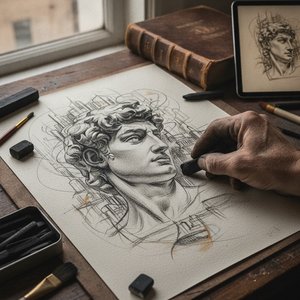
subtractive drawing. In this technique, the artist covers a surface with charcoal marks and then uses a tool—often a kneaded or putty eraser—to "draw" with light. By lifting pigment away, you can create the appearance of reflected light, fine textures, or the soft glow of a highlight on a cheekbone.
Blending is the third pillar of charcoal technique. Using fingers, tortillons, or even soft cloths, an artist can smudge the carbon to create seamless transitions between light and dark. This blending transforms harsh lines into soft, atmospheric gradients, essential for rendering skin or misty landscapes. When these three methods are used in harmony, the artist can achieve a remarkable range of textures, from the gritty, rough grain of a stormy sky to the smooth, polished surface of marble. It is through this constant movement between adding and removing that the artist truly wrestles with the essence of form.
From Sketch to Masterpiece: Lessons from History's Great Charcoal Works
To study charcoal is to walk through the annals of art history. From the prehistoric sketches etched onto cave walls to the sophisticated anatomical studies of the Renaissance, charcoal has always been the medium of preparation and profound expression. We see this in the preparatory studies of Federico Fiori Barocci, where the scratch of charcoal against paper records a vibrant, energetic thought process. These works are not merely unfinished narratives; they are windows into the creative crucible, showing us the raw energy that precedes the finished masterpiece.
Even in more modern contexts, artists like Michelle Cioccoloni demonstrate how monochrome compositions can be used to create an intensely personal dialogue with the subject. Her work, rooted in direct observation, uses the restriction of palette to force a focus on texture and light. Whether it is the expressive, dynamic lines of Shubhankar Chandere or the historical gravity of 18th-century studies by Thomas Sully, these works remind us that complexity does not require color. They teach us that true impact comes from the courage to embrace the dark and the mastery of tone.
Bringing the Monochrome Home: Curating Charcoal Art for Modern Interiors
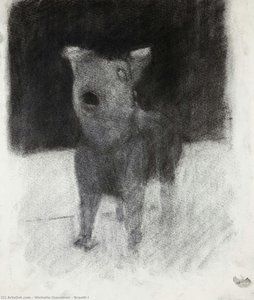 michelle cioccoloni
Michelle Cioccoloni: A World Rendered in Monochrome London-based artist Michelle Cioccoloni has carved a distinctive niche within contemporary art, captivating audiences with her meticulously rendered monochrome ink drawings. Her work isn’t merely ob...
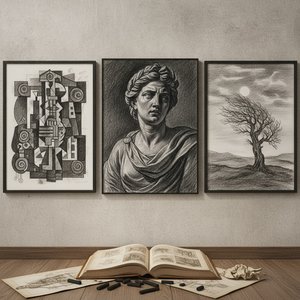
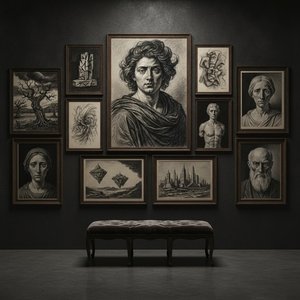
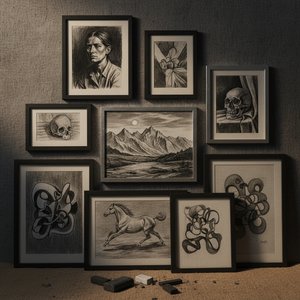
In our modern, hyper-saturated world, there is a restorative peace in returning to the monochrome. Integrating charcoal art into your home decor offers a sophisticated way to add depth and "soul" to a room without overwhelming it with color. Because charcoal works exist in a spectrum of black, white, and gray, they act as a neutral yet powerful anchor for any interior design palette. A large-scale charcoal print can serve as a dramatic focal point in a minimalist living room, while smaller, intimate sketches can add a layer of historical texture to a study or library.
When curating your collection, consider the mood you wish to evoke. For a contemporary, architectural look, you might opt for multi-panel "split" charcoal prints that flow across a wide wall, creating a sense of movement. If you seek something more classic, a framed reproduction with a deep, dark wood frame can lend an air of museum-grade elegance to a hallway. At ArtsDot.com, we believe art should be a personal discovery. Whether you are looking for a hand-painted oil reproduction that captures the tactile depth of charcoal or a high-quality Giclée print, bringing these monochromatic textures into your space allows you to create a sanctuary of light and shadow.


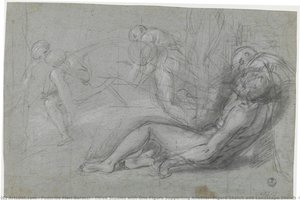 Three Studies with One Figure Supporting Another; Figure Sketch and Landscape Sketch (for “Deposition”, Perugia, Cathedral of San Lorenzo)