
Introduction
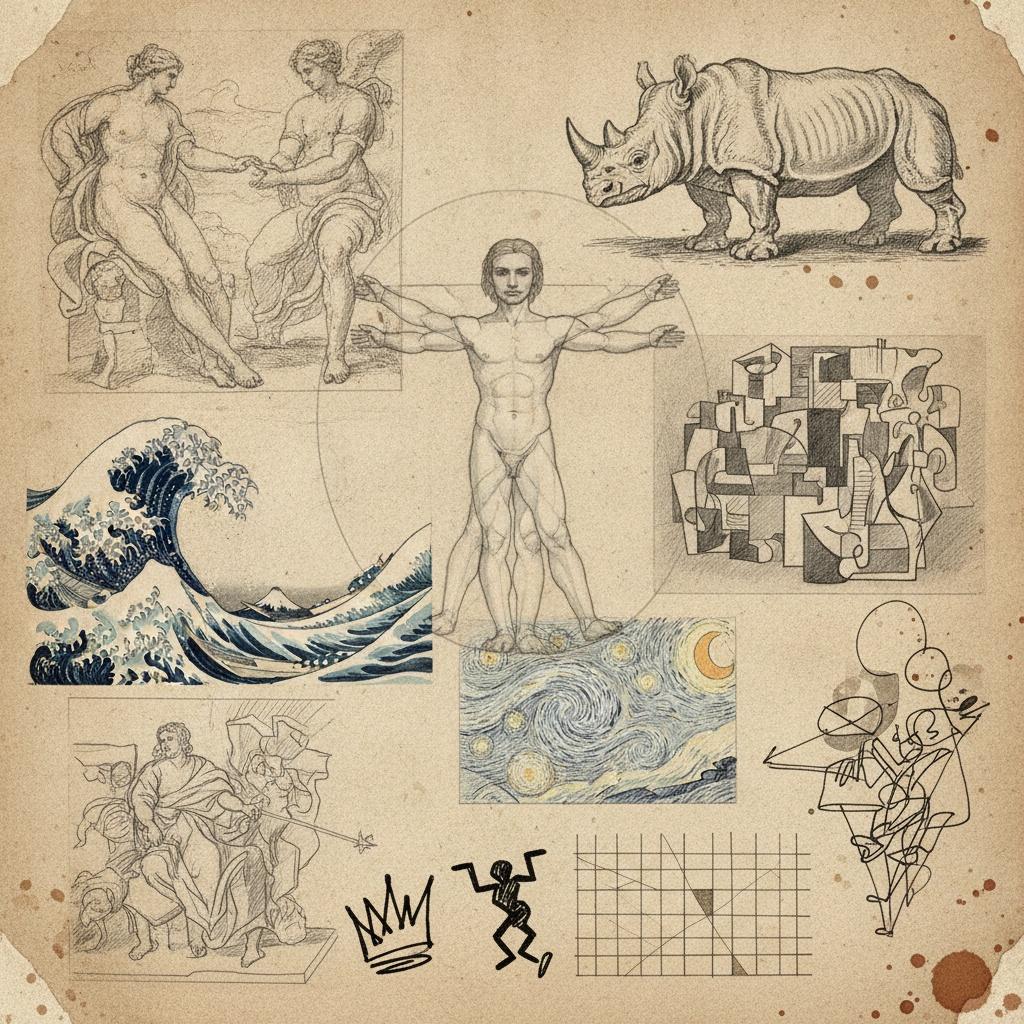
Imagine walking through a quiet, sun-drenched gallery where the air feels heavy with the whispers of centuries past. Before the grand scale of oil canvases or the vibrant explosions of modern color, there was the humble, intimate power of the line. A single stroke of charcoal, a delicate sweep of silverpoint, or the rhythmic scratch of a quill—these are the raw, unfiltered breaths of history. We often think of masterpieces as finished, polished monuments, but the true soul of art is frequently found in its most skeletal form: the drawing.
\denThroughout the ages, from the anatomical precision of the Renaissance to the frantic, emotional energy of the modern era, drawings have served as the laboratory of human genius. They are the places where ideas are born, where mistakes are explored, and where an artist’s first, most honest impulse is captured before it is ever layered in pigment. These works were never meant for the public eye; they were private dialogues between a creator and their vision, making them some of the most vulnerable and profound artifacts in our cultural heritage.
Today, these legendary sketches remain deeply meaningful because they bridge the gap between the past and our present moment. In an era of digital perfection, there is something undeniably magnetic about the tactile imperfection of a hand-drawn line—the way we can almost feel the pressure of the artist's hand against the paper. They remind us that even the most complex movements in art history began with a simple, singular thought.
In the following pages, we invite you to slow down and rediscover the magic of the mark. We have curated a journey through ten transformative works—pieces that did more than just capture a likeness; they redefined how we see the world. From the anatomical wonders that unlocked the secrets of the human form to the expressive strokes that paved the way for abstraction, prepare to encounter the legendary drawings that changed the course of art forever.
Vitruvian Man - Leonardo da Vinci
 Vitruvian Man - Leonardo da Vinci
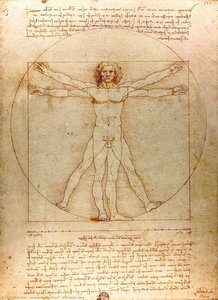
Few images capture the heartbeat of human potential quite like Leonardo da Vinci’s Vitruvian Man . More than a mere anatomical study, this pen-and-ink masterpiece serves as a profound bridge between the earthly and the divine. By inscribing the human form within the perfect geometry of the circle and the square, Da Vinci visually articulated the Renaissance belief that humanity is the mathematical center of the universe.
As you gaze upon the delicate, precise lines etched into aged parchment, you feel the tension between scientific rigor and poetic grace. The subtle interplay of light and shadow across the muscular figure reveals a master obsessed with the harmony of nature. In today’s modern interiors, this iconic drawing remains a powerful cultural touchstone; its themes of balance, proportion, and organic symmetry resonate deeply within minimalist and contemporary spaces. It stands as a timeless symbol of our enduring quest to understand our place within the cosmos, making it an essential pillar among the top 10 legendary drawing masterpieces that changed art forever .
Sien, Sewing, Half-Figure - vincent willem van gogh
 Sien, Sewing, Half-Figure - vincent willem van gogh
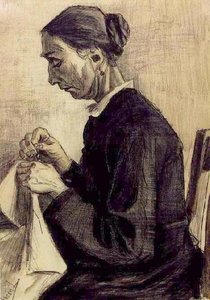
There is a profound, quiet intimacy in Sien, Sewing, Half-Figure by Vincent van Gogh that stops you mid-breath. In this 1883 masterpiece, we aren't just looking at a woman engaged in domestic labor; we are witnessing a sacred, meditative moment captured through delicate monochrome lines. Van Gogh moves away from his later explosive colors to find something even more raw: the rhythmic beauty of shadow and the soulful stillness of a single, focused life.
This work earns its place among the top 10 legendary drawing masterpieces because it demonstrates how much emotion can be conveyed through the simple precision of a pencil. It captures a universal sense of peace that remains incredibly modern. At ArtsDot.com, we believe this kind of soulful tranquility belongs in your personal sanctuary. Our hand-painted oil reproductions are meticulously crafted to preserve every subtle gradation of light and the delicate weight of Van Gogh's shadows, allowing you to bring this timeless, contemplative energy into your own home decor with authentic, tactile beauty.
The head of St James, and architectural sketches - Leonardo da Vinci
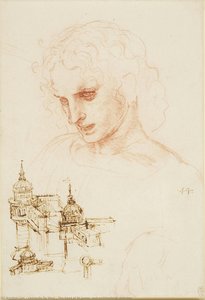 The head of St James, and architectural sketches - Leonardo da Vinci
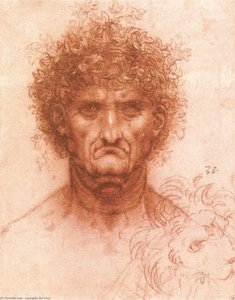
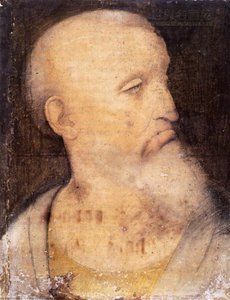
To gaze upon The Head of St James, and architectural sketches by Leonardo da Vinci is to witness the very heartbeat of the Renaissance. Created around 1495, this work transcends simple sketching; it is a profound window into the mind of a genius who saw no boundary between the grace of human anatomy and the precision of engineering. Da Vinci’s mastery of sfumato —that smoky, ethereal blending of light and shadow—breathes life into the youthful features of St James, creating a sense of soulful contemplation that remains breathtaking centuries later.
This masterpiece earns its place among the world's greatest drawings through its dual nature: it is both an intimate study of spiritual devotion and a blueprint for structural innovation. The accompanying architectural bastions reveal Leonardo’s visionary approach to space and defense. For the modern collector, this piece serves as an eternal inspiration, reminding us that true beauty lies in the harmony of detail and grand design. Integrating such timeless, intellectual depth into a curated home collection invites a sophisticated conversation between historical legacy and contemporary elegance.
View of the Sea at Sunset - Claude Monet
 View of the Sea at Sunset - Claude Monet
To encounter View of the Sea at Sunset by Claude Monet is to witness the very first breaths of the Impressionist revolution. Long before his iconic water lilies, this 1862 masterpiece captured a young artist beginning to dissolve the rigid boundaries of academic tradition in favor of pure, sensory light.
What secures its place among the world's most legendary works is Monet’s early mastery of atmospheric alchemy. He moves away from meticulous detail toward a visceral experience, using warm oranges and delicate peaches to mimic the sun's descent. The two silent boats anchored in the calm waters of Le Havre provide a sense of scale, grounding the ethereal glow of the sky against the rhythmic stillness of the sea.
For the modern collector, this piece offers more than just historical significance; it brings a profound emotional resonance into the home. Its palette of luminous yellows and deep, reflective tones creates a soothing, sophisticated focal point that complements refined, contemporary interiors with timeless grace.
Potato field behind the dunes - vincent willem van gogh
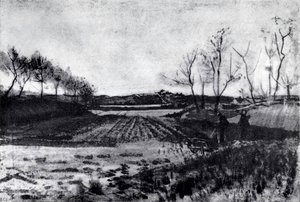 Potato field behind the dunes - vincent willem van gogh
Before the world fell in love with his swirling celestial skies and vibrant sunflowers, there was a period of profound, quiet observation. In 1883, a young Vincent van Gogh captured the raw, unvarnished essence of rural life in “Potato Field Behind the Dunes.” This monochrome masterpiece stands as a pivotal moment in our list of legendary drawing works because it reveals the artist’s foundational mastery of texture and tone long before his signature explosion of color.
Through a sophisticated use of hatching and cross-hatching, Van Gogh breathes life into a grayscale world. You can almost feel the grit of the sandy dunes and the damp, heavy earth of the potato rows. The thick, expressive lines delineate the weathered landscape with a tactile realism that honors the dignity of manual labor. It is a study in light and shadow, where every stroke serves to build depth and emotional weight. This early work reminds us that true artistic transformation begins with seeing the beauty in the simplest, most honest moments—a sentiment that continues to inspire how we curate meaningful, soulful spaces in our homes today.
Study for the Disputation of the Holy Sacrament: twenty clerics and ecclesiastics discussing - Raphael
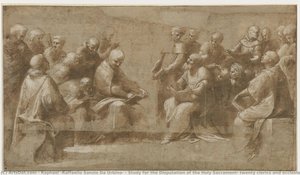 Study for the Disputation of the Holy Sacrament: twenty clerics and ecclesiastics discussing - Raphael
Owning a piece inspired by Study for the Disputation of the Holy Sacrament: twenty clerics and ecclesiastics discussing by Raphael is an investment in a legacy of profound intellectual taste. This preparatory sketch, captured in striking monochrome, serves as a window into the very soul of the High Renaissance. As one of our top 10 legendary drawing masterpieces, it offers more than just visual beauty; it embodies the spirit of disegno —the meticulous foundation of anatomical precision and expressive movement that defined an era.
The composition breathes with the quiet prestige of a scholarly gathering, where thirteen figures engage in a rhythmic dance of theological debate. The subtle interplay of light and shadow creates a sense of sculptural volume, inviting the viewer into a world of humanist discovery. While the original remains a priceless treasure of art history, bringing a high-quality reproduction of this work into your home provides an unmatched aesthetic authority. Its sophisticated, monochromatic palette and timeless architectural depth make it a breathtaking anchor for modern luxury interiors, lending a sense of cultured permanence to any curated space.
Sitting Male Nude (recto) - Michelangelo Buonarroti
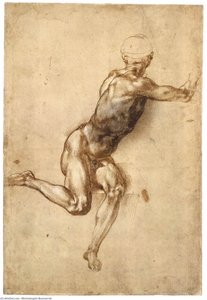 Sitting Male Nude (recto) - Michelangelo Buonarroti
In Sitting Male Nude (recto) , Michelangelo achieves a breathtaking structural harmony that defines the very essence of Renaissance mastery. The composition is anchored by a powerful diagonal energy, where the rhythmic interplay of heavy, dark lines and delicate hatching creates a sense of sculptural volume on a flat surface. Every stroke serves to map the complex geometry of human musculature, balancing raw physical strength with an elegant, flowing grace that feels both monumental and intimate.
This meticulous arrangement of form and shadow offers a timeless perfection that continues to captivate viewers centuries later. There is a profound connection between Michelangelo’s disciplined use of line and the principles of modern minimalist design; much like a clean, contemporary interior, this drawing relies on essential shapes and tonal depth rather than excess to ground its emotional impact. As one of the top 10 legendary drawing masterpieces , it serves as a masterclass in how anatomical precision can evoke an enduring sense of awe, making it a cornerstone of art history that still inspires the modern aesthetic.
Codex Madrid I, f.7r - Leonardo da Vinci
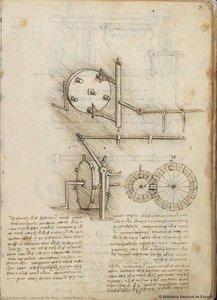 Codex Madrid I, f.7r - Leonardo da Vinci
Imagine leaning over a centuries-old manuscript, the scent of aged parchment filling the air as your eyes trace the delicate, rhythmic lines of Codex Madrid I, f.7r . In this singular drawing, Leonardo da Vinci invites us into his private laboratory of the mind. There is no grand landscape or divine figure here; instead, we find the mesmerizing dance of gears and levers—a proto-engineering marvel captured with the same grace he applied to the Mona Lisa .
Using his legendary sfumato technique, Leonardo softens the edges of these mechanical components, blurring the line between cold machinery and organic life. The subtle gradations of ink create a sense of depth and motion, as if the clockwork mechanism might spring to life under your gaze. This masterpiece stands as a profound testament to the Renaissance spirit, where art and science were never separate, but two sides of the same curious soul. Bringing the essence of such intellectual wonder into a modern study or creative workspace can inspire a sense of deep reflection and boundless innovation, reminding us that even the smallest gear plays a vital role in the grand design of the universe.
Portrait of a Young Woman - Titian
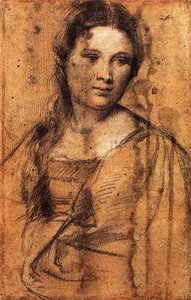 Portrait of a Young Woman - Titian
In the Portrait of a Young Woman , Titian proves that true mastery doesn't require a riot of color; instead, the lines here aren’t merely drawn—they are choreographed . Created around 1515, this work is far more than a simple likeness; it is a dance frozen in time, where light and shadow perform a delicate duet across the subject's features. Through a sophisticated monochrome approach, Titian uses rhythmic hatching to sculpt the soft contours of her face, creating a breathtaking illusion of three-dimensional life.
The subject’s serene gaze and enigmatic, faint smile invite us into a private moment of Renaissance contemplation. There is a profound sense of harmony in how the chiaroscuro technique breathes movement into the stillness of the paper. It makes one wonder: what if your own living room could hold that same balance? What if your walls could breathe rhythm through the subtle interplay of light and shadow? This masterpiece stands as a testament to the power of restraint, turning a quiet study into an eternal, soulful encounter.
The Barricade - Édouard Manet
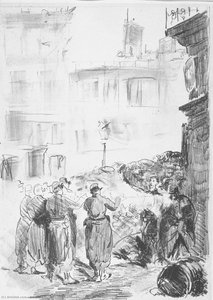 The Barricade - Édouard Manet
There’s a tension in The Barricade by Édouard Manet that follows you—not with judgment, but with a haunting understanding of human struggle. This isn't just a sketch of Parisian unrest; it is a mirror reflecting the raw, unpolished moments of history. As you gaze into this monochrome world, the masterful use of charcoal and graphite creates a landscape of deep shadows and stark, flickering light, pulling you into the heart of the 1871 Paris Commune.
Manet uses loose, expressive lines and intricate hatching to sculpt a scene where the mundane—a stray dog or a solitary hydrant—meets the monumental weight of revolution. The texture feels tactile, almost gritty, as if you could reach out and touch the very smoke of the uprising. Now, imagine this piece in your space. It doesn't just decorate a wall; it reminds you that even in chaos, there is profound beauty and strength. It brings a sense of quiet prestige and historical depth, inviting you to be part of a much larger, enduring story.
Conclusion
As we draw our journey through these legendary lines to a close, it is easy to see these works not merely as relics of a bygone era, but as living, breathing presences that continue to pulse with life in our modern world. Each stroke of charcoal, each delicate sweep of silverpoint, and every intentional mark left by these masters acts as a bridge across centuries, connecting the quiet solitude of an artist's studio to the vibrant energy of our contemporary homes. These drawings are more than historical milestones; they are intimate whispers from the past, inviting us into a timeless conversation that transcends language and era.
When we bring these masterpieces into our own spaces, we do more than decorate a wall—we invite a legacy of human emotion, struggle, and triumph to reside with us. They possess a unique power to transform a room from a mere physical space into a sanctuary of reflection and inspiration. Whether it is the raw intensity of a Renaissance sketch or the fluid grace of an Impressionist study, these works remind us that the human spirit remains unchanged by time. We invite you to continue your own discovery and find a piece of this eternal beauty for your collection by exploring our full collection . May these lines always serve as a gentle reminder that art is the heartbeat of our shared human experience, forever moving us, shaping us, and inspiring us to see the world with renewed wonder.