Introduction
Imagine stepping into a grand, sun-drenched hall of an English estate, where the air feels heavy with the scent of old velvet and the quiet dignity of history. As your eyes wander across the walls, you encounter faces that seem to watch you with a sophisticated, knowing grace—faces that have captured the very essence of nobility for centuries. This is the magic of Sir Anthony van Dyck . To look upon his work is not merely to view a portrait, but to experience the breathtaking elegance of the Baroque era, where every brushstroke of silk, lace, and skin tells a story of power, poise, and profound humanity.
Born in the vibrant artistic hub of Antwerp, van Dyck began his journey under the shadow of the great Rubens, yet he quickly transcended his apprenticeship to become a master of a much more refined language. His travels through Italy allowed him to absorb the luminous light of the Mediterranean, which he later infused into the somber, majestic atmosphere of the English court. He was the painter who taught royalty how to look at themselves—not just as rulers, but as icons of grace. Through his hands, the textures of satin became tactile, and the subtle shadows around a sitter's eyes began to reveal the complex inner lives of the era's most influential figures.
Today, these masterpieces remain deeply meaningful because they touch on something universal: the desire to be seen in our most dignified light. In an age of fleeting digital snapshots, van Dyck’s work offers a slow, soulful encounter with permanence. His ability to balance grandeur with intimacy continues to inspire modern interiors, bringing a sense of curated history and timeless warmth to the contemporary home.
As we embark on this journey through his most celebrated achievements, prepare to be captivated by a collection that defines an era. From sweeping royal commissions to tender, character-driven studies, we invite you to explore our curated selection of the top 25 artworks by Sir Anthony van Dyck —a definitive guide to the man who painted the soul of the Baroque.
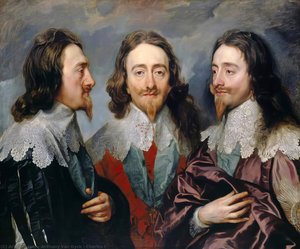
Charles I in Three Positions - Sir Anthony van Dyck
 Charles I in Three Positions - Sir Anthony van Dyck
There is a profound, rhythmic energy in Charles I in Three Positions by Sir Anthony van Dyck that feels almost cinematic. It isn't just a portrait; it is a masterclass in perspective, acting as a visual study that captures the King from three distinct angles—profile, face-on, and three-quarter view. As you move past this piece, you realize Van Dyck wasn't just painting a monarch; he was creating a blueprint for immortality. The way the light dances across the delicate lace collars and deep, velvety shadows creates a chiaroscuro effect that breathes life into the canvas.
Imagine this dramatic interplay of light and dark in your own home. This masterpiece served as a vital reference for the sculptor Bernini, proving that Van Dyck’s brushstrokes held the power to shape stone itself. The rich palette of earthy browns, deep blacks, and luminous creams brings a sense of regal sophistication and historical weight to any room. To hang this work is to invite a piece of the Baroque era's soul into your space, reminding you that true elegance is timeless.
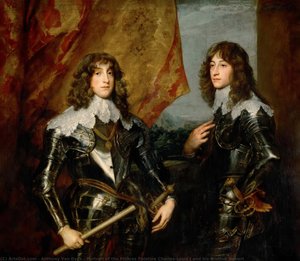
Portrait of the Princes Palatine Charles-Louis I and his Brother Robert - Sir Anthony van Dyck
 Portrait of the Princes Palatine Charles-Louis I and his Brother Robert - Sir Anthony van Dyck
In the Portrait of the Princes Palatine Charles-Louis I and his Brother Robert , Sir Anthony van Dyck captures a moment where royal duty meets the quiet intimacy of brotherhood, frozen in a breathtaking dance of light and shadow. This masterpiece earns its place among the top 25 artworks of Sir Anthony van Dyck through its unparalleled ability to blend the formidable strength of the Baroque era with an unmistakable, refined elegance. As you gaze upon the polished steel of their engraved armor, you can almost feel the cool weight of the metal against the warmth of the rich, crimson drapery that surrounds them.
Van Dyck uses dramatic chiaroscuro to sculpt these young figures from the darkness, creating a sense of three-dimensional vitality that breathes life into the canvas. For the modern collector, this painting is more than a historical record; it is an infusion of prestige and sophisticated drama. Whether placed in a grand hallway or a curated study, its deep tonal range and luxurious textures provide a commanding focal point, bringing a timeless sense of nobility and architectural depth to any contemporary interior.
Self-Portrait - Sir Anthony van Dyck
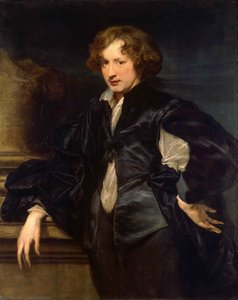 Self-Portrait - Sir Anthony van Dyck
In the Self-Portrait of 1622, Sir Anthony van Dyck captures a moment where youthful ambition meets the quiet gravity of a master in the making. This piece holds its place among the top 25 artworks of Sir Anthony van Dyck because it serves as a profound window into the artist's soul before he became the definitive painter of European royalty. There is a captivating tension in his direct gaze, an invitation to witness the birth of a legend.
The painting breathes with a sophisticated, muted palette; deep blacks and rich browns of his textured attire create a sense of dignified restraint, while subtle highlights on the fabric whisper of the luxurious textures he would later master. The interplay of light and shadow—a nod to his mentor Rubens—shapes a face defined by confidence and grace. For the modern collector, bringing a reproduction of this masterpiece into a home introduces an air of timeless sophistication and intellectual depth. It is more than a likeness; it is an infusion of Baroque elegance that anchors a room with a sense of history and composed beauty.
Samson and Delilah - Sir Anthony van Dyck
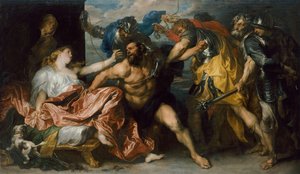 Samson and Delilah - Sir Anthony van Dyck
A single moment of deceptive stillness holds the breath of history in Samson and Delilah by Sir Anthony van Dyck. In this breathtaking scene from 1630, we are not merely observers of a biblical betrayal, but witnesses to the heavy, palpable tension between divine strength and human frailty. This masterpiece earns its place among the top 25 artworks of Sir Anthony van Dyck through its masterful use of chiaroscuro , where dramatic light sculpts the emotional landscape, illuminating the soft sheen of skin against the dark, looming shadows of treachery.
Van Dyck transcends simple storytelling, using the interplay of luxurious textures and psychological depth to explore the eternal struggle between trust and vulnerability. It is this profound emotional gravity—the way a single shadow can tell a story of broken covenants—that makes the work so enduringly influential. Today, the dramatic energy of this Baroque treasure serves as a sophisticated inspiration for modern interiors. By choosing a high-fidelity reproduction, you can bring this transformative, cinematic presence into your own home or private gallery, allowing the soulful light of the Old Masters to illuminate your personal space.
Deposition - Sir Anthony van Dyck
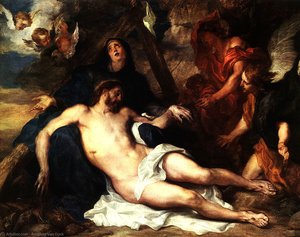 Deposition - Sir Anthony van Dyck
Step into the profound stillness of Sir Anthony van Dyck’s Deposition , where time itself seems to suspend in a moment of unparalleled spiritual gravity. Created in 1634, this masterpiece does not merely depict a historical event; it invites you to inhabit a shared experience of grief and reverence. As you stand before the canvas, notice how the artist didn’t just paint light—he composed it like a hauntingly beautiful sonata. Through a masterful use of chiaroscuro , Van Dyck sculpts the figures from deep, velvety shadows, using luminous highlights to catch the tearful expressions of Mary Magdalene and the soulful gaze of John the Apostle.
The way the light spills across the heavy, rich fabrics of Christ’s body creates a tactile, three-dimensional presence that feels almost within reach. This dramatic interplay of light and shadow directs the emotional pulse of the scene, turning a wall in your home into a portal of contemplation. It is this very alchemy—the ability to invent light to reveal the human soul—that secures its place among the top 25 artworks of Sir Anthony van Dyck.
Portrait of Mary Ruthven, wife of the artist - Sir Anthony van Dyck
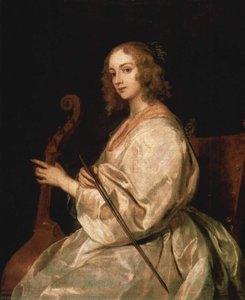 Portrait of Mary Ruthven, wife of the artist - Sir Anthony van Dyck
While many recognize Sir Anthony van Dyck for his grand depictions of kings, his 1640 Portrait of Mary Ruthven offers a breathtakingly intimate window into his private world. This masterpiece captures the artist's wife not just as a subject, but as a symbol of the social ascent achieved through their union. As you gaze upon her serene composure, notice how van Dyck utilizes dramatic chiaroscuro to sculpt her form; the soft light dancing off her white gown and the delicate strings of her violin creates a palpable sense of atmosphere.
The technical genius lies in his ability to blend the textures of luxurious fabric with loose, impressionistic brushstrokes that lend the scene an immediate, living warmth. This painting stands as one of the top 25 artworks of Sir Anthony van Dyck because it transcends mere likeness to tell a story of grace and quiet ambition. Bringing such a sophisticated interplay of light and shadow into your own study or home office can inspire a focused, dignified atmosphere, turning a workspace into a sanctuary of historical elegance and creative thought.
Virgin with Donors - Sir Anthony van Dyck
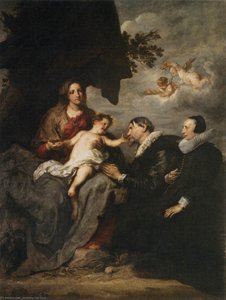 Virgin with Donors - Sir Anthony van Dyck
Imagine stepping into a quiet, candlelit chapel where the air feels heavy with reverence and the soft glow of divinity. In Virgin with Donors , Sir Anthony van Dyck captures this exact moment of profound spiritual connection. This masterpiece is far more than a religious icon; it is a breathtaking tableau of devotion, where the earthly meets the divine through the gaze of kneeling patrons.
As one of the top 2ical artworks of Sir Anthony van Dyck , this piece stands out for its exquisite use of light and sfumato . The Virgin Mary radiates an ethereal serenity, her luminous skin contrasting beautifully with the rich, textured drapery that defines the Baroque era. Van Dyck’s ability to blend the dramatic energy of Rubens with a newfound, delicate grace makes this work essential for any collection.
Bringing such a piece into your home—perhaps as a large-scale hand-painted oil reproduction —allows you to invite that same sense of tranquility and timeless elegance into your modern living space, turning a simple wall into a sanctuary of peace.
Saint Rosalie Interceding for the City of Palermo - Sir Anthony van Dyck
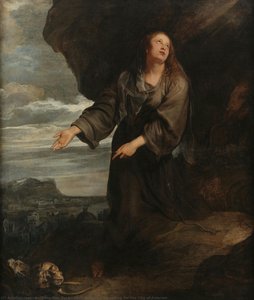 Saint Rosalie Interceding for the City of Palermo - Sir Anthony van Dyck
In Saint Rosalie Interceding for the City of Palermo , Sir Anthony van Dyck captures a profound moment where divine grace meets human desperation. This masterpiece stands as one of the most moving entries in our collection of the top 25 artworks of Sir Anthony van Dyck , offering a narrative that transcends mere religious devotion to touch upon the universal human need for hope during times of crisis. Painted amidst the harrowing plague in Sicily, the work utilizes a dramatic chiaroscuro to guide the viewer through a landscape of mortality and miracle.
The visual language is deeply evocative: the stark, skeletal remains serve as a somber memento mori, while the golden light bathing Saint Rosalie symbolizes a celestial shield over the distant, suffering city. Today, this interplay of shadow and luminous warmth resonates deeply in modern interior design, where collectors seek pieces that provide emotional depth and a sense of sanctuary. Van Dyck’s ability to weave Baroque symbolism —from the purity of the white lily to the rugged mountainous backdrop—creates a timeless atmosphere of resilience that continues to captivate the contemporary eye.
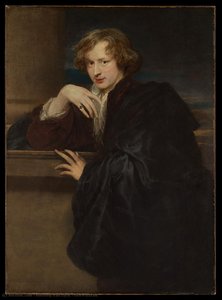
Untitled (D2X2RT) - Sir Anthony van Dyck
When you gaze upon Untitled (D2X2RT) , you aren't just looking at a self-portrait; you are witnessing the very moment a master begins to compose his own legend. In this evocative work from 1620, the light doesn't simply fall upon Van Dyck—it seems to emerge from within him. The artist uses light as a silent language, casting soft, diffused glows across his black robes to create a sense of profound, introspective depth.
As you explore this piece, notice how the subtle glint of a ring and the delicate drape of a necklace serve as quiet whispers of nobility and status. The muted palette of deep browns and blacks creates an atmosphere of solemn dignity, making the luminous highlights on his face feel like a sudden revelation in a darkened gallery. It is this masterful interplay of shadow and brilliance that secures its place among the top 25 artworks of Sir Anthony van Dyck. Bringing this sense of Baroque elegance into your home transforms a simple wall into a portal of historical grace and quiet, commanding inspiration.
Genoese Noblewoman - Sir Anthony van Dyck
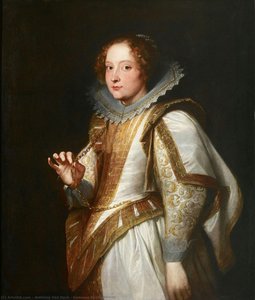 Genoese Noblewoman - Sir Anthony van Dyck
To stand before Genoese Noblewoman is to witness the breathtaking tactile mastery of Sir Anthony van Dyck at the height of his Italian sojourn. As you lean in, the eye is immediately captured by the luminous interplay of light and shadow—a masterful use of chiaroscuro that sculpts the subject from the darkness. One can almost feel the weight of the heavy, embroidered silks and the delicate, crisp texture of the black lace adorning her neckline. Van Dyck’s brushwork here is nothing short of revolutionary; he moves beyond mere likeness to capture the very soul of Genoese grandeur through rich, layered textures and a sophisticated tonal range.
This painting earns its place among the top 25 artworks of Sir Anthony van Dyck by embodying the transition from Rubens' energy to a new, refined elegance. At ArtsDot.com, we strive to bring this same three-dimensional depth into your home. Our handmade oil reproductions are meticulously crafted on cotton canvas, ensuring that every visible brushstroke and opulent detail of this Baroque masterpiece is preserved, allowing you to experience the true, tactile spirit of the original in your own curated space.
Venus in der Werkstatt des Vulkan (Thetis empfängt von Hephaistos die Waffen für Achill) - Sir Anthony van Dyck
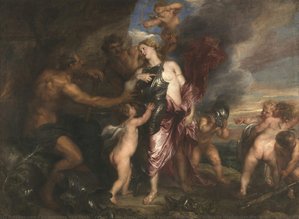 Venus in der Werkstatt des Vulkan (Thetis empfängt von Hephaistos die Waffen für Achill) - Sir Anthony van Dyck
Stepping into Venus in der Werkstatt des Vulkan is like walking into the heat of a divine heartbeat. In this breathtaking scene, Sir Anthony van Dyck captures more than just a mythological event; he captures the breathless tension of destiny. As Thetis receives the celestial armor for Achilles, we feel the weight of heroic legacy through the flickering light of Hephaestus’s forge. It is a masterclass in Baroque drama, where the glint of polished shields and the deep, velvety shadows create an atmosphere of organized, divine chaos.
This work earns its place among the top 25 artworks of Sir Anthony van Dyck because of its unparalleled ability to blend the monumental with the intimate. The rich palette of burnished golds and deep crimsons breathes life into every nymph and angel present. At ArtsDot.com, we believe such profound beauty should be accessible to every home. Our hand-painted oil reproductions meticulously preserve Van Dyck’s signature brushstrokes and the luminous chiaroscuro , allowing you to invite this sense of historical grandeur and emotional depth into your own living space.
Rinaldo and Armida - Sir Anthony van Dyck
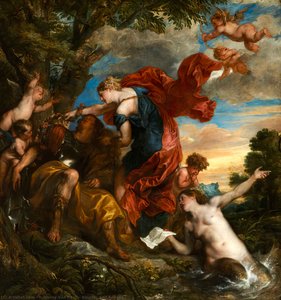 Rinaldo and Armida - Sir Anthony van Dyck
In Rinaldo and Armida , the brushstrokes of Sir Anthony van Dyck aren’t merely applied; they are choreographed . This 1629 masterpiece is not just a composition; it is a dance frozen in time , capturing the precise moment where enchantment meets duty. As you gaze upon the sorceress Armida, draped in flowing, crimson fabrics that seem to pulse with life, you feel the magnetic pull of her power. Van Dyck utilizes a breathtaking chiaroscuro technique, where dramatic highlights dance against deep, velvety shadows, creating a theatrical stage for the knight Rinaldo.
The scene is alive with movement—swirling drapery, expressive gestures, and playful putti that guide your eye through a landscape of passion and myth. The rich palette of golds, deep blues, and fiery reds brings an unparalleled opulence to the canvas. What if your own home could hold this same exquisite balance? Imagine a space where your walls breathe rhythm and emotion, much like this pinnacle of Baroque drama. It is a profound exploration of human feeling that transforms any room into a curated gallery of historical significance.
Frans Snyders - Sir Anthony van Dyck
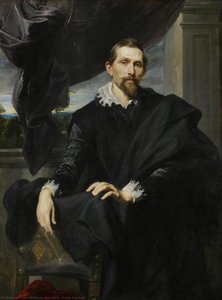 Frans Snyders - Sir Anthony van Dyck
What if I told you that Frans Snyders by Sir Anthony van Dyck was born from a moment of profound social aspiration—a stroke of brilliance designed to capture the very essence of prestige? This masterpiece is far more than a mere likeness; it is a carefully orchestrated performance of status. Its inclusion in our Top 25 is essential, as it showcases Van Dyck’s early ability to use chiaroscuro and luxurious textures to transform a portrait into a visual manifesto of success.
In this work, the dramatic interplay of light against Snyders’ somber black attire and crisp white collar creates a sculptural depth that feels incredibly modern. Every brushstroke celebrates the tactile reality of the Baroque era, from the heavy drapery to the soft, luminous skin tones. At ArtsDot.com, we believe such profound history should be part of your daily life. Imagine this painting commanding attention in your study or hallway, turning a simple wall into a sophisticated statement of elegance. It is not just decor; it is an invitation to surround yourself with the timeless grace of the Flemish Masters.
Pentecost - Sir Anthony van Dyck
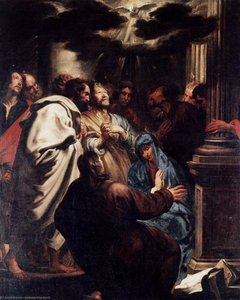 Pentecost - Sir Anthony van Dyck
In Pentecost by Sir Anthony van Dyck, the eye is immediately drawn to the luminous, tactile quality of the light as it descends upon the apostles. One can almost feel the weight of the heavy, richly textured drapery and the subtle, velvety shadows that define this early Baroque masterpiece. Van Dyck utilizes a masterful chiaroscuro , where the dramatic contrast between deep, atmospheric tones and radiant highlights creates a sense of divine movement. The brushwork captures the profound emotion of the scene—the awe, the reverence, and the spiritual awakening—rendering the textures of skin and fabric with an almost palpable realism.
This painting stands as a vital entry in our collection of the top 25 artworks of Sir Anthony van Dyck because it showcases his transition from Rubens’s robust energy to his own signature elegance. At ArtsDot.com, we are dedicated to preserving this tactile, three-dimensional quality . Our hand-painted oil reproductions are meticulously crafted on cotton canvas, ensuring that the visible brushstrokes and deep tonal ranges of Van Dyck’s original vision are brought into your home, allowing you to experience the true soul of the Baroque era.
Margareta de Vos - Sir Anthony van Dyck
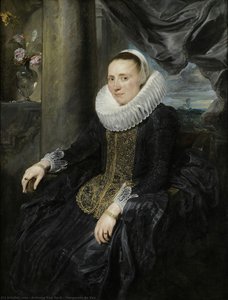 Margareta de Vos - Sir Anthony van Dyck
Long before he became the celebrated painter to King Charles I, a young Sir Anthony van Dyck was already mastering the art of capturing the soul behind the status. In 1620, in his native Flanders, he painted Margareta de Vos , a work that serves as a breathtaking window into early 17 even-century prosperity. This portrait is far more than a simple likeness; it is a technical triumph where Van Dyck uses light to weave a story of quiet dignity.
The true genius lies in the foreground, where a glass vase overflows with blossoms. Here, Van Dyck’s brushwork achieves a virtuosic shimmer, using buttery yellows and deep blues to mimic the way light refracts through water and petals. This mastery of texture and luminous color makes it one of the top 25 artworks of Sir Anthony van Dyck . The painting's sense of controlled elegance and focused composition offers a perfect inspiration for a modern study; hanging such a piece creates an atmosphere of sophisticated calm and intellectual depth, ideal for a workspace designed for meaningful reflection.
Nicolas Lanier - Sir Anthony van Dyck
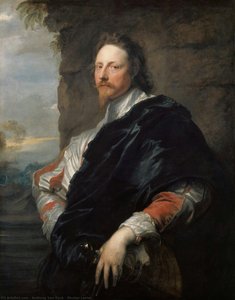 Nicolas Lanier - Sir Anthony van Dyck
There is a profound sense of quiet confidence that radiates from Nicolas Lanier , a portrait that captures more than just a face; it captures an era of effortless grace. In this 1628 masterpiece, Sir Anthony van Dyck invites us into the intimate world of the Stuart court, where every fold of dark silk and every subtle glint of light on a lace cuff whispers of sprezzatura —that coveted art of making the complex look easy. This work earns its place among the top 25 artworks of Sir Anthony van Dyck because of its breathtaking ability to blend the dramatic chiaroscuro of the Baroque era with a soulful, human vulnerability.
As you gaze upon the rich textures and the luminous, atmospheric landscape in the background, you can almost feel the weight of history. At ArtsDot.com, we believe this level of grandeur shouldn't be confined to museum walls. Our hand-painted oil reproductions are meticulously crafted to preserve these very details—the visible brushstrokes, the deep tonal range, and the emotional depth—allowing you to bring the sophisticated elegance of Van Dyck’s legacy into your own living space.
Jacqueline van Caestre - Sir Anthony van Dyck
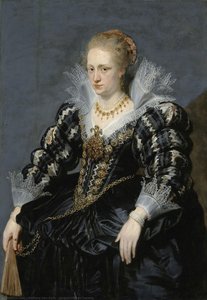 Jacqueline van Caestre - Sir Anthony van Dyck
In the Jacqueline van Caestre , we encounter a breathtaking moment of early Baroque mastery that transcends simple portraiture. Painted in 1622, this work serves as a profound study of how identity is woven through texture and light. Van Dyck does not merely paint a woman; he orchestrates a symphony of status, using the deep, lustrous blacks of her gown and the shimmering gold embroidery to narrate a story of Antwerp’s high society. The way the light dances across the delicate lace and pearls creates a sense of tactile intimacy that feels remarkably modern.
As one of the most captivating pieces among the top 25 artworks of Sir Anthony van Dyck , this portrait resonates with today’s design lovers who gravitate toward "quiet luxury" and monochromatic elegance. The dramatic chiaroscuro —that signature play of shadow and soft, ethereal glow—brings a soulful depth to any curated space, making it a timeless conversation piece. It is a masterful blend of regal composure and human vulnerability, proving why Van Dyck remains a cornerstone of fine art history.
Portrait of Anna Dalkeith, Countess of Morton, and Lady Anna Kirk - Sir Anthony van Dyck
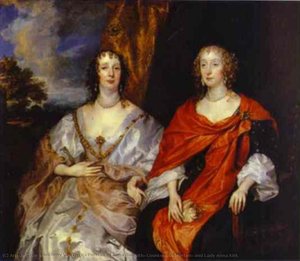 Portrait of Anna Dalkeith, Countess of Morton, and Lady Anna Kirk - Sir Anthony van Dyck
Step into a moment of quiet, aristocratic grace with Portrait of Anna Dalkeith, Countess of Morton, and Lady Anna Kirk by Sir Anthony van Dyck. This 1631 masterpiece does more than capture two faces; it weaves a narrative of dignity and lineage through the soft interplay of light and texture. As you gaze upon the rich, crimson velvet of the Countess’s gown contrasted against the luminous white silk of her daughter, you feel the pulse of 17th-century elegance. Van Dyck’s legendary use of chiaroscuro creates a soulful depth that breathes life into the subjects, making their presence feel almost tangible.
Included in our Top 25, this work exemplifies how Van Dyck redefined portraiture by capturing the inner character behind the noble exterior. At ArtsDot, we believe such profound beauty shouldn't be confined to the Hermitage; it belongs in your sanctuary. Whether you are drawn to the deep tonal range of a handmade oil reproduction or the crisp detail of a fine print, bringing this piece into your home transforms a simple wall into a curated gallery of history and emotion.
The Lamentation - Sir Anthony van Dyck
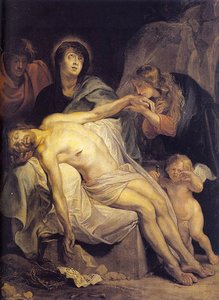 The Lamentation - Sir Anthony van Dyck
Step into a moment of profound, hushed sorrow with The Lamentation . Painted in 1620 during Van Dyck’s formative years in Italy, this masterpiece captures the heavy, breathless stillness following the crucifixion. The scene is a symphony of Baroque emotion, where the dramatic interplay of light and shadow—the classic chiaroscuro —illuminates the grief-stricken faces of the Virgin Mary and her companions against a dark, cavernous backdrop.
Van Dyck’s brushwork here is nothing short of cinematic; you can almost feel the weight of the heavy, crimson drapery and the rugged texture of the rocky landscape. The palette, rich with deep golds, somber browns, and blood reds, creates an atmosphere of sacred contemplation. As one of the most powerful works in the top 25 artworks of Sir Anthony van Dyck , this painting offers more than just historical significance. Its intense emotional depth and masterful use of light make it a breathtaking focal point for a home, inviting a sense of quiet prestige, reflection, and timeless drama into any curated space.
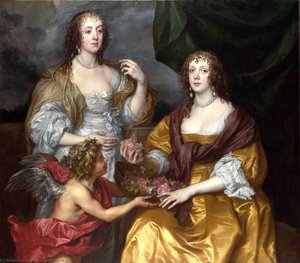
Lady Elizabeth Thimbelby and her Sister - Sir Anthony van Dyck
To experience Lady Elizabeth Thimbelby and her Sister by Sir Anthony van Dyck is to feel the very texture of the English Baroque. When you look closely at this masterpiece, the magic lies in the tactile interplay of light and pigment; notice how the artist’s brushwork breathes life into the heavy, luminous silks and the delicate, translucent petals of the flowers. Van Dyck’s revolutionary ability to blend deep, jewel-toned shadows with ethereal, glowing skin tones is precisely why this work stands among the top 25 artworks of Sir Anthony van Dyck . He does not merely paint figures; he weaves a celestial narrative where angels and earthly blossoms meet.
At ArtsDot.com, we believe such profound artistry should be felt, not just seen. Our hand-painted oil reproductions are meticulously crafted to preserve this three-dimensional quality , capturing every visible brushstroke and the rich, impasto depth of the original canvas. We bring this courtly grandeur into your home, ensuring the soulful, textured elegance of Van Dyck’s legacy remains a vibrant, tactile centerpiece for your collection.
Prince charles louis, count palatine - Sir Anthony van Dyck
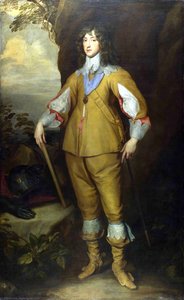 Prince charles louis, count palatine - Sir Anthony van Dyck
In Prince Charles Louis, Count Palatine , Sir Anthony van Dyck achieves a breathtaking structural harmony that secures its place among the top 25 artworks of Sir Anthony van Dyck . The composition is anchored by a masterful geometric balance; the verticality of the Prince’s poised figure is stabilized by the grounded, dark mass of the black bear at his side. This careful arrangement of shapes—the sharp lines of the white collar against the deep, velvety blues of the jacket—creates a sense of timeless perfection that draws the eye inward.
There is a profound, quiet rhythm in how Van Dyck utilizes light to sculpt the subject from the shadows, a technique that feels remarkably relevant to today’s modern minimalist design . Much like a clean, contemporary interior that relies on focal points and negative space, this portrait uses a balanced, uncluttered arrangement to ground its high drama. The interplay of the crisp textures and the soft, natural backdrop offers an enduring appeal, proving that true elegance lies in the perfect equilibrium between strength and grace.
The Vision of the Blessed Hermann Joseph - Sir Anthony van Dyck
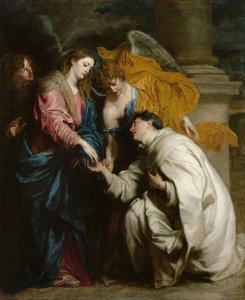 The Vision of the Blessed Hermann Joseph - Sir Anthony van Dyck
In the hallowed atmosphere of the Baroque era, few works capture the intersection of human humility and divine splendor as poignantly as The Vision of the Blessed Hermann Joseph . As one of the most profound entries in our collection of the top 25 artworks of Sir Anthony van Dyck , this 1630 masterpiece serves as a window into a mystical realm where the earthly and celestial dissolve. Van Dyck moves away from the muscular dynamism of Rubens to embrace a more nuanced, intimate path, using sophisticated broken color to create a luminous, breathing encounter.
There is a gaze in this painting that follows you—not with judgment, but with understanding . As you observe the monk’s kneeling posture and the soft, ethereal light dancing upon the angelic figures, the work becomes more than a religious depiction; it becomes a mirror for your own moments of quiet reflection. Imagine this celestial encounter in your home, not merely as decor, but as a gentle reminder that even in stillness, we are part of a much larger, beautiful story.
Emperor Theodosius Forbidden by St Ambrose To Enter Milan Cathedral - Sir Anthony van Dyck
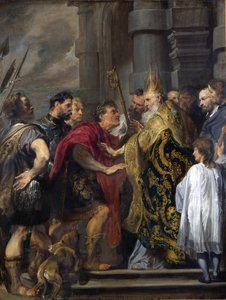 Emperor Theodosius Forbidden by St Ambrose To Enter Milan Cathedral - Sir Anthony van Dyck
In Emperor Theodosius Forbidden by St Ambrose To Enter Milan Cathedral by Sir Anthony van Dyck, the drama is ignited by a masterful command of chiaroscuro. The light does not merely illuminate; it sculpts the tension between imperial might and spiritual authority. As shadows pool around the gathered figures, a piercing glow catches the textures of fine fabrics and the weathered expressions of the onlookers, pulling you directly into this pivotal historical confrontation. This sophisticated interplay of light and shadow is precisely why this work remains a cornerstone of the top 25 artworks of Sir Anthony van Dyck .
When brought into a modern home as a hand-painted oil reproduction, this painting offers more than just a historical window; it provides an atmospheric anchor. The deep tonal range and dramatic highlights create a sense of movement and luxury, adding profound architectural depth to a contemporary room. Whether placed in a quiet study or a grand hallway, the painting’s ability to manipulate mood through light ensures it remains a captivating conversation piece for any discerning collector.
The Wife and Daughter of Colyn de Nole - Sir Anthony van Dyck
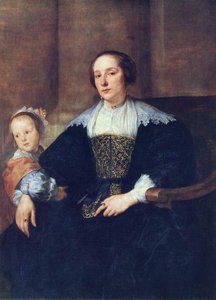 The Wife and Daughter of Colyn de Nole - Sir Anthony van Dyck
To encounter The Wife and Daughter of Colyn de Nole is to step into a private moment of Baroque splendor, an unveiling of pure, aristocratic grace that secures its place among the top 25 artworks of Sir Anthony van Dyck. This masterpiece does not merely record faces; it captures a profound sense of lineage and quiet dignity. Van Dyck utilizes his legendary mastery of light to sculpt the textures of the scene—the shimmering sheen of silk, the intricate delicacy of lace, and the rich, deep blacks of the mother’s gown that command the room.
For the modern collector, this painting offers more than historical value; it brings a sense of timeless luxury and emotional depth to a curated space. The subtle interplay of chiaroscuro creates an atmosphere of intimacy that resonates beautifully in sophisticated, contemporary interiors. As you gaze upon the poised connection between mother and child, you witness the very essence of Van Dyck’s ability to transform a portrait into a lasting legacy of elegance and human connection.
Lucas van Uffel (died 1637) - Sir Anthony van Dyck
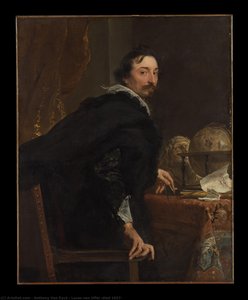 Lucas van Uffel (died 1637) - Sir Anthony van Dyck
In the quiet depths of Sir Anthony van Dyck’s 1622 masterpiece, Lucas van Uffel , we encounter more than a mere likeness; we step into a meticulously curated world of intellectual fervor and Baroque elegance. Painted during his formative years, this portrait breathes with the vibrant energy of the High Renaissance. Through the masterful application of chiaroscuro , Van Dyck orchestrates a dramatic interplay of light and shadow, pulling the viewer into a richly textured interior where every flicker of candlelight illuminates the essence of human curiosity.
The composition is a symphony of textures—the heavy black of the subject's coat contrasts sharply with the luminous white of his shirt, creating a focal point of profound gravitas. Scattered across the table, a celestial globe, books, and musical instruments act as symbols of the humanist spirit , suggesting a life dedicated to science and song. For those looking to elevate a modern study or library, this painting offers an air of timeless prestige, providing a sophisticated anchor that inspires reflection and deep, quiet creativity.
Conclusion
As the light fades on our journey through these magnificent canvases, we are left with more than just a list of names and dates; we carry with us the lingering gaze of kings, the soft shimmer of silk, and the quiet dignity of souls captured in moments of eternal grace. To walk through the world of Sir Anthony van Dyck is to realize that his brush did not merely record faces, but breathed life into the very essence of nobility and human emotion. These masterpieces are not relics frozen in the amber of history, tucked away in silent galleries; they are living, breathing presences that continue to whisper beauty into our modern lives, finding new homes on our walls and new meaning in our hearts.
Whether it is the dramatic interplay of shadow in a Baroque portrait or the effortless elegance of a royal pose, van Dyck’s legacy invites us to slow down, to notice the texture of light, and to find inspiration in the timeless connection between art and the human spirit. As you move forward from this virtual gallery into your own daily life, may you carry that same sense of wonder with you, perhaps finding a way to bring a touch of this historical splendor into your own sanctuary. We invite you to continue your discovery and explore the full collection , where the grandeur of the past meets the warmth of your home.