The Genesis of Genius: Dürer’s Early Life and Apprenticeship
The Northern Renaissance was the Renaissance that occurred in Europe north of the Alps, developing later than the Italian Renaissance, and in most respects only beginning in the last years of the 15th century. It took different forms in the various c...
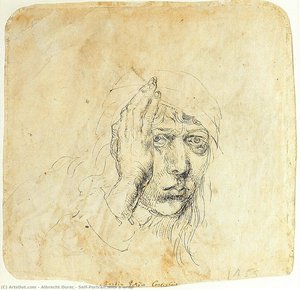
Nuremberg, a bustling hub of commerce and craftsmanship in the late 15th century, provided fertile ground for the blossoming talent of Albrecht Dürer. Born in 1471 to a goldsmith father, young Albrecht was initially destined to follow in his family’s footsteps – a path steeped in precision and meticulous detail. However, even from childhood, an extraordinary aptitude for drawing quickly became apparent, shifting the trajectory of his life towards the realm of artistic expression. His earliest surviving silverpoint self-portrait, created at the astonishing age of thirteen, is not merely a testament to precocious skill; it’s a poignant declaration of nascent self-awareness and a commitment to capturing the world with unwavering accuracy. This early work foreshadows the profound introspection that would characterize his later oeuvre.
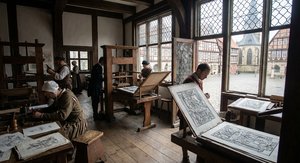
Dürer's formal training began in 1486 under Michael Wolgemut, Nuremberg’s leading artist at the time. Wolgemut’s workshop was a dynamic environment, producing a wide array of art, most notably woodcut illustrations for books – a burgeoning industry fueled by the city’s thriving printing presses. The experience proved invaluable, exposing Dürer to the technical demands of reproduction and the power of visual storytelling. His godfather, Anton Koberger, a former goldsmith turned successful publisher, played an indirect but significant role, commissioning works that further honed Dürer's skills. The monumental Nuremberg Chronicle, illustrated largely by Wolgemut’s workshop during Dürer’s apprenticeship, offered a glimpse into the possibilities of woodcut as a powerful medium for disseminating knowledge and imagery.
Though his father initially envisioned a secure future in goldsmithing, Albrecht's passion proved undeniable. The decision to pursue art was not simply a matter of personal inclination; it represented a burgeoning recognition of his unique talent – a gift that would soon transcend the boundaries of local renown and establish him as a leading figure on the European stage.
A Fusion of Worlds: Italian Influences on Northern Renaissance Art
The late 15th century witnessed a growing exchange between the artistic traditions of Italy and Northern Europe. While the Italian Renaissance championed classical ideals of beauty, harmony, and anatomical precision, Northern artists like Dürer brought a distinct sensibility to their work – one characterized by meticulous realism, intricate detail, and a profound interest in symbolism. Dürer’s journey to Italy in 1494 marked a pivotal moment in his artistic development, exposing him to the works of masters such as Raphael, Giovanni Bellini, and Leonardo da Vinci.
This wasn't merely an act of imitation; Dürer didn’t simply replicate Italian styles. Instead, he synthesized these influences with the existing Northern traditions, forging a unique artistic language that blended classical principles with his inherent penchant for detail and observation. He absorbed the Italian emphasis on perspective, anatomy, and composition, but infused it with a distinctly German sensibility – a focus on emotional depth and psychological realism. His travels broadened his understanding of art theory and technique, providing him with the tools to elevate printmaking from a craft-based practice to a respected fine art form.
The impact of Italian humanism also resonated deeply with Dürer. The renewed interest in classical literature, philosophy, and science fueled a desire for intellectual exploration and a celebration of individual potential – themes that would become central to his work. This fusion of Northern realism and Italian idealism is what sets Dürer apart, establishing him as a truly unique figure in the Renaissance landscape.
Mastering the Medium: Dürer’s Innovations in Printmaking
 Wikipedia: Albrecht Dürer
Albrecht Dürer ( DURE-ər, German: [ˈalbʁɛçt ˈdyːʁɐ]; 21 May 1471 – 6 April 1528), sometimes spelled in English as Durer or Duerer, was a German painter, printmaker, and theorist of the German Renaissance. Born in Nuremberg, Dürer established his repu...
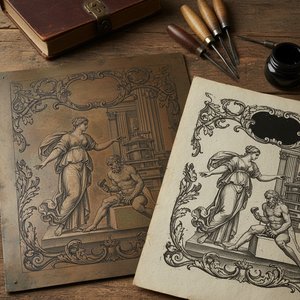
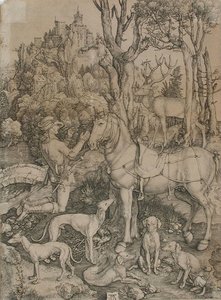
Albrecht Dürer revolutionized printmaking, elevating it from a relatively minor art form to one of the most significant artistic mediums of his time. While woodcut held an important place in Northern European art, it was Dürer's mastery of engraving that truly transformed the landscape. Engraving, with its ability to create incredibly fine lines and subtle tonal variations, allowed for a level of detail previously unattainable in woodcuts.
His technical prowess was unparalleled. He meticulously controlled every aspect of the process – from the preparation of the copper plate to the precise application of the burin, the tool used to carve the image into the metal. This painstaking attention to detail resulted in prints of extraordinary clarity and expressiveness. Works like Melencolia I (1514) demonstrate his mastery of tonal range and symbolic complexity, showcasing a depth of psychological insight rarely seen in earlier printmaking.
Dürer didn’t simply refine existing techniques; he invented new ones. He experimented with drypoint, a technique that created a softer, more velvety line, and developed innovative methods for cross-hatching and stippling to achieve nuanced shading effects. His prints were not merely reproductions of paintings or drawings; they were original works of art in their own right – accessible to a wider audience than ever before. This democratization of art was a significant achievement, allowing his ideas and imagery to spread rapidly across Europe.
Beyond Technique: Symbolism, Humanism, and Intellectual Depth in Dürer’s Works
 The Enduring Legacy of Renaissance Art: Innovation, Humanism & Mastery
Explore the enduring legacy of Renaissance art! Discover its historical context, humanist ideals, iconic masterpieces, and lasting influence on Western art with .
While Dürer's technical skill is undeniable, it is the intellectual depth and symbolic richness of his work that truly sets him apart. His art wasn’t merely about depicting the world accurately; it was about exploring profound philosophical questions, religious beliefs, and the complexities of human existence. His engravings are often laden with symbolism, drawing upon a wide range of sources – from classical mythology to biblical narratives to contemporary scientific knowledge.
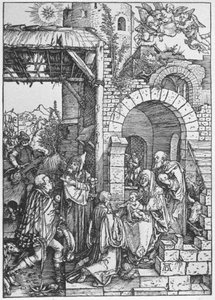
The Revelation of St John: 14. The Whore of Babylon (1497) is a prime example of his symbolic prowess. This intricate woodcut, part of a series illustrating the Book of Revelation, is not simply a depiction of biblical imagery; it’s a complex allegory exploring themes of sin, corruption, and divine judgment. Similarly, The Adoration of the Magi (1511) is rich with symbolic details – from the carefully chosen animals to the architectural elements – each element contributing to a deeper understanding of the scene's religious significance.
Dürer’s humanist beliefs also permeate his work. He celebrated human reason, individual potential, and the beauty of the natural world. His self-portraits, in particular, reflect this intellectual curiosity and a desire for self-understanding. He wasn’t simply documenting his physical appearance; he was exploring his own identity as an artist, scholar, and man of faith.
The Self-Portrait as Artistic Statement: Exploring Dürer’s Iconic Representations
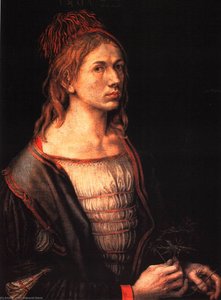
Albrecht Dürer elevated the self-portrait to a new level of artistic significance. Unlike earlier representations that often served merely as records of appearance, Dürer's self-portraits are profound statements about his identity, status, and artistic aspirations. His earliest surviving self-portrait, created at age thirteen, is remarkable for its precocious skill and introspective gaze. However, it’s his later self-portraits – particularly those from 1500 – that truly capture the essence of his artistic persona.
In these iconic images, Dürer presents himself as a confident and dignified figure, often dressed in elegant attire and holding symbolic objects. The 1500 self-portrait, with its symmetrical composition and Christ-like pose, is particularly striking. The meticulous detail of his clothing and facial features conveys a sense of authority and intellectual refinement. This wasn’t simply vanity; it was a deliberate attempt to establish himself as a respected artist – a scholar and gentleman rather than merely a craftsman.
His self-portraits also reflect his fascination with the human form and his desire for self-understanding. He meticulously studied his own features, capturing not only his physical appearance but also his inner emotions and psychological state. These images are not simply representations of Dürer; they’re explorations of identity, mortality, and the role of the artist in society.
Dürer’s Enduring Legacy: Impact and Influence on Subsequent Artists
Albrecht Dürer's influence on subsequent generations of artists is immeasurable. His innovations in printmaking revolutionized the medium, making high-quality art accessible to a wider audience than ever before. His meticulous technique, symbolic complexity, and intellectual depth set a new standard for artistic excellence.
Artists across Europe – from Lucas van Leyden in the Netherlands to Hendrick Goltzius in the Dutch Republic – were deeply influenced by his work. They emulated his engraving techniques, adopted his compositional strategies, and drew inspiration from his symbolic imagery. His theoretical treatises on perspective and proportion became essential texts for aspiring artists, shaping their understanding of art theory and technique.
Even today, Dürer’s legacy continues to resonate. His works are celebrated in museums around the world, inspiring awe and admiration in viewers centuries after his death. He remains a pivotal figure in the history of art – a testament to the power of artistic innovation, intellectual curiosity, and unwavering dedication to craft. Explore the masterpieces of Albrecht Dürer at ArtsDot.com, where you can discover high-quality reproductions