The Rise of Neoclassicism: A Reaction Against Rococo Excess
The late eighteenth century witnessed a profound shift in artistic sensibilities, a deliberate turning away from the ornate frivolity of the Rococo period towards a renewed appreciation for the classical world – a movement we now know as Neoclassicism. For decades, European art had been dominated by pastel hues, playful themes, and an emphasis on aristocratic indulgence. But beneath the surface of this decorative style lay a growing discontent, a yearning for moral gravitas and intellectual rigor. The rediscovery of Pompeii and Herculaneum in 1738 and 1748 ignited a passion for ancient Greece and Rome, not merely as sources of aesthetic inspiration but as models for civic virtue and philosophical clarity. This wasn’t simply about copying forms; it was about embodying the perceived ideals of classical civilization – order, reason, and harmony. Artists began to look to antiquity for subject matter, embracing stories of heroism, sacrifice, and duty. The resulting works weren't merely beautiful objects but were intended as powerful statements about human potential and societal values. This intellectual climate provided fertile ground for a sculptor who would come to define the era: Antonio Canova.
Canova’s Early Life & Influences: From Possagno to Venice
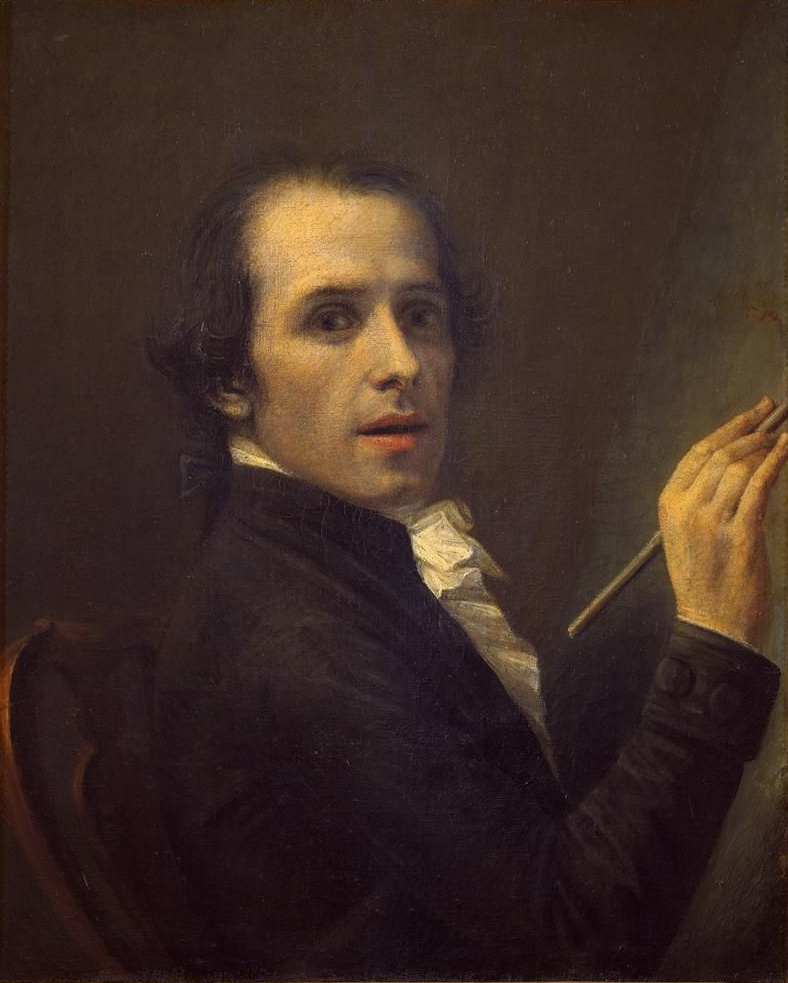 Wikipedia: Antonio Canova
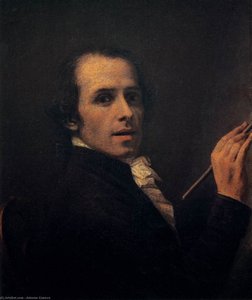
Antonio Canova (Italian pronunciation: [anˈtɔːnjo kaˈnɔːva]; 1 November 1757 – 13 October 1822) was an Italian Neoclassical sculptor, famous for his marble sculptures. Often regarded as the greatest of the Neoclassical artists, his sculpture was insp...
Born in 1757 in the small Venetian town of Possagno, Antonio Canova's artistic journey began not within the grand academies of Europe but amidst the workshops and quarries of his family. His grandfather, Pasino Canova, a stonemason with a penchant for Baroque sculpture, instilled in him a foundational understanding of materials and techniques. Early exposure to carving marble proved pivotal; even as a child, he demonstrated an extraordinary aptitude for shaping stone, creating small shrines that hinted at the talent to come. This early training wasn’t solely focused on imitation but on mastering the physical demands of the craft – the precise handling of tools, the understanding of form and texture. At fourteen, Canova moved to Venice, apprenticing first with Giuseppe Bernardi and later Giovanni Ferrari. Venice itself was a crucible of artistic exchange, exposing him to a wider range of influences and fostering his ambition. However, it was his decision to travel extensively throughout Italy – Bologna, Florence, Rome, and Naples – that truly solidified his direction. Witnessing the masterpieces of antiquity firsthand, studying both celebrated sculptures and newly excavated finds, proved transformative. He meticulously documented his observations in detailed notebooks, absorbing the principles of classical proportion, anatomy, and composition.
Mastering Marble: Canova’s Technique and Sculptural Innovations
Canova's reputation rests not only on his artistic vision but also on his unparalleled technical skill. He didn’t simply replicate classical forms; he *reimagined* them with a level of refinement previously unseen. His mastery of marble was legendary, achieving a smoothness and luminosity that seemed to imbue the stone with life itself. Unlike many sculptors who relied heavily on assistants for preliminary work, Canova personally oversaw every stage of the process, from the initial selection of the block to the final polishing. He employed innovative techniques – using multiple rasps and abrasives to achieve subtle gradations in texture, carefully controlling light and shadow to create a sense of depth and volume. He was also a pioneer in the use of *non finito* – deliberately leaving portions of the sculpture unfinished, suggesting an ongoing process of creation and inviting viewers to participate in the work’s completion. This wasn't merely about showcasing his skill; it was about conveying a sense of immediacy and emotional vulnerability. He understood that marble, despite its inherent coldness, could be made to express warmth, passion, and even pain.
Myth, Emotion, and Idealism: Exploring Key Works – Cupid & Psyche, The Graces, and Papal Monuments
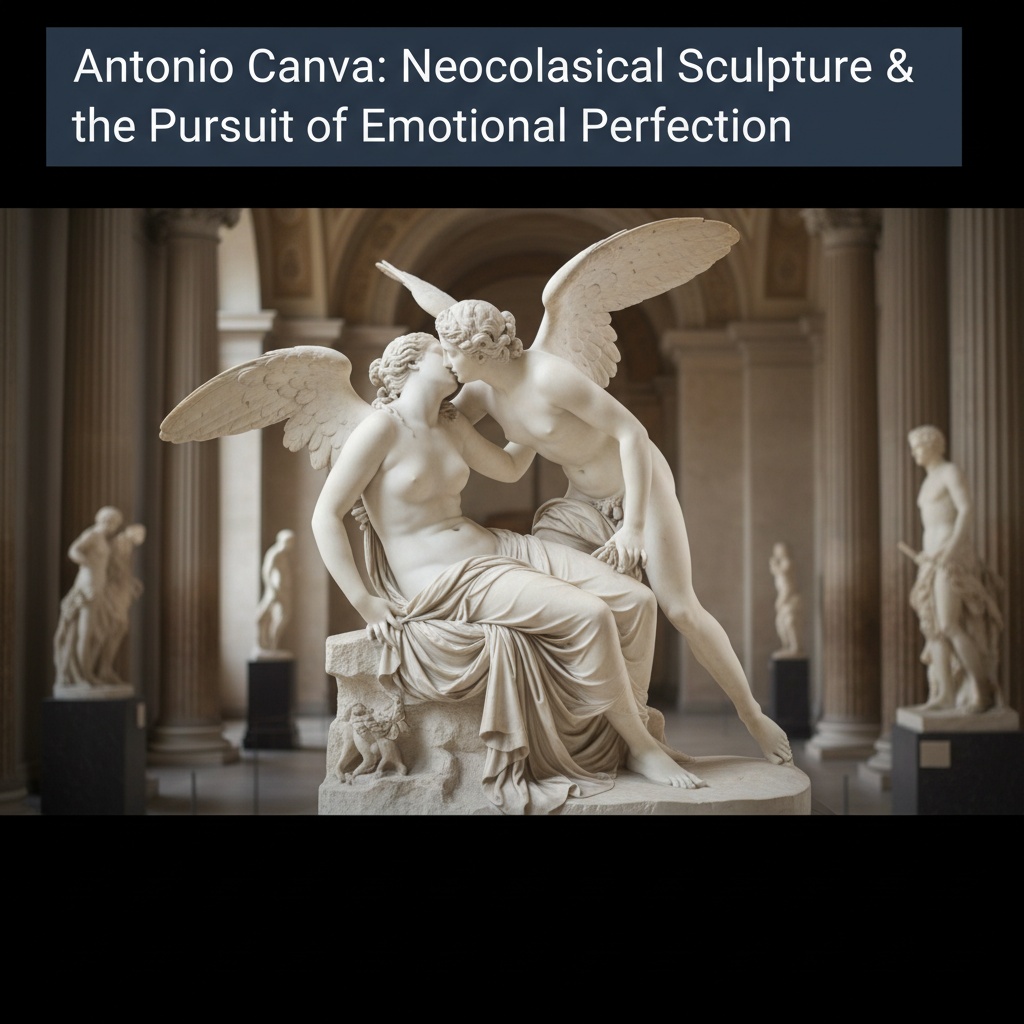
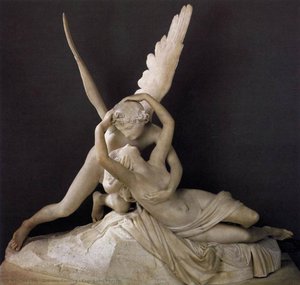
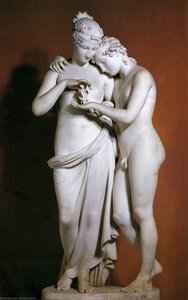
Canova’s oeuvre is populated with figures drawn from classical mythology, reimagined not as static representations of ancient tales but as embodiments of universal human emotions. His *Cupid and Psyche* (1787-93) exemplifies this approach. The sculpture captures the poignant moment when Cupid awakens Psyche with a kiss, conveying a profound sense of tenderness and longing. It’s not simply a depiction of a love story; it's an exploration of the power of affection to overcome adversity. Similarly, *The Graces* (1803-17) – three sisters representing beauty, charm, and elegance – embodies Canova’s ideal of feminine grace and harmony. The figures are intertwined in a delicate embrace, their forms radiating a sense of serene joy. Beyond mythological subjects, Canova also excelled at monumental works, particularly his funerary monuments for Pope Clement XIII (1783-92) and Clement XIV (1783-87). These ambitious projects showcased his ability to blend Baroque theatricality with Neoclassical restraint, creating powerful statements about faith, mortality, and the enduring legacy of the papacy. The allegorical figures – representing virtues like Religion and Prudence – are not merely decorative elements but integral components of a complex symbolic narrative.
Canova as a Cultural Icon: Patronage, Politics, and Lasting Legacy
Antonio Canova wasn’t simply an artist; he was a cultural phenomenon. His works were sought after by the most powerful patrons in Europe – royalty, nobility, and the papacy itself. He cultivated relationships with influential figures, navigating the complex political landscape of his time with remarkable skill. His sculptures weren't merely objects of aesthetic beauty; they were symbols of status, power, and refined taste. During the Napoleonic era, Canova even served as a diplomat for the Vatican, negotiating the return of stolen artworks from France. This demonstrates the immense respect he commanded – he was seen not just as an artist but as a representative of Italian culture itself. His influence extended far beyond his lifetime, shaping the course of sculpture throughout the 19th century and continuing to inspire artists today. He established a new standard for technical excellence and emotional expression, proving that marble could be more than just stone – it could be a vessel for profound human experience.
Collecting Canova Today: Investing in Timeless Beauty
For the discerning collector, acquiring a work by Antonio Canova represents not merely an investment but a connection to a pivotal moment in art history. While original sculptures are exceedingly rare and command astronomical prices, plaster casts from his studio – often authorized by the artist himself – offer a more accessible entry point into his world. These casts retain the exquisite detail and emotional power of Canova’s originals, providing a tangible link to his creative process. Beyond the aesthetic value, collecting Canova is an investment in timeless beauty and enduring cultural significance. His works continue to captivate audiences worldwide, gracing the halls of prestigious museums and private collections alike. ArtsDot.com offers high-quality reproductions of Canova’s masterpieces, allowing art enthusiasts to experience his genius firsthand. Whether you seek a stunning oil painting or a meticulously crafted print, exploring Canova's legacy is an invitation to immerse yourself in the world of Neoclassical sculpture and appreciate the enduring power of artistic vision. Explore our collection today and discover the beauty that has captivated generations.