Introduction
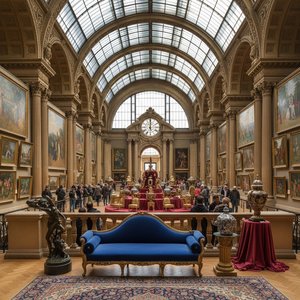
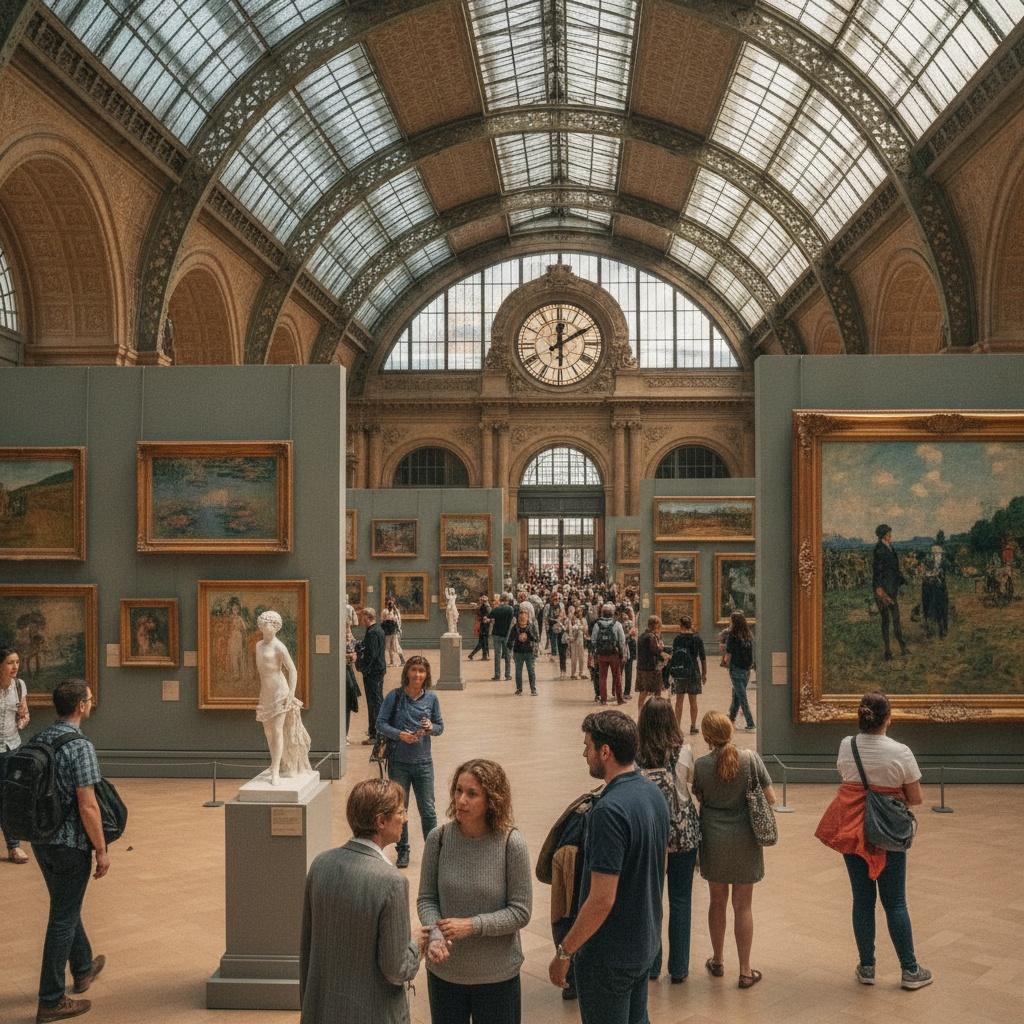
To step into the Musée d’Orsay is to enter a sanctuary where the industrial past and the artistic future collide. Once a bustling railway station, the Gare d’Orsay has been transformed into a luminous cathedral of light, where the iron and glass architecture serves as a breathtaking frame for the most revolutionary era of human creativity. Within these walls, the heavy atmosphere of the 19th century dissolves into the shimmering, sun-drenched textures of the Impressionist movement.
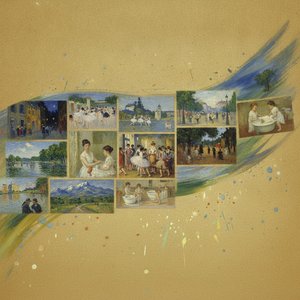
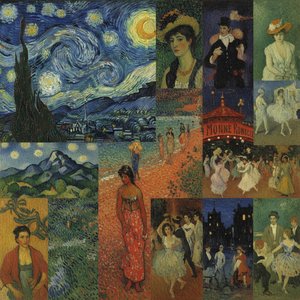
The twenty-five artworks featured in this collection represent more than just historical milestones; they are the heartbeat of a revolution that fundamentally altered how we perceive reality. Through the works of masters like Claude Monet , Edgar Degas , and Vincent van Gogh , we witness a shift from the rigid, academic traditions of the past toward an obsession with the fleeting moment—the way light dances across water, the rhythmic movement of a dancer, or the emotional weight of a single, expressive brushstroke. These paintings remain profoundly meaningful today because they capture the ephemeral nature of life itself, inviting us to find beauty in the transient and the atmospheric.
As we guide you through this curated selection, prepare to encounter works that define the very essence of modern art. Each piece in this list is a window into a world of color, light, and emotion, offering a journey through the galleries that shaped the visual language of the modern age.
Olympia - Édouard Manet
 Olympia - Édouard Manet
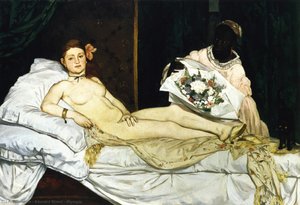
Acquiring Olympia by Édouard Manet is far more than an aesthetic choice; it is a profound investment in the legacy of modern art and a testament to a collector's discerning taste. As a definitive pillar among the top 25 artworks in Musée d'Orsay, Paris , this masterpiece holds immense historical influence, having shattered academic conventions with its raw, unapologetic realism. By replacing idealized goddesses with the stark reality of contemporary Parisian life, Manet created a work whose provenance and cultural impact remain unparalleled in the global art market.
The painting’s bold, flattened forms and provocative gaze offer a striking visual tension that continues to captivate. For those curating modern luxury interiors—from high-end hospitality suites to corporate galleries—a premium oil reproduction carries the same aesthetic authority and prestige as the original. Integrating such an iconic piece allows a space to command attention through its sheer historical weight and sophisticated, avant-garde spirit.
Arrangement in Grey and Black. Portrait of the Painter's Mother - James Abbott McNeill Whistler
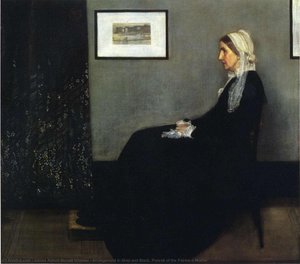 Arrangement in Grey and Black. Portrait of the Painter's Mother - James Abbott McNeill Whistler
In Arrangement in Grey and Black. Portrait of the Painter's Mother by James Abbott McNeill Whistler , the brilliance lies not in vibrant color, but in the masterful command of diffused light and subtle tonal gradations. The soft illumination gently sculpts the sitter’s profile against a somber, monochromatic backdrop, creating a profound sense of quiet dignity. This precise manipulation of light—a hallmark of Tonalism—was revolutionary, stripping away Victorian narrative to focus on pure aesthetic harmony. It is this very ability to evoke emotion through shadow that secures its prestigious position among the top 25 artworks in Musée d'Orsay, Paris . For the discerning decorator, a faithful reproduction of this work offers more than mere decoration; the interplay of deep blacks and muted greys introduces an architectural depth and a sense of timeless luxury to any contemporary wall, providing a sophisticated focal point that commands respect through its understated elegance.
Gare Saint Lazare, Pari - Claude Monet
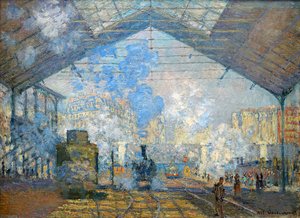 Gare Saint Lazare, Pari - Claude Monet
A pervasive, smoky blue defines Gare Saint Lazare, Paris by Claude Monet, casting an ethereal and atmospheric mood over the bustling station. This shade of steel and mist captures the very essence of industrial movement and transience. Monet’s mastery lies in his ability to blend these cool grays with sudden flickers of warm ochre and crimson, transforming a locomotive's steam into a luminous dance of light. This innovative use of color—prioritizing atmosphere over rigid form—is precisely why this piece remains a cornerstone among the top 25 artworks in Musée d'Orsay, Paris .
For those curating modern living or dining spaces, this painting offers a sophisticated way to introduce an industrial-chic aesthetic. The muted, tranquil palette can be used to anchor a room’s lighting, providing a sense of depth and calm that complements contemporary metallic accents or neutral textures, making it a versatile choice for high-end interior projects.
The Great Bathers (The Nymphs) - Pierre-Auguste Renoir
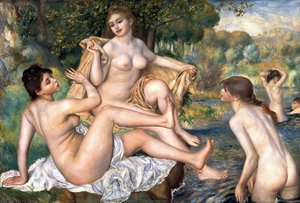 The Great Bathers (The Nymphs) - Pierre-Auguste Renoir
In The Great Bathers (The Nymphs) by Pierre-Auguste Renoir, the true protagonist is the dappled sunlight filtering through a lush canopy to dance upon the figures' skin. This masterful command of illumination—where soft, diffused light meets the shimmering textures of water and flesh—is precisely what secures its position among the top 25 artworks in Musée d'Orsay, Paris . Renoir moves beyond mere impression, using light to sculpt form, creating a luminous atmosphere that feels both eternal and fleeting. The interplay of warm peaches and cool greens, captured through delicate, broken brushstrokes, offers a profound sense of tranquility.
For the discerning decorator or collector, bringing a faithful oil reproduction of this masterpiece into a contemporary space does more than decorate; it introduces a sophisticated layer of depth and organic luxury. The way the light seems to emanate from within the canvas can transform a corporate suite or a private residence, adding a timeless, sun-drenched elegance that anchors any modern interior.
Two Women on the Beach - Eugène Henri Paul Gauguin
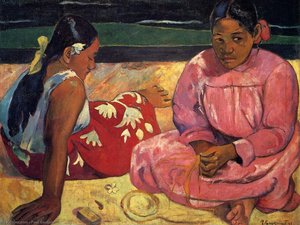 Two Women on the Beach - Eugène Henri Paul Gauguin
Gauguin’s Two Women on the Beach serves as a profound window into the Post-Impressionist revolution, capturing a pivotal moment when art moved from mere observation to deep, symbolic expression. As a cornerstone of the top 25 artworks in Musée d'Orsay, Paris, this piece exemplifies the radical shift toward Synthetism, where bold, flat planes of color and dark, Cloisonnist outlines replace traditional perspective. The canvas vibrates with a warm, tropical palette—rich ochres, deep reds, and sun-drenched pinks—that evokes an atmosphere of serene, quiet intimacy. Beyond its historical significance, the painting invites us to reflect on how perception can be shaped by emotion rather than just sight. Its striking use of color and simplified forms offers timeless inspiration for modern interiors, providing a soulful focal point that brings a sense of exotic mystery and structural strength to any curated collection.
Dance at the Moulin de la Galette - Pierre-Auguste Renoir
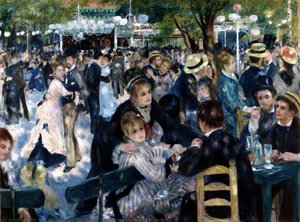 Dance at the Moulin de la Galette - Pierre-Auguste Renoir
Imagine a sun-drenched afternoon in Montmartre, where the air is thick with laughter and dappled light filters through swaying trees. This sense of vibrant, fleeting joy is captured perfectly in Dance at the Moulin de la Galette by Pierre-Auguste Renoir , a cornerstone of the top 25 artworks in Musée d'Orsay, Paris. Created in 1876, this masterpiece represents an artistic breakthrough, moving away from photographic realism toward the pure sensation of movement and atmosphere. Renoir employs a luminous palette of soft pinks, lavenders, and peaches, using broken brushstrokes to create a shimmering effect that mimics sunlight dancing on fabric. The composition is alive with the energy of Parisian social life, inviting viewers into a rhythmic, swirling world of leisure. Beyond its historical significance, the painting’s ability to evoke warmth and light makes it an enduring icon. It serves as a reminder of how profound art can transform any space, bringing a sense of timeless elegance and emotional depth to the modern environment.
The Card Players - Paul Cézanne
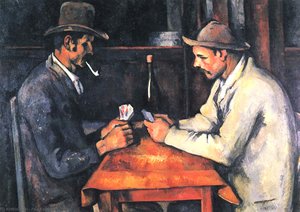 The Card Players - Paul Cézanne
Observing the thick, deliberate impasto of Paul Cézanne’s The Card Players , one immediately feels the physical weight of the medium. The surface is a landscape of earthy ochres and muted greys, where each visible brushstroke serves to build structural permanence rather than mere fleeting light. This masterpiece stands as a cornerstone among the top 25 artworks in Musée d'Orsay, Paris, because it marks the revolutionary shift from Impressionism toward the geometric foundations of Cubism. Cézanne’s ability to use color modulation to create volume transforms two simple peasants into sculptural, monumental figures.
At ArtsDot.com, our mission is to preserve this exact tactile, three-dimensional quality for the connoisseur's collection. Our hand-painted oil reproductions are meticulously crafted on cotton canvas to ensure the textured depth and heavy brushwork of the original are captured with precision, allowing the profound atmosphere of the Orsay to be seamlessly integrated into any high-end interior or professional space.
The origin of the world - Gustave Courbet
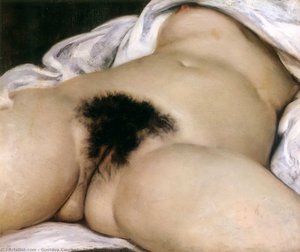 The origin of the world - Gustave Courbet
In the hallowed galleries of Musée d'Orsay, Paris , few works command such visceral attention as Gustave Courbet’s 1866 masterpiece, The origin of the world . The lines in this provocative work aren’t merely drawn; they are choreographed . This is not just a composition; it is a dance frozen in time , where heavy shadows and luminous skin tones create an intimate, almost startling confrontation. By stripping away the face and background, Courbet rejects the polished myths of his era, offering instead the raw, unadorned reality of the human form through masterful chiaroscuro. The interplay of light and shadow gives the flesh a sculptural weight, making the canvas feel alive with texture and breath. It is a bold rebellion of Realism that continues to pulse with energy centuries later. What if your living room could hold that same balance? What if your walls could breathe rhythm ?
Three Muses - Denis Maurice
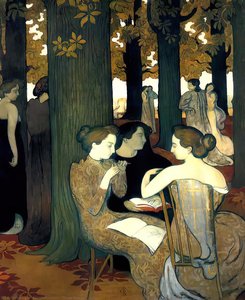 Three Muses - Denis Maurice
In Three Muses by Denis Maurice, the mastery of light is nothing short of transformative. The way dappled sunlight filters through the dense forest canopy, creating a delicate interplay of shadow and golden brilliance, defines the work’s ethereal atmosphere. This sophisticated command of illumination—capturing the fleeting, soft-edged glow characteristic of the Nabis movement—is precisely what secures its prestigious place among the top 25 artworks in Musée d'Orsay, Paris . The light does more than illuminate; it breathes life into the organic lines and rich, earthy tones, weaving a sense of mystical intimacy between the figures. For the discerning collector, a faithful oil reproduction of this piece offers more than mere decoration; the palpable depth of its chiaroscuro adds a layer of profound luxury and historical weight to a contemporary interior, turning any wall into a luminous portal to the dawn of modern art.
Family Reunion - Frédéric Bazille
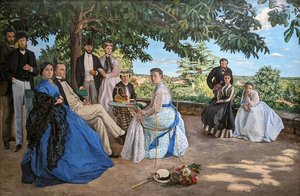 Family Reunion - Frédéric Bazille
“Family Reunion” by Frédéric Bazille stands as a profound investment in both artistic legacy and refined taste for the discerning collector. As a cornerstone among the top 25 artworks in ‘Musée d’Orsay, Paris’ , this 1867 masterpiece serves as a vital bridge between academic realism and the revolutionary Impressionist movement. The painting captures a sun-dappled social gathering, where the intricate textures of elegant attire and the lush, verdant canopy create an atmosphere of quiet prestige. Bazille’s historical proximity to masters like Monet and Renoir lends the work an undeniable influence and enduring market significance.
Integrating this piece into modern luxury interiors provides a sophisticated focal point that commands respect. A high-quality reproduction carries the same aesthetic authority as the original, offering a timeless sense of class and architectural depth to premium corporate or residential spaces.
Luxe, Calme, et Volupté (compositional study) - Henri Matisse
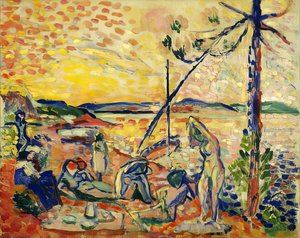 Luxe, Calme, et Volupté (compositional study) - Henri Matisse
Matisse’s Luxe, Calme, et Volupté (compositional study) stands as a vibrant threshold between tradition and the modern era. Created in 1904, this work captures the precise moment when color began to liberate itself from the constraints of reality, marking a pivotal shift toward the Fauvist movement. Its inclusion among the top 25 artworks in the Musée d'Orsay is essential; it represents the historical heartbeat of an artistic revolution that prioritized raw emotion over mere imitation.
Through sun-drenched hues and rhythmic, textured brushstrokes, Matisse invites us to reconsider the nature of beauty—not as a mirror of reality, but as a visceral experience of light and warmth. This masterpiece offers a profound reflection on human vitality and our connection to the natural world. For those curating sophisticated professional or residential spaces, the painting’s energetic palette acts as a timeless anchor, capable of transforming any modern environment into a sanctuary of movement and tranquility.
Young Girls at the Piano - Pierre-Auguste Renoir
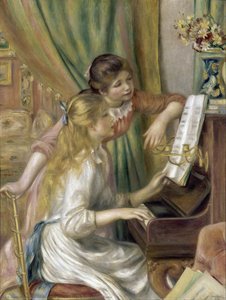 Young Girls at the Piano - Pierre-Auguste Renoir
Within the hallowed galleries of the Musée d'Orsay, Pierre-Auguste Renoir’s Young Girls at the Piano (1892) stands as a profound testament to the beauty of the everyday. This work is not merely a depiction of domesticity; it is an invitation to experience a moment of pure, luminous serenity. Through Renoir’s signature Impressionist technique, the canvas comes alive with soft, flowing brushstrokes that prioritize the ephemeral quality of light over rigid form. The composition draws the eye toward the intimate interaction between the two figures, enveloped in a harmonious palette of delicate whites, soft pinks, and gentle blues. As the warm, diffused light catches the textures of the room, one feels the quiet weight of the piano and the tender spirit of companionship. In this masterpiece, Renoir does more than capture a scene; he captures the very essence of innocence, transforming a simple musical afternoon into an eternal, breathing memory. To encounter such art is to realize that it does not merely decorate a space—it liberates it.
Camille Monet On Her Deathbed - Claude Monet
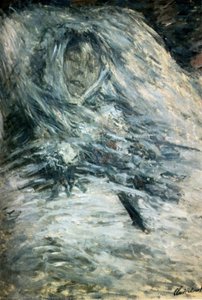 Camille Monet On Her Deathbed - Claude Monet
Claude Monet’s Camille Monet On Her Deathbed stands as a hauntingly beautiful testament to the intersection of profound grief and artistic transcendence. Within the prestigious selection of the top 25 artworks in Musée d'Orsay, Paris , this 1879 masterpiece offers an intimate, raw glimpse into the artist's soul during his most tumultuous period. The painting utilizes a muted palette of blues, grays, and whites, where Camille is enveloped in a shroud-like veil that blurs the line between presence and absence. Monet’s mastery of light and thick, impasto brushstrokes creates an ethereal atmosphere, turning a moment of personal loss into a universal meditation on mortality.
In contemporary curated spaces, where minimalist aesthetics often seek emotional resonance, the painting's atmospheric textures and somber elegance remain deeply relevant. It serves as a powerful focal point for interiors designed to evoke introspection and quiet strength, bridging the gap between historical tragedy and modern aesthetic sophistication.
Red Roofs, Corner of a Village, Winter - Camille Pissarro
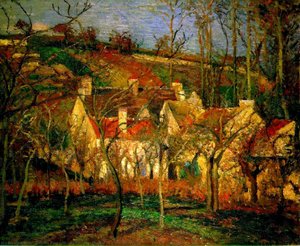 Red Roofs, Corner of a Village, Winter - Camille Pissarro
In Red Roofs, Corner of a Village, Winter by Camille Pissarro, one is immediately enveloped by a profound sense of seasonal stillness and nostalgic warmth. The painting captures the quietude of a rural landscape caught in transition, where the vibrant ochres and burnt oranges of the rooftops contrast beautifully against the skeletal, bare trees of a late winter afternoon. As a standout among the top 25 artworks in Musée d'Orsay, Paris , Pissarro’s work offers a psychological depth that serves as a universal mirror for our own moments of reflection and change. The thick, textured impasto strokes create a tactile reality, making the fleeting, diffused light feel almost tangible. Displaying this evocative masterpiece within a personal sanctuary or professional space can transform any environment into a place of profound calm and contemplation, inviting a timeless connection to the earthy, rhythmic beauty of the natural world.
Starry Night Over the Rhone - vincent willem van gogh
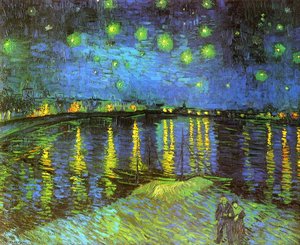 Starry Night Over the Rhone - vincent willem van gogh
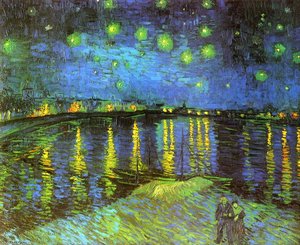
To stand before Starry Night Over the Rhone in the Musée d'Orsay is to witness a celestial dance captured in thick, rhythmic impasto. This 1888 masterpiece transcends mere landscape; it is an emotional journey where the deep, nocturnal blues of the Rhône River meet the brilliant, pulsating yellows of the stars above. Van Gogh’s brushstrokes do not just depict light—they embody its movement, creating shimmering reflections that dance upon the water's surface alongside two solitary figures.
There is a profound sense of wonder found in this contrast between the vast, swirling cosmos and the quiet intimacy of the riverbank. Owning a piece of this legacy isn’t simply about decoration; it is an inheritance . It is a lineage of taste that allows you to bring Van Gogh's luminous vision into your own space, where every glance at the textured canvas is a nod to the masters.
Cart on the Snow Covered Road with Saint-Simeon Farm - Claude Monet
 Cart on the Snow Covered Road with Saint-Simeon Farm - Claude Monet
In Cart on the Snow Covered Road with Saint-Simeon Farm , Claude Monet masterfully captures the diffused, ethereal light of a French winter. The painting relies not on harsh shadows, but on a delicate interplay of cool blues, soft whites, and muted grays to evoke the chilling yet serene atmosphere of the countryside. This early command of atmospheric illumination was revolutionary, helping establish the Impressionist movement and earning this piece a permanent place among the top 25 artworks in Musée d'Orsay, Paris . The way light seems to settle upon the snow-covered path creates a sense of profound stillness. For the discerning decorator or collector, a faithful oil reproduction of this masterpiece offers more than just color; it brings a tactile depth and a sense of quiet prestige to any contemporary wall. The visible brushstrokes and textured layers of paint provide a luxurious, immersive experience, transforming a corporate space or private residence into a sanctuary of light and tranquility.
The Floor Scrapers (also known as The Floor Strippers) - Gustave Caillebotte
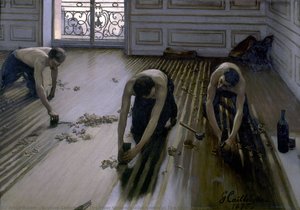 The Floor Scrapers (also known as The Floor Strippers) - Gustave Caillebotte
A rhythmic pulse of labor and light is captured forever in The Floor Scrapers by Gustave Caillebotte. This masterpiece stands among the top 25 works at Musée d'Orsay because it masterfully bridges the gap between gritty Realism and the fleeting atmosphere of Impressionism. One can almost sense the tactile grit of wood shavings and the heavy, focused breathing of the workers as they move through a landscape of earthy browns, muted blues, and sun-drenched neutrals. The dramatic diagonal composition pulls the viewer into the physical exertion of the scene, while the soft light from an unseen window breathes life into the textured floorboards. For the modern professional or decorator, this painting offers more than just historical depth; its sophisticated, subdued palette and structured geometry provide a grounding presence in contemporary corporate spaces or luxury hospitality interiors, bringing an air of quiet prestige and enduring strength to any wall.
Irises in Monet's Garden - Claude Monet
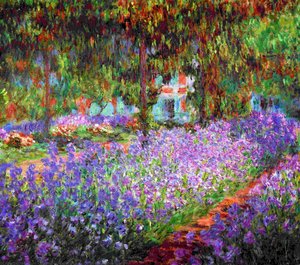 Irises in Monet's Garden - Claude Monet
To gaze upon Irises in Monet's Garden is to step directly into the soul of Giverny, where the boundary between nature and art dissolves. Claude Monet captures more than just flora; he captures a fleeting moment of pure, sun-drenched tranquility.
As one of the top 25 artworks in Musée d'Orsay, Paris , this piece stands as a pinnacle of Impressionist mastery. Through thick, expressive impasto brushstrokes and a vibrant palette of deep purples and blues, Monet invites us into a rhythmic dance of light and shadow that has resonated for over a century.
This enduring emotional resonance is exactly what we aim to preserve. Our hand-painted oil reproductions are meticulously crafted to maintain the tactile depth and luminous color of Monet’s original vision. By choosing our high-quality reproductions, you can bring this window into a serene, timeless world into your own professional or personal environment.
Noon Rest from Work after Millet - vincent willem van gogh
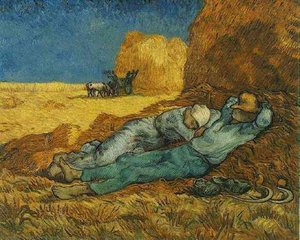 Noon Rest from Work after Millet - vincent willem van gogh
In Noon Rest from Work after Millet , Vincent van Gogh offers more than a mere landscape; he presents a profound meditation on the sanctity of labor and the quiet dignity found in exhaustion. As one of the most evocative pieces among the top 25 artworks in Musée d'Orsay, Paris , this work captures a fleeting moment of respite within a sea of sun-drenched, golden wheat. Van Gogh’s homage to Millet transcends simple imitation, utilizing thick, tactile impasto strokes that breathe life into the heavy haystack and the weary figures nestled within it.
The palette—a rhythmic dance of earthy ochres, deep greens, and a turbulent, soulful blue sky—creates a sensory experience that resonates deeply with contemporary desires for tranquility and connection to the natural world. In an era of constant digital noise, the painting’s emphasis on the slow, seasonal rhythms of rural life serves as a powerful cultural touchstone. Its presence in a curated space brings a sense of groundedness, inviting viewers to find their own moments of stillness amidst the vibrant textures of Post-Impressionist emotion.
The Harbour at Argenteuil - Claude Monet
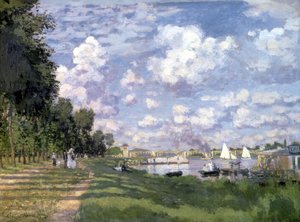 The Harbour at Argenteuil - Claude Monet
Imagine the tranquil banks of the Seine, where the soft blues and shimmering yellows of The Harbour at Argenteuil by Claude Monet converge to capture a fleeting moment of peace. This work stands as a cornerstone among the top 25 artworks in Musée d'Orsay, Paris, because it redefined beauty through the lens of light and atmosphere rather than rigid form.
What if I told you that The Harbour at Argenteuil was born from a moment of rebellion—a stroke of defiance against the ordinary? Its place in history is not just earned; it is demanded by its ability to evoke pure serenity. Now, imagine this masterpiece integrated into a professional setting, such as a hotel lobby or corporate lounge, turning every glance into a reminder of nature's calm. At ArtsDot.com, we provide the reliable, high-quality reproductions necessary to bring this legendary Impressionist atmosphere to your large-scale projects. This is more than decor; it is an opportunity to transform any space into a sophisticated, tranquil sanctuary.
Harvest - Charles-François Daubigny
 Harvest - Charles-François Daubigny
Imagine standing amidst a vast, golden expanse where the only sound is the gentle rustle of ripe wheat swaying under an overcast sky. In Charles-François Daubigny’s Harvest , we are transported to the heart of the French countryside, feeling the quiet dignity of seasonal labor and the warmth of the earth. As a pivotal figure of the Barbizon School and a vital precursor to Impressionism, Dauboney captures more than just a landscape; he captures a profound, breathing connection between humanity and the natural world.
This piece earns its place among the top 25 artworks in the Musée d'Orsay because it embodies a timeless sense of abundance and restorative peace. The soft, diffused light and earthy palette of yellows and browns create a rhythmic stability that is deeply moving. Integrating such a serene, masterfully textured work into a modern interior—whether a quiet study or a grand corporate space—serves as a powerful window to tranquility, offering a momentary escape into the enduring grace of the nineteenth-century landscape.
Burial at Ornans - Gustave Courbet
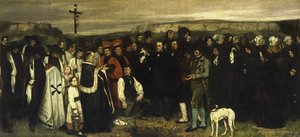 Burial at Ornans - Gustave Courbet
A heavy silence hangs over the canvas of Burial at Ornans , where Gustave Courbet captures the raw, unvarnished weight of mortality. As one of the top 25 artworks in Musée d'Orsay, Paris , this monumental piece is immortalized for its role in shattering academic tradition, replacing idealized myths with the profound dignity of the everyday. It remains the definitive manifesto of the Realist movement.
The painting breathes through its rugged, impasto textures and a somber palette of earthy browns, deep blacks, and muted grays that evoke the damp soil of a French cemetery. There is no polished perfection here; instead, visible brushstrokes lend an immediate, visceral energy to the fifty mourning figures gathered in a stage-like arrangement. For the modern collector or designer, the painting’s grounded tones and commanding presence provide a sophisticated anchor for large-scale architectural spaces, bringing a sense of historical depth and quiet strength to contemporary interiors.
Hospital Saint-Paul at Saint-Rémy-de-Provence - vincent willem van gogh
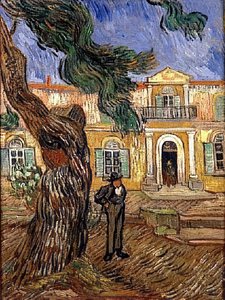 Hospital Saint-Paul at Saint-Rémy-de-Provence - vincent willem van gogh
Hospital Saint-Paul at Saint-Rémy-de-Provence by Vincent van Gogh serves as a poignant window into the artist's soul during his most turbulent years. As one of the top 25 artworks in Musée d'Orsay, Paris , this painting transcends mere architectural depiction to become a profound symbol of resilience and transformation. The vibrant interplay between the sun-drenched yellow walls and the deep green shutters reflects Van Gogh's struggle to find light amidst his period of isolation at the asylum.
Through his signature Post-Impressionist brushstrokes, the artist invites us to contemplate the delicate balance between human suffering and the enduring vitality of nature. This work does not merely document a building; it captures an emotional atmosphere that continues to resonate with the human condition today. For the discerning collector or professional decorator, the painting's bold color palette and rhythmic composition offer a sophisticated way to anchor a modern space, creating a timeless dialogue between historical mastery and contemporary interior design.
Portrait of Doctor Gachet - vincent willem van gogh
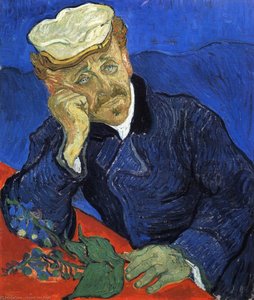 Portrait of Doctor Gachet - vincent willem van gogh
To encounter the Portrait of Doctor Gachet is to stand before one of the most profound psychological windows in the history of art. As a cornerstone among the top 25 artworks in Musée d'Orsay, Paris , this masterpiece transcends mere portraiture; it captures the raw, vibrating energy of Van Gogh’s final months. Through thick, rhythmic impasto and a somber palette of deep greens and melancholic blues, the artist translates his internal turmoil onto the canvas with unparalleled intensity.
The physician’s weary posture and the subtle presence of medicinal bottles create an atmosphere of shared vulnerability that has influenced generations of Post-Impressionist expression. For the discerning collector or designer, this work offers more than historical significance; it provides a powerful, emotive focal point for refined, modern interiors. Its heavy texture and profound emotional depth bring a sense of soul and timeless legacy to any curated space, embodying an aesthetic of unmatched sophistication.
Self-Portrait - Paul Cézanne
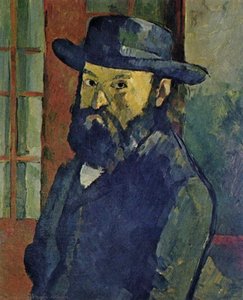 Self-Portrait - Paul Cézanne
In this 1882 masterpiece, Paul Cézanne offers more than a mere likeness; he presents a profound architectural study of the human face. As one navigates the top 25 artworks in Musée d'Orsay, Paris, this self-portrait stands as a pivotal moment where Impressionist light meets the structural rigor of proto-Cubism.
The viewer is met by the artist’s steady gaze, framed by a dark hat and a rugged beard, set against a backdrop featuring a window and a striking red door. Through heavy, rhythmic impasto brushstrokes, Cézanne builds form through color rather than line, creating a palpable texture that feels almost sculptural. Owning a reproduction of this Self-Portrait isn’t just a purchase; it is an inheritance. It represents a lineage of taste that brings the structural brilliance of Post-Impressionism directly to your walls—where every glance at these geometric forms is a nod to the masters.
Conclusion
As the golden light of sunset fades over the banks of the Seine, leaving the hallowed halls of the Musée d'Orsay behind, one realizes that these masterpieces are far more than mere relics of a bygone era. They do not exist solely as silent witnesses to history, but as vibrant, breathing forces that continue to pulse with life long after we have exited the gallery doors. The shimmering reflections in a Monet landscape and the profound, swirling depths of a Van Gogh sky remain etched in our collective consciousness, bridging the gap between the nineteenth century and our modern lives. These works are living legacies, capable of transforming a simple space into a sanctuary of emotion and inspiration. To carry this timeless beauty into your own world is to keep the conversation with the masters alive, finding new meaning in every brushstroke and every shade of light. We invite you to rediscover these eternal moments through our full collection , where the soul of Paris meets the artistry of today.