
![The Courtship Of Paris And Helen [detail 1] — Jacques-louis David](/media/artworks/images-thumb/cb/6c/cb6cd2fb48353357d2ab2a0324aa75a5.jpg)
Introduction
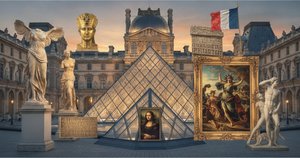
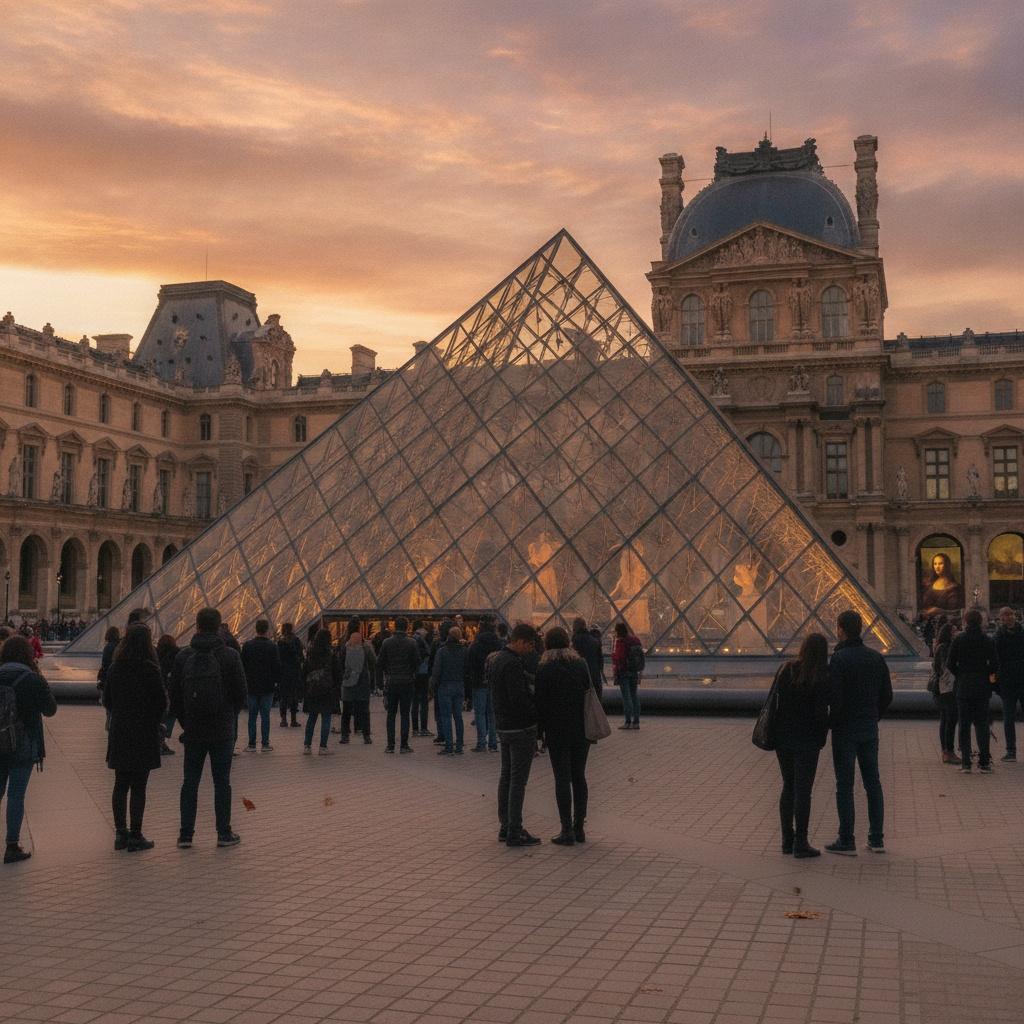
To step into the Musée du Louvre is to walk through the very heartbeat of human history. It is a place where stone and canvas act as a palimpsest, layered with the ambitions of kings and the whispers of forgotten eras. Once a formidable fortress built by Philip II in the 12th century, this monumental structure evolved from a defensive bulwark into an opulent palace that mirrors the shifting tides of French identity. From the regal grandeur of Louis XIV’s era to the revolutionary spirit that reshaped Paris, every corridor tells a story of power, beauty, and transformation.
Within these hallowed halls, the collection transcends mere museum displays; it offers an unparalleled journey through time. Whether standing before the colossal shadows of Egyptian deities or the delicate brushstrokes of Renaissance masters, we encounter the enduring essence of human creativity. These twenty-five selected works are more than just masterpieces; they are windows into the souls of civilizations past, remaining profoundly relevant as they continue to evoke awe, curiosity, and deep emotional resonance in the modern viewer.
As we begin our exploration, prepare to encounter the icons that define the Louvre—works that have shaped the course of art history and continue to inspire the world today.
Mona Lisa (La Gioconda) - Leonardo da Vinci
 Mona Lisa (La Gioconda) - Leonardo da Vinci
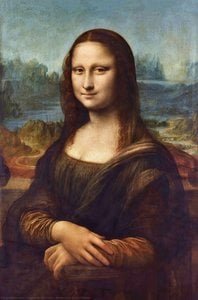
What if I told you that the Mona Lisa by Leonardo da Vinci was born from a moment of rebellion—a stroke of defiance against the ordinary? This is not merely a portrait; it is a manifesto . Its place among the top 25 artworks in The Louvre is not just earned; it is demanded by history.
Through his revolutionary sfumato technique, Da Vinci dissolved rigid outlines into a smoky, atmospheric haze, imbuing Lisa Gherardini with an unprecedented psychological depth. This masterpiece redefined the boundaries of light and emotion, creating an enigmatic presence that continues to captivate the world. Now, imagine this rebellion hanging above your desk or in a corporate lobby, turning every glance into a reminder: your space is not just a room; it’s a statement. At ArtsDot.com, we believe in making such legendary beauty accessible, providing hand-painted reproductions that transform any professional or personal sanctuary into a gallery of timeless elegance.
Liberty Leading the People - Eugène Delacroix
 Liberty Leading the People - Eugène Delacroix
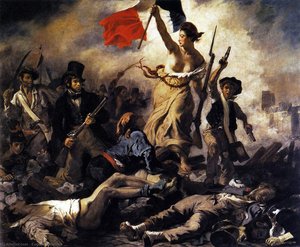
What if I told you that "Liberty Leading the People" by Eugène Delacroix was born from a moment of rebellion—a stroke of defiance against the ordinary? This is not art; it’s a manifesto . Its place among the top 25 artworks in 'The Louvre, Paris' is not just earned; it’s demanded by history.
Delacroix redefined artistic emotion through a whirlwind of action and a striking palette of reds and earthy tones. Now, imagine this rebellion hanging in a corporate lobby or a hotel restaurant, turning every glance into a reminder: your space is not just a room. It’s a statement. At ArtsDot.com, we facilitate large-scale art procurement for professionals, offering high-quality, hand-painted reproductions that bring this historical intensity to commercial interiors with reliable, efficient service.
Gilles - Jean-Antoine Watteau
 Gilles - Jean-Antoine Watteau
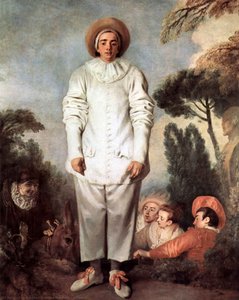
Before Jean-Antoine Watteau’s untimely passing at the age of thirty-seven, he breathed life into the Rococo movement with a brushstroke that felt both ethereal and profoundly human. In Gilles , one of the most hauntingly beautiful pieces among the top 25 artworks in 'The Louvre, Paris' , the artist transcends mere portraiture. By dressing his subject in the melancholic costume of the commedia dell'arte ’s Pierrot, Watteau achieved a technical marvel: a luminous, weightless rendering of fabric that seems to float against a hazy, atmospheric landscape. This mastery of light and subtle tonal gradations creates a sense of theatricality and quiet introspection. The painting’s ability to balance playful elegance with a wistful, underlying sadness offers more than just visual delight; it provides a blueprint for sophistication. Integrating the delicate textures and emotive depth of such a masterpiece into a modern home office or study can transform a standard workspace into an inspiring sanctuary of focused, high-level contemplation and refined taste.
The Raft of the Medusa - Théodore Géricault
 The Raft of the Medusa - Théodore Géricault
To stand before this canvas is to feel the crushing weight of the Atlantic’s fury and the visceral ache of human despair. Géricault’s 1819 masterpiece, The Raft of the Medusa , transcends mere historical documentation of a maritime tragedy to become an eternal symbol of resilience amidst chaos. As one of the most powerful works in The Louvre, Paris, it captures the political scandal of the shipwrecked crew through a lens of raw Romanticism. The artist employs a dramatic chiaroscuro , where stark lights pierce through heavy, somber shadows of ochre and deep umber. You can almost sense the textured, muscular forms struggling against the turbulent waves, their bodies arranged in a desperate pyramidal ascent toward a distant, flickering hope. This painting remains essential because it refuses to look away from suffering, offering a profound emotional depth that continues to transform how we perceive tragedy and triumph in art today, making it a cornerstone for any serious collection of historical masterpieces.
Self-portrait at 22 - Albrecht Dürer
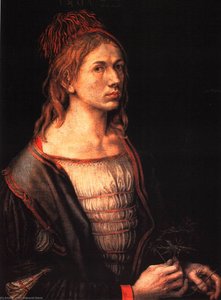 Self-portrait at 22 - Albrecht Dürer
In the quiet corridors of The Louvre, Albrecht Dürer’s Self-portrait at 22 stands as a profound meditation on the intersection of burgeoning identity and inevitable hardship. The subject's solemn gaze, paired with the delicate yet sharp thistle held in hand, creates a narrative of resilience amidst vulnerability. This piece is more than a mere likeness; it is a philosophical inquiry into the weight of existence, where every meticulous brushstroke serves to anchor the viewer in the artist's introspective reality. As one explores the top 25 artworks in The Louvre, Paris , Dürer’s mastery of Northern Renaissance realism—characterized by its intense focus on texture and light—remains strikingly relevant. In contemporary curated spaces, where the demand for authenticity and tactile depth is rising, the hyper-realistic rendering of skin, hair, and fabric offers a sophisticated anchor. The muted, somber palette provides a timeless elegance that transcends eras, making this portrait a vital cultural touchstone for those seeking art that speaks to the enduring human spirit.
The Embarkation for Cythera - Jean-Antoine Watteau
 The Embarkation for Cythera - Jean-Antoine Watteau
When Jean-Antoine Watteau presented The Embarkation for Cythera to the Royal Academy in 1717, he wasn't just submitting a painting; he was launching an entire era. This audacious 'reception piece' effectively birthed the fête galante genre, marking a definitive departure from Baroque rigidity toward the airy, romantic whimsy of the Rococo. As one of the top 25 artworks in The Louvre, Paris , it showcases Watteau’s technical brilliance through soft, feathered brushstrokes and a luminous palette of gold, ochre, and misty blues that create an almost dreamlike atmosphere. The scene—a delicate dance of lovers moving toward the mythical island of Venus—is rich with movement and light. For those looking to curate a sophisticated home office or study, this masterpiece offers more than mere decoration; its poised elegance and tranquil, pastoral depth provide an inspiring backdrop for focused, high-level professional thought.
Basket with Oranges - Henri Matisse
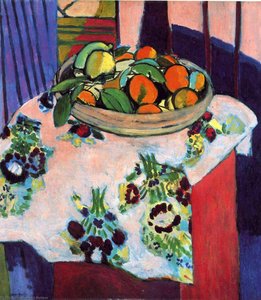 Basket with Oranges - Henri Matisse
In Basket with Oranges by Henri Matisse, the lines aren’t merely drawn; they are choreographed . This is not just a composition; it is a dance frozen in time . As you explore the top 25 artworks in The Louvre, Paris, this masterpiece stands as a tribute to its unique ability to make chaos feel like harmony through its bold, non-naturalistic palette of sun-drenched yellows and deep, contrasting shadows.
Matisse uses thick, expressive brushstrokes that lend a tactile vitality to the scene, turning a simple bowl of fruit into an explosion of life's abundance. What if your living room could hold that same balance? What if your walls could breathe rhythm ? Bringing this piece into your collection offers more than mere decoration; it invites the vibrant energy and modernist elegance of 1913 directly into the heart of your space.
Arab Horses Fighting in a Stable - Eugène Delacroix
 Arab Horses Fighting in a Stable - Eugène Delacroix
The air thickens with the palpable tension of unbridled fury in Arab Horses Fighting in a Stable by Eugène Delacroix. One is immediately swept into the kinetic chaos of rearing stallions, yet beneath the visible struggle lies a psychological depth that serves as a universal mirror to the human experience. As a standout among the top 25 artworks in 'The Louvre, Paris' , this piece captures the raw, untamed essence of Romanticism through its dramatic interplay of light and shadow.
Delacroix’s palette—rich with earthy browns, deep blacks, and muted greens—creates a somber atmosphere that feels both visceral and timeless. Displaying such an intense, movement-filled masterpiece can transform a personal sanctuary into a space for profound reflection on strength and resilience, or provide a commanding, dramatic focal point in a sophisticated professional setting. It is a work that does not just decorate a wall; it breathes life and turbulent energy into the very soul of a room.
The Poet's Inspiration - Nicolas Poussin
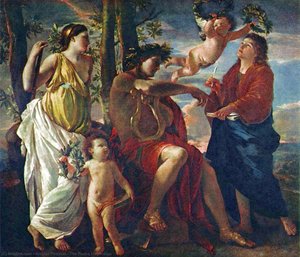 The Poet's Inspiration - Nicolas Poussin
A celestial harmony descends upon the canvas in Nicolas Poussin’s The Poet's Inspiration , where the divine touch of Apollo breathes life into the mortal soul. This masterpiece earns its place among the top 25 artworks in The Louvre through its profound ability to capture the exact moment of creative awakening. Poussin utilizes a rigorous, balanced composition and dramatic chiaroscuro to symbolize the intersection of human intellect and divine grace, marking it as an essential pillar of the Classical Baroque era.
The painting’s rich, earthy palette of ochre, deep red, and soft gold offers a timeless aesthetic that complements sophisticated modern interiors, providing a sense of stability and intellectual prestige. At ArtsDot.com, we aim to democratize beauty by making such masterpieces accessible; through our high-fidelity, hand-painted oil reproductions, you can bring this transformative, museum-grade presence into your own home, corporate office, or professional gallery.
Young Christian Martyr - hippolyte-paul delaroche
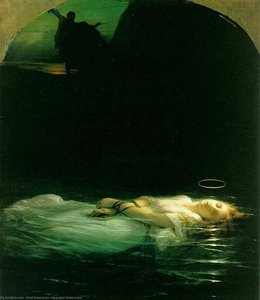 Young Christian Martyr - hippolyte-paul delaroche
Imagine a profound, heavy silence, broken only by the rhythmic ripple of dark, cold water. A sense of tragic stillness settles over the viewer as they encounter the pale, ethereal form of a figure surrendered to the depths. In Young Christian Martyr , Hippolyte-Paul Delaroche masterfully captures a moment of spiritual transition and haunting beauty.
Through dramatic use of light and shadow, and a palette dominated by somber blues and greens, Delaroche depicts a scene of sacrifice that bridges the gap between Romantic emotion and Academic precision. The shadowy figure watching from above adds an element of suspenseful mourning, turning a historical theme of martyrdom into a universal meditation on loss and transcendence. This work earns its place among the top 25 artworks in The Louvre, Paris due to its profound ability to provoke deep introspection and emotional resonance.
Integrating such evocative imagery into a modern interior allows for the infusion of depth and quiet contemplation into our daily environments, offering a sanctuary of meaning and historical weight within the contemporary home.
The Four Evangelists - Jacob Jordaens
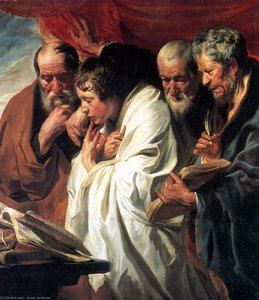 The Four Evangelists - Jacob Jordaens
Deep, earthy browns dominate The Four Evangelists by Jacob Jordaens, casting a somber and profoundly contemplative mood over the scene. This mastery of a muted palette—interspersed with flashes of brilliant white and warm, muted reds—is precisely why this piece stands out among the top 25 artworks in 'The Louvre, Paris' . Through the dramatic use of chiaroscuro, Jordaens creates a sense of physical volume and spiritual intensity that feels almost tactile.
For the modern decorator or professional curator, this painting offers an incredible blueprint for atmospheric design; its rich, dark tones can be used to anchor a sophisticated dining room or executive study, providing a sense of historical weight and "emotional lighting" that complements contemporary low-light environments. By integrating such a powerful use of shadow and warmth, one can transform a standard corporate space into a room of profound character and scholarly elegance.
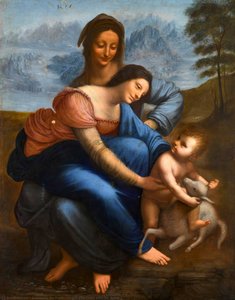
The Virgin and Child with Saint Anne - Leonardo da Vinci
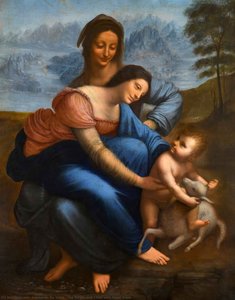 The Virgin and Child with Saint Anne - Leonardo da Vinci
A moment of divine tenderness is frozen within the ethereal glow of The Virgin and Child with Saint Anne . As a cornerstone among the top 25 artworks in The Louvre, Paris , Leonardo da Vinci’s masterpiece transcends time through its unparalleled balance of emotional depth and technical innovation. Through his legendary sfumato technique, the boundaries between light and shadow dissolve, creating a smoky, dream-like atmosphere where soft blues and earthy browns breathe life into the sacred figures. The pyramidal composition provides a structural stability that guides the eye through a landscape of receding mountains and misty horizons, evoking a sense of infinite peace. This profound equilibrium offers more than historical insight; its quiet, harmonious energy serves as a sophisticated anchor for contemporary living, bringing a sense of timeless calm and classical grace to modern interiors seeking a touch of Renaissance soul.
The battle of san romano - the counter-attack by mich - Paolo Uccello
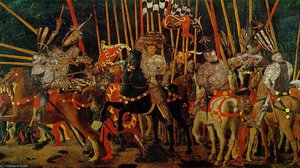 The battle of san romano - the counter-attack by mich - Paolo Uccello
In The battle of san romano - the counter-attack by mich by Paolo Uccello , the eye is immediately captivated by a rigorous geometry of intersecting lines. The sharp, angular trajectories of lances and the rigid, geometric plates of knightly armor create a structured rhythm that balances the chaotic energy of combat. This mathematical precision provides a sense of structural harmony, contributing to its enduring appeal among the top 25 artworks in 'The Louvre, Paris' . There is a striking parallel between Uccello’s disciplined composition and the principles of modern minimalist design; the artwork's ability to ground a space with strong, clean lines offers a sophisticated anchor for a contemporary aesthetic. Bathed in glowing golds and deep, fiery reds, the scene pulses with a quiet prestige. The rich textures of the oil paint and the dramatic interplay of light evoke the intense atmosphere of the Renaissance, inviting viewers to witness a meticulously engineered spectacle of war and grace.
Portrait of Nikolaus Kratzer - Hans Holbein the Younger
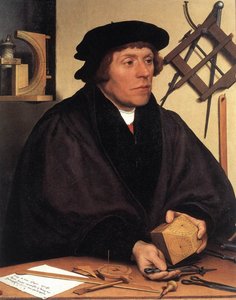 Portrait of Nikolaus Kratzer - Hans Holbein the Younger
In the Portrait of Nikolaus Kratzer , Hans Holbein the Younger employs a masterful command of geometry to anchor the viewer's gaze. The composition is defined by a precise interplay of lines—the sharp edges of drafting instruments and the circular arcs of astronomical tools—which create a structural harmony that feels both mathematically exact and visually serene. This meticulous balance between the scholar’s form and his scientific apparatus contributes to the painting's status as one of the most captivating pieces among the top 25 artworks in 'The Louvre, Paris' . There is a profound, quiet perfection in how Holbein arranges these shapes, a quality that finds a striking parallel in modern minimalist design. Much like a contemporary minimalist interior, where purposeful objects and clean silhouettes create a sense of calm, this portrait uses a restrained palette and focused geometry to ground a sophisticated, clean aesthetic. The soft light from the upper left breathes life into the textures of wood and metal, inviting us into a moment of timeless intellectual pursuit.
La Belle Jardiniere - Raphael
 La Belle Jardiniere - Raphael
A luminous, warm glow of golden light and soft flesh tones defines La Belle Jardiniere by Raphael , setting a mood of profound serenity and sacred intimacy. This masterpiece earns its place among the top 25 artworks in 'The Louvre, Paris' through Raphael’s masterful use of color gradation and the subtle sfumato technique, which blends light and shadow to breathe life into the Madonna and Child. The innovative palette—ranging from deep, tranquil blues in the drapery to the hazy, atmospheric greens of the distant landscape—creates a sense of infinite depth. For those curating a modern living space or an elegant dining room, this painting offers a sophisticated blueprint for emotional lighting. Integrating its soft, earthy tones and muted celestial hues can transform a contemporary interior into a sanctuary of calm, providing a timeless aesthetic that balances classical grandeur with the peaceful requirements of modern architectural design.
Virgin of the Rocks - London - Leonardo da Vinci
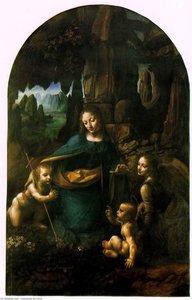 Virgin of the Rocks - London - Leonardo da Vinci
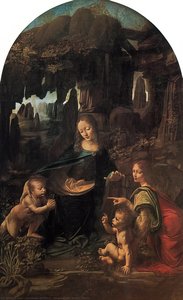
Close your eyes. Can you feel the light in "Virgin of the Rocks - London" by Leonardo da Vinci ? It’s not just illumination; it’s a language . The artist didn’t paint light—they composed it , like a musician crafting a sonata. This is why it remains one of the top 25 artworks in The Louvre, Paris: it doesn’t just reflect light; it invents it .
Within this mysterious, rocky landscape, Leonardo employs his legendary sfumato technique, blending tones so softly that the boundaries between the divine figures and the shadowed earth seem to dissolve. The pyramidal arrangement of the Holy Family creates a sense of eternal stability, while the atmospheric haze breathes life into the very stones themselves. Now, open your eyes. That light? It’s waiting to spill into your home, turning walls into portals of inspiration and bringing the profound serenity of the High Renaissance directly into your personal space.
The Lictors Returning to Brutus the Bodies of his Sons - Jacques-Louis David
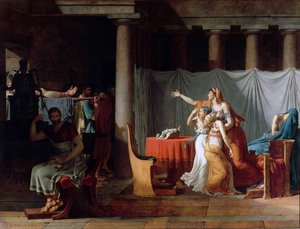 The Lictors Returning to Brutus the Bodies of his Sons - Jacques-Louis David
In The Lictors Returning to Brutus the Bodies of his Sons by Jacques-Louis David, one is immediately struck by the harrowing weight in Brutus’s eyes—a gaze caught between the crushing agony of paternal loss and the unyielding steel of civic duty. As a vital entry among the top 25 artworks in 'The Louvre, Paris' , this painting offers a profound psychological depth that mirrors the universal human struggle between private emotion and moral obligation.
David’s Neoclassical mastery is evident in the stark interplay of light and shadow across cold stone and heavy drapery, creating a scene of intense, somber gravity. Integrating such a powerful work into your collection can transform a personal sanctuary or a professional space into an area for profound reflection and quiet prestige. The painting's disciplined composition and muted, earthy tones provide a commanding presence, inviting viewers to contemplate the enduring costs of integrity and sacrifice.
The Parnassus: Mars and Venus - Andrea Mantegna
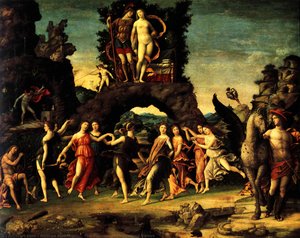 The Parnassus: Mars and Venus - Andrea Mantegna
Imagine stepping onto the sun-drenched slopes of Mount Parnassus, where the air hums with the lyre's melody and the scent of ancient stone lingers. In Andrea Mantegna’s The Parnassus: Mars and Venus , the boundaries between painting and sculpture dissolve into a breathtaking display of High Renaissance mastery. As a standout among the top 25 artworks in The Louvre, Paris , this piece captivates through its innovative use of perspective; the low horizon line draws the viewer directly into a serene gathering of gods and muses.
The composition vibrates with a delicate tension between the god of war, Mars, and the tranquil Venus, balanced by the rhythmic placement of figures receding toward a distant, architectural horizon. The cool tones of the stone bridge and the sculptural precision of each figure create an atmosphere of eternal, classical calm. Integrating such a profound narrative into a modern interior offers more than mere decoration; it provides a window of historical elegance that inspires deep reflection and creative thought.
Leonidas at Thermopylae - Jacques-Louis David
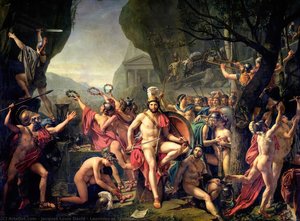 Leonidas at Thermopylae - Jacques-Louis David
Jacques-Louis David’s Leonidas at Thermopylae serves as a profound emblem of unyielding courage and moral duty, reflecting the Neoclassical era's obsession with heroic virtue. As one of the most significant pieces among the top 25 artworks in The Louvre, Paris, this monumental work transcends its historical subject—the Spartan defense against the Persian Empire—to become a universal study of human resilience. David utilizes dramatic chiaroscuro and a commanding pyramidal composition to direct the viewer's eye toward the resolute King Leonidas, capturing a moment where duty meets destiny.
This masterpiece invites us to contemplate the strength found in sacrifice and the timelessness of honor. For those looking to infuse modern interiors or professional galleries with historical gravity, the painting’s intense palette and dramatic light offer an unparalleled sense of authority. It is a piece that does not merely decorate a wall but initiates a powerful conversation between classical history and contemporary architectural elegance.
Saint John the Baptist - Leonardo da Vinci
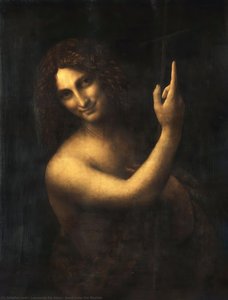 Saint John the Baptist - Leonardo da Vinci
There’s a gaze in "Saint John the Baptist by Leonardo da Vinci" that follows you—not with judgment, but with understanding . This isn’t a portrait; it’s a mirror . Its spot among the top 25 artworks in The Louvre, Paris, is a testament to its power to make the invisible visible. Now, imagine that gaze in your space. Not watching you, but reminding you : you are seen. You are part of the story.
Emerging from a profound, shadowy void, the figure of Saint John appears through Da Vinci’s legendary sfumato technique. The soft, smoky transitions of light and shadow create a hauntingly lifelike presence, where the edges of his form seem to dissolve into the darkness. His enigmatic smile, reminiscent of the Mona Lisa , paired with a finger pointing toward the heavens, invites deep spiritual contemplation. This late masterpiece captures the very essence of the High Renaissance—a seamless blend of human emotion and divine mystery that continues to captivate every visitor wandering through the halls of Paris.
Philosopher in Meditation - Rembrandt van Rijn
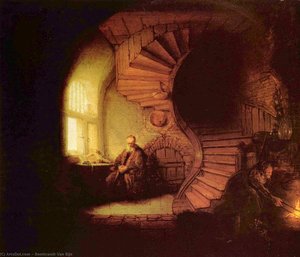 Philosopher in Meditation - Rembrandt van Rijn
In Philosopher in Meditation by Rembrandt van Rijn, the lines aren’t merely drawn; they are choreographed through a masterful interplay of shadow and light. This is not just a composition; it is a dance frozen in time , where the dramatic spiral staircase guides your gaze upward, mirroring a spiritual ascent toward enlightenment. As one of the most profound pieces among the top 25 artworks in The Louvre, Paris, this work captures a moment of deep, quiet introspection.
The warm glow from a hidden fire illuminates the textures of the room, casting the figures into a soft, mysterious chiaroscuro that feels both intimate and eternal. Every brushstroke breathes life into the heavy atmosphere of thought and memory. To stand before it is to feel the weight of history and the beauty of a single, silent thought. Imagine your own space holding this same balance—where walls do not just enclose, but breathe rhythm and profound peace.
St Louis, King of France, with a Page - El Greco
 St Louis, King of France, with a Page - El Greco
The introspective, heavy gaze of Saint Louis in El Greco’s 1592 masterpiece, St Louis, King of France, with a Page , captures a profound moment of spiritual and regal contemplation. Beyond the shimmering metallic textures of his armor, there is an unmistakable psychological depth; the King’s expression reflects the immense burden of both divine duty and earthly sovereignty. As one of the most significant pieces among the top 25 artworks in 'The Louvre, Paris', this work exemplifies El Greco's transition from Mannerism to Baroque through his signature elongated figures and dramatic chiaroscuro .
The interplay of moonlight against the dark, mysterious landscape invites a sense of quietude. Integrating such a powerful emotional resonance into your own environment can transform a personal sanctuary into a space for profound reflection or calm. By capturing the tension between power and piety, El Greco offers a universal mirror to the human experience, making this painting an essential cornerstone for any serious collection.
LE CALVAIRE - Andrea Mantegna
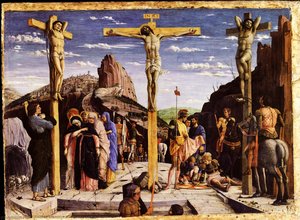 LE CALVAIRE - Andrea Mantegna
In Le Calvaire , Andrea Mantegna achieves a profound synthesis of sacred narrative and archaeological precision, making it a standout among the top 25 artworks in 'The Louvre, Paris' . The painting does not merely depict the Crucifixion; it reconstructs the event through a lens of Roman grandeur. By utilizing an innovative, low-set horizon line, Mantegna forces the viewer’s gaze upward, creating a sense of monumental scale that feels almost sculptural.
This mastery of linear perspective transforms the canvas into a window of deep, physical space, where the figures of Christ, John the Baptist, and Mary Magdalene possess a weight and anatomical accuracy reminiscent of classical stone carvings. Today, this dedication to structural realism and historical truth resonates deeply within modern curated spaces, where the intersection of historical depth and architectural precision is highly valued. The somber atmosphere, punctuated by the dramatic presence of a horse on the periphery, serves as a timeless meditation on suffering and the enduring power of faith, ensuring its place as an essential pillar of Renaissance art history.
Christ on the Cross Adored by Two Donors - El Greco
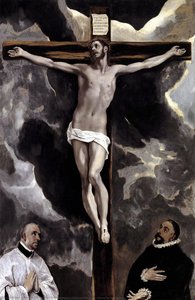 Christ on the Cross Adored by Two Donors - El Greco
What story does the background and atmospheric environment in Christ on the Cross Adored by Two Donors by El Greco tell? Within the swirling, turbulent clouds and stark shadows, we find a masterpiece that emerged from the religious fervor of the Spanish Renaissance, breaking ground by defying classical norms through signature Mannerist elongation. By employing Tenebrism , El Greco uses dramatic contrasts between light and dark to pull the viewer into the profound suffering of Christ and the devout gaze of the kneeling donors. As one of the top 25 artworks in 'The Louvre, Paris' , this painting captures a spiritual intensity that transcends time. The composition’s moody setting—dominated by deep blacks and ethereal highlights—offers more than just historical insight; it provides a powerful sense of escape for modern collectors. Integrating such a dramatic piece into a curated home space allows for an evocative connection to history, bringing the emotional depth of the Spanish Baroque directly into contemporary living environments.
Slave (rebelling) - Michelangelo Buonarroti
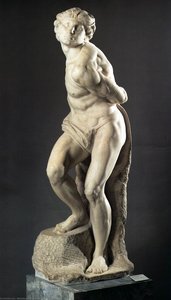 Slave (rebelling) - Michelangelo Buonarroti
Michelangelo once lamented that his divine soul was imprisoned within a fragile body, a sentiment physically manifested in the raw, powerful marble of The Slave (rebelling) . As you explore the top 25 artworks in The Louvre, Paris , this 1513 masterpiece stands out for its visceral energy and anatomical precision. Carved from pure Carrara marble, the figure appears to be fighting a desperate battle against the very stone that holds it captive. You can almost feel the tension in the strained musculature and the frantic movement of limbs attempting to break free from their mineral prison; it is a profound conceptual leap into the essence of liberation.
The sheer determination captured in this Renaissance titan’s work serves as a powerful reminder of human resilience. Integrating the commanding presence of such a masterpiece into a modern home office or study can cultivate an atmosphere of focused strength and sophisticated ambition, inspiring a workspace built for greatness.
Conclusion
As the golden light of dusk settles over the courtyard of the Louvre, the shadows stretch across the stone corridors, signaling the end of a journey through time. To walk among these masterpieces is to realize that they are far more than mere relics of a bygone era or silent witnesses to history; they remain vibrant, breathing presences that continue to pulse with the same raw emotion and technical brilliance that first captured the hearts of their creators. These works do not belong solely to the halls of Paris; they live on in the way we perceive light, the way we interpret human struggle, and the way we seek beauty in our own modern spaces. Whether through a sudden flash of color or the profound depth of a brushstroke, these paintings bridge the gap between centuries, connecting our contemporary lives to the eternal human spirit. As you depart from the museum's embrace, carry with you the quiet realization that art is never truly finished; it continues to evolve, shaping our interiors and inspiring our very souls long after we have left its walls. Discover the enduring legacy of these works within our full collection and bring a piece of this timelessness into your own world.