
Introduction
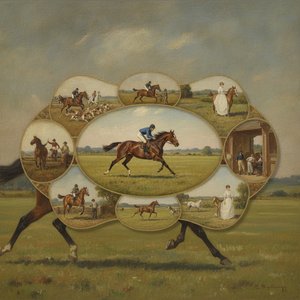
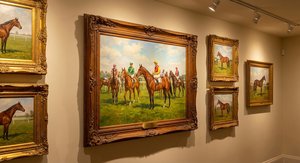
To step into the world of Sir Alfred James Munnings is to leave the noise of the modern era behind and enter a realm of rhythmic motion, sun-drenched pastures, and the quiet dignity of the English countryside. His work does more than merely depict horses; it captures the very pulse of a vanishing way of life. Through his brush, we feel the thundering gallop of a hunter, the gentle sway of a pony in a summer meadow, and the profound, unspoken bond between human and animal that defined an era of British tradition.
Born in 1878, Munnings emerged from the practical discipline of a printing apprenticeship to become one of the most celebrated equestrian artists of the 20th century. His style, deeply influenced by the plein air techniques of the Newlyn School, breathes with an Impressionistic vitality. He possessed a rare ability to translate the fleeting effects of light and atmosphere into palpable textures—the sheen on a horse's coat, the dust kicked up from a dirt track, and the soft, hazy horizons of the Suffolk landscape. His service as an official war artist during the First World War added a layer of poignant depth to his repertoire, grounding his romanticism in a profound respect for the resilience of life amidst hardship.
<Today, these artworks remain deeply meaningful because they serve as a visual archive of a pastoral England that has largely been transformed by time. In an increasingly digital and disconnected world, Munnings’s canvases offer a sensory return to nature and tradition. They resonate with collectors and decorators alike for their ability to bring warmth, movement, and a sense of historical continuity to any space.
In the following selection, we guide you through twenty-five of his most significant works. From his early, atmospheric studies of rural life to his masterful, high-energy equestrian portraits, this list celebrates the enduring legacy of an artist who mastered the art of capturing motion and soul on canvas.
The 6th Earl Winterton, MFH - Sir Alfred James Munnings
 The 6th Earl Winterton, MFH - Sir Alfred James Munnings
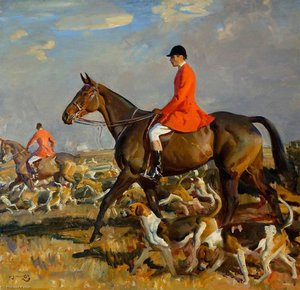
In "The 6th Earl Winterton, MFH," Sir Alfred James Munnings captures a profound sense of quiet authority and seasoned expertise through the commanding gaze of the Earl. The painting transcends simple portraiture, offering a psychological window into the nobility of heritage and the deep-seated bond between man and animal. As the central figure sits atop his muscular brown horse, dressed in a vibrant scarlet hunting jacket, there is an unmistakable feeling of stability and tradition that resonates with anyone seeking a connection to the past.
The composition is alive with kinetic energy, featuring nine hounds pressing close to the horses' hooves in eager anticipation. Munnings’s mastery of plein air techniques allows the warmth of the afternoon sun to glint off the horse's coat, creating a luminous atmosphere that breathes life into the English meadow. For collectors and decorators, integrating this piece into a personal sanctuary or corporate space can transform an environment into a place of profound reflection and calm. As one of the top 25 artworks of Sir Alfred James Munnings , this masterpiece provides a sophisticated interplay of bold reds and organic greens, anchoring any room with its timeless, spirited elegance.
The Fancy Dress Ball - Sir Alfred James Munnings
 The Fancy Dress Ball - Sir Alfred James Munnings
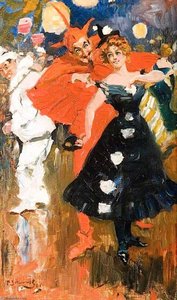
In The Fancy Dress Ball , the physical presence of the paint is as much a part of the story as the Edwardian revelry itself. To observe this 1901 masterpiece is to witness Munnings’ mastery of impasto ; he applies oil with a rhythmic, thick texture that catches the light, giving the masquerade a palpable, three-dimensional energy. The heavy brushstrokes do not merely depict movement—they create it, as vibrant reds and deep blacks collide in a dance of light and shadow.
This tactile depth is precisely what defines this piece among the top 25 artworks of Sir Alfred James Munnings . At ArtsDot.com, our mission is to preserve this exact materiality. Our hand-painted reproductions are meticulously crafted on 100% cotton canvas, ensuring that the visible brushwork and the dramatic, sculptural quality of the original's surface are captured for your collection. We bring the atmospheric soul of Munnings’ impressionistic technique into your space, maintaining the authentic, textured essence of this historical moment.
Stranded - Sir Alfred James Munnings
 Stranded - Sir Alfred James Munnings
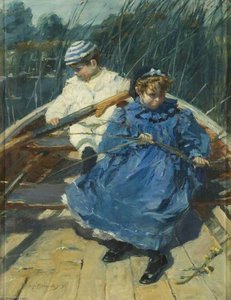
In Stranded , painted in 1898, we encounter a rare, tender moment from the early period of Sir Alfred James Munnings. Before he became the world-renowned master of equine movement and hunting scenes, this work reveals his profound ability to capture the quiet, atmospheric stillness of rural life. The painting presents a delicate scene of two children navigating a small boat; the boy at the bow and the girl behind him, their hands steady on the oars as they drift through the water.
There is a gaze in Stranded that follows you—not with judgment, but with understanding . Through soft, Impressionistic brushstrokes, Munnings captures the light dancing on the surface and the distant, watchful presence of figures on the shore. This isn't merely a landscape; it is a mirror reflecting the innocence of childhood and the fleeting nature of peace. Its inclusion in our collection of the top 25 artworks of Sir Alfred James Munnings is a testament to its power to make the invisible visible. Imagine this sense of tranquility in your space, reminding you that even in moments of being stranded , there is profound beauty to be found.
The Ford - Sir Alfred James Munnings
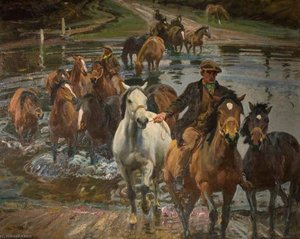 The Ford - Sir Alfred James Munnings
In The Ford , the lines of Sir Alfred James Munnings’s composition aren’t merely drawn; they are choreographed . This is not a static landscape, but a dance frozen in time , where the turbulent waters of a flooded English field become a stage for equine grace and human camaraderie. As you observe the group navigating the muddy terrain, you see how Munnings transforms a scene of potential chaos into a moment of profound harmony.
The painting breathes with a vibrant, Impressionistic energy. Earthy browns and deep greens collide with the swirling, reflective textures of the water, capturing the rhythmic splashing of hooves and the determined posture of the riders. Each muscle tension in the nine horses is rendered with breathtaking precision, pulling the viewer into this vanishing world of rural tradition. Its place among the top 25 artworks of Sir Alfred James Munnings is a tribute to this mastery of movement. What if your own walls could breathe rhythm and hold this same delicate balance between nature's unrestrained power and classical elegance?
A Dark Bay Hunter - Sir Alfred James Munnings
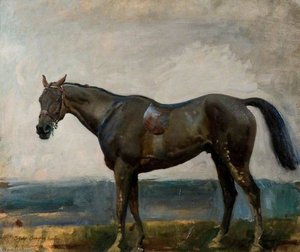 A Dark Bay Hunter - Sir Alfred James Munnings
In A Dark Bay Hunter , Sir Alfred James Munnings captures more than just the physical prowess of an equine subject; he distills a sense of quiet, watchful dignity. The horse’s steady presence, marked by the striking white spot on its back and the meticulous rendering of its powerful musculature, serves as a profound meditation on strength and stillness. As one of the top 25 artworks of Sir Alfred James Munnings , this piece resonates through its masterful use of Impressionistic light and texture, where broken hues and layered pigments bring the vitality of the English countryside to life.
There is a psychological depth in this portrait that transcends the subject matter, offering a universal mirror of grace and resilience. For collectors and decorators, integrating such an evocative work into a professional or personal space can transform a room into a sanctuary for profound reflection. The interplay of the dark bay tones against the soft, atmospheric sky creates a calming focal point, making it an essential selection for those seeking to infuse their interiors with the timeless, romantic spirit of British tradition.
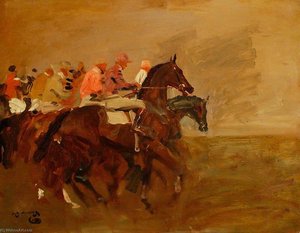
The Start, October Meeting, Newmarket, Suffolk - Sir Alfred James Munnings
In The Start, October Meeting, Newmarket, Suffolk , the lines of Sir Alfred James Munnings aren’t merely drawn; they are choreographed . This is not a static composition; it is a dance frozen in time . As the horses surge forward at the historic Newmarket track, Munnings captures that electric, breathless moment where tension breaks into pure, kinetic energy. Through his masterful Impressionistic technique, the vibrant reds and greens of the jockeys' silks collide with the earthy tones of the Suffolk landscape, creating a visual rhythm that feels alive.
The painting serves as a powerful testament to why this piece belongs among the top 25 artworks of Sir Alfred James Munnings . He utilizes bold, layered brushstrokes to translate the thundering hooves and the palpable excitement of the racecourse into a sensory experience. What if your living room could hold that same balance? What if your walls could breathe rhythm ? By bringing this iconic depiction of British equestrian tradition into your space, you invite the enduring spirit of the English countryside to become part of your home's architectural narrative.
The Royal Carriage Entering the Long Walk, Windsor, on the Return from the Ascot Races, 1925 - Sir Alfred James Munnings
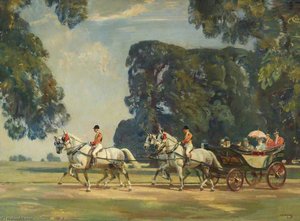 The Royal Carriage Entering the Long Walk, Windsor, on the Return from the Ascot Races, 1925 - Sir Alfred James Munnings
Imagine the rhythmic clip-clop of hooves against the path and the soft rustle of silk as The Royal Carriage Entering the Long Walk, Windsor, on the Return from the Ascot Races, 1925 unfolds before your eyes. In this masterpiece, Sir Alfred James Munnings captures more than a mere procession; he preserves a fleeting moment of British grandeur. The canvas breathes with the dappled sunlight filtering through the ancient trees of Windsor, illuminating the vibrant textures of the horse-drawn carriage and the dignified figures within.
Munnings utilizes his signature Impressionistic technique, employing loose, energetic brushstrokes that convey the palpable movement of the four powerful horses. The palette is a sophisticated blend of luminous hues that evoke both aristocratic prestige and the serene atmosphere of the English countryside. This work stands as a pinnacle among the top 25 artworks of Sir Alfred James Munnings because it transcends simple documentation to offer a sensory experience of tradition and stability. For the modern collector, introducing such a piece into a professional or residential space brings an air of timeless elegance and a reflective, tranquil connection to history's most graceful eras.
Nobby Gray with the Hunt - Sir Alfred James Munnings
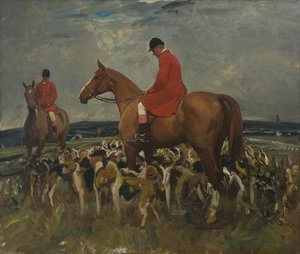 Nobby Gray with the Hunt - Sir Alfred James Munnings
In the pantheon of the top 25 artworks of Sir Alfred James Munnings , Nobby Gray with the Hunt stands as a definitive masterclass in capturing the visceral pulse of British equestrian tradition. This work transcends mere sporting documentation; it serves as a profound temporal bridge, preserving the kinetic energy and aristocratic ceremony of a vanishing English era. At its heart, the powerful presence of Nobby Gray anchors a composition defined by dynamic diagonals and the breathless anticipation of the chase.
Munnings utilizes a sophisticated Impressionistic vocabulary, employing thick, impasto brushstrokes that allow light to dance across the horse’s musculature. The palette—a harmonious blend of rustic ochres, deep umbers, and sudden flashes of hunting red—creates a sculptural texture that feels remarkably modern. In today's curated interiors, this painting remains a vital cultural talking point, offering a sense of heritage and organic warmth. Its ability to evoke the scent of damp earth and the rhythmic movement of hounds makes it an essential cornerstone for any serious collection of 20th-century British art.
Study for 'Lady Munnings Riding on Exmoor' - Sir Alfred James Munnings
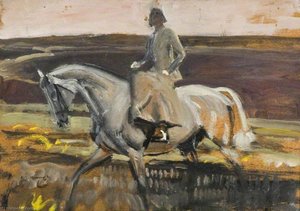 Study for 'Lady Munnings Riding on Exmoor' - Sir Alfred James Munnings
In the Study for 'Lady Munnings Riding on Exmoor' , Sir Alfred James Munnings invites us into the very heart of his creative evolution. This piece is far more than a preliminary sketch; it is a vibrant, energetic window into the artist's studio, capturing the raw, unrefined spirit of movement before the final layers of oil were applied. Through loose, impressionistic brushstrokes and a masterful play of light, we witness the rhythmic gallop of the grey hunter, ‘Magnolia,’ and the poised elegance of Violet Munnings navigating the rugged Somerset landscape.
Its inclusion in our top 25 artworks is essential because it reveals the technical brilliance behind his most famous equestrian masterpieces. The study showcases how Munnings utilized thin washes and dynamic compositions to translate the scent of damp earth and the wind of the countryside onto canvas. At ArtsDot.com, we believe such profound moments of vitality should not be confined to museum archives. By bringing this high-quality reproduction into your professional or private space, you transform a simple wall into a curated gallery, making the timeless, spirited legacy of British equestrian art an accessible part of your daily environment.
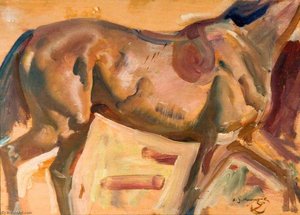
Study of 'Rufus' for 'Our Mutual Friend the Horse' - Sir Alfred James Munnings
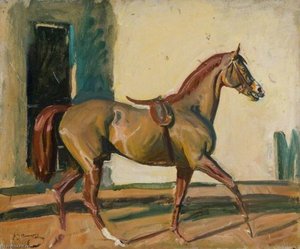 Study of 'Rufus' for 'Our Mutual Friend the Horse' - Sir Alfred James Munnings
In the Study of 'Rufus' for 'Our Mutual Friend the Horse' by Sir Alfred James Munnings, the viewer is immediately met with the raw, tactile energy of the artist’s preparatory process. The brushwork is remarkably visceral; short, choppy strokes of oil paint define the taut musculature of the chestnut horse, creating a textured surface where light and shadow dance across the animal's powerful form. This piece stands within the top 25 artworks of Sir Alfred James Munnings because it captures the very soul of movement—a fleeting moment of kinetic grace frozen in thick, expressive impasto.
Munnings’s ability to translate the weight and spirit of an equine subject through broken, Impressionistic strokes is what makes this study a masterpiece of observation. At ArtsDot.com, our mission is to preserve this exact three-dimensional quality. Our hand-painted oil reproductions are meticulously crafted on 100% cotton canvas, ensuring that the visible brushstrokes and deep tonal ranges of Munnings’s original vision are brought into your space, maintaining the authentic, sculptural depth that digital prints simply cannot replicate.
A Racehorse in a Landscape - Sir Alfred James Munnings
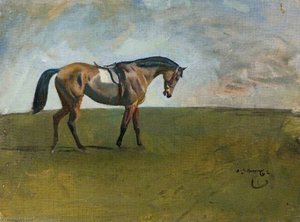 A Racehorse in a Landscape - Sir Alfred James Munnings
Imagine standing in the quiet heart of the Suffolk countryside, where the only sound is the rhythmic thud of hooves against soft earth and the gentle rustle of wind through long grass. In A Racehorse in a Landscape , Sir Alfred James Munnings captures this precise moment of pastoral serenity. The painting presents a magnificent brown horse, marked by a striking white stripe, as it moves with effortless grace across a sun-drenched expanse.
This work earns its place among the top 25 artworks of Sir Alfred James Munnings because it transcends mere animal portraiture; it is an atmospheric window into a vanishing era of English tradition. Through loose, Impressionistic brushstrokes, Munnings distills the shimmering light and the palpable energy of the equine spirit. By bringing such a piece into a modern interior, one does not just decorate a wall; one invites a sense of timeless tranquility and the noble, enduring beauty of the natural world into the daily rush of contemporary life.
Study for 'The Saddling Paddock, Cheltenham March Meeting' - Sir Alfred James Munnings
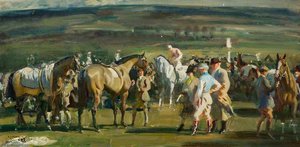 Study for 'The Saddling Paddock, Cheltenham March Meeting' - Sir Alfred James Munnings
In Study for 'The Saddling Paddock, Cheltenham March Meeting' by Sir Alfred James Munnings, the canvas vibrates with a palpable, sun-drenched warmth. To observe this work is to witness the power of thick, textured impasto; the artist uses heavy, rhythmic brushstrokes to build a surface where light doesn't just sit—it dances across the horses' gleaming coats. This preparatory piece is a masterclass in Impressionistic movement, prioritizing the fleeting energy of the Cheltenham paddock over rigid detail. You can almost feel the frantic anticipation of the jockeys and the muscular vitality of the horses through the visible, tactile ridges of oil paint.
At ArtsDot.com, our mission is to preserve this exact three-dimensional quality for your collection. We specialize in high-end, hand-painted reproductions that honor Munnings's legacy, ensuring that every stroke and textural nuance of his top 25 artworks is captured on 100% cotton canvas. We bring the soul of the British equestrian tradition into your space, delivering a physical depth that digital prints simply cannot replicate.
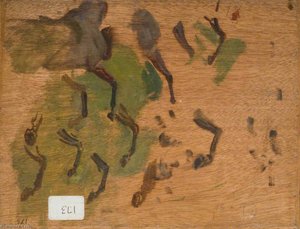
Study of a Wood (verso) - Sir Alfred James Munnings
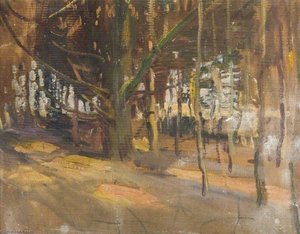 Study of a Wood (verso) - Sir Alfred James Munnings
What story does the untamed landscape within Study of a Wood (verso) by Sir Alfred James Munnings tell about the fleeting nature of light and memory? Painted in 1920, this evocative work emerged from a period where Munnings was deeply immersed in capturing the atmospheric soul of the English countryside. As a preparatory study rendered on the reverse of another canvas, it offers an intimate look into his creative evolution, prioritizing expressive, loose brushstrokes over rigid detail to capture the dappled sunlight filtering through an ancient canopy.
The palette—a rich tapestry of mossy greens, deep ochres, and earthy browns—creates a sensory experience that transcends the canvas. For the modern collector, this piece serves as a curated escape; its woodland reverie provides a tranquil focal point for sophisticated interior spaces, bringing the timeless, romantic essence of the British landscape into the home. As one of the top 25 artworks of Sir Alfred James Munnings, it stands as a testament to his ability to transform a simple sketch into a profound emotional journey through nature.
Spring Evening, Cornwall - Sir Alfred James Munnings
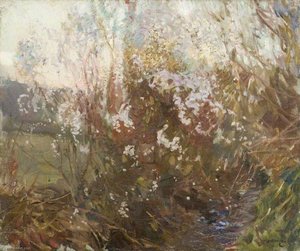 Spring Evening, Cornwall - Sir Alfred James Munnings
In Spring Evening, Cornwall , Sir Alfred James Munnings invites us into a moment of profound stillness, where the boundaries between the earth and the sky seem to dissolve in the twilight. As one of the most significant pieces among the top 25 artworks of Sir Alfred James Munnings , this painting functions as more than a landscape; it is an emotional sanctuary. The scene near Lamorna Cove is defined by the luminous white blossoms of mature trees, their delicate petals catching the final, soft glimmers of a Cornish dusk.
Munnings utilizes masterful Impressionistic techniques, layering oils to capture the rhythmic flow of the river and the subtle interplay of blues and greens. There is a gaze in this work that follows you—not with judgment, but with understanding . It does not merely depict a seasonal transition; it acts as a mirror to our own need for tranquility. To hang this masterpiece in a professional or residential space is to invite a constant reminder of peace, ensuring that even amidst the pressures of modern life, you are connected to the enduring, rhythmic beauty of the natural world.
Sheep on Exmoor - Sir Alfred James Munnings
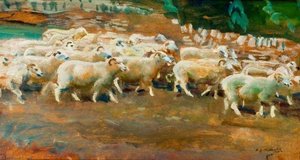 Sheep on Exmoor - Sir Alfred James Munnings
In Sheep on Exmoor , Sir Alfred James Munnings captures more than a pastoral scene; he preserves a moment of profound stillness amidst the gathering shadows of the 1940s. This work earns its place among the top 25 artworks of Sir Alfred James Munnings by acting as a visual sanctuary. Through impressionistic realism, Munnings utilizes loose, energetic brushstrokes and a palette of muted earth tones to depict a flock moving across the rugged landscape. The subtle interplay of light on the sheep’s wool against the deep greens of the Exmoor hills creates a sense of movement and enduring peace.
This painting is a masterclass in using light to convey resilience, making it an essential selection for those seeking to bring historical depth to modern interiors. At ArtsDot.com , we believe such emotive landscapes should not be confined to museums. Whether you are furnishing a corporate suite or a private study, this reproduction serves as a powerful statement of tranquility and timeless British heritage, transforming any professional or residential space into a curated gallery of emotional depth.
Huntsman Crossing the Dunkery Beacon, Exmoor - Sir Alfred James Munnings
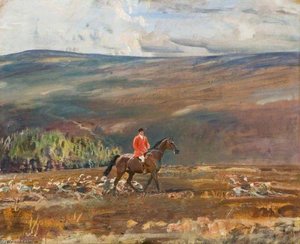 Huntsman Crossing the Dunkery Beacon, Exmoor - Sir Alfred James Munnings
In Huntsman Crossing the Dunkery Beacon, Exmoor , Sir Alfred James Munnings invites us into a cinematic moment of movement and tradition. The canvas breathes with the rugged energy of Somerset’s highest peak, where the air feels heavy with the scent of damp earth and the rhythmic pulse of the hunt. Through masterful Impressionistic technique, Munnings utilizes loose, textured brushstrokes to build layers of color that capture the diffused light of the English countryside.
The composition is defined by expansive horizontal bands of rolling hills and vast skies, creating a sense of profound scale. A central huntsman, astride a powerful horse and accompanied by a pack of hounds, commands the foreground, embodying a harmonious yet commanding relationship between man and nature. The visible impasto and atmospheric perspective lend a tactile depth to the scene, making the landscape feel alive. For the modern collector, this piece offers more than mere decoration; its sweeping vistas and soulful connection to rural heritage provide a grounding presence, capable of inspiring reflection and bringing a sense of timeless, pastoral calm to any sophisticated interior.
Bagsworthy Water, Exmoor, at Cloud - Sir Alfred James Munnings
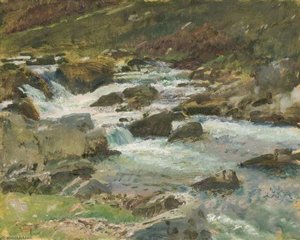 Bagsworthy Water, Exmoor, at Cloud - Sir Alfred James Munnings
In Bagsworthy Water, Exmoor, at Cloud , Sir Alfred James Munnings captures a moment of raw, elemental power that transcends mere landscape painting. As one of the most commanding works in our collection of the top 25 artworks of Sir Alfred James Munnings, this piece does not simply depict a river; it invites you to feel the turbulent energy of the Exmoor terrain. The heavy use of impasto technique creates a tactile surface where thick, rhythmic brushstrokes mimic the rushing rapids and the jagged resistance of stone.
The palette is a masterclass in brooding beauty, utilizing earthy greens, deep browns, and subtle, reflective blues to evoke an atmosphere of overcast intensity. There is a profound sense of movement here—a visceral reminder of nature's untamed spirit. When placed in a professional or residential setting, this painting acts as more than decor; it serves as a window into a vanishing British wilderness, offering a sensory experience of light, motion, and the sublime strength of the natural world.
Two Calves grazing by a Hedge - Sir Alfred James Munnings
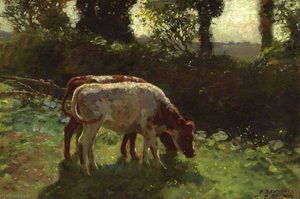 Two Calves grazing by a Hedge - Sir Alfred James Munnings
In Two Calves Grazing by a Hedge , Sir Alfred James Munnings invites you into a sanctuary of pastoral stillness. Painted in 1904, this work is far more than a study of livestock; it is an evocative window into a vanishing English countryside. As you stand before this canvas, the dappled sunlight filtering through the hedgerow seems to move, rendered through Munnings’s masterful Impressionistic brushwork. The soft, rhythmic grazing of the two calves creates a profound sense of tranquility that settles over the viewer like a quiet afternoon in Suffolk.
There is a gaze in this piece that follows you—not with judgment, but with understanding . It does not merely present a scene; it acts as a mirror to our own need for peace amidst a modern, industrial world. The subtle interplay of earthy greens and warm ochres captures the very soul of the landscape. When placed in your collection, this masterpiece serves as a constant, gentle reminder: even in the midst of chaos, there is a place of enduring harmony waiting to be rediscovered.
Langham Mill Pool on the Stour - Sir Alfred James Munnings
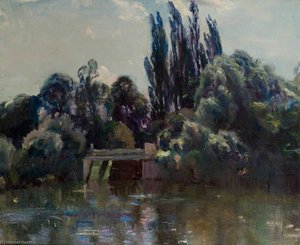 Langham Mill Pool on the Stour - Sir Alfred James Munnings
In Langham Mill Pool on the Stour , Sir Alfred James Munnings captures far more than a mere Suffolk landscape; he preserves a fragment of a vanishing England. This work stands as a cornerstone among the top 25 artworks of Sir Alfred James Munnings because it functions as a visual eulogy for a lost Arcadia. Through an Impressionistic lens, Munnings utilizes loose, rhythmic brushstrokes to animate the water's surface, where dappled sunlight dances across emerald and turquoise hues. The painting’s philosophical depth lies in its ability to evoke a profound sense of nostalgia, inviting the viewer into a tranquil, pre-industrial sanctuary.
In contemporary interior curation, this piece remains a vital cultural touchstone. Its emphasis on organic textures and the interplay of light and shadow resonates with modern desires for biophilic design and serene, nature-focused aesthetics. The subtle movement within the foliage and the shimmering reflections create a meditative atmosphere that brings a sense of historical continuity and peace to any sophisticated space. It is not just a landscape, but an enduring symbol of resilience and natural beauty.
A Farmyard Scene - Sir Alfred James Munnings
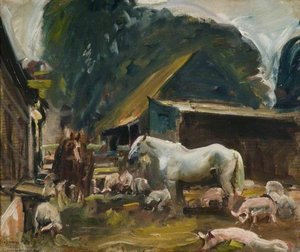 A Farmyard Scene - Sir Alfred James Munnings
In A Farmyard Scene , Sir Alfred James Munnings does not merely paint a landscape; he captures the very heartbeat of a vanishing England. This work earns its place among the top 25 artworks of Sir Alfred James Munnings by masterfully distilling the energy of rural life into a vibrant, Impressionistic symphony of light and motion. The canvas breathes with the movement of a gleaming white horse, set against a textured backdrop of earthy browns, mossy greens, and the rustic charm of a sun-drenched barn.
Munnings uses bold, rhythmic brushstrokes to transform a simple moment of livestock and soil into a profound celebration of tradition. The interplay between the tranquil grazing pigs and the dynamic, light-drenched atmosphere creates a sense of timeless harmony that transcends the era it depicts. At ArtsDot.com, we believe such evocative mastery should not be confined to museums. By offering high-quality, hand-painted reproductions, we bring this piece of British heritage into your professional or private spaces, allowing you to transform a corporate office or a refined home into a sanctuary of historical elegance and enduring beauty.
Tagg's Island - Sir Alfred James Munnings
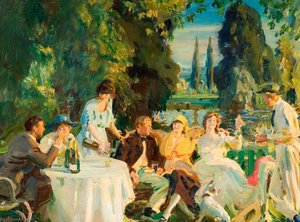 Tagg's Island - Sir Alfred James Munnings
In Tagg's Island , the physical presence of the paint is as vital as the subject itself. Upon close inspection, one discovers the masterful use of impasto , where Sir Alfred James Munnings applied thick, rhythmic layers of oil to capture the dappled sunlight filtering through the Suffolk foliage. These visible, textured brushstrokes do more than depict a summer luncheon; they create a tactile energy that makes the shimmering lemonade and Edwardian silks feel almost tangible. This emphasis on the materiality of the medium is precisely why this piece ranks among the top 25 artworks of Sir Alfred James Munnings .
At ArtsDot.com, our mission is to preserve this exact three-dimensional quality for your collection. Our hand-painted oil reproductions are meticulously crafted on 100% cotton canvas, ensuring that the heavy texture and expressive movement of Munnings’ original strokes are replicated with academic precision. We bring the soul of the English countryside into your space, offering a high-end window into a vanishing era through art that retains its physical depth and luminous spirit.
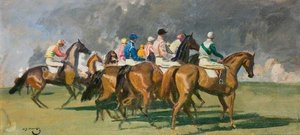
Under Starter's Orders - Sir Alfred James Munnings
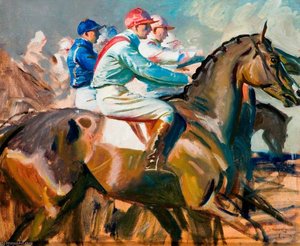 Under Starter's Orders - Sir Alfred James Munnings
In "Under Starter's Orders," Sir Alfred James Munnings captures the breathless tension that exists just before the gates fly open. This masterpiece is a vibrant distillation of English sporting tradition, where the air feels thick with anticipation and the scent of turf. As one of the most essential works in the top 25 artworks of Sir Alfred James Munnings, it functions as more than a mere sporting record; it is a sensory immersion into a vanishing era of rural prestige.
The canvas erupts with the energy of British Impressionism, utilizing loose, rhythmic brushstrokes to convey the kinetic potential of the horses and the bright, fluttering silks of the jockeys. Bold reds and blues dance across the composition, mirroring the pulse of the crowd. To hang this piece in your collection is to invite that very electricity into your space—a reminder of strength, nobility, and the timeless beauty of movement. It does not simply decorate a wall; it brings the spirited heart of the English countryside directly into your professional or private environment.
Daniel Tomkins and His Dog - Sir Alfred James Munnings
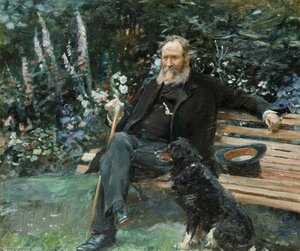 Daniel Tomkins and His Dog - Sir Alfred James Munnings
Imagine the profound stillness of a late Victorian afternoon, where the only sound is the soft breathing of a loyal companion and the rustle of leaves in a quiet English garden. In Daniel Tomkins and His Dog , Sir Alfred James Munnings captures this fleeting sense of peace with unparalleled sensitivity. This work stands as a vital entry in the top 25 artworks of Sir Alfred James Munnings because it transcends mere portraiture; it is an emotional archive of a vanishing way of life.
Through masterful Impressionistic brushstrokes, Munnings renders the weathered textures of Tomkins’s features and the sturdy presence of his canine friend amidst a soft arrangement of potted greenery. The painting evokes a deep sense of dignity and steadfastness, reminding us of the beauty found in simple, enduring bonds. Bringing such a piece into a modern space offers more than decoration; it introduces a meditative anchor of serenity and historical depth, allowing the quiet strength of the British countryside to enrich the atmosphere of any contemporary home or professional environment.
Hornberg, Black Forest - Sir Alfred James Munnings
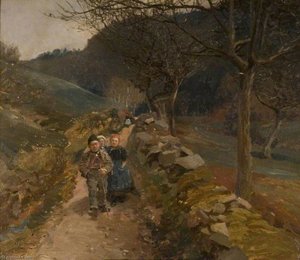 Hornberg, Black Forest - Sir Alfred James Munnings
To encounter Hornberg, Black Forest by Sir Alfred James Munnings is to step into a serene, sun-dappled memory of a world long passed. As one of the most evocative entries in our collection of the top 25 artworks of Sir Alfred James Munnings, this 1903 masterpiece transcends simple landscape painting; it serves as a profound window into the pastoral tranquility of the early 20th century. The scene unfolds along a rustic dirt track, where a family and their faithful dogs wander through the lush, verdant depths of the forest, accompanied by the quiet presence of a horse in the distance.
Munnings utilizes his signature Impressionistic roots to manipulate light and shadow, using broken color techniques that make the dappled sunlight appear to dance across the earthy ochres and deep greens of the terrain. For the discerning collector or decorator, this piece offers an unparalleled sense of heritage and emotional depth. Its harmonious palette and rhythmic brushwork provide a sophisticated focal point for luxury interiors, bringing a timeless, aristocratic charm and a sense of historical continuity to any refined architectural space.
Studies of a Brown Mare for 'Unsaddling Enclosure, Epsom' - Sir Alfred James Munnings
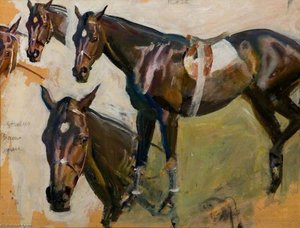 Studies of a Brown Mare for 'Unsaddling Enclosure, Epsom' - Sir Alfred James Munnings
To witness the raw, kinetic energy of a Thoroughbred in repose is to understand the very heartbeat of British sporting history. In Studies of a Brown Mare for 'Unsaddling Enclosure, Epsom' by Sir Alfred James Munnings , we are invited into the preparatory soul of a masterpiece, capturing the tension and grace that precede the roar of the Derby. This work earns its place among the top 25 artworks of Sir Alfred James Munnings through its masterful use of Impressionistic technique to document the equine spirit.
Munnings employs a palette of rich ochres, deep umbers, and earthy browns, applied with loose, rhythmic brushstrokes that suggest the flickering light of the Epsom Downs. The composition focuses on the physical presence of the mares, where the play of light on their muscular flanks creates a sense of breathing life. There is a profound tactile quality in the way the paint captures both the lush green of the paddock and the subtle tension in the horses' postures. Such works remain timeless, offering any professional space or private collection a window into a vanished era of rural elegance and unbridled movement.
Conclusion
To wander through the works of Sir Alfred James Munnings is to step into a world where time slows, and the rhythmic pulse of the English countryside becomes palpable. His masterpieces are far more than mere historical records of a vanishing era; they are living presences that breathe life into the spaces they inhabit. Each stroke of his brush captures not just the muscular grace of a horse or the soft light of a Suffolk morning, but a profound, enduring connection to the earth and the spirit of tradition. These paintings remain vital, moving hearts with their nostalgic warmth and shaping the atmosphere of any room with their quiet, dignified energy.
At ArtsDot.com , we believe that such timeless beauty should not be confined to museum walls but integrated into the very fabric of our most cherished environments. We serve as a dedicated creative partner for architects, interior designers, and hospitality professionals who seek to transform hotels, villas, and refined corporate spaces into curated artistic statements. Through our meticulous process of creating hand-painted, museum-quality reproductions, we allow you to bring the soul of Munnings’s equestrian landscapes into your projects with absolute precision. Whether you require custom sizing for a grand hotel lobby or professional digital mockups to visualize a specific color palette within a new interior, our mission is to ensure that every commission becomes a seamless extension of your design vision.
As we conclude this journey through the equine elegance of Munnings, we invite you to explore his full collection and discover how these storied canvases can anchor your next architectural endeavor with grace, history, and unparalleled artistry.