Introduction
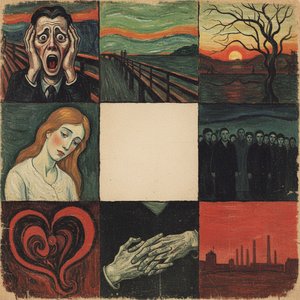
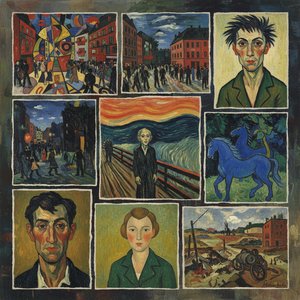
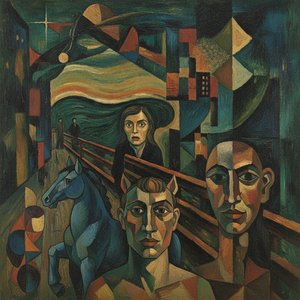
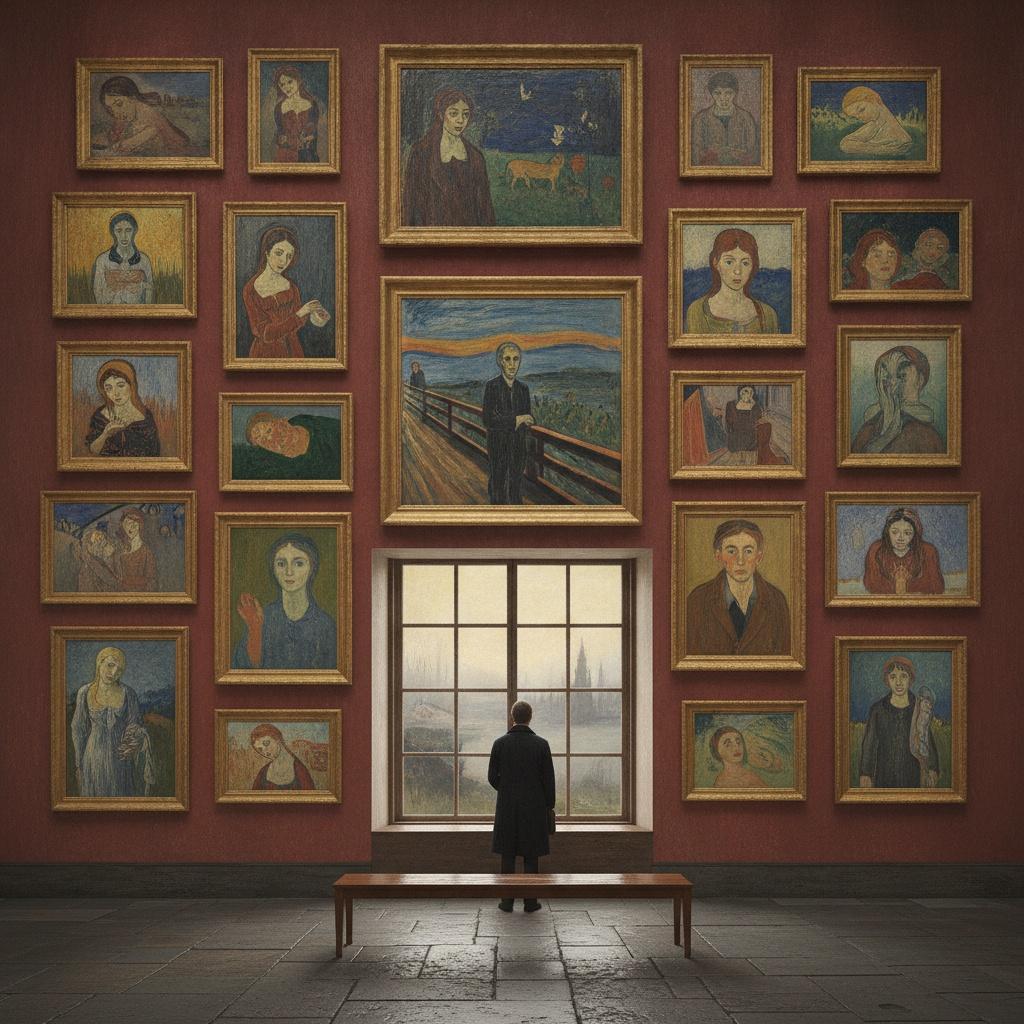
To step into the world of Edvard Munch is to walk through a landscape where the boundary between the external environment and the internal psyche dissolves entirely. His work does not merely depict scenes; it captures the very vibration of human existence—the tremors of anxiety, the weight of grief, and the piercing intensity of longing. As we prepare to explore his top 25 masterpieces, we are not just looking at paint on canvas, but witnessing the birth of Expressionism, where color and form were liberated from reality to serve the profound needs of the soul.
Born in Norway amidst a life marked by the shadows of loss and illness, Munch transformed personal trauma into a universal visual language. Moving through the bohemian circles of Kristiania and the vibrant, transformative light of Paris, he synthesized the bold palettes of Post- Impressionism with a raw, psychological depth that was entirely his own. His "soul paintings" rejected the polite boundaries of academic realism, opting instead for distorted lines and haunting, rhythmic brushstrokes that mirror the turbulent rhythms of the human heart.
These works remain strikingly relevant in our modern era. In an age often characterized by rapid change and collective uncertainty, Munch’s ability to externalize fear and existential dread resonates with a contemporary audience that understands the complexity of the inner life. His canvases serve as mirrors, reflecting the timeless struggles of identity, mortality, and the search for meaning amidst chaos.
In the following selection, we will guide you through twenty-five of his most significant works—from the iconic, blood-red skies of his most famous compositions to the more intimate, somber portraits that reveal the quiet fragility of life. Each piece offers a window into a masterwork of emotional architecture, inviting you to experience the profound, unsettling, and beautiful depths of the Munch legacy.
The Scream - Edvard Munch
 The Scream - Edvard Munch
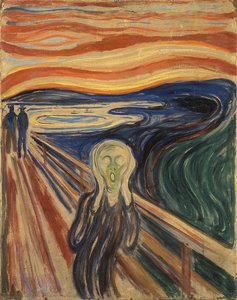
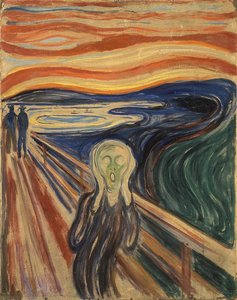
In The Scream by Edvard Munch, the viewer is immediately met with a visceral, silent howl that transcends the canvas. The central, androgynous figure, with hands pressed against a skull-like face, serves as a universal mirror for the existential dread and modern anxiety that define much of Munch's most celebrated work. As one of the most recognizable pieces in our collection of the top 25 artworks of Edvard Munch , it captures a moment where the internal psyche bleeds into the external landscape.
The composition is a masterclass in emotional turbulence; swirling, fiery oranges and blood-reds collide with deep, melancholic blues, creating an atmosphere of profound instability. The distorted perspective and thick, expressive brushstrokes pull you into a vortex of psychological depth, making the painting feel less like a depiction and more like an experience. Integrating such a powerful, emotive masterpiece into your space offers more than mere decoration; it provides a focal point for profound reflection, inviting a sense of raw, human connection and transformative energy into any personal sanctuary or curated gallery wall.
Melancholy - Edvard Munch
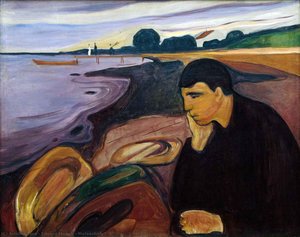 Melancholy - Edvard Munch
In Melancholy , Edvard Munch does not merely depict a landscape; he composes a visual sonata of solitude. As you stand before this 1894 masterpiece, the light does not simply illuminate the scene—it breathes with a heavy, rhythmic sorrow. The artist uses a somber palette of deep blues, purples, and murky greens to translate the weight of human isolation into something tactile. You can almost feel the cool, damp air of the shoreline through his expressive, impasto-like brushstrokes that ripple across the canvas.
The composition is masterfully weighted, with a solitary figure anchored to the right, lost in profound introspection. The high horizon line and compressed space create a psychological pressure, mirroring the internal tension of the subject. While distant ships offer a faint, flickering suggestion of hope, they are ultimately swallowed by the vast, turbulent atmosphere. This work remains a cornerstone of the Expressionist movement because it transcends objective reality to capture the raw, unshielded essence of the human soul—a profound addition to any collection focused on the emotional depth of Munch’s top works.
Madonna - Edvard Munch
 Madonna - Edvard Munch
In Madonna by Edvard Munch, the eye is immediately drawn to the visceral, almost frantic texture of the paint. The work is defined by its raw materiality; thick, jagged brushstrokes and swirling, organic lines create a sense of movement that feels less like a painting and more like an emotional outburst captured on canvas. This piece stands as a cornerstone of the top 25 artworks of Edvard Munch because it rejects traditional beauty in favor of a haunting, psychological truth. The jarring contrast between the pale, distressed figure and the chaotic vortex of fiery oranges and deep blacks embodies the very essence of Expressionism.
At ArtsDot.com, we understand that the power of such a masterpiece lies in its tactile depth. Our hand-painted oil reproductions are meticulously crafted to preserve this three-dimensional quality, ensuring that every visible brushstroke and heavy impasto layer is replicated for your collection. We bring the profound tension and somber light of Munch’s inner world into your space, providing a high-end, textured tribute to one of history's most emotive visionaries.
Christmas in the Brothel - Edvard Munch
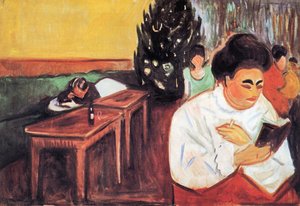 Christmas in the Brothel - Edvard Munch
In Christmas in the Brothel by Edvard Munch, the viewer is immediately struck by the visceral, gestural energy of the impasto brushwork. The thick, rhythmic application of oil paint creates a textured surface where reds, oranges, and deep browns collide, capturing the chaotic, flickering light of a crowded interior. This isn't merely a depiction of a scene; it is a tactile exploration of psychological tension. Munch utilizes bold, organic shapes and flattened perspectives to evoke the fragmented nature of modern existence, making this piece a cornerstone of his Expressionist legacy.
At ArtsDot.com, we specialize in preserving this essential materiality. Our hand-painted oil reproductions are meticulously crafted on 100% cotton canvas to ensure that every heavy brushstroke and emotional contour of Munch’s original vision is felt by the connoisseur. We bring the three-dimensional depth of these top 25 Edvard Munch masterpieces into your professional or private space, providing a high-end, authentic sensory experience that digital prints simply cannot replicate.
The Dance of Life - Edvard Munch
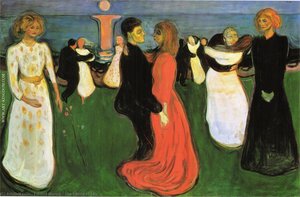 The Dance of Life - Edvard Munch
In The Dance of Life , Edvard Munch captures a profound sense of rhythmic tension, where the gaze of the central figures seems to oscillate between the joy of connection and the shadow of inevitable loss. As one of the most significant pieces in our collection of the top 25 artworks of Edvard Munch , this masterpiece utilizes a striking palette—most notably the vivid, passionate red of the woman's dress against more somber, undulating tones—to mirror the cyclical nature of human existence. The composition moves with an almost hypnotic fluidity, representing the stages of life through the symbolic presence of youth, passion, and decline.
For the discerning collector or decorator, integrating this work into a professional or private space offers more than mere decoration; it provides a window into the psychological depth of Expressionism. The painting’s ability to evoke both vitality and melancholy makes it a universal mirror of the human experience. Displaying such an emotionally resonant piece can transform a corporate lounge or a personal sanctuary into a sophisticated environment for profound reflection, inviting guests to contemplate the beautiful, turbulent dance of life itself.
Ashes - Edvard Munch
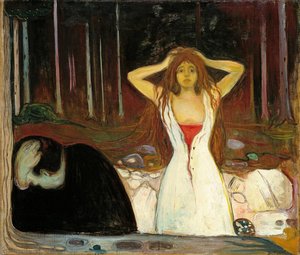 Ashes - Edvard Munch
In Ashes (1894), Edvard Munch invites you into a psychological landscape where the boundaries between life and death blur into a singular, haunting vision. There is a gaze in Ashes by Edvard Munch that follows you—not with judgment, but with understanding . As you stand before this masterpiece, the vibrant, fiery red of the woman’s hair acts as a visceral pulse against the suffocating, dark verticality of the forest. The composition, heavy with muted earth tones and deep shadows, forces an encounter with the profound: a figure in anguish clutching her head, while a shrouded presence lies prone in the gloom.
This isn't merely a painting; it is a mirror reflecting the rawest human vulnerabilities—grief, mortality, and the weight of memory. Its spot in the Top 25 is a testament to its power to make the invisible visible. Now, imagine that gaze in your space. Not watching you, but reminding you : you are seen. You are part of the story. For the discerning collector, this work offers an unparalleled depth of emotion, transforming any room into a sanctuary for introspection.
Separation - Edvard Munch
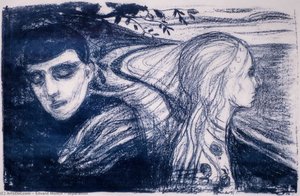 Separation - Edvard Munch
In the hauntingly beautiful lithograph "Separation," created in 1896, Edvard Munch transcends mere visual representation to touch the very essence of human vulnerability. This masterpiece is not simply a depiction of two figures parting ways; it is a profound meditation on loss and the inescapable anxieties that define our most intimate relationships. As a cornerstone of the Expressionist movement, the work eschews objective reality in favor of a raw, subjective experience.
The technique achieves a distinctive, grainy texture, utilizing somber blues and deep blacks to create an atmosphere of profound isolation. A subtle use of gold in the woman’s hair provides an Art Nouveau elegance that contrasts sharply with the underlying grief. Every element serves as a silent protagonist, from the man clutching his heart to the symbolic flowing hair that acts as a tether between souls. For collectors and decorators, bringing such a powerful piece into a professional or residential space offers more than just decor; it introduces a profound depth of character and a focal point for quiet reflection and emotional resonance.
Meeting in Space - Edvard Munch
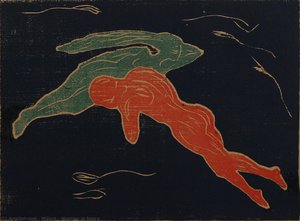 Meeting in Space - Edvard Munch
In Meeting in Space , Edvard Munch masterfully manipulates a spectral form of illumination, where light does not descend from an external source but seems to emanate from within the figures themselves. This internal glow creates a haunting chiaroscuro effect against the void-like, navy black backdrop, casting the vibrant green and red forms into sharp, dramatic relief. By eschewing traditional perspective in favor of this luminous, flattened space, Munch secured this work's place among the top 25 artworks of Edvard Munch , as it captures the very essence of Expressionist psychological depth.
The interplay between the stark, dark vacuum and the pulsating colors evokes a profound sense of isolation and spiritual encounter. When reproduced as a high-quality oil painting, the visible brushstrokes and rich tonal range amplify this otherworldly glow, bringing a sophisticated, dramatic energy to any professional or residential interior. Integrating such a powerful use of light and shadow into a contemporary space adds an unmistakable layer of intellectual luxury and emotional resonance, transforming a simple wall into a window onto the human soul.
Self-Portrait - Edvard Munch
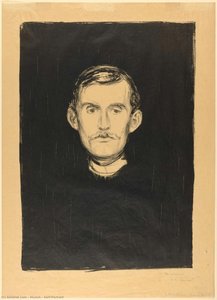 Self-Portrait - Edvard Munch
There is a gaze in Self-Portrait by Edvard Munch that follows you—not with judgment, but with understanding . This isn’t merely a portrait; it is a mirror . Its inclusion in this collection of the top 25 artworks of Edvard Munch is a testament to its power to make the invisible visible, capturing the raw, psychological landscape of the human soul.
Created in 1895, this lithograph utilizes fragmented, agitated lines and a somber palette of browns, blacks, and warm beiges to externalize internal unrest. The composition is strikingly direct, focusing on the artist’s head and shoulders against a dark, atmospheric void. Through the mastery of lithographic texture, Munch transforms paper into a visceral experience of vulnerability and introspection. Now, imagine that gaze in your space. Not watching you, but reminding you : you are seen. You are part of the story. For those seeking to anchor a professional or private space with profound emotional depth, this piece serves as a sophisticated focal point that commands attention through its quiet, haunting strength.
The Military Band on Karl Johan Street - Edvard Munch
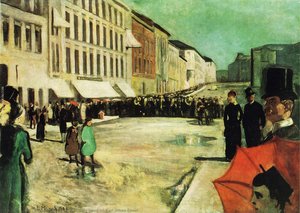 The Military Band on Karl Johan Street - Edvard Munch
In The Military Band on Karl Johan Street , Edvard Munch does not merely capture a moment in Oslo; he composes a visual sonata of urban existence. When you gaze upon this 1889 masterpiece, the light is not just illumination—it is a language. Munch uses an unsettling palette of yellows, blues, and reds to invent a light that feels both vibrant and deeply anxious, as if the atmosphere itself is breathing with the rhythm of the brass instruments.
As you walk through this painted crowd, you feel the pulse of the street. The musicians at the center act as a focal point for a sea of anonymous figures, some sheltered by umbrellas, others lost in the emotional haze of the throng. This work stands among the top 25 artworks of Edvard Munch because it transcends simple street photography; it captures the psychological tension of modern life through bold, expressive brushstrokes. It is a profound exploration of Symbolism, where every color choice serves to translate internal dread and fleeting beauty into a tangible, sensory experience that waits to transform your own space.
Winter Night - Edvard Munch
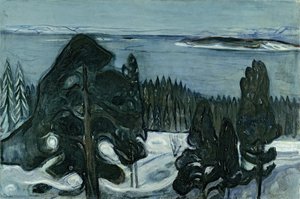 Winter Night - Edvard Munch
The visceral power of Winter Night by Edvard Munch lies in the heavy, purposeful application of oil paint, where thick, angular brushstrokes transform a frozen Norwegian landscape into a psychological map of solitude. In this 1900 masterpiece, the materiality of the medium is essential; the jagged, dark silhouettes of the foreground trees are not merely shapes, but textured ridges of pigment that command the viewer's attention. Munch’s revolutionary Expressionist technique eschews photographic realism in favor of emotional truth, using a somber palette of icy blues, stark whites, and deep greys to evoke a sense of profound stillness and existential dread.
At ArtsDot.com, our mission is to preserve this tactile, three-dimensional quality for your professional or private collection. We specialize in high-end, hand-painted reproductions that honor the original's impasto depth and visible brushwork. By capturing the physical soul of Munch’s work—the way light catches the ridges of the paint—we ensure that these top 25 Edvard Munch artworks serve as evocative, museum-grade centerpieces that bring the raw, emotive energy of Expressionism into any architectural space.
Man and Woman I - Edvard Munch
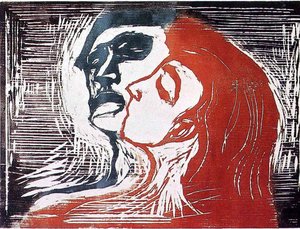 Man and Woman I - Edvard Munch
To stand before a masterpiece is to confront the rawest fragments of the human psyche. In Man and Woman I by Edvard Munch , we are not merely observing a portrait, but witnessing a visceral plunge into emotional intensity. Created in 1905, this work serves as a cornerstone of the Expressionist movement, moving far beyond objective realism to capture the turbulent currents of love and anxiety. The composition draws the viewer into an unsettlingly intimate space where two figures are pressed together, their faces etched with the weight of shared existence.
Munch utilizes a striking, somber palette punctuated by an arresting red background that vibrates with psychological tension. His brushwork eschews fine detail for bold, simplified forms and sharp, angular strokes that amplify the sense of unease. The tactile nature of the paint on the wood panel creates a heavy, atmospheric depth, making the figures feel as though they are emerging from a dreamlike state of distress. As one of the top 25 artworks of Edvard Munch , this piece remains a powerful testament to how art can transform a space, turning a silent wall into a profound dialogue on the fragility of human connection.
Kiss - Edvard Munch
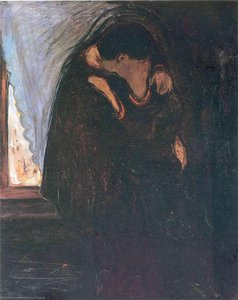 Kiss - Edvard Munch
In Kiss (1897), Edvard Munch transcends mere portraiture to present a profound meditation on solitude and the weight of human emotion. As one of the most evocative entries in our collection of the top 25 artworks of Edvard Munch , this piece captures a solitary figure enveloped in a dark, heavy cloak, lost in a state of deep introspection or grief. The painting’s power lies in its masterful use of chiaroscuro ; a single, directional light source illuminates the subject, creating a dramatic tension between the visible form and the encroaching shadows of the background.
The visual language—characterized by thick, gestural brushstrokes and an almost palpable impasto texture—aligns perfectly with modern preferences for expressive, tactile art in contemporary interior design. The fluid, organic lines of the drapery and the muted, somber palette evoke a sense of psychological depth that remains a cultural talking point today. For collectors seeking to introduce a sense of contemplative elegance into a professional or residential space, Kiss serves as a timeless symbol of the beauty found within melancholy.
Girl on a Bridge - Edvard Munch
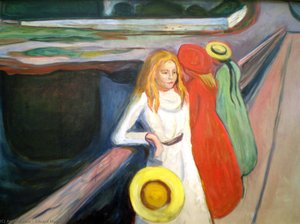 Girl on a Bridge - Edvard Munch
In Girl on a Bridge , Edvard Munch moves beyond the raw terror of his more famous works to explore the delicate, often melancholic nuances of human connection. This painting stands as a vital entry in our collection of the top 25 artworks of Edvard Munch, offering a profound study of Symbolism and the threshold between companionship and isolation. The scene captures two women on a bridge, their figures draped in shadows, holding umbrellas that shield them from an unseen elements. Through muted tones and fluid, expressive brushstrokes, Munch creates a sense of quiet prestige and introspective depth.
For modern collectors and interior decorators, this piece provides a sophisticated emotional anchor. Its atmospheric use of light and shadow integrates seamlessly into contemporary spaces, adding a layer of psychological complexity to corporate lobbies or private studies. Whether you are drawn to the textured impasto of his oil reproductions or the striking composition for a large-scale multi-panel installation, Girl on a Bridge remains an enduring testament to the beauty found within life's more somber, reflective moments.
Mother and Daughter - Edvard Munch
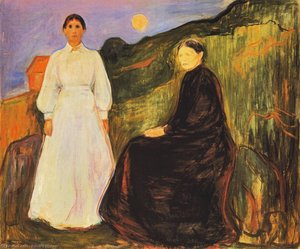 Mother and Daughter - Edvard Munch
Owning Mother and Daughter by Edvard Munch isn’t merely a purchase; it is an inheritance of one of the most profound emotional legacies in art history. As a cornerstone of the top 25 artworks of Edvard Munch, this 1897 masterpiece serves as a haunting dialogue between intimacy and anxiety. The canvas captures two figures—a seated older woman and a standing younger companion—locked in a moment of quiet, heavy contemplation. Through loose, agitated brushstrokes and a muted, melancholic palette, Munch externalizes an internal psychological state rather than a mere physical likeness.
The composition is masterfully tensioned; the presence of a clock on the wall serves as a chilling symbol of time's relentless march and the fragility of life. Soft, diffused light casts gentle shadows, creating an ethereal atmosphere that masks a deeper undercurrent of dread. To bring this lineage of taste into your own space, ArtsDot.com offers high-quality, hand-painted oil reproductions that preserve the tactile depth and visible brushwork of Munch’s Expressionist vision, allowing you to host a piece of museum-grade history on your walls.
Portrait of Hanni Esche - Edvard Munch
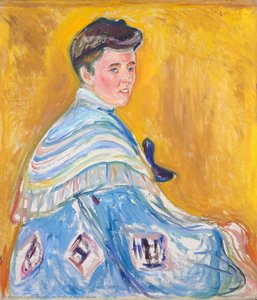 Portrait of Hanni Esche - Edvard Munch
In the Portrait of Hanni Esche , Edvard Munch invites us into a moment of quiet, psychological depth that transcends mere likeness. As you stand before this 1905 masterpiece, the vibrant, sun-drenched yellow background strikes with an immediate intensity, pushing the subject forward and demanding your attention. Hanni Esche gazes outward with a look that balances warmth with a subtle, haunting melancholy—a hallmark of Munch’s ability to externalize the inner soul.
The painting is a masterclass in early Expressionism; notice how the energetic, visible brushstrokes create a textured surface that feels alive with movement. The striking contrast between her intricately patterned blue dress and the luminous backdrop creates a visual tension that is both modern and deeply emotive. For those looking to curate a space of reflection, this piece offers more than decoration. Its bold color palette and contemplative atmosphere provide a sophisticated focal point, bringing a sense of historical weight and creative inspiration to any contemporary interior or professional gallery setting.
untitled (6059) - Edvard Munch
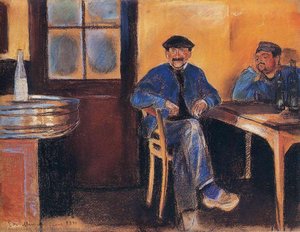 untitled (6059) - Edvard Munch
What if I told you that Untitled (6059) by Edvard Munch was born from a moment of profound psychological observation—a quiet rebellion against the superficiality of the ordinary? This piece does not merely depict two men at a bar; it captures the heavy, palpable tension of the human condition. Its inclusion in our top 25 artworks of Edvard Munch is essential because it exemplifies how the master of Expressionism could transform a mundane social setting into a haunting study of isolation and existential unease.
The monochrome palette strips away all distractions, forcing the viewer to confront the stark tonal contrasts and the symbolic weight of the weathered wood and solitary bottles. It is a manifesto of emotion, where every shadow speaks of unspoken anxieties. At ArtsDot.com, we believe such powerful imagery should not be confined to museums. By bringing this masterpiece into your professional or private space as a high-quality oil reproduction, you turn a simple wall into a profound statement of depth and intellectual character. Your environment is more than just a room; with Munch, it becomes a sanctuary for reflection.
Anxiety - Edvard Munch
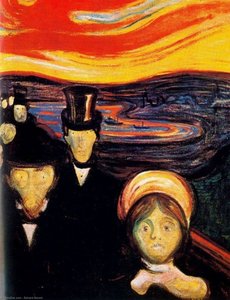 Anxiety - Edvard Munch
What story does the turbulent environment in Anxiety by Edvard Munch tell us about the fragility of the human psyche? Painted in 1894, this masterpiece emerged from a period where Munch was moving away from academic realism toward a raw, subjective "soul painting." As one of the top 25 artworks of Edvard Munch, it serves as a cornerstone of Expressionism, breaking ground by using a discordant palette of bruised purples and sickly yellows to externalize internal dread rather than mere landscape.
The composition features figures standing on a jetty, their faces obscured, creating a universal sense of unease that resonates deeply in modern interiors. The swirling, unstable brushstrokes and the dark, encroaching water offer more than just a visual spectacle; they provide a profound, atmospheric presence for those seeking art with emotional depth. Integrating such a powerful piece into a curated space allows a collector to evoke a sense of history and psychological complexity, turning a wall into a window onto the most intense human experiences.
Jealousy - Edvard Munch
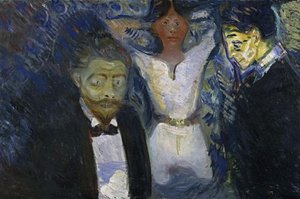 Jealousy - Edvard Munch
A heavy silence hangs over Jealousy by Edvard Munch, a moment where the air itself feels thick with unspoken resentment and psychological weight. As one of the most profound entries in our collection of the top 25 artworks of Edvard Munch, this 1913 masterpiece stands immortalized for its ability to externalize the invisible tremors of the human soul. The palette is a somber symphony of deep blues and murky greens, punctuated by the stark, clinical white of formal shirts that contrast sharply against the dimly lit, claustrophobic room.
Munch utilizes his signature "soul painting" technique, where agitated brushstrokes and simplified, skeletal forms breathe life into a scene of profound unease. The central figure’s averted gaze creates a haunting tension, inviting viewers to feel the sting of betrayal and isolation. In a modern interior, this piece serves as a powerful focal point; its moody atmosphere and masterful use of shadow bring a sophisticated, contemplative depth to corporate spaces or private galleries, reminding us of the raw, enduring complexity of human emotion.
Girl with Doll. Erdmute Esche with Polar Bear and Doll - Edvard Munch
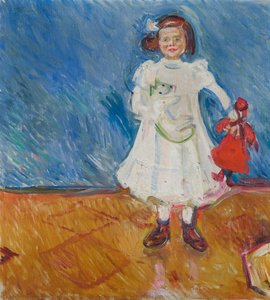 Girl with Doll. Erdmute Esche with Polar Bear and Doll - Edvard Munch
In “Girl with Doll: Erdmute Esche with Polar Bear and Doll,” Edvard Munch captures a gaze that is both innocent and profoundly introspective. The young subject, anchored by the soft presence of her doll and a stuffed polar bear, serves as a poignant window into the psychological landscape of Expressionism. While the scene initially suggests childhood play, the underlying tension—rendered through asymmetrical composition and a striking palette of deep blues and warm browns—mirrors the artist's signature exploration of anxiety and the subconscious.
The painting’s power lies in its ability to act as a universal mirror; the way the light catches the thick, textured impasto brushstrokes invites viewers to confront the delicate balance between security and vulnerability. As one of the most compelling pieces in our collection of the top 25 artworks of Edvard Munch , this work offers more than mere decoration. Integrating such a masterwork into your interior can transform a personal sanctuary into a space for profound reflection, where the vibrant colors and emotive depth foster an atmosphere of quiet, soulful contemplation.
Death of Marat I - Edvard Munch
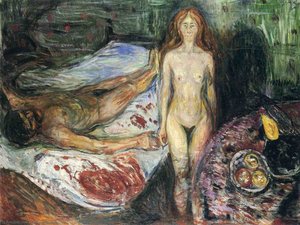 Death of Marat I - Edvard Munch
In the haunting depths of Death of Marat I by Edvard Munch, a moment of profound stillness meets an eternal, visceral ache. This masterpiece secures its place among the top 25 artworks of Edvard Munch through its unparalleled ability to transform a historical assassination into a raw, psychological allegory of mortality and trauma. The canvas breathes with a sickly, evocative palette; bruised purples, unsettling greens, and stark, pallid whites whisper of decay and the fragility of life. Munch’s signature expressionist technique—characterized by agitated, swirling brushstrokes—creates a sense of movement that feels both claustrophobic and deeply spiritual.
The texture of the oil paint captures the heavy atmosphere of grief, making the scene feel less like a distant historical event and more like a living, breathing memory. For the modern collector or professional decorator, integrating such a powerful piece into a space brings an unparalleled intellectual depth and emotional gravity. It serves as a sophisticated focal point that invites contemplation, offering a window into the profound human experience of loss and resilience.
Despair - Edvard Munch
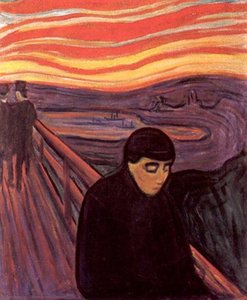 Despair - Edvard Munch
In the profound landscape of Edvard Munch’s oeuvre, Despair stands as a haunting pillar of emotional intensity. Created in 1892, this masterpiece captures the raw, psychological weight of human suffering with a precision that few artists can replicate. The composition centers on a solitary figure slumped at a piano, enveloped by a palette of dark, muted tones that evoke an immediate sense of isolation and melancholy.
As one of the most significant works in our collection of the top 25 artworks of Edvard Munch , Despair exemplifies the transition from Symbolism to Expressionism. The thick, expressive brushstrokes and the dramatic, heavy atmosphere create a tactile experience of grief. For modern collectors and interior decorators, this piece offers more than just historical value; its somber, moody aesthetic provides a powerful focal point for sophisticated, contemporary spaces that seek to embrace depth and contemplative stillness. It remains an enduring study of the human condition, translating internal psychological turmoil into a visible, breathtakingly beautiful reality.
To mennesker. De ensomme (Reinhardt-frisen) Two Human Beings. The Lonely Ones (The Reinhardt Frieze) - Edvard Munch
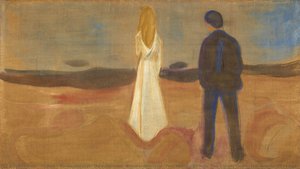 To mennesker. De ensomme (Reinhardt-frisen) Two Human Beings. The Lonely Ones (The Reinhardt Frieze) - Edvard Munch
In To mennesker. De ensomme (Reinhardt-frisen) , Edvard Munch does not merely paint figures; he composes a visual sonata of silence and separation. As you stand before this masterpiece, the light does not simply illuminate the canvas—it breathes a heavy, melancholic atmosphere into the room. The palette is a somber arrangement of earthy ochres, deep browns, and muted greys, creating a space where the air feels thick with unspoken grief.
The composition is a masterclass in psychological tension. By positioning the two figures on the right, facing away from one another, Munch utilizes empty, asymmetrical space to represent the vast, aching gulf of human disconnection. The texture of the brushstrokes is raw and gestural, lending an immediate, visceral pulse to the man’s dark suit and the woman's pale cream dress. There is no shallow perspective here, only a flat, haunting plane that pushes the viewer directly into the emotional epicenter of isolation. This work remains a cornerstone of Expressionism, inviting you to experience the profound beauty found within the shadows of the human soul.
House in Moonlight - Edvard Munch
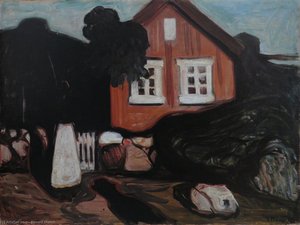 House in Moonlight - Edvard Munch
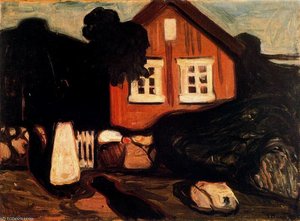
In House in Moonlight by Edvard Munch, the composition achieves a haunting structural harmony through a stark, flattened perspective that anchors the viewer within a dreamlike nocturnal realm. The geometry of the piece is defined by the heavy, block-like form of the red-walled house, which stands in powerful opposition to the dark, simplified masses of the surrounding trees. These strong diagonal lines and simplified shapes create a balanced yet unsettling equilibrium, a characteristic that secures its place among the top 25 artworks of Edvard Munch .
The interplay between the vibrant, symbolic red of the architecture and the deep, oppressive blacks of the night sky creates a visual tension that is both visceral and profoundly stable. This deliberate use of weight and contrast mirrors the principles of modern minimalist design, where stripped-back forms and a controlled color palette ground a contemporary aesthetic. As you observe the silvery moonlight glancing off the windows, the painting transcends mere landscape, offering a timeless study in solitude and psychological depth that remains as impactful today as it was in 1895.
Women at the beach Sun - Edvard Munch
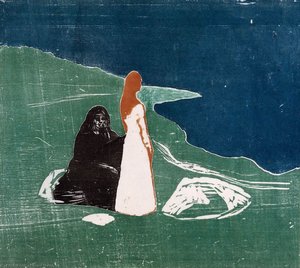 Women at the beach Sun - Edvard Munch
In the quietude of a late afternoon, where the golden light of the sun meets the rhythmic pulse of the sea, one finds a profound stillness that transcends mere landscape. Women at the beach Sun by Edvard Munch is a masterwork of psychological depth, standing as a vital entry in our collection of the top 25 artworks of Edvard Munch . This 1896 piece moves beyond simple seaside scenery to capture the delicate tension between intimacy and isolation.
Munch utilizes a striking palette of luminous highlights and velvety shadows to depict two figures on a hillside; one woman, draped in black, gazes toward her companion in white, whose back is turned to the viewer. The composition creates a silent dialogue, utilizing subtle asymmetry to evoke the underlying melancholy and yearning characteristic of Expressionism. Through masterful tonal gradations, the artist transforms the ocean and scattered boats into a vast, emotive backdrop. This painting remains a timeless cornerstone for collectors, offering a sophisticated way to introduce emotional resonance and historical prestige into any modern architectural space.
Conclusion
To walk through the visual landscape of Edvard Munch is to traverse the very corridors of the human psyche, moving from the sharp edges of anxiety to the soft, lingering shadows of memory. These twenty-five masterpieces do more than merely document a period in art history; they act as mirrors held up to our own vulnerabilities and triumphs. As the sun sets on this exploration, we find that Munch’s work does not remain trapped within the gilded frames of museums. Instead, these paintings exist as living presences, breathing life into the spaces we inhabit, transforming quiet corners of our homes into profound sites of reflection and emotional resonance.
The enduring power of his imagery lies in its ability to bridge the gap between the historical moment and the modern soul. When we bring a reproduction of his work into a contemporary interior, we are not just decorating a wall; we are inviting an eternal dialogue into our daily lives. His swirling skies and emotive silhouettes continue to shape our cultural aesthetic, reminding us that even in our most isolated moments of fear or longing, there is a shared human experience that connects us all across time. We invite you to continue this journey and find the piece that speaks to your own story within our full collection , allowing the profound depth of Munch’s vision to become a permanent part of your world.