The Enigmatic Beginnings: Davies’ Early Influences & Artistic Formation
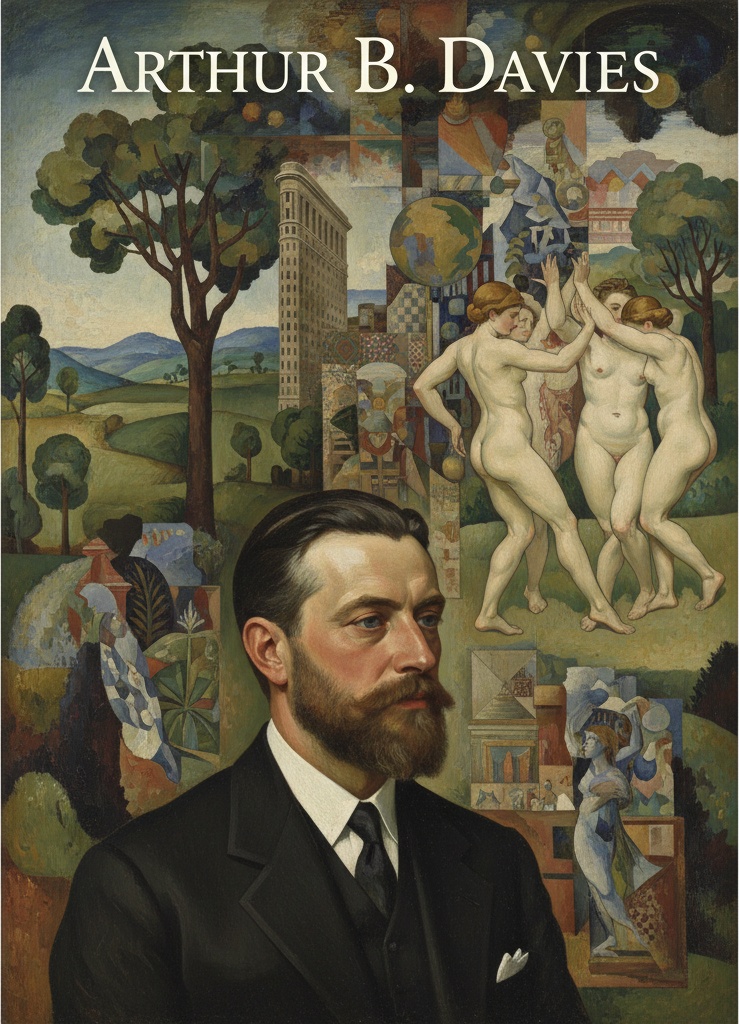
Arthur Bowen Davies, a name often whispered with a sense of contradiction, stands as a fascinating figure at the dawn of American Modernism. Born in Utica, New York, in 1862, his path to becoming a champion of avant-garde art was anything but conventional. Unlike many artists who found early mentorship within established academies, Davies’ initial artistic awakening occurred through exposure—a large touring exhibition featuring the works of George Inness and members of the Hudson River School profoundly impacted the young artist. The tonalist landscapes, with their evocative atmospheres and subtle harmonies, resonated deeply, laying a foundational aesthetic sensibility that would subtly inform his later, more radical explorations. This early fascination wasn’t merely stylistic; it instilled in Davies an appreciation for mood, suggestion, and the power of painting to evoke emotional responses rather than simply replicate visual reality.
The family's relocation to Chicago further shaped his development. Studies at the Chicago Academy of Design provided technical grounding, but it was a brief sojourn at the Art Institute of Chicago that proved less formative. Davies’ true education came from independent study and an insatiable curiosity. He gravitated towards illustration as a means of supporting himself, a pragmatic choice that nonetheless honed his observational skills and understanding of composition. However, this commercial work never fully satisfied his artistic ambitions; he yearned for something more—a deeper expression of the inner life, a realm beyond the constraints of representational accuracy.
A Contradictory Visionary: Exploring Davies' Unique Aesthetic Style
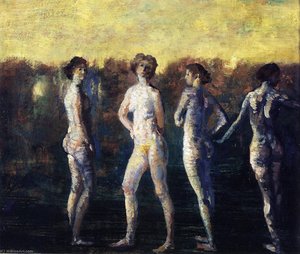
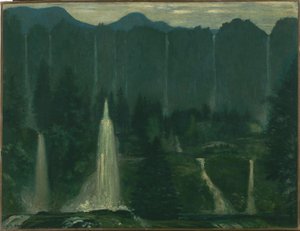
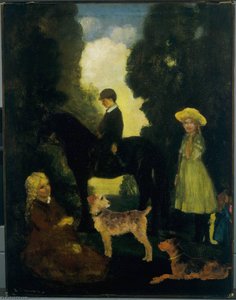
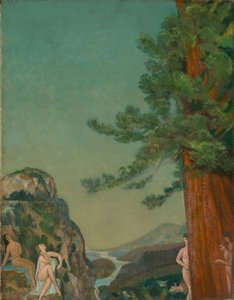
To categorize Arthur B. Davies is to invite frustration. He resisted easy labels, existing in a liminal space between 19th-century romanticism and the burgeoning currents of early 20th-century modernism. His paintings are characterized by a mystical quality, often featuring ethereal figures set within dreamlike landscapes. These aren’t scenes readily identifiable as specific places; rather, they evoke states of consciousness, memories, or perhaps even archetypal visions. The brushwork is delicate yet purposeful, creating a sense of shimmering light and atmospheric depth. While influenced by European masters like Corot and Millet in his use of color and tonal values, Davies developed a distinctly American sensibility—a quiet introspection coupled with a subtle yearning for the sublime.
His work often features symbolic elements – unicorns, shepherds, and serene waters – that invite contemplation rather than direct interpretation. “Spring Beauties”, for example, exemplifies this approach; it’s not simply a depiction of a landscape but an evocation of tranquility tinged with melancholy. Similarly, “Corridor of Summer,” reveals his mastery of atmospheric perspective and the subtle interplay of light and shadow. These paintings aren't about what they *show* so much as what they *suggest*, creating a space for personal reflection and emotional resonance. This inherent ambiguity, coupled with his technical skill, set him apart from many of his contemporaries.
Championing the New: Davies and the Rise of American Modernism
Davies wasn’t merely an artist; he was a catalyst. As American art struggled to find its voice in the early 20th century, he became a tireless advocate for new ideas and emerging styles. He recognized the limitations of traditional academic training and sought opportunities to expose American audiences to the radical innovations taking place in Europe. This commitment led him to forge close relationships with fellow artists like William Glackens and Robert Henri, forming a nucleus of progressive thinkers who challenged the established art world.
The formation of “The Eight” in 1908 was a pivotal moment. This group exhibition at the Macbeth Gallery wasn’t simply about showcasing new work; it was a direct protest against the conservative jury system of the National Academy of Design. While Davies' style differed from the Ashcan Realists within the group, he shared their desire to break free from convention and represent modern life with honesty and authenticity. This spirit of rebellion paved the way for greater acceptance of diverse artistic voices and ultimately contributed to the burgeoning modernist movement.
The 1913 Armory Show: A Catalyst for Change and Davies’ Central Role
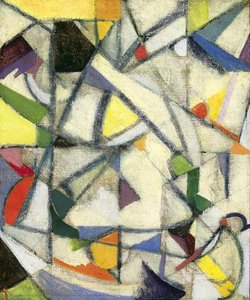
No discussion of Arthur B. Davies is complete without acknowledging his central role in organizing the legendary 1913 Armory Show—officially titled the International Exhibition of Modern Art. This event, arguably the most important single exhibition in American art history, shattered expectations and irrevocably altered the course of artistic development. Davies wasn’t simply a participant; he was the driving force behind it, tirelessly traveling to Europe with Walter Pach and John Kuhn to scout out examples of Cubism, Fauvism, and Futurism.
The show itself was a sensation—and a scandal. The public was largely unprepared for the radical abstraction and unconventional forms on display. Yet, amidst the controversy, Davies’ vision prevailed. He believed that American artists needed to engage with these new ideas, even if they didn't fully embrace them. “The Goatherd”, while not a Cubist work itself, exemplifies the introspective mood and symbolic language that Davies championed—a counterpoint to the more overtly shocking works on display. The Armory Show opened American eyes to the possibilities of modern art, sparking debate, inspiring new generations of artists, and solidifying Davies’ reputation as a visionary leader.
Beyond the Canvas: Davies as Collector, Advisor & Cosmopolitan Patron
Cosmopolitanism is the idea that all human beings are members of a single community. Its adherents are known as cosmopolitan or cosmopolite. Cosmopolitanism is both prescriptive and aspirational, believing humans can and should be "world citizens" in...
Davies' influence extended far beyond his own paintings. He was an avid collector, amassing a significant collection of American and European modernism—a testament to his discerning eye and unwavering belief in contemporary art. This passion led him to become a sought-after advisor to wealthy New Yorkers like Lillie P. Bliss and Abby Aldrich Rockefeller, guiding their acquisitions and shaping the foundations of what would eventually become The Museum of Modern Art.
His role as a patron wasn’t simply about acquiring artworks; it was about fostering a cosmopolitan community—a network of artists, collectors, and intellectuals who shared a commitment to innovation and cultural exchange. This embrace of diverse perspectives reflects the broader spirit of cosmopolitanism, recognizing that artistic inspiration transcends national boundaries. Davies understood that art wasn’t created in a vacuum; it was shaped by global currents and interconnected ideas. His legacy, therefore, lies not only in his own paintings but also in his tireless efforts to promote a more open, inclusive, and forward-thinking art world.
Davies' Enduring Legacy: Influence on Subsequent Generations of Artists
Arthur B. Davies’ impact continues to resonate today. While perhaps less widely recognized than some of his contemporaries, his role as a pioneer of American Modernism is undeniable. He challenged conventional norms, championed new ideas, and fostered a spirit of experimentation that paved the way for subsequent generations of artists. His paintings—with their ethereal beauty and subtle symbolism—offer a glimpse into a unique artistic sensibility, one that valued introspection, emotional resonance, and the power of suggestion.
At ArtsDot.com, we celebrate Davies’ enduring legacy by offering high-quality reproductions of his most iconic works. Whether you're a seasoned collector or simply beginning your art journey, exploring the world of Arthur B. Davies is an invitation to discover a pivotal figure in American art history—a visionary who dared to challenge convention and embrace the possibilities of the new.