

Introduction: The Paradox of Balthus – A World Apart
 Wikipedia: Figurative art
Figurative art, sometimes written as figurativism, describes artwork (particularly paintings and sculptures) that is clearly derived from real object sources and so is, by definition, representational. The term is often in contrast to abstract art: ...
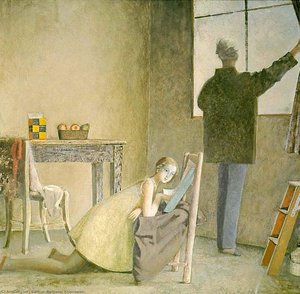
Balthus, born Balthasar Klossowski de Rola, remains one of the most compelling and unsettling figures in 20th-century art. He occupies a unique space—neither fully embraced by nor entirely rejecting the dominant currents of Modernism. His paintings are not easily categorized; they resist simple interpretation, existing instead as hauntingly beautiful puzzles that invite prolonged contemplation. While contemporaries explored abstraction and fragmentation, Balthus steadfastly pursued a figurative realism steeped in symbolism, dreamlike atmospheres, and an often-disquieting psychological intensity. This deliberate divergence, coupled with the controversial subject matter of many of his works—particularly his depictions of adolescent girls—has ensured both enduring fascination and ongoing debate surrounding his oeuvre.
Early Life & Influences: From Ragnit to Paris, Shaping a Unique Vision
 Wikipedia: Balthus
Balthasar Klossowski de Rola (February 29, 1908 – February 18, 2001), known as Balthus, was a Polish-French modern artist. He is known for his erotically charged images of young girls, but also for the refined, dreamlike quality of his imagery. Throu...
Born in 1908 into an aristocratic Polish family with a complex history, Balthus’s early life was marked by displacement and artistic immersion. His father, Erich Klossowski, was a renowned art historian specializing in Honoré Daumier, while his mother, Baladine, fostered a salon atmosphere frequented by literary giants like Rainer Maria Rilke and André Gide. This environment instilled in the young Balthasar a deep appreciation for tradition and a sophisticated understanding of artistic lineage. The family’s peripatetic existence—from Ragnit in East Prussia to Paris, Switzerland, and Berlin—contributed to a sense of detachment and observation that would later permeate his work. Crucially, it was during his youth that Balthus developed an almost obsessive fascination with the Old Masters, particularly Piero della Francesca and Poussin, whose influence is readily apparent in his meticulously composed scenes and classical sensibility. He wasn’t drawn to the fleeting impressions of Impressionism but rather to a timeless quality—a sense of stillness and permanence.
The Recurring Themes: Childhood, Sexuality, and the Subconscious
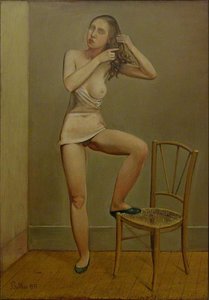 Alice
AliceExplore Balthus’s enigmatic nude portrait ‘Alice,’ a realistic oil painting embodying loneliness & contemplation in a classic, melancholic style.
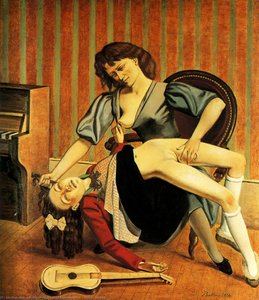
Balthus's paintings are often characterized by their exploration of childhood, yet this is rarely a sentimental or idyllic portrayal. His young female figures are frequently depicted in states of vulnerability, contemplation, or even ambiguous sexuality. This has understandably led to controversy, with accusations of pedophilia leveled against the artist. However, reducing his work to such simplistic interpretations overlooks the deeper psychological complexities at play. His subjects aren’t merely objects of desire but rather embodiments of a liminal space—a transition between innocence and experience, vulnerability and power. The often-stark interiors and landscapes that serve as backdrops for these figures amplify their sense of isolation and introspection. Alice, for example (available through ArtsDot), is not simply a nude portrait; it’s an exploration of loneliness, self-awareness, and the weight of burgeoning womanhood. The deliberate lack of narrative allows viewers to project their own interpretations onto these scenes, making them profoundly unsettling yet deeply compelling.
Compositional Mastery & Symbolism: Decoding Balthus’s Visual Language
Balthus was a master of composition, employing carefully constructed arrangements that evoke a sense of both order and unease. His paintings often feature dramatic perspectives, stark contrasts of light and shadow, and meticulously rendered details. The Street (1933), for instance, showcases his dynamic use of space and perspective, creating a scene that feels simultaneously realistic and surreal. The muted palette and symbolic depth—the figures frozen in time, the ambiguous relationships between them—invite viewers to question the narrative unfolding before them. He frequently incorporated objects with symbolic resonance—cats (representing independence and mystery), books (knowledge and introspection), and mirrors (self-reflection)—adding layers of meaning to his compositions. His attention to detail extends beyond the figures themselves; the textures of fabrics, the patterns on wallpaper, and the arrangement of furniture all contribute to the overall atmosphere of his work.
Balthus and Modernism: A Deliberate Outsider?
While Balthus lived and worked during the height of Modernism, he consciously rejected its prevailing aesthetic principles. He eschewed abstraction in favor of figurative representation, prioritizing psychological depth over formal experimentation. He wasn’t interested in breaking with tradition but rather in reinterpreting it—drawing inspiration from Renaissance masters while simultaneously forging his own unique path. This deliberate aloofness from the avant-garde often led to criticism and misunderstanding. However, Balthus remained steadfast in his artistic vision, believing that painting should be an act of personal expression rather than a reflection of contemporary trends. As Sabine Rewald notes in her seminal work on the artist (available through The Metropolitan Museum of Art), “The paintings of Balthus abound in paradoxes and are likely to challenge any effort to situate his style and interpret his work.” This resistance to categorization is, perhaps, what makes his art so enduringly fascinating.
Legacy and Controversy: The Enduring Power of an Enigmatic Artist
Balthus’s legacy remains complex and contested. His paintings continue to provoke debate, challenging viewers to confront uncomfortable truths about sexuality, power dynamics, and the human condition. Despite—or perhaps because of—the controversy surrounding his work, he has exerted a significant influence on subsequent generations of artists. His commitment to figurative representation, his masterful use of composition, and his exploration of psychological themes continue to resonate with contemporary audiences. ArtsDot offers a unique opportunity to experience the power and beauty of Balthus’s paintings firsthand, allowing you to bring these enigmatic masterpieces into your own home. Whether viewed as a visionary artist or a controversial figure, Balthus undeniably occupies a singular position in the history of 20th-century art—a testament to his unwavering artistic vision and enduring ability to captivate and unsettle.