

The Enduring Echo: Trauma's Historical Presence in Artistic Expression
In art, resilience is the capacity of the work of art to preserve through aesthetics its particularity distinguishing it from any other object, despite the increasing subjectivization in the production of works. Resilience in art appears as a respons...
The impulse to translate suffering into form is as old as art itself, yet the ways in which trauma manifests within artistic practice have undergone a profound evolution. For centuries, depictions of violence and loss were often filtered through religious or mythological narratives – scenes of martyrdom, heroic sacrifice, or classical tragedy offering a degree of distance, a symbolic framework for processing difficult realities. However, the seismic shifts of the late 19th and early 20th centuries—the industrial revolution, world wars, rapid social upheaval—fundamentally altered this relationship. The birth of movements like Symbolism, Cubism, and Surrealism wasn’t merely an aesthetic rebellion; it was a desperate attempt to adjust to a world irrevocably fractured by change. These weren't simply stylistic choices but responses to the great social, industrial, economic, and political changes that were taking place at the time. Parallel to these movements emerged more radical expressions – Hirsutes, Hydropathes, Incohérents – and politically charged forms like Constructivism and Dada, all questioning established norms and seeking new languages for representing a reality increasingly devoid of inherent meaning.
The Anglo-Saxon Analytic Aesthetics that gained prominence in the mid-20th century further complicated matters. By rejecting beauty as a foundational principle and asserting that any object could be considered art if sanctioned by the “art world,” it inadvertently eroded the very notion of artistic unity. This proliferation of subjectivity, while liberating for some, also led to an inability to define the work of art itself, creating a space where intention often superseded aesthetic coherence. The question then becomes: how does one discern genuine engagement with trauma from mere provocation? How do we identify resilience within a landscape saturated with individual expression?
Resilience as Aesthetic Strategy: Defining Art Beyond Subjectivity
The concept of resilience in art, therefore, isn’t simply about the subject matter—it's about the capacity of the work to preserve its particularity despite this increasing subjectivization. It’s a subtle but crucial distinction. A painting depicting horrific violence may be deeply affecting, but does it possess an inherent quality that distinguishes it from other works addressing similar themes? Resilience suggests a restoration of foundational artistic principles—a return to beauty not as a superficial attribute, but as a structural element capable of conveying profound emotional weight. This isn’t about ignoring the darkness; rather, it's about finding a way to articulate it within a framework that transcends mere shock value.
Recent neurobiological research offers intriguing insights into this process. Studies demonstrate that encountering beauty activates both objective and subjective areas of the brain—an initial physiological response followed by personal interpretation. This suggests that beauty isn’t solely in the eye of the beholder, but rather a fundamental aspect of human perception, rooted in universal structures. The immediate recognition of aesthetic quality, regardless of cultural background, supports the idea that art can tap into something deeper than individual preference—a shared capacity for emotional resonance.
Visceral Landscapes: Contemporary Artists Confronting Psychological Wounds
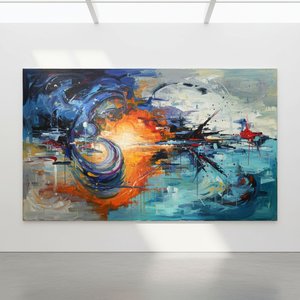
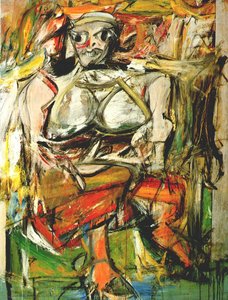
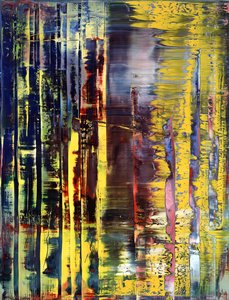
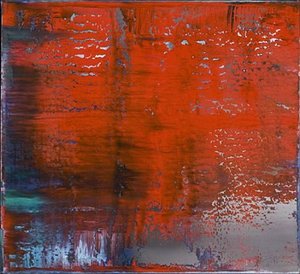
Contemporary artists are increasingly engaging with trauma not through explicit representation but through visceral landscapes of emotion and memory. Jackson Pollock’s ‘Number 10’, a monumental drip painting, exemplifies this approach. Its chaotic energy, the layers of interwoven lines and colors, evoke a sense of overwhelming psychological turmoil without depicting any specific event. The work's power lies in its ability to bypass narrative altogether, directly accessing the raw emotional core of human experience. Similarly, Egon Schiele’s ‘Autumn Tree in Movement’, with its vibrant Expressionist style and distorted forms, captures a sense of inner unrest and existential anxiety. These artists aren't illustrating trauma; they are embodying it.
The work of Andy Warhol, particularly pieces like “untitled (8110),” presents a more unsettling approach. Through symbolic imagery and jarring textures, Warhol explores themes of vulnerability and societal alienation. His use of mixed media creates a sense of fragmentation and unease, reflecting the fractured nature of modern identity. These works challenge viewers to confront uncomfortable truths about themselves and the world around them.
Body, Memory & the Fragmented Self: Exploring Representation of Trauma
Psychological trauma (also known as mental trauma, psychiatric trauma, emotional damage, or psychotrauma) is an emotional response caused by severe distressing events, such as bodily injury, sexual violence, or other threats to the life of the subjec...
The body itself has become a central site for exploring trauma in contemporary art. Artists like Gina Pane utilized performance art to connect personal experiences of violence with the viewer’s own emotional responses. This direct engagement with physicality forces a confrontation with the visceral reality of suffering, bypassing intellectual distance. The exploration of memory is equally crucial. Trauma often disrupts linear narratives, leaving behind fragmented recollections and haunting echoes. Contemporary artists employ techniques like collage, installation, and video to recreate this sense of disorientation and loss.
The representation of trauma, as explored by scholars like Griselda Pollock, involves five key features: perpetual presentness (the feeling that the event is constantly recurring), permanent absence (the inability to fully grasp or articulate the experience), irrepresentibility (the limitations of language and imagery), belatedness (the delayed impact of trauma), and transmissibility (the intergenerational transmission of emotional wounds). These concepts provide a framework for understanding the complex ways in which trauma shapes artistic practice.
Global Perspectives: Diverse Voices and Cultural Narratives of Resilience
It’s crucial to recognize that experiences of trauma are not universal. Cultural context profoundly shapes how individuals perceive, process, and express suffering. Artists like Wangechi Mutu, a Kenyan-American contemporary artist, explore themes of female identity, cultural trauma, race, colonialism, and environmental destruction through her collage paintings and sculpture. Her work challenges Western narratives of power and representation, offering a nuanced perspective on the complexities of postcolonial experience.
Venkat Shyam, a renowned Indian artist from the Gond community, utilizes vibrant paintings and etchings to reflect social issues and personal experiences, including the 2008 Mumbai attacks. His unique Jangarh Kalam style blends traditional storytelling with contemporary concerns, creating powerful visual narratives that resonate across cultures. Similarly, Arpana Caur's paintings blend feminist themes with rich cultural heritage, exploring life, death, and social issues through dynamic compositions. These artists demonstrate the power of art to bear witness to trauma, challenge dominant ideologies, and foster a deeper understanding of the human condition.