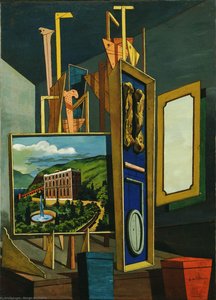

The Dawn of Metaphysical Painting: Giorgio de Chirico's Early Influences
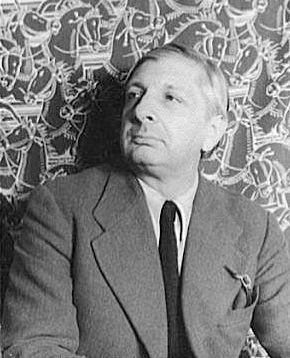 Wikipedia: Giorgio de Chirico
Giuseppe Maria Alberto Giorgio de Chirico ( KIRR-ik-oh; Italian: [ˈdʒordʒo de ˈkiːriko]; 10 July 1888 – 20 November 1978) was an Italian artist and writer born in Greece. In the years before World War I, he founded the scuola metafisica art movement...
Before the haunting piazzas and unsettling stillness that define his most celebrated works, Giorgio de Chirico embarked on a journey shaped by diverse artistic currents and philosophical inquiries. Born in Volos, Greece, in 1888, De Chirico’s early training at the Athens Polytechnic laid a foundation in traditional drawing and painting. However, it was his subsequent relocation to Munich that proved pivotal. Immersed in the German cultural landscape, he encountered the Symbolist paintings of Arnold Böcklin – works imbued with mythological themes and a palpable sense of melancholy – which resonated deeply with his burgeoning artistic sensibility. Böcklin’s influence is visible in De Chirico's early pieces like The Dying Centaur (1909), revealing a fascination with mortality and the subconscious that would later become hallmarks of his unique style. Crucially, it was during this period that De Chirico began to delve into the writings of Friedrich Nietzsche and Arthur Schopenhauer, philosophers whose ideas about the nature of reality, the will, and the human condition would profoundly shape his artistic vision.
De Chirico’s initial explorations weren't immediately indicative of the *Pittura Metafisica* that was to come. He absorbed Impressionism and Post-Impressionism, but found himself increasingly dissatisfied with their focus on purely optical sensations. A yearning for something deeper, a desire to represent not what he saw, but what lay beneath the surface of perception, began to take hold. This nascent quest led him back to Italy, specifically Florence in 1910, where a pivotal “revelation” occurred in Piazza Santa Croce – an experience that would ignite the spark of his metaphysical style.
Dreamscapes and Disquiet: Key Characteristics of the *Pittura Metafisica*
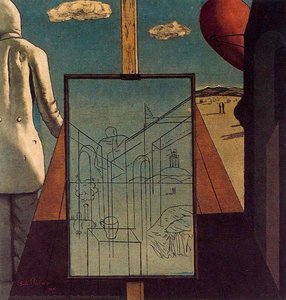 The Double Dream of Spring
Explore Giorgio de Chirico's 'The Double Dream of Spring' (1915), a masterpiece of Metaphysical art. Discover its dreamlike imagery, philosophical depth & surreal atmosphere.
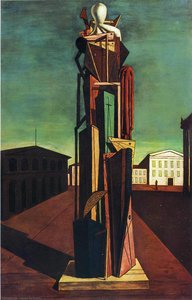
The years between 1910 and 1919 witnessed the flowering of De Chirico’s *Pittura Metafisica*, a movement that sought to unlock the hidden realities beyond the realm of conscious experience. Unlike many of his contemporaries preoccupied with capturing fleeting moments, De Chirico aimed to create paintings that evoked a sense of timelessness and unease. His canvases are populated by deserted city squares bathed in stark, dramatic light – often long shadows cast by unseen sources – creating an atmosphere of both beauty and foreboding. These aren’t depictions of specific places, but rather evocative stage sets designed to stir the subconscious.
Central to this aesthetic is a deliberate distortion of perspective. Receding arcades stretch into impossible depths, while buildings appear simultaneously close and distant, disrupting our sense of spatial coherence. This manipulation of reality isn't merely a technical exercise; it’s an attempt to mirror the illogical nature of dreams and memories. The effect is profoundly disorienting, inviting viewers to question their own perceptions and confront the mysteries that lie beneath the surface of everyday life. De Chirico described his intention as “painting that which cannot be seen,” a pursuit of intangible emotions and philosophical concepts through visual means.
Iconography of Isolation: Mannequins, Arcades, and Symbolic Objects
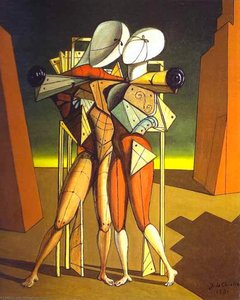
The *Pittura Metafisica* is instantly recognizable for its distinctive iconography. Mannequins – often headless or faceless – appear frequently in De Chirico’s compositions, serving as unsettling stand-ins for human figures. These ambiguous forms evoke a sense of alienation and existential loneliness, prompting questions about identity and the nature of being. The arcades themselves, inspired by Renaissance architecture, are not merely decorative elements; they represent portals to other realms, suggesting hidden passageways and forgotten histories.
Other recurring motifs include trains – symbols of transition and displacement – and commonplace objects like gloves or fruit, imbued with a strange significance through their juxtaposition with the unsettling architectural settings. These seemingly ordinary items are stripped of their usual context, becoming enigmatic clues in De Chirico’s visual puzzles. The deliberate arrangement of these elements creates a sense of psychological tension, inviting viewers to decipher the hidden meanings embedded within each composition. Consider Cupido e il Minotauro (1917), where classical mythology collides with unsettling modern forms, creating a powerful and ambiguous narrative.
Philosophical Undercurrents: Nietzsche, Schopenhauer, and the Search for Meaning
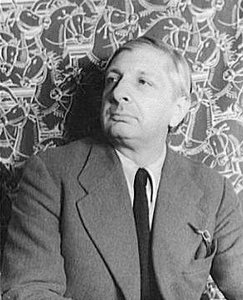 Giorgio de Chirico
Explore the surreal world of Giorgio de Chirico (1888-1978), founder of Metaphysical art. Discover dreamlike cityscapes, philosophical themes & iconic mannequins. Influential to Surrealism.
De Chirico’s art wasn't born in a vacuum; it was deeply intertwined with his intellectual pursuits. The philosophies of Friedrich Nietzsche and Arthur Schopenhauer provided a crucial framework for his artistic vision. Nietzsche’s concept of the “will to power” – the fundamental drive underlying all existence – resonated with De Chirico’s desire to explore the hidden forces shaping human experience. Similarly, Schopenhauer’s pessimistic worldview, which posited that life is driven by a relentless and ultimately unsatisfying striving, informed his paintings' sense of melancholy and alienation.
The Double Dream of Spring (1915) exemplifies this philosophical depth. The painting’s dreamlike imagery, with its illogical juxtapositions and ambiguous symbolism, reflects Schopenhauer’s ideas about the illusory nature of reality. De Chirico wasn't simply illustrating these philosophies; he was attempting to translate them into a visual language, creating paintings that evoked the same sense of existential angst and longing for meaning. His work can be seen as a meditation on the human condition, exploring themes of isolation, mortality, and the search for truth in a world devoid of inherent purpose.
The Legacy of Metaphysical Art: Surrealism and Beyond
Although De Chirico’s *Pittura Metafisica* was relatively short-lived – he largely abandoned the style by 1919 – its impact on the development of modern art was profound. His dreamlike imagery, unsettling juxtapositions, and exploration of the subconscious paved the way for Surrealism, a movement that embraced the irrational and sought to unlock the power of the unconscious mind. Artists like René Magritte and Salvador Dalí were deeply influenced by De Chirico’s work, adopting his techniques and themes in their own compositions.
Beyond Surrealism, De Chirico’s legacy can be seen in a wide range of artistic expressions, from contemporary painting to film and literature. His exploration of psychological space and the hidden realities beneath the surface of perception continues to resonate with artists today. The enduring appeal of his work lies in its ability to tap into our deepest anxieties and desires, prompting us to question our own perceptions and confront the mysteries that lie at the heart of human existence.
Collecting Metaphysical Masterpieces: A Guide for Enthusiasts
Acquiring a work by Giorgio de Chirico is an investment in a pivotal moment in art history. While his most iconic paintings command significant prices, opportunities exist to collect works from different periods of his career. Early *Pittura Metafisica* pieces are particularly sought after, representing the height of his innovative style. Prints and reproductions offer accessible entry points for enthusiasts eager to experience the power of his imagery.
When considering a purchase, authenticity is paramount. Provenance – the documented history of ownership – is crucial in verifying the artwork’s legitimacy. Consulting with reputable art dealers and appraisers can provide valuable guidance. ArtsDot.com offers high-quality reproductions of De Chirico's masterpieces, allowing you to bring his haunting vision into your home or office. Explore our collection today and discover the enduring beauty and philosophical depth of this remarkable artist.