![Black Circle [1913] State Russian Museum, — Kazimir Malevich](/media/artworks/images/thumbnails/29/9f/299f2153e48d4d70918e77144b5835a6.jpg)
The Genesis of a New Aesthetic: Kazimir Malevich and the Rejection of Illusion
 Wikipedia: Kazimir Malevich
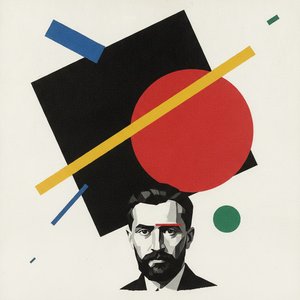
Kazimir Severinovich Malevich (23 February [O.S. 11 February] 1879 – 15 May 1935) was an avant-garde artist and art theorist, whose pioneering work and writing influenced the development of abstract art in the 20th century. His concept of Suprematism...
The early 20th century was a period of seismic shifts, not only in politics and technology but also within the very foundations of artistic expression. Amidst this upheaval, a Russian artist named Kazimir Severinovich Malevich embarked on a radical journey that would irrevocably alter the course of art history. Dissatisfied with the representational constraints of traditional painting – its obligation to mimic the visible world – Malevich sought a new visual language, one liberated from the “things” of reality and focused instead on the pure essence of feeling. This quest culminated in Suprematism, an artistic movement born not merely from aesthetic innovation but from a profound philosophical rejection of everything that had come before.
Malevich’s early work demonstrated a clear engagement with Cubism and Futurism, movements he admired for their deconstruction of form. However, he quickly realized these approaches still clung to the objective world, albeit fragmented or dynamic versions of it. He wasn't interested in *representing* objects; he wanted to transcend them entirely. This desire stemmed from a broader spiritual yearning prevalent at the time – a search for underlying truths beyond the material realm. Influenced by Russian icon painting and philosophical currents like Theosophy, Malevich believed art could be a conduit to a higher consciousness, a direct expression of “pure feeling” unburdened by narrative or imitation. His paintings began to shed recognizable forms, gradually simplifying into geometric shapes – squares, circles, rectangles – painted in a limited palette, signaling the dawn of a new aesthetic.
Suprematism's Core Principles: Geometry, Color, and 'Pure Feeling'
 Wikipedia: Abstract art
Abstract art uses visual language of shape, form, color and line to create a composition which may exist with a degree of independence from visual references in the world. Abstract art, non-figurative art, non-objective art, and non-representational ...
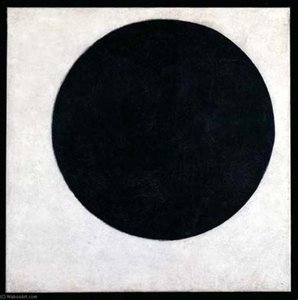
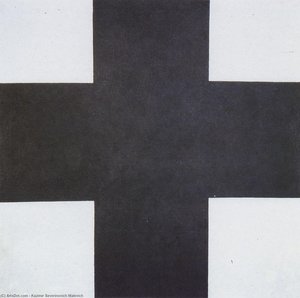
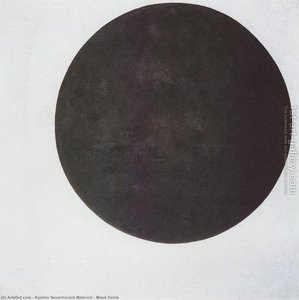
At its heart, Suprematism is defined by its unwavering commitment to fundamental geometry. These weren’t arbitrary shapes; they were considered the building blocks of reality itself, the purest expressions of existence. Malevich believed that through these basic forms, artists could access a universal language, bypassing the limitations of individual experience and cultural context. Color played an equally crucial role, though employed with deliberate restraint. The palette typically consisted of a limited range – often reds, blues, yellows, blacks, and whites – chosen not for their descriptive qualities but for their inherent emotional resonance.
The term “Suprematism” itself, coined by Malevich, encapsulates the movement’s central tenet: the supremacy of pure artistic feeling. This wasn't simply about abstracting from nature; it was about eliminating any reference to it altogether. The artist, according to Malevich, should be liberated from all preconceived notions and external constraints, becoming a vessel for conveying this “pure feeling” directly onto the canvas. This concept is powerfully articulated in his writings, particularly *From Cubism and Futurism to Suprematism: The New Realism in Painting*, where he outlines the theoretical underpinnings of his revolutionary approach. He envisioned a new kind of art – non-objective art – that existed solely for its own sake, independent of any utilitarian or representational function.
Black Square and Beyond: Key Works and Their Revolutionary Significance
 Wikipedia: Suprematism
Suprematism (Russian: супремати́зм) is an early 20th-century art movement focused on the fundamentals of geometry (circles, squares, rectangles), painted in a limited range of colors. The term suprematism refers to an abstract art based upon "the sup...
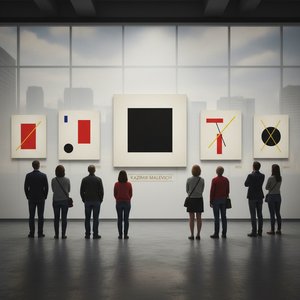
No discussion of Suprematism is complete without acknowledging the monumental significance of *Black Square* (1915). Presented at the 0.10 Exhibition in St. Petersburg, this seemingly simple painting – a black square on a white background – was nothing short of a declaration of artistic independence. It wasn’t merely an absence of imagery; it was a radical assertion that art could exist without depicting anything at all. Placed in the traditional “red corner” reserved for icons, *Black Square* challenged centuries-old conventions and sparked intense debate.
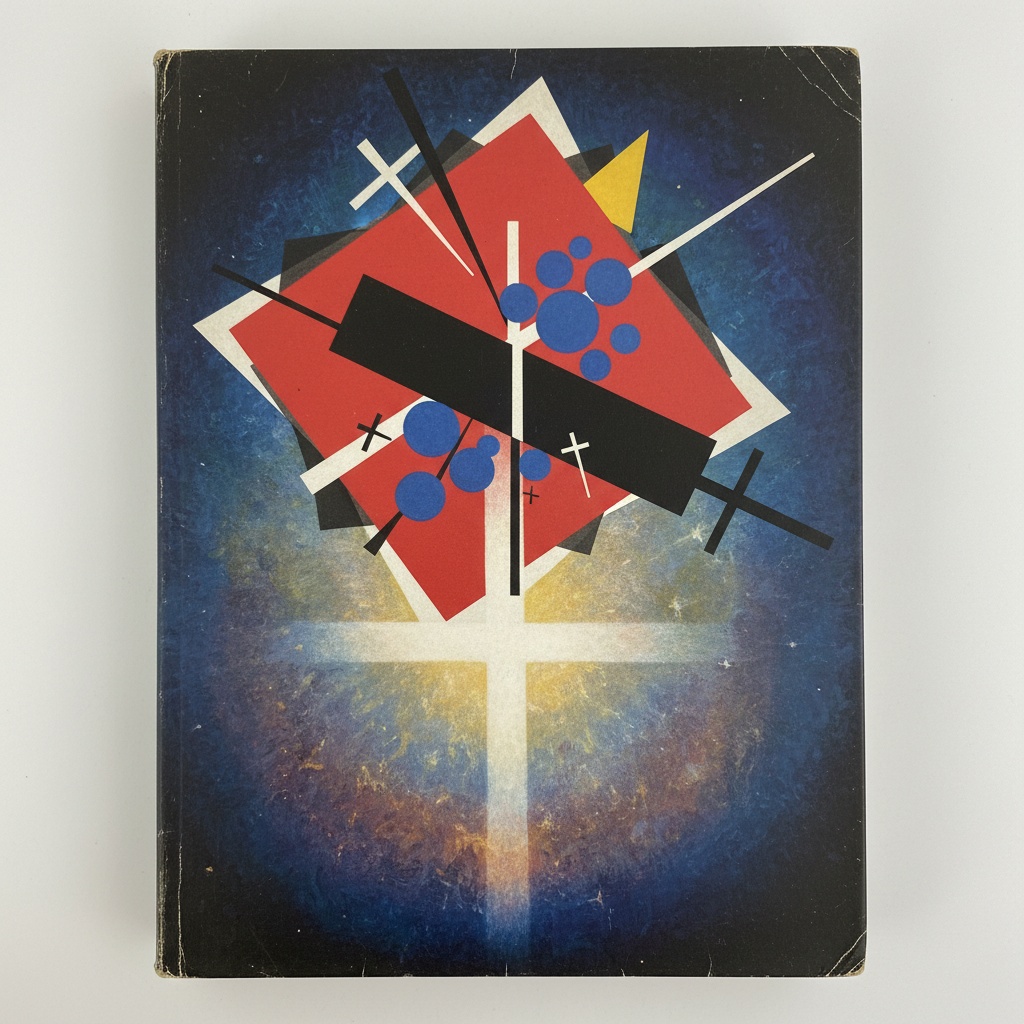
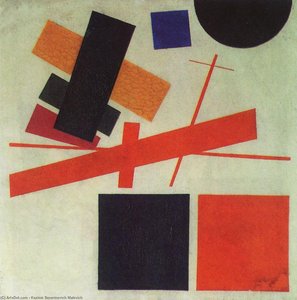
Following *Black Square*, Malevich continued to explore the possibilities of Suprematism with works like *White on White* (1918), pushing abstraction even further. Other key compositions, such as *Supremus No. 55* (1916) and various iterations of “Red Square,” demonstrate his mastery of geometric form and color relationships. These paintings weren’t simply aesthetic exercises; they were attempts to create a new visual reality, one based on pure feeling and spiritual intuition. Artists like Olga Rozanova and Ivan Klyun also contributed significantly to the movement, expanding upon Malevich's principles and exploring different facets of Suprematist expression.
Spiritual Undercurrents: The Quest for Non-Objectivity and Universal Truth
The roots of Suprematism lie deep within a broader spiritual context. Malevich’s rejection of the material world wasn’t simply an artistic choice; it was part of a larger quest for transcendence. Influenced by Russian icon painting, with its emphasis on flatness and symbolic representation, he sought to create art that could evoke a similar sense of spiritual awe. Theosophy, a mystical philosophy popular at the time, also played a significant role in shaping his thinking. Theosophical ideas about underlying cosmic energies and the interconnectedness of all things resonated deeply with Malevich’s desire to access universal truths through abstract form.
“Under Suprematism I understand the primacy of pure feeling in creative art,” Malevich wrote, emphasizing that visual phenomena were meaningless without this fundamental emotional connection. He believed that by stripping away all representational elements, artists could create a direct conduit to the spiritual realm, allowing viewers to experience a sense of liberation and enlightenment. This quest for non-objectivity wasn’t about denying reality; it was about accessing a deeper level of truth beyond its superficial appearances.
The Legacy of Suprematism: Influence on Modern Art and Design
Although relatively short-lived as a cohesive movement, Suprematism exerted a profound influence on the development of modern art. Its emphasis on geometric abstraction paved the way for movements like Constructivism, De Stijl, and Minimalism. Artists such as Piet Mondrian and Josef Albers were deeply inspired by Malevich’s work, incorporating his principles into their own unique styles. The impact extended beyond painting, influencing architecture, graphic design, and even fashion.
Today, Suprematism continues to resonate with artists and designers seeking a visual language that transcends cultural boundaries and speaks directly to the human spirit. Its emphasis on simplicity, purity, and emotional resonance remains remarkably relevant in an increasingly complex world. The movement’s legacy is not simply about specific aesthetic forms; it's about a fundamental shift in perspective – a rejection of illusion and a commitment to accessing the underlying truths that lie beyond the visible realm.
Collecting Suprematism Today: Navigating the Market & Appreciating Its Value
Acquiring works by Kazimir Malevich or his close associates is a significant undertaking, given their rarity and historical importance. The market for Suprematist art has seen considerable growth in recent years, reflecting increased appreciation for its pioneering role in modernism. Authenticity is paramount; careful provenance research is essential when considering any purchase.
ArtsDot.com offers a curated selection of high-quality reproductions of key Suprematist works, allowing art enthusiasts to experience the movement’s aesthetic power firsthand. While original paintings remain highly sought after by collectors, these meticulously crafted reproductions provide an accessible way to engage with Malevich's vision and appreciate the enduring legacy of Suprematism. Whether you are a seasoned collector or simply beginning your journey into abstract art, exploring the world of Suprematism is sure to be a rewarding experience.