The Essence of American Realism: Beyond the Surface of Tradition
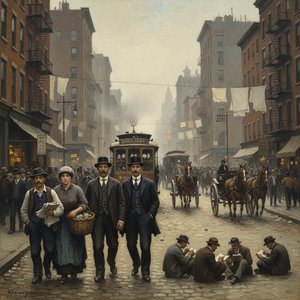
To understand the heartbeat of a nation, one must look past the polished veneers of romanticized landscapes and into the unvarnished truth of its people. American Realism emerged not merely as an artistic movement, but as a profound psychological inquiry into the identity of a burgeoning superpower. While European traditions often leaned toward the ethereal or the aristocratic, the American Realist sought something far more elusive: the authentic pulse of everyday existence. This was an art of observation, where the subject matter was found in the shadows of alleyways, the steam of street vendors, and the weary but resilient faces of the working class.
At its core, this movement rejected the escapism of much contemporary academic art. Instead, it embraced a rigorous commitment to the tangible. The artists of this era understood that there is a unique, quiet dignity found in the mundane. By focusing on the unadorned realities of life—the grit, the toil, and the spontaneous joy of the streets—they created a visual language that spoke to the democratic ideals of the United States. It was an attempt to document the soul of a country in transition, capturing a moment in history where the old world was being rapidly reshaped by the industrial and social forces of the new.
Ultimately, American Realism serves as a mirror held up to society, reflecting both its struggles and its triumphs. It invites the viewer to find beauty not in the idealized, but in the lived experience. Through this lens, we learn that art does not always need to depict the divine to be sacred; sometimes, the most profound spiritual truths are found in the simplest human interactions.
The Ashcan School: Urban Grit and the Poetry of the Streets
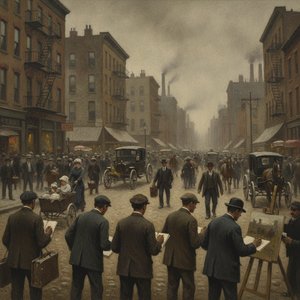
As the twentieth century dawned, New York City underwent a metamorphosis, swelling with unprecedented energy and density. It was within this chaotic, soot-stained environment that the Ashcan School found its inspiration. This group of painters, often characterized by their fascination with the city's less glamorous corners, turned their brushes toward the "ashcans" of urban life—the discarded remnants of a bustling metropolis. They were the visual chroniclers of a New York that was raw, loud, and unapologetically alive.
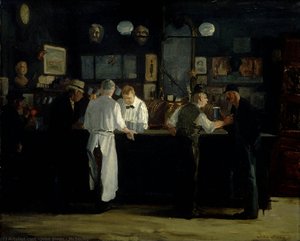
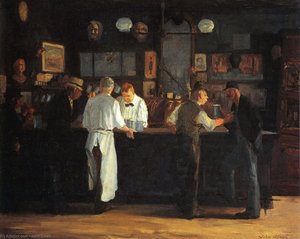
One cannot discuss this era without invoking the name of John Sloan, whose work stands as a cornerstone of the movement. In his 1912 masterpiece, McSorley’s Bar, Sloan does not present a sanitized version of social life; instead, he captures the vibrant, gritty atmosphere of a legendary NYC establishment. Through thick, expressive brushwork and a masterful command of light and shadow, he invites us into a world of smoke-filled rooms and communal camaraderie. His work exemplifies how the Ashcan artists found a peculiar kind of poetry within the grime of the city, transforming the mundane activities of patrons into scenes of profound social significance.
The movement was characterized by this very ability to find rhythm in the chaos. The streets were not merely settings; they were protagonists. The movement’s strength lay in its refusal to look away from the darker, more crowded aspects of urban expansion, finding instead a sense of shared humanity amidst the industrial sprawl. In doingLY so, the Ashcan School redefined American subject matter, proving that the true essence of a nation could be found in its most overlooked corners.
Social Landscapes: Capturing Immigrant Life and Working-Class Dignity
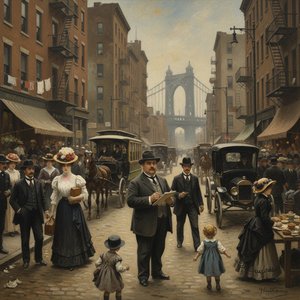
Beyond the bustling bars and crowded avenues, American Realism delved deeply into the social fabric of the immigrant experience. The Lower East Side, with its labyrinthine streets and diverse tongues, became a primary canvas for artists who sought to document the human cost and the human spirit of the Great Migration. This was an era of profound transition, where the struggle for survival met the hope of a new beginning, and the artists were there to witness every heartbeat.
Jerome Myers stands as a poignant figure in this regard. His work is deeply imbued with an empathy that transcends mere documentation. In pieces such as Fruit Vendor, Myers captures the quiet, industrious dignity of the street life that defined the immigrant experience. He possessed a unique ability to portray the Lower East Side not as a place of mere poverty, but as a complex ecosystem of culture and resilience. His paintings are more than portraits; they are sociological studies, rendered with a tenderness that honors the subjects' perseverance.
This focus on the working class provided a necessary counterbalance to the elitist art traditions of the past. By elevating the fruit vendor, the laborer, and the immigrant to the status of fine art subjects, these painters asserted that every life holds intrinsic value. The social landscapes of American Realism thus became a testament to the strength of the human spirit, documenting a period where the very foundations of American society were being built by those often left out of the history books.
Technique and Texture: The Influence of Impressionism on American Realist Mastery
While the subject matter of American Realism was rooted in the tangible world, its technical execution often drew from the more fluid traditions of European Impressionism. This intersection created a fascinating tension between the "what" and the "how." Artists like William Glackens masterfully bridged this gap, blending the gritty realism of the Ashcan School with the light-drenched, vibrant palette of Renoir and the Impressionists.
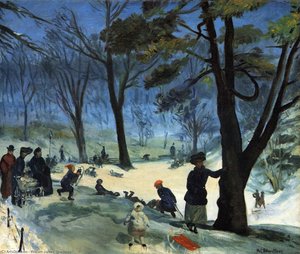
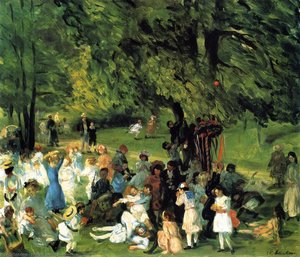
In works such as Italo-American Celebration, Washington Square, one can see this beautiful synthesis. While the scene depicts a lively, culturally specific celebration within the American urban landscape, the application of paint is decidedly impressionistic. The use of broken color, the emphasis on the play of light across moving figures, and a certain luminous quality to the atmosphere allow the painting to breathe with life. This technique prevented the realism from becoming overly clinical or photographic; instead, it imbued the scenes with an emotional resonance and a sense of fleeting movement.
The mastery of texture—the ability to use impasto to suggest the weight of a coat or the shimmer of sunlight on a cobblestone street—was essential. This tactile approach allowed the artists to communicate the physical reality of their subjects through the very medium of oil paint. By utilizing the light-capturing techniques of Impressionism to serve the narrative goals of Realism, these masters created works that were both visually dazzling and deeply grounded in truth.
Legacy and Longevity: How American Realism Continively Shapes Modern Perception
The impact of American Realism extends far beyond the early twentieth century; it fundamentally altered the trajectory of Western art. By breaking the monopoly of "high" subjects, this movement paved the way for future generations to explore the beauty in the everyday, influencing everything from Social Realism to the gritty aesthetics of modern documentary photography. The movement taught us that truth does not require embellishment, and that there is a profound power in the honest depiction of our shared reality.
Today, we see the echoes of this movement in our continued fascination with the authentic and the unscripted. In an age of digital perfection and curated personas, the raw, textured, and deeply human approach of the American Realists feels more relevant than ever. Their work serves as a reminder of the importance of looking closely—of seeing the person behind the worker, the story behind the street, and the soul behind the struggle.
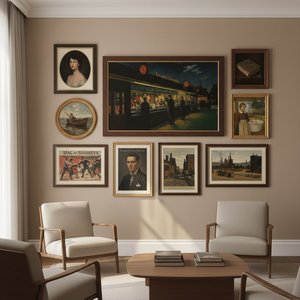
As we continue to curate our collections and appreciate the history of fine art, the works of the Ashcan School and their contemporaries remain vital. They offer us a window into a foundational era of American identity, providing a sense of continuity and a deep, emotional connection to the past. To study American Realism is to study the very process of becoming a nation, captured one brushstroke at a time.
At ArtsDot.com, we are dedicated to preserving this incredible legacy. Our mission is to make the profound beauty of these historical masterpieces accessible to collectors worldwide. Through our meticulous, hand-painted oil reproductions, we bring the texture, the light, and the soul of American Realism into modern homes. Whether you seek a custom portrait in the style of the masters or a breathtaking reproduction of an Ashcan classic, our expert artists work with academic precision to ensure every brushstroke honors the original's spirit. Discover the timeless power of art history with us.