The Genesis of Abstraction: From Expressionism to Color Field
--- title: Color-field painting | Abstract Expressionism, Minimalism, Post-Painterly Abstraction, Artists, Mark Rothko, Examples, Definition, & Facts | Britannica author: Lisa S Wainwright url: https://www.britannica.com/art/color-field-painting host...
The mid-20th century witnessed a seismic shift in the art world, a move away from representational forms and towards an exploration of pure emotion and subjective experience. This burgeoning spirit found its most potent expression in Abstract Expressionism, a movement born from the anxieties and aftermath of World War II. Artists like Jackson Pollock and Willem de Kooning unleashed raw energy onto canvas through gestural brushwork and dynamic compositions. However, within this broad current, a quieter revolution was taking place – one that traded action for contemplation, gesture for stillness. This nascent shift would ultimately blossom into Color Field painting, a style characterized by large-scale canvases dominated by flat expanses of color, minimal surface detail, and an emphasis on the emotive power of hue itself. It wasn’t merely a rejection of figuration; it was a search for something beyond it – a direct conduit to the spiritual or psychological realm through the language of color.
The roots of this transition can be traced back to the work of artists like Arshile Gorky, whose biomorphic forms hinted at an underlying emotional landscape. But it was the desire to strip away all vestiges of recognizable imagery – to arrive at a purely optical and experiential encounter with paint – that truly defined Color Field’s emergence. The New York School, as this group became known, sought to create paintings that were not *about* something, but rather *were* something—autonomous objects imbued with their own internal logic and resonance.
Mark Rothko and Barnett Newman: Pioneers of Sublimity in Color
Color field painting (Colour field painting in Commonwealth English) is a style of abstract painting that emerged in New York City during the 1940s and 1950s. It was inspired by European modernism and closely related to abstract expressionism, while ...
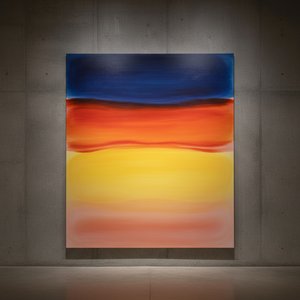
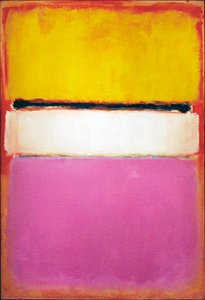
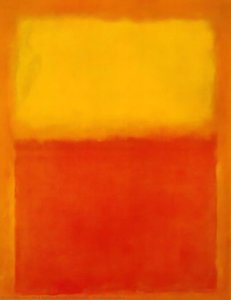
No discussion of Color Field painting is complete without acknowledging the pivotal contributions of Mark Rothko and Barnett Newman. Both artists, though distinct in their approaches, shared a profound belief in color’s ability to evoke powerful emotional responses. Rothko, perhaps the more widely recognized figure, achieved his signature style through layers upon layers of luminous, often somber, rectangular forms that seemed to float on the canvas. His paintings weren't simply compositions; they were immersive environments designed to envelop the viewer and provoke a sense of quiet contemplation. The edges of these rectangles are deliberately soft, allowing colors to bleed into one another, creating an ethereal quality that invites introspection.
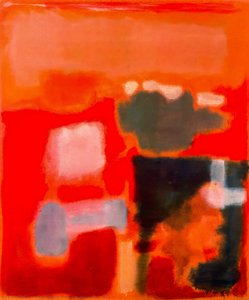
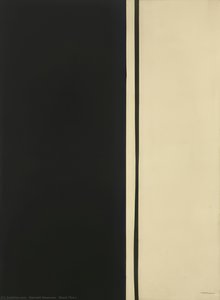
No. 61 (Rust and Blue), exemplifies Rothko’s mastery of color and atmosphere. The interplay between the rusty reds and deep blues creates a sense of both tension and harmony, drawing the viewer into a meditative state. Newman, on the other hand, employed bold vertical lines – which he termed “zips” – to divide his canvases, creating fields of intense, saturated color. These zips weren’t merely formal elements; they were intended as symbols of the sublime, representing moments of transcendence and spiritual awakening. His works often feature a scale that dwarfs the viewer, emphasizing the painting's monumental presence and its capacity to inspire awe.
Beyond the Canvas: The Philosophical Underpinnings of Color Field Painting
Color Field painting wasn’t simply an aesthetic choice; it was deeply intertwined with philosophical currents of the time. The artists were influenced by existentialism, which emphasized individual freedom and responsibility in a seemingly meaningless world. They sought to create paintings that weren't bound by traditional narratives or symbolic systems, but rather offered direct access to subjective experience. The work also resonated with theories of Gestalt psychology, which explored how the human mind perceives patterns and forms. By reducing painting to its essential elements – color, shape, scale – Color Field artists aimed to bypass intellectual interpretation and engage directly with the viewer’s perceptual faculties.
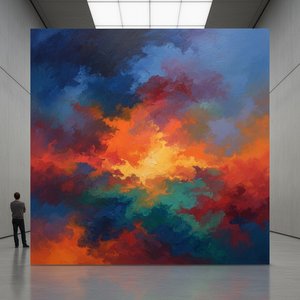
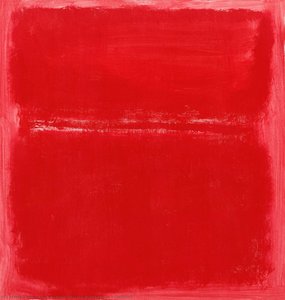
Untitled 66, for instance, embodies this philosophical intent. The layered colors create a sense of depth and ambiguity, inviting viewers to project their own emotions and interpretations onto the canvas. The absence of recognizable imagery forces a direct confrontation with one's inner state, making the painting a mirror reflecting the viewer’s own psyche.
Color Field's Influence on Subsequent Movements: Minimalism & Post-Painterly Abstraction
Post-painterly abstraction is a term created by art critic Clement Greenberg as the title for an exhibit he curated for the Los Angeles County Museum of Art in 1964, which subsequently travelled to the Walker Art Center and the Art Gallery of Toronto...
The impact of Color Field painting extended far beyond its initial practitioners. It laid the groundwork for subsequent movements like Minimalism, which further reduced art to its most fundamental forms – geometric shapes and industrial materials. Artists like Donald Judd and Sol LeWitt embraced simplicity and objectivity, rejecting any hint of emotional expression or subjective interpretation. However, even in Minimalism’s austere aesthetic, traces of Color Field’s influence can be detected—particularly in the emphasis on scale, materiality, and the viewer's physical experience of the artwork.
Post-Painterly Abstraction, emerging in the 1960s, represented a more nuanced response to Abstract Expressionism. Artists like Helen Frankenthaler and Morris Louis embraced color field techniques but sought greater clarity and openness in their compositions. They experimented with staining canvas directly with diluted paint, creating luminous surfaces that lacked the dense impasto of earlier works. This movement, curated by Clement Greenberg, signaled a shift towards a more cerebral and analytical approach to abstraction.
Collecting Color Field Paintings: Key Artists and Considerations
For collectors seeking to acquire works from this pivotal period, several artists represent particularly compelling investment opportunities. Mark Rothko remains the most sought-after figure, with his paintings commanding exceptionally high prices at auction. Barnett Newman’s monumental canvases are also highly valued, as are works by Clyfford Still and Helen Frankenthaler. Raymond Parker, though less widely known, offers a more accessible entry point into the movement, with his lyrical abstractions showcasing a vibrant palette and unique sensibility.
When considering a Color Field painting, it’s crucial to assess not only its aesthetic qualities but also its provenance – its history of ownership and exhibition. Authenticity is paramount, as forgeries are unfortunately prevalent in the art market. Furthermore, understanding the artist's technique and materials is essential—the quality of the pigments and canvas can significantly impact a painting’s longevity and value. At ArtsDot.com, we offer expert appraisal services to assist collectors in making informed decisions, ensuring that each acquisition is a genuine masterpiece worthy of preservation and admiration. We provide high-quality reproductions allowing everyone to experience the power of Color Field painting.