The Salon System: Gatekeeper of Taste & Catalyst for Change
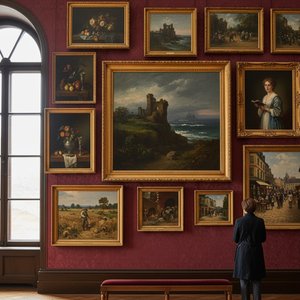
For the Classic Enthusiast, understanding the 19th century is inextricably linked to understanding the Salon. More than just an exhibition, the Parisian Salon—originating in 1667 under Louis XIV—was a cultural institution that dictated artistic success and public perception. Initially showcasing works by members of the Académie Royale de Peinture et Sculpture, it evolved into an annual juried event where artists vied for recognition, commissions, and ultimately, their place in history. The Salon wasn’t merely about displaying art; it was a performance of taste, a carefully constructed hierarchy overseen by conservative critics and established masters. Acceptance meant validation, rejection often signaled obscurity. However, this very system of control inadvertently sowed the seeds of rebellion, fostering movements that would challenge its authority and redefine artistic expression.
The power wielded by the Salon is difficult to overstate. The Metropolitan Museum of Art notes how it—and the Royal Academies—held a “virtual monopoly on public taste and official patronage.” Artists needed Salon approval not just for financial gain, but also for social standing. This created an environment where adherence to academic standards – historical or mythological subjects rendered with meticulous detail and idealized forms – was paramount. Yet, beneath this veneer of tradition, a growing desire for authenticity and contemporary relevance began to stir, setting the stage for the dramatic shifts that would characterize the century’s art.
Realism's Revolt: Depicting Life Unvarnished
Realism, Realistic, or Realists may refer to: == In the arts == Realism (arts), the general attempt to depict subjects truthfully in different forms of the arts Arts movements related to realism include: == In philosophy == Philosophical realism ...
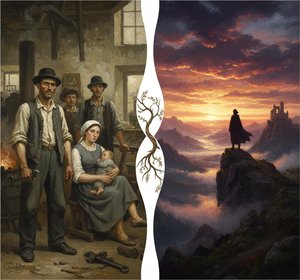
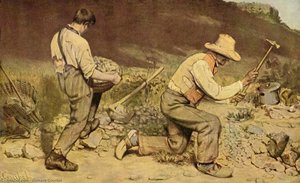
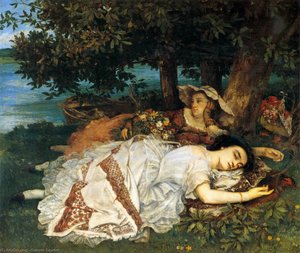
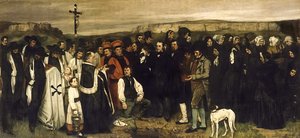
The mid-19th century witnessed a deliberate turning away from idealized beauty and romantic narratives with the emergence of Realism. Artists like Gustave Courbet, Honoré Daumier, and Jean-Baptiste-Camille Corot sought to depict life as it truly was—unflinching, often gritty, and devoid of embellishment. This wasn’t simply a stylistic choice; it was a philosophical statement. In an era marked by rapid industrialization and social upheaval, Realists believed art should reflect the realities of everyday existence, particularly the lives of ordinary people. Courbet's monumental paintings, such as *The Stone Breakers* (sadly destroyed during WWII), shocked audiences with their depiction of manual labor and lack of heroic grandeur.
Daumier, a master lithographer and painter, used his art as a powerful form of social commentary, satirizing the bourgeoisie and exposing the injustices of French society. Corot, while often associated with landscape painting, also produced works that captured the dignity and quiet resilience of rural life. The Realist movement wasn’t without its critics; many found their subject matter vulgar or politically subversive. However, it paved the way for a more honest and democratic approach to art, challenging the established norms and broadening the scope of artistic representation.
Impressionism’s Fleeting Glimpses: Capturing Light and Modernity
Impressionism was a 19th-century art movement characterized by visible brush strokes, open composition, emphasis on accurate depiction of light in its changing qualities (often accentuating the effects of the passage of time), ordinary subject matter...
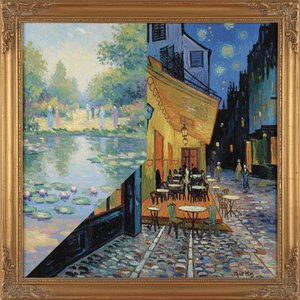
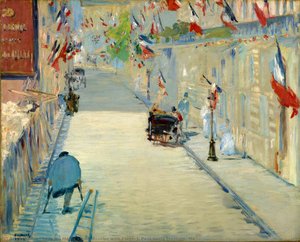
Emerging in the 1870s, Impressionism represented a radical departure from Realism's focus on detailed depiction. A group of artists—including Claude Monet, Edgar Degas, and Pierre-Auguste Renoir—rejected the constraints of academic painting, choosing instead to capture the fleeting effects of light and atmosphere. Working *en plein air* (outdoors), they abandoned traditional studio techniques in favor of visible brushstrokes, open composition, and a focus on capturing the subjective experience of perception.
The name “Impressionism” itself was initially derisive, coined by critic Louis Leroy after viewing Monet’s *Impression, soleil levant*. However, the artists embraced the label, recognizing it as a fitting descriptor for their innovative approach. They weren't interested in recreating reality with photographic accuracy; they sought to convey the *impression* of a moment—the way light played on water, the vibrancy of a Parisian street scene, the ephemeral beauty of a sunset. This emphasis on subjective experience and modern life challenged traditional notions of artistic value and paved the way for further experimentation.
Beyond Impressionism: Post-Impressionism and the Search for Structure
By the late 19th century, Impressionism had begun to fragment, with artists seeking new ways to express their individual visions. Post-Impressionism wasn’t a unified movement but rather a diverse range of styles that built upon—and reacted against—the principles of Impressionism. Artists like Paul Cézanne, Vincent van Gogh, and Paul Gauguin explored different avenues of expression, emphasizing form, structure, and emotional intensity.
Cézanne sought to bring order and solidity to the fleeting impressions of Impressionism, meticulously analyzing forms and reducing them to their essential geometric components. Van Gogh used bold colors and expressive brushstrokes to convey his inner turmoil and subjective experience of the world. Gauguin rejected the urban landscapes of Europe in favor of the exotic beauty of Tahiti, exploring themes of primitivism and spirituality. Post-Impressionism marked a transition from capturing external reality to expressing internal states, laying the groundwork for the abstract art movements of the 20th century.
Romanticism’s Enduring Legacy: Emotion, Imagination & Individuality
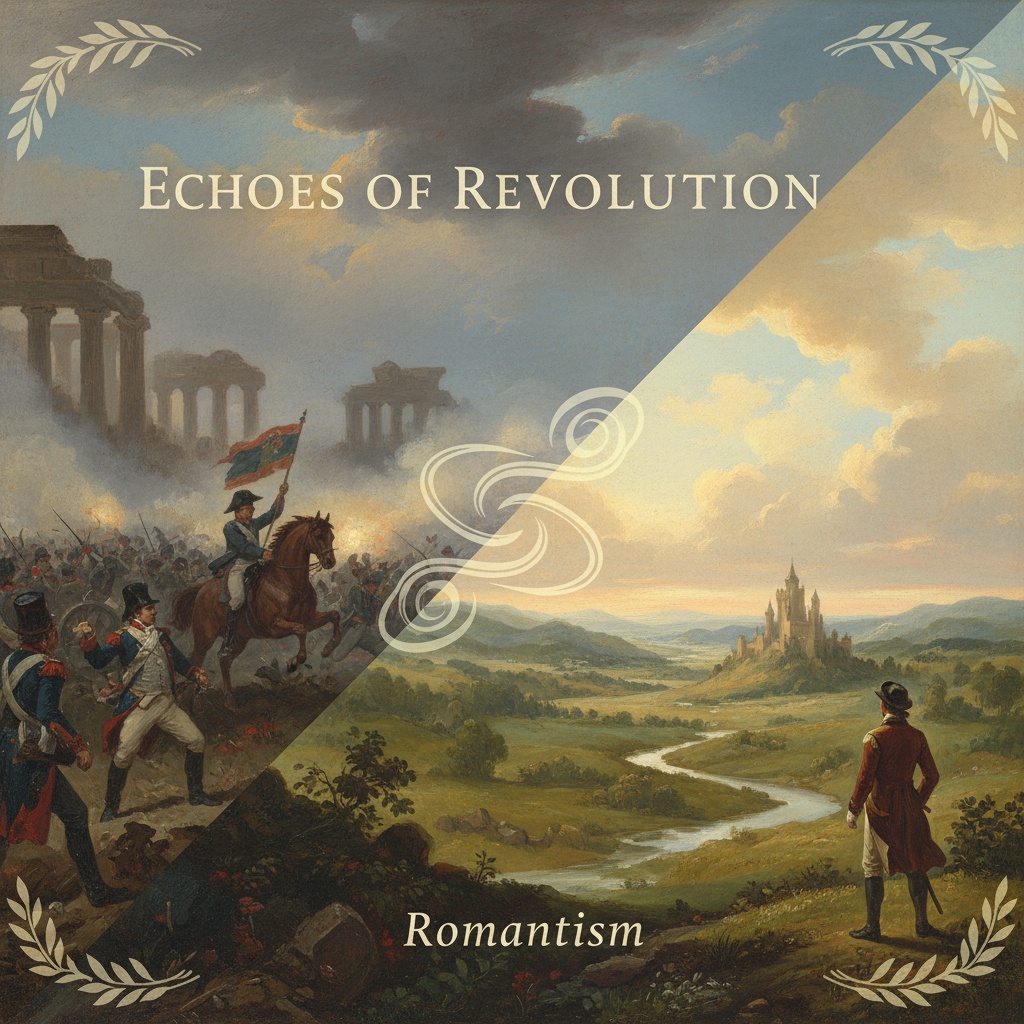
While often overshadowed by Realism and Impressionism, Romanticism cast a long shadow over the entire 19th century. Emerging in the late 18th and early 19th centuries as a reaction against the Enlightenment’s emphasis on reason, Romanticism celebrated emotion, imagination, and individuality. Artists like Eugène Delacroix—whose *Women of Algiers* initially captivated audiences with its perceived realism but was later revealed to be a constructed fantasy—explored themes of passion, heroism, and the sublime.
The emphasis on individual expression and subjective experience resonated throughout the century, influencing both Realism’s focus on authentic representation and Impressionism’s exploration of personal perception. Romanticism's fascination with nature also played a significant role in the development of landscape painting, inspiring artists to capture the beauty and power of the natural world. The movement’s enduring legacy lies in its celebration of human emotion and its rejection of rigid conventions, paving the way for the artistic freedom that would characterize the modern era.
Collecting 19th-Century Art: A Guide for the Classic Enthusiast
For those drawn to the richness and complexity of 19th-century art, building a collection can be an immensely rewarding experience. Consider your personal preferences—are you captivated by the social realism of Courbet, the luminous landscapes of Monet, or the expressive power of Van Gogh? Researching artists and movements is crucial, as is understanding the historical context in which these works were created.
ArtsDot.com offers a curated selection of handmade oil paintings and museum-quality prints, allowing you to bring the masterpieces of the 19th century into your home. Whether you’re seeking a reproduction of a beloved classic or exploring custom portrait commissions in the style of your favorite artist, our team of experts is here to guide you. From free art consultations to detailed artwork appraisals and secure global shipping, we are committed to providing a seamless and enriching experience for every collector. Explore our extensive library today and discover the enduring beauty of 19th-century art!