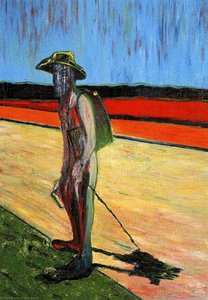
The Foundations of Affective Representation: Color, Form, and Psychological Response
Affective computing is the study and development of systems and devices that can recognize, interpret, process, and simulate human affects. It is an interdisciplinary field spanning computer science, psychology, and cognitive science. While some core...
The human experience is inextricably linked to emotion – a vibrant tapestry woven with joy, sorrow, fear, and wonder. For millennia, artists have striven not merely to depict the world around them but to capture and convey these deeply felt states, transforming canvas and stone into conduits for visceral response. This pursuit isn’t arbitrary; it's rooted in both psychological predispositions and culturally learned associations that shape how we perceive and interpret visual stimuli. The power of art lies in its ability to bypass rational thought and speak directly to the emotional core.
Color psychology, while a nuanced field often debated for its subjective interpretations, suggests inherent responses to certain hues. Reds frequently evoke passion, energy, or even aggression, their intensity mirroring the pulse of life itself. Blues, conversely, tend towards calmness, introspection, and sometimes melancholy – shades reminiscent of vast oceans and twilight skies. However, these aren’t universal decrees; cultural context profoundly shapes color perception. What is considered auspicious in one society might be associated with mourning in another, demonstrating that emotional resonance isn't solely dictated by inherent properties but also by collective experience. Form, too, plays a critical role. Sharp angles and jagged lines can convey tension and unease, disrupting visual harmony, while rounded forms often suggest comfort, unity, and organic growth. The pioneering work of Wassily Kandinsky provides a foundational understanding of this interplay; he believed that each color possessed a 'spiritual vibration' capable of directly impacting the viewer’s emotional state, akin to musical notes resonating within the soul.
Texture adds another layer of complexity, inviting tactile engagement even through visual means. Rough textures can evoke feelings of rawness or discomfort, mirroring the imperfections and challenges of life, while smooth surfaces suggest refinement, tranquility, and a sense of control. The very act of paint application – impasto versus glazing, for instance – influences perception; thick, visible brushstrokes convey energy and immediacy, whereas subtle layers create depth and mystery. Beyond individual elements, their *relationships* are paramount. A vibrant red juxtaposed with a somber blue creates a dramatically different emotional impact than the same red paired with a sunny yellow. Compositional choices—the arrangement of forms within the frame—also guide the viewer’s eye and influence emotional interpretation.
Baroque Drama & Emotional Intensity: Chiaroscuro and the Depiction of Suffering
The Baroque period (roughly 1600-1750) witnessed a dramatic exploration of emotional intensity in painting, moving away from the idealized forms of the Renaissance towards a more visceral and immediate representation of human experience. Artists like Caravaggio and Gerrit Dou masterfully employed chiaroscuro – the stark contrast between light and shadow – to heighten drama and evoke powerful feelings, often focusing on religious narratives or scenes of everyday life imbued with symbolic weight.
Gerrit Dou’s “The Dropsical Woman” (1663) exemplifies this approach. The painting depicts a physician examining an elderly woman afflicted with dropsy, a condition causing debilitating fluid retention. While the scene is ostensibly a medical examination, it's deeply imbued with pathos. Dou’s meticulous detail – the precise rendering of textures, the somber lighting that casts long shadows across the room, and the expressions on the faces of both the doctor and patient – create a sense of claustrophobia and despair. The limited color palette reinforces this mood; muted browns and grays dominate, emphasizing the woman's illness and vulnerability. Caravaggio’s work, though often more overtly dramatic, similarly utilizes chiaroscuro to emphasize emotional states. His paintings frequently depict scenes of martyrdom or religious ecstasy, bathed in intense light that highlights the figures’ suffering or spiritual fervor. The use of tenebbrism – an extreme form of chiaroscuro – creates a sense of theatricality and draws the viewer into the scene's emotional core.
These artists weren’t simply depicting physical reality; they were using visual techniques to convey the *experience* of emotion, inviting viewers to empathize with their subjects. The focus wasn’t on idealized beauty but on raw human vulnerability, a departure that profoundly influenced subsequent generations of painters.
Van Gogh's Expressive Brushwork: Conveying Personal Emotion Through Paint
Vincent van Gogh’s expressive brushwork and bold use of color represent a significant departure from traditional artistic conventions. Rejecting the academic precision of his predecessors, Van Gogh prioritized emotional expression over accurate representation, utilizing paint as a vehicle for conveying his intensely personal state of mind.
Van Gogh's “Portrait of Madame Trabuc” (1889) is a compelling example of this approach. Unlike the meticulous realism of Baroque portraiture, Van Gogh’s painting prioritizes emotional expression over accurate representation. The thick impasto – the visible brushstrokes – creates a sense of dynamism and energy, as if the paint itself is alive with feeling. The vibrant colors—particularly the yellows and oranges—are not necessarily naturalistic but rather reflect Van Gogh's subjective experience of his subject. The swirling patterns and distorted forms convey a sense of inner turmoil and psychological intensity. This is not simply a depiction *of* Madame Trabuc; it’s a representation of how Van Gogh *felt* about her, filtered through his own emotional lens. His use of color isn’t arbitrary; he believed that colors possessed inherent expressive qualities and could directly communicate emotions. The yellows, for example, often represented hope or madness, while the blues conveyed sadness or isolation. This subjective approach to color and form paved the way for Expressionism and other modern art movements.
Francis Bacon and the Visceral Language of Anguish: Distortion as Affective Communication
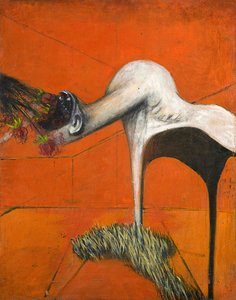
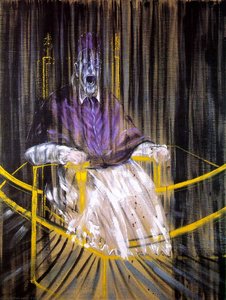
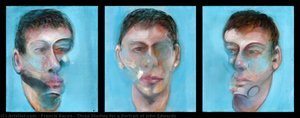
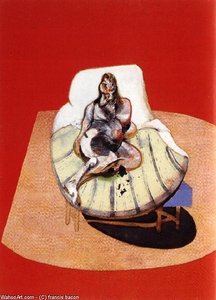
Francis Bacon's work is characterized by its raw, visceral depiction of human suffering and existential angst. Rejecting traditional notions of beauty and form, Bacon employed distorted figures, unsettling compositions, and a limited color palette to convey these profound emotions.
Francis Bacon’s “Head II” (1949) exemplifies his signature style. The painting depicts a Black woman's head, rendered in expressive, textured oil paint. However, the image is profoundly disturbing; the figure’s features are distorted and fragmented, conveying a sense of pain and alienation. The limited color palette—dominated by shades of gray, black, and red—reinforces this mood. Bacon wasn’t interested in creating aesthetically pleasing images; his goal was to confront viewers with the harsh realities of human existence. His use of distortion isn't simply stylistic; it reflects a deeper psychological state – a sense of fragmentation and existential dread. The composition is also unsettling; the figure appears trapped within the frame, unable to escape its own suffering. Bacon’s work often draws on themes of violence, mortality, and isolation, reflecting his own personal struggles and anxieties. He sought to capture the raw, primal emotions that lie beneath the surface of human consciousness.
Affective Computing & Art: A Scientific Lens on Emotional Perception
The field of affective computing explores the possibility of creating machines that can recognize, interpret, process, and simulate human emotions. While seemingly disparate, this technology offers valuable tools for analyzing the visual elements that contribute to emotional responses in art.
Affective computing draws on insights from computer science, psychology, and cognitive science to develop systems capable of 'emotional intelligence.' Recent research suggests that subtle variations in haptic feedback (touch) can even shape human reward learning and mobile interaction behavior, indicating that emotional responses aren’t limited to visual stimuli. This raises intriguing questions about the role of texture and tactile qualities in art appreciation. Furthermore, the attempt to simulate empathy in machines highlights the importance of understanding how emotions are communicated through nonverbal cues—a skill that artists have honed for centuries.
Machine learning algorithms can be trained to identify patterns in facial expressions, body language, and speech associated with specific emotions. These algorithms can then be applied to analyze artworks, identifying features—such as color combinations, compositional choices, and brushstroke techniques—that are correlated with particular affective states. This provides a quantitative approach to understanding the subjective experience of viewing art.
The Nuances of Color Psychology: Cultural Context, Individual Preference, and Artistic Application
The relationship between color and emotion is complex and multifaceted, extending beyond simple associations. While certain colors may evoke broadly similar responses across cultures, individual preferences and learned experiences play a significant role in shaping perception.
Research demonstrates that adults perceive emotional properties in abstract art even without representational cues, suggesting an inherent capacity to associate color and form with feeling. However, this association isn’t fixed; it's influenced by personal history, cultural background, and individual temperament. The semantic differential—a technique used in psychology to measure the connotative meaning of concepts—reveals that colors are often associated with a range of emotions, depending on the context and the individual observer.
Ultimately, understanding emotional representation in art requires acknowledging the interplay between universal psychological predispositions, culturally learned associations, and the artist’s unique vision. At ArtsDot.com, we offer both meticulously crafted reproductions of classic masterpieces and the opportunity to commission personalized oil portraits that capture your own cherished memories and emotions. Explore our collection today and discover the power of art to transform your space and evoke profound