A History Rooted in Antiquity: From Manuscript Illumination to Early Modern Practice
Watercolor (American English) or watercolour (Commonwealth English; see spelling differences), also aquarelle (French: [akwaʁɛl]; from Italian diminutive of Latin aqua 'water'), is a painting method in which the paints are made of pigments suspended ...
The allure of watercolor lies not merely in its delicate beauty, but in its profound lineage—a history stretching back millennia, interwoven with the very development of artistic expression itself. While often perceived as a quintessentially Western medium, the roots of water-based painting extend deep into antiquity. Evidence suggests early forms existed in cave paintings, though it was within the meticulous world of manuscript illumination that watercolor truly began to flourish. Monks and scribes across Europe, Asia, and the Middle East painstakingly adorned religious texts with vibrant hues derived from natural pigments – minerals ground finely and bound with gum arabic, creating a luminosity that seemed to emanate from the page itself. These early works weren’t simply decorative; they were acts of devotion, transforming sacred words into visual feasts.
The Renaissance witnessed a shift, as watercolor transitioned from solely serving religious purposes to becoming a favored tool for artists exploring preparatory sketches and studies. Albrecht Dürer, a master of both printmaking and painting, stands as a pivotal figure. His botanical watercolors, rendered with astonishing precision, demonstrate not only technical skill but also a deep appreciation for the natural world. These weren’t mere copies of nature; they were investigations—detailed observations capturing form, texture, and light with unprecedented accuracy. Leonardo da Vinci similarly employed watercolor in his notebooks, using it to record anatomical studies and engineering designs, showcasing its versatility as a medium for both artistic expression and scientific inquiry. However, during this period, watercolor remained largely subordinate to oil painting, considered the more prestigious and permanent art form.
The Golden Age of English Watercolor: Innovation, Artists & Landscape Painting
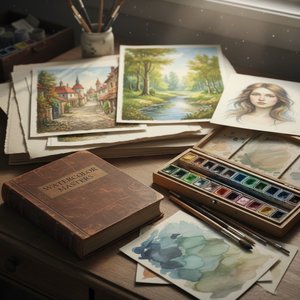 The Enduring Appeal of Watercolor: History, Techniques & Contemporary Practice
Explore the captivating world of watercolor painting! Discover its rich history, essential techniques, influential artists, and collecting tips. A comprehensive guide for art enthusiasts.
The 18th and early 19th centuries marked a watershed moment for watercolor—its “Golden Age,” primarily centered in England. A confluence of factors fueled this blossoming: increased affordability of materials, the rise of a leisured class with a penchant for picturesque scenery, and a growing emphasis on capturing the unique character of the British countryside. Artists began to embrace watercolor not as a preparatory tool but as a finished art form in its own right. This era saw the emergence of distinct styles and techniques, characterized by atmospheric effects, delicate washes, and a focus on light and shadow.
Figures like Thomas Gainsborough pioneered a loose, fluid style, capturing the essence of landscapes with remarkable sensitivity. John Robert Cozens developed an innovative approach to creating sublime and melancholic scenes, utilizing dynamic color and form to evoke emotional responses. But it was J.M.W. Turner who truly revolutionized watercolor painting. His mastery of light, color, and atmospheric perspective pushed the boundaries of the medium, anticipating the Impressionists with his evocative depictions of seascapes, landscapes, and historical events. Simultaneously, John Constable’s naturalistic approach focused on capturing the specific atmosphere of the English countryside, laying the groundwork for a uniquely British watercolor tradition. These artists weren't simply *painting* landscapes; they were interpreting them—conveying their emotional connection to the land.
Techniques of Transparency: Exploring the Unique Characteristics of Watercolor
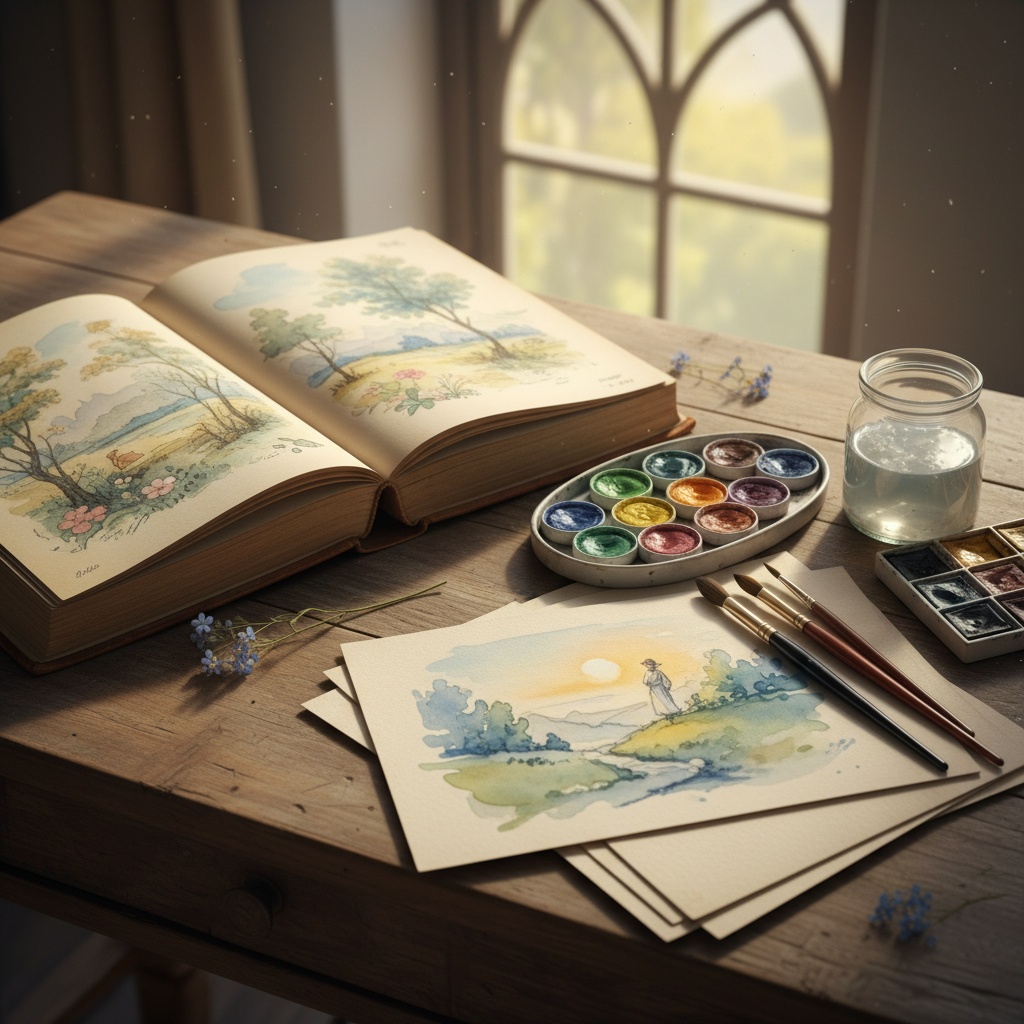
The very essence of watercolor lies in its transparency. Unlike opaque mediums like oil or acrylic, watercolor relies on layering washes of diluted pigment onto white paper, allowing light to reflect through the colors and create a luminous effect. This characteristic dictates not only the techniques employed but also the aesthetic qualities that define the medium. Artists typically utilize “pans” – small cakes of dried color – or tubes of thickened paint, both composed of finely ground pigments suspended in water and gum arabic.
The interplay between water and pigment is crucial. Applying watercolor to dampened paper creates soft, flowing washes with diffused edges, while applying it to dry paper results in more defined strokes and textures. Artists often employ techniques like “lifting” – removing pigment with a cloth or sponge to create highlights or soften edges—and masking fluid to protect areas of the paper from being painted. The choice of paper is equally important; watercolor papers are typically made of cotton, providing texture and minimizing distortion when wet. The luminosity achieved through layering transparent washes allows for subtle gradations of color and an unparalleled sense of depth. Mastering these techniques requires patience, control, and a deep understanding of the medium’s inherent properties.
Watercolor's Revolutionary Moments: Kandinsky and the Rise of Abstraction
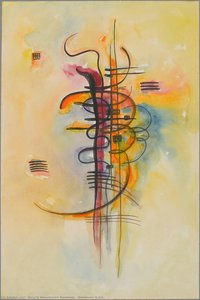
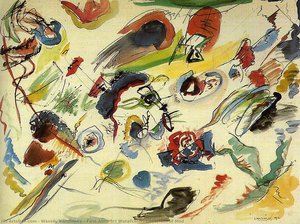 First Abstract Watercolor, Collection of Mad
Discover Wassily Kandinsky’s ‘First Abstract Watercolor’ (1910). A vibrant, pioneering abstract work showcasing dynamic color & form. Explore this landmark piece of modern art!
While traditionally associated with representational art, watercolor played a pivotal role in the birth of abstraction. Wassily Kandinsky, a pioneer of abstract expressionism, embraced watercolor as a vehicle for exploring the spiritual dimension of art. His “First Abstract Watercolor” (1910) is considered a landmark work—a vibrant explosion of color and form that broke free from representational constraints. Kandinsky believed that colors possessed inherent emotional qualities and sought to express these emotions directly through abstract compositions.
This radical departure from traditional painting challenged conventional notions of art and paved the way for a new era of artistic experimentation. Kandinsky’s use of watercolor wasn't merely about abandoning representation; it was about exploring the underlying principles of form, color, and composition. He saw parallels between music and painting, believing that colors could evoke emotions in much the same way as musical notes. His work demonstrated the power of watercolor to transcend the limitations of visual depiction and tap into a deeper realm of feeling and expression.
Beyond Representation: The Emotional Power and Symbolic Depth in Watercolor
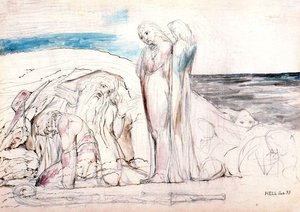 Ugolino tells his cruel history
Explore William Blake’s ‘Ugolino tells his cruel history’! A haunting watercolor depicting Dante’s Inferno. Romantic & Pre-Raphaelite style, powerful symbolism. Discover this iconic artwork.
From the delicate botanical studies of Dürer to Kandinsky’s revolutionary abstractions, watercolor has consistently served as a medium for conveying emotion and exploring symbolic depth. The inherent transparency of the medium lends itself beautifully to capturing fleeting moments, atmospheric effects, and subtle nuances of feeling. William Blake's haunting watercolors depicting scenes from Dante’s Inferno, such as “Ugolino tells his cruel history,” exemplify this power—the delicate washes and expressive brushwork conveying a sense of anguish and despair.
The ability to layer colors and create luminous effects allows artists to evoke a wide range of emotions – from tranquility and serenity to drama and intensity. Watercolor’s unique qualities also make it ideal for capturing the ephemeral—the fleeting beauty of light, the changing seasons, or the subtle expressions of human emotion. Today, contemporary watercolor artists continue to push the boundaries of the medium, exploring new techniques and subject matter while honoring its rich history and enduring legacy.
At ArtsDot.com, we celebrate this legacy by offering high-quality reproductions of both historical masterpieces and contemporary works in watercolor. Explore our extensive collection and discover the captivating beauty and emotional power of this timeless art form. From custom paintings based on your favorite artists to expertly appraised originals, we are dedicated to making the world’s great artworks accessible to all.