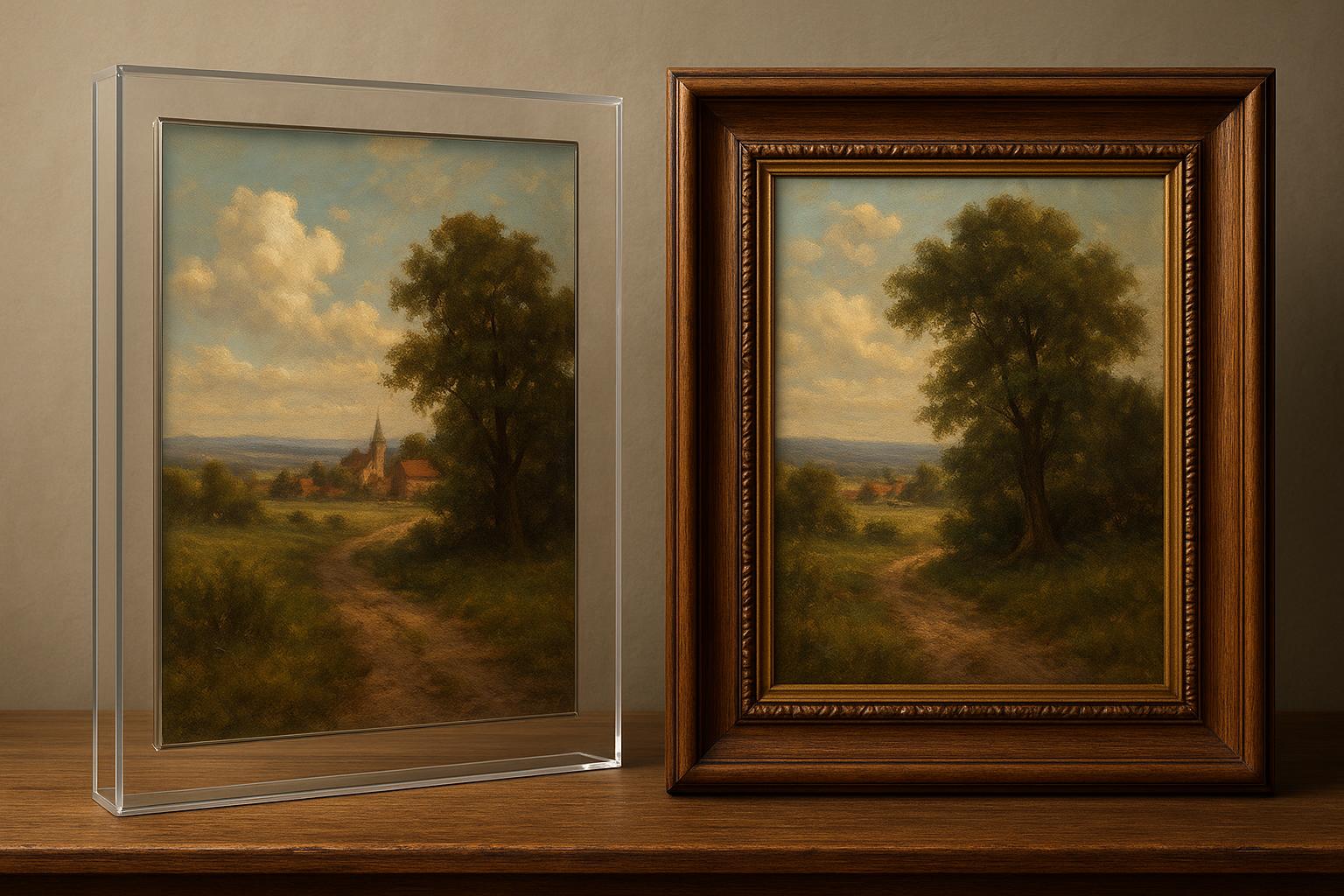
Understanding the Aesthetic Distinctions: Acrylic's Modernity vs. Wood's Classicism
For the discerning art collector, framing is not merely a functional necessity; it’s an integral element of the artwork itself. The choice between acrylic and wood frames represents a fundamental aesthetic decision, reflecting distinct stylistic sensibilities. Acrylic frames, characterized by their sleek transparency and minimalist design, embody modern elegance. Their clarity allows for unobstructed viewing of the artwork, emphasizing its colors and forms without distraction. This is particularly well-suited to contemporary pieces or those with bold color palettes where visual impact is paramount. Wood frames, conversely, evoke a sense of timeless tradition and warmth. The natural grain patterns and rich textures of wood—whether mahogany, oak, or walnut—lend an air of sophistication and heritage. They complement classical works, landscapes, and portraits beautifully, enhancing their inherent gravitas and historical context. Selecting the appropriate frame is about harmonizing with the artwork’s spirit and aligning it with your personal taste.
Material Properties & Preservation: How Framing Choices Impact Artwork Longevity for Elite Collections
Preserving an investment-grade artwork requires meticulous attention to detail, including the selection of framing materials. Both acrylic and wood offer protective benefits, but their properties differ significantly. Acrylic frames provide a superior barrier against environmental factors such as dust, humidity, and UV light—critical considerations for long-term preservation. The inherent clarity of acrylic also minimizes reflection, ensuring optimal viewing conditions while safeguarding the artwork from fading. Wood frames, when properly sealed with archival-quality finishes, can also offer protection; however, they are more susceptible to fluctuations in temperature and humidity which can cause expansion and contraction, potentially stressing the canvas over time. At , we utilize only museum-grade materials and construction techniques to ensure your artwork remains pristine for generations. Our framing experts consider factors like canvas type, pigment sensitivity, and environmental conditions when recommending optimal frame choices.
’s Bespoke Options: Customization and Craftsmanship in Both Acrylic and Wood Frames
At , we understand that every collector's needs are unique. Our bespoke framing service offers unparalleled customization options for both acrylic and wood frames. For acrylic frames, you can select from a range of thicknesses, edge profiles (beveled, square, or rounded), and mounting hardware to achieve your desired aesthetic. We offer various tints and finishes—from crystal clear to smoked gray—to subtly alter the frame’s visual impact. Wood frames benefit from an even wider array of customization possibilities. Choose from dozens of wood species, stains, and finishes, including hand-rubbed oil, lacquer, and varnish. Our skilled artisans meticulously craft each frame by hand, ensuring precise joinery, flawless finishing, and a level of quality unmatched in the industry. We also offer specialized features like hidden hinges, museum glass glazing, and acid-free backing boards to further enhance preservation and presentation.
Investment Considerations: Selecting a Frame that Enhances Value and Resale Potential
The right frame can significantly impact an artwork’s perceived value and its appeal to potential buyers. While personal preference is paramount, it's prudent to consider the broader market when framing investment-grade pieces. Classic or historically accurate frames often enhance the authenticity and provenance of older works, increasing their desirability among collectors. For contemporary art, a minimalist acrylic frame can project an image of sophistication and modernity, aligning with current trends. Avoid overly ornate or trendy frames that may detract from the artwork’s intrinsic value and limit its appeal to future buyers. At , our framing consultants possess extensive knowledge of art market dynamics and can advise you on choices that maximize your investment's potential.
Beyond the Frame: Coordinating with Canvas Wraps & Interior Design Styles
The frame should seamlessly integrate with the artwork’s canvas wrap style and complement the surrounding interior design. offers a variety of canvas wrap options—WhiteWrap, MirrorWrap, ExtendedWrap, and BlurSideWrap—each influencing the overall aesthetic. A WhiteWrap provides a clean, neutral border that works well with both acrylic and wood frames. MirrorWrap extends the image onto the sides, creating an immersive effect best suited for modern interiors. ExtendedWrap offers a painted border that can coordinate with the frame’s color palette. BlurSideWrap softens the edges of the canvas, providing a subtle transition between the artwork and the wall. Consider your home's style—whether it be traditional, contemporary, or eclectic—and choose a framing combination that creates visual harmony and enhances the overall ambiance. Our team is available to provide personalized recommendations based on your specific needs and preferences.