The Rise of AI Art: From Algorithms to Aesthetics
The story of art is, at its heart, a chronicle of innovation—a relentless pursuit of new ways to capture the human experience and translate it into tangible form. For millennia, this translation relied solely on the skilled hand and discerning eye of the artist. But the dawn of artificial intelligence has irrevocably altered that equation, introducing a powerful new force into the creative landscape. The emergence of AI-driven photo art generation isn’t simply about machines mimicking human artistry; it represents a fundamental shift in how we conceive of creativity itself. The earliest explorations, dating back to Harold Cohen’s AARON system in the 1960s, were driven by a desire to codify the very act of drawing – to break down artistic creation into symbolic rules and logical processes. While rudimentary by today's standards, AARON laid the groundwork for decades of research into algorithmic art, foreshadowing the astonishing capabilities we now witness.
The core technology powering this revolution lies in neural networks—complex algorithms inspired by the structure of the human brain. Generative Adversarial Networks (GANs) initially captured attention with their ability to produce remarkably realistic images through a competitive process: one network generates, and another critiques, constantly refining the output until it becomes indistinguishable from reality. However, the recent rise of diffusion models has proven even more transformative. These models operate by systematically adding noise to an image until it dissolves into randomness, then learning to reverse that process—denoising the chaos back into a coherent form guided by textual prompts or initial images. This allows for unprecedented control and stylistic nuance, enabling users to conjure artwork from the ether with relative ease.
Decoding Style: How AI Interprets (and Imitates) Artistic Movements
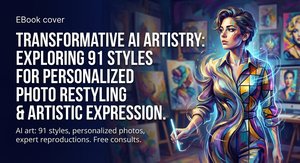
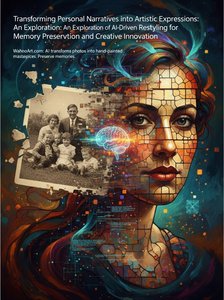
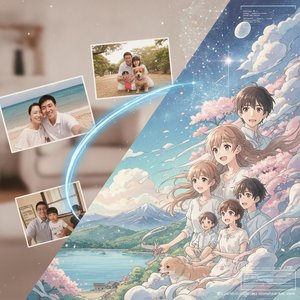
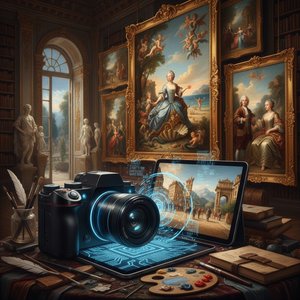
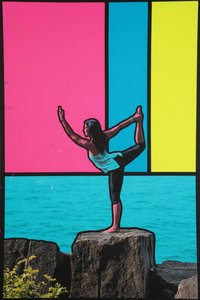
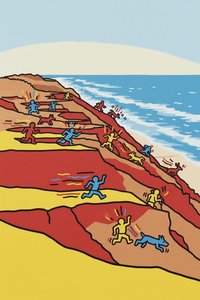
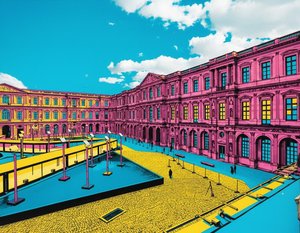
One of the most captivating aspects of AI art generation is its ability to evoke established artistic styles. The algorithms don’t merely copy; they *interpret*. Neural style transfer (NST), for example, allows us to imbue a photograph with the brushstrokes and color palettes of Van Gogh, Monet, or Klimt. But this isn't simply a superficial overlay. The AI must understand the underlying structure and composition of both images—the subject matter, perspective, lighting—to achieve a harmonious result. Consider the delicate balance required to apply Impressionistic techniques to a portrait: capturing the fleeting quality of light, the broken color, the sense of movement without sacrificing the likeness of the subject.
However, this process isn’t without its limitations. Illustrators have keenly observed that while AI excels at replicating aesthetic *fragments*, it often struggles with content-style disentanglement—maintaining the integrity of the original subject matter when applying a new style. The resulting artwork can sometimes feel disjointed or lacking in cohesion, betraying its artificial origins. This limitation underscores the complexity of artistic skill, which involves not just visual replication but also conceptual understanding and intentionality – the ability to imbue an image with meaning and emotion. The AI may convincingly mimic the *look* of Van Gogh, but it cannot replicate his emotional turmoil or philosophical depth.
Human & Machine: Collaboration, Not Competition in the Age of AI
The narrative surrounding AI art often frames it as a competition between human artists and intelligent machines. However, a more nuanced perspective reveals a burgeoning partnership—a symbiotic relationship where AI serves not as a replacement for artistic talent but as a powerful collaborator. Rather than fearing obsolescence, many artists are embracing these tools to enhance their creative processes, automating tedious tasks and opening up new avenues for experimentation.
AI can generate initial sketches, explore different color palettes, or create variations on existing themes, allowing artists to focus on the more conceptual aspects of their work—refining compositions, adding personal touches, and imbuing the artwork with meaning. This concept of ‘human-AI synergy’ is gaining traction, recognizing that the most compelling AI art often arises from a collaborative process. The artist defines the parameters, provides feedback, and curates the outputs, while the AI handles the technical execution. Projects like Refik Anadol’s *Unsupervised*, which uses AI to generate abstract visualizations based on museum data, exemplify this approach—a stunning demonstration of what can be achieved when human vision and artificial intelligence converge.
Copyright & Creativity: Navigating the Legal Landscape of AI-Generated Imagery
As AI-generated art becomes more prevalent, fundamental questions surrounding originality and copyright have come to the forefront. The legal landscape is complex and rapidly evolving, struggling to keep pace with technological advancements. If an algorithm is trained on a dataset of copyrighted images, does the resulting artwork infringe upon those copyrights? The answer remains far from clear.
Some argue that the transformative nature of AI generation constitutes fair use—that the new artwork represents a significant departure from the original source material. Others contend that it represents unauthorized reproduction, particularly if the algorithm is capable of replicating specific styles or even entire compositions. Furthermore, the question of authorship arises: who owns the copyright to an AI-generated image – the programmer, the user who provided the prompt, or the AI itself? This debate has significant implications for artists and collectors alike. Commissioning inspired paintings with artistic integrity—ensuring proper attribution and respecting intellectual property rights—becomes even more crucial when dealing with AI-generated elements. ArtsDot’s commitment to ethical practices provides a framework for navigating these complexities.
Computational Creativity: Exploring the Science Behind Artificial Artistry
Underlying the technological advancements is the field of computational creativity, a multidisciplinary endeavor that seeks to understand and replicate human creative processes using computer systems. The goal isn’t simply to build machines that *produce* art but to unravel the very essence of creativity itself.
Margaret Boden’s work emphasizes the importance of novelty and value in defining creativity—an artwork must be both original and meaningful to be considered truly creative. Mihaly Csikszentmihali's DIFI framework highlights the social context of artistic assessment, recognizing that an artwork’s value is ultimately determined by its reception within a broader cultural landscape. These theoretical perspectives inform the development of AI algorithms designed to generate original and impactful artworks. However, a fundamental challenge remains: can a machine truly be creative if it operates solely on pre-programmed rules and data? Ada Lovelace’s objection—that machines can only do what they are programmed to do—continues to resonate in this debate.
The Impact on Artists: Economic Disruption and the Future of Creative Labor
The rise of AI art isn't without its challenges. The potential for economic disruption within the creative labor market is a growing concern, particularly for artists whose livelihoods depend on their unique styles. Style transfer algorithms, in particular, pose a threat to illustrators and other visual artists by enabling the replication of their work with relative ease.
Research suggests that while AI may not fully capture the nuances of artistic expression, it can still produce outputs that are commercially viable, potentially displacing human artists in certain contexts. This highlights the need for a critical examination of the economic implications of AI art and the development of strategies to protect creative workers. The Art Aia residency program exemplifies an approach that blends innovation with sustainability, fostering creativity while addressing broader societal concerns. Ultimately, the future of art may lie not in replacing human artists but in empowering them—providing them with new tools and opportunities to thrive in a rapidly evolving landscape. At ArtsDot, we believe in celebrating artistic expression in all its forms, offering both hand-painted reproductions and innovative AI-driven solutions to connect you with the artwork of your dreams.