The Foundations: Geometric Patterns in Ancient & Islamic Art
Geometric abstraction is a form of abstract art based on the use of geometric forms sometimes, though not always, placed in non-illusionistic space and combined into non-objective (non-representational) compositions. Although the genre was popularize...
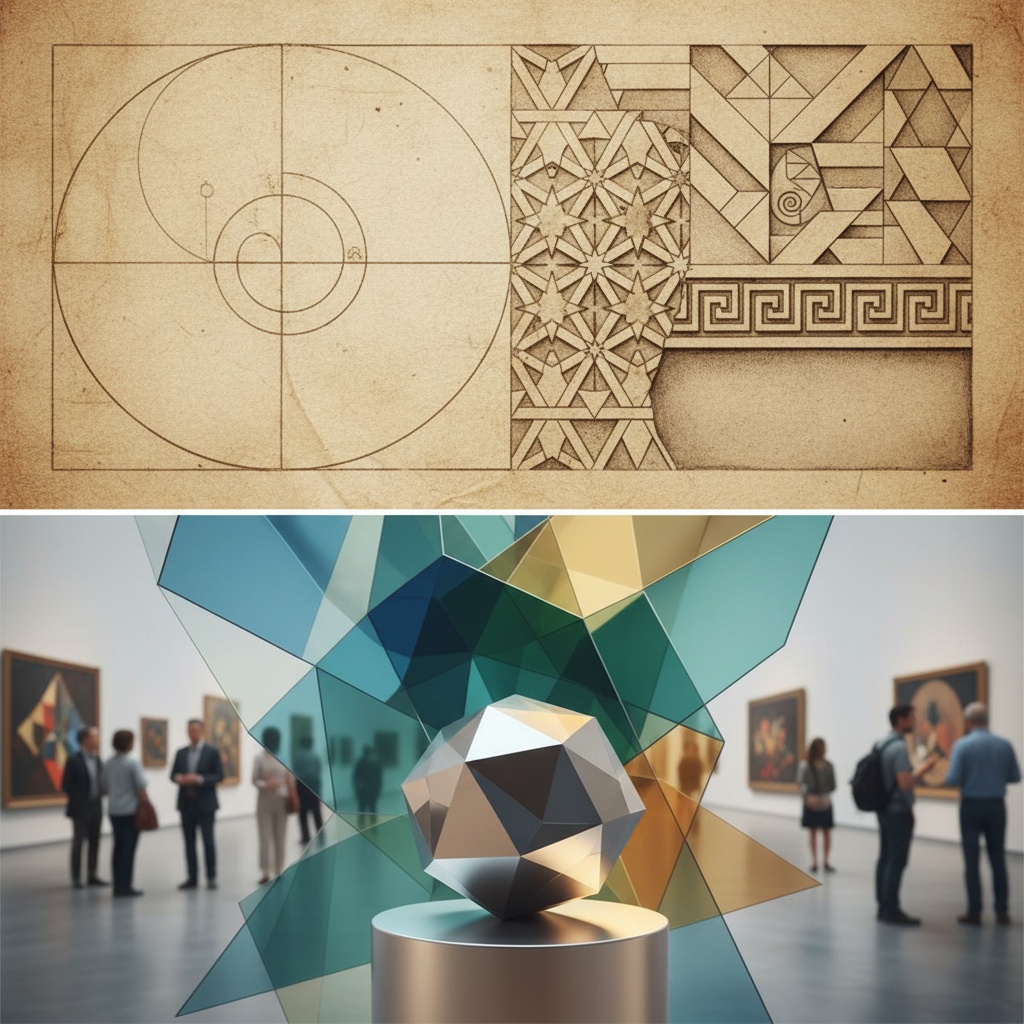
Before the advent of abstract expressionism and the radical experiments of the 20th century, geometric patterns held a profound significance across diverse cultures. To understand the enduring appeal of geometric abstraction, one must look back to civilizations where representation wasn’t merely a stylistic choice but often a matter of religious or philosophical constraint. In ancient Greece, geometry provided the foundational principles for harmonious proportions in architecture and sculpture – think of the perfectly balanced Doric columns or the mathematical precision of classical friezes. However, it was within Islamic art that geometric design truly flourished. Prohibiting figural representation in many contexts, Islamic artists turned inward, mastering intricate tessellations, arabesques, and kaleidoscopic patterns that symbolized the infinite nature of God and the cosmos. These weren’t simply decorative elements; they were visual embodiments of spiritual concepts, meticulously crafted to evoke a sense of awe and transcendence. The repetition, symmetry, and complex interweaving of shapes served as meditative tools, inviting contemplation and reflecting the underlying order believed to govern the universe. This rich tradition, passed down through generations of artisans, would later exert a subtle but powerful influence on Western artists seeking new modes of visual expression.
Cubism's Revolution: Deconstructing Form and Paving the Way for Abstraction
Art history is an academic discipline devoted to the study of artistic production and visual culture throughout human history. Art historians use a historical method or a philosophy, such as historical materialism or critical theory, to analyze artwo...
The early 20th century witnessed a seismic shift in artistic perception with the emergence of Cubism, spearheaded by Pablo Picasso and Georges Braque. Their revolutionary approach wasn’t about replicating reality but rather dissecting it – breaking down objects into fragmented forms and reassembling them on the canvas from multiple viewpoints simultaneously. This deconstruction of form was not merely an aesthetic exercise; it challenged the very notion of pictorial space and representation. As Cubism evolved, artists increasingly reduced their palettes and simplified shapes, moving further away from recognizable subject matter. Analytic Cubism, with its muted tones and fractured planes, laid the groundwork for a more radical departure: Synthetic Cubism. This phase introduced collage elements – fragments of newspaper, wallpaper, fabric – blurring the boundaries between painting and reality. The emphasis shifted from analyzing objects to constructing them anew, prioritizing the inherent qualities of form and color over illusionistic depth. It was within this context that the seeds of geometric abstraction were sown, as artists began to explore the potential of pure geometry as a means of visual expression, liberated from the constraints of depicting the external world.
Constructivism & Suprematism: Utopian Visions and Pure Geometric Expression
Constructivism may refer to: == Art and architecture == Constructivism (art), an early 20th-century artistic movement that extols art as a practice for social purposes Constructivist architecture, an architectural movement in the Soviet Union in th...
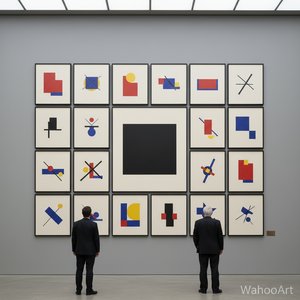
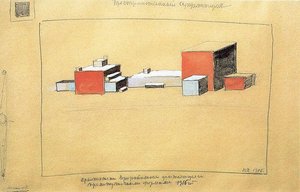
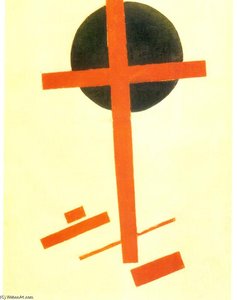
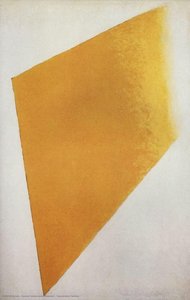
The Russian avant-garde movements of Constructivism and Suprematism represent pivotal moments in the development of geometric abstraction. Born out of the fervor of the 1917 revolution, these artists sought to create art that was not merely aesthetically pleasing but actively engaged with social and political change. Kazimir Malevich, the founder of Suprematism, famously declared his ultimate goal: “pure feeling.” He stripped away all representational elements, reducing painting to its most fundamental components – squares, circles, rectangles, and lines floating in an infinite white space. His iconic *Black Square* (1915) wasn’t a depiction of anything; it was a symbol of absolute non-objectivity, a gateway to a new spiritual reality. Simultaneously, Vladimir Tatlin pioneered Constructivism, emphasizing the practical application of art to industry and architecture. He rejected traditional artistic materials in favor of industrial components – metal, wood, glass – creating dynamic “counter-reliefs” that explored geometric form in three dimensions. These movements weren’t simply about aesthetics; they were utopian visions of a new society built on principles of rationality, functionality, and collective purpose. The influence of Constructivism extended beyond painting and sculpture, impacting graphic design, typography, and even architecture.
Mid-Century Masters: Mondrian, Pasmore, and the Rise of Neo-Plasticism
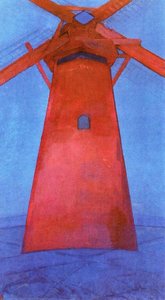
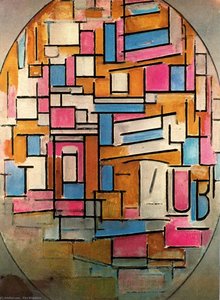
Following the upheaval of World War II, geometric abstraction experienced a resurgence in Europe and America. Piet Mondrian, building upon the foundations laid by Cubism, developed his signature style of Neo-Plasticism – characterized by strict horizontal and vertical lines and primary colors against a white background. For Mondrian, these weren’t arbitrary choices; they represented an attempt to express “absolute reality,” the underlying order governing the universe. His compositions were meticulously balanced, striving for a harmonious equilibrium that reflected his spiritual beliefs. In Britain, Victor Pasmore similarly embraced geometric abstraction, though with a more nuanced approach. Initially influenced by Cubism and Surrealism, Pasmore gradually moved towards pure abstraction in the late 1940s, exploring the interplay of shapes and colors in collages like *Abstract in White, Grey & Ochre* (1949). His work reflects the influence of Constructivism, emphasizing the flatness of the picture plane and the inherent qualities of materials. These artists weren’t simply creating aesthetically pleasing compositions; they were engaged in a profound exploration of form, color, and space, seeking to express universal truths through abstract means.
Geometric Abstraction in Latin America: A Unique Regional Voice
While often overshadowed by European and North American movements, geometric abstraction flourished throughout Latin America during the mid-20th century. Artists like José Gurvich in Uruguay, Aleksandr Deineka in Russia (whose mosaic work for Moscow’s metro stations exemplifies a unique application of geometric principles), and others developed distinct regional variations on the theme. In Venezuela, kinetic art emerged as a dynamic force, exploring movement and perception through abstract forms. Brazilian Concrete Art similarly emphasized geometric precision and vibrant color palettes, often reflecting the energy and dynamism of urban life. What distinguished Latin American geometric abstraction was its unique blend of indigenous traditions, European influences, and a strong sense of social consciousness. Artists sought to create art that was both visually compelling and culturally relevant, expressing their identity and challenging conventional artistic norms. This movement wasn’t simply an imitation of European styles; it was a vibrant expression of regional creativity and a testament to the power of abstraction as a universal language.
Collecting Geometric Abstraction Today: Trends, Artists, and Investment Potential
Today, geometric abstraction continues to captivate collectors with its timeless appeal and intellectual rigor. The market for works by established masters like Mondrian and Malevich remains strong, but there’s also growing interest in lesser-known artists who pushed the boundaries of the genre. Investing in geometric abstraction offers a unique opportunity to acquire artworks that are both aesthetically rewarding and historically significant. Key trends include a renewed appreciation for Constructivist works from Eastern Europe, as well as increased demand for Latin American artists whose contributions were previously overlooked. When building a collection, consider the artist’s historical context, their technical skill, and the overall aesthetic quality of the work. Look for pieces that demonstrate a strong understanding of form, color, and composition – artworks that resonate with you on an emotional level. Beyond investment potential, collecting geometric abstraction is about engaging with a rich artistic tradition that continues to inspire and challenge our perceptions of the world. ArtsDot offers a curated selection of museum-quality reproductions, allowing collectors to experience the beauty and power of these masterpieces firsthand.