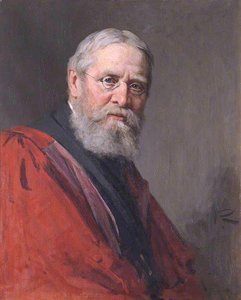
Early Life and Artistic Foundations: From Rural Ontario to Formal Training
 Wikipedia: George Agnew Reid
George Agnew Reid who signed his name as G. A. Reid (July 25, 1860 – August 23, 1947) was a Canadian artist, architect, and educator. He is best known as a genre painter, but he was also a successful muralist, arts organizer, and champion of the app...
George Agnew Reid’s story is one deeply rooted in the Canadian landscape, a narrative that begins not within the hallowed halls of art academies but on the fertile farmlands of East Wawanosh Township, Huron County, Ontario. Born in 1860, his early life was imbued with the rhythms and realities of rural existence – a stark contrast to the artistic ambitions stirring within him from a young age. Even as a child, he devoured illustrated books and magazines, finding inspiration in images that transported him beyond the boundaries of the farm. This nascent passion, however, initially met resistance; his father envisioned a life of agricultural labor, believing “making pictures” an unsuitable pursuit for a robust man. Yet, Reid’s determination proved unwavering, and a brief apprenticeship with a local architect served as a stepping stone towards formal artistic training.
In 1879, he journeyed to Toronto to enroll at the Ontario School of Art, where he came under the tutelage of Robert Harris – a significant figure in Canadian art known for his historical and portrait work. This marked Reid’s first foray into structured artistic education, providing him with foundational skills in drawing and painting. However, it was his subsequent studies at the Pennsylvania Academy of the Fine Arts (1882-1885) that proved truly transformative. There, he found a mentor in Thomas Eakins, a renowned realist painter celebrated for his anatomical precision and unflinching portrayal of American life. Eakins appointed Reid as a demonstrator in anatomy classes, solidifying his understanding of the human form – a skill that would become integral to his later work. It was also at Pennsylvania that he met Mary Hiester Reid, who would become his wife and lifelong artistic companion.
Embracing Impressionism: Parisian Influences and the Canadian Context
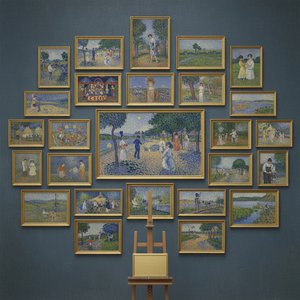
Canadian Impressionism is a subclass of Impressionist art which had its origin in French Impressionism. Guy Wildenstein of the Wildenstein Institute in Paris states in the foreword of A.K. Prakash's Impressionism in Canada: A Journey of Rediscovery t...
The allure of Paris, the epicenter of the art world in the late 19th century, proved irresistible to Reid. He and Mary embarked on several journeys to Europe, immersing themselves in the vibrant artistic milieu of the French capital. While not a radical adopter of Impressionism’s most experimental techniques, Reid absorbed its core principles – an emphasis on capturing fleeting moments of light and atmosphere, broken color, and a move away from academic realism. His time at the Académie Julian and the Académie Colarossi exposed him to contemporary trends, broadening his artistic horizons.
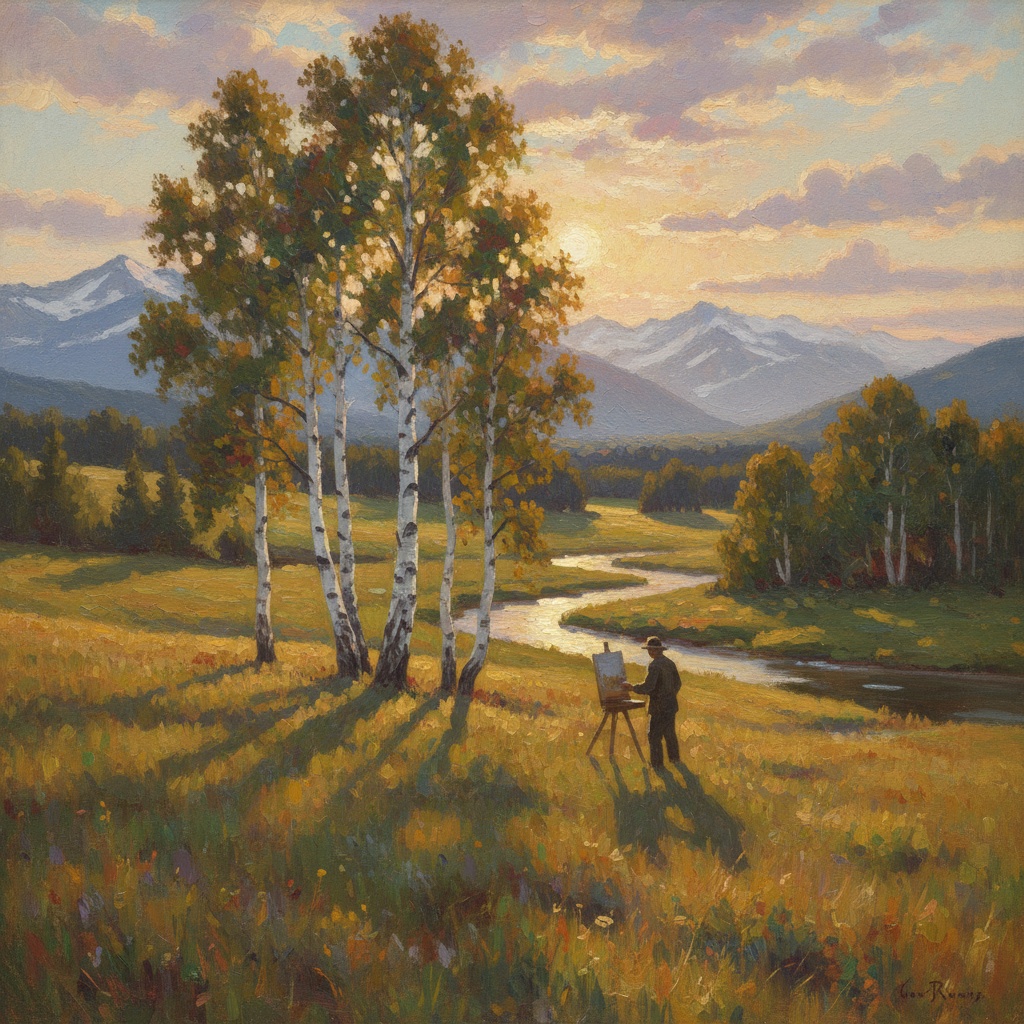
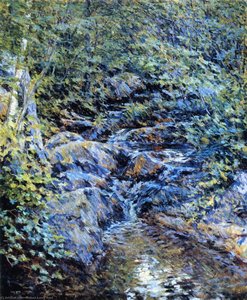
However, Reid’s engagement with Impressionism wasn't simply an act of imitation. He skillfully adapted these European influences to the unique character of the Canadian landscape and subject matter. Unlike the Parisian scenes of bustling city life or idyllic countryside, Reid focused on capturing the essence of rural Ontario – its vast fields, serene lakes, and the everyday lives of its inhabitants. This fusion of European technique with distinctly Canadian content would become a hallmark of his style, contributing to the development of a uniquely national artistic voice.
Genre Painting and Narrative Themes: Capturing Everyday Life in Canada
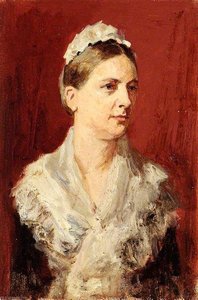 Portrait of a Woman Wearing a Mop Cap and a Shawl
Admire George Reid’s ‘Portrait of a Woman.’ This evocative oil painting captures Victorian elegance with Impressionistic brushwork & rich detail. Discover Canadian art history!
Reid established himself as a prominent genre painter, skillfully depicting scenes of everyday life in Canada. His early works, such as Forbidden Fruit (1889), demonstrate his ability to imbue seemingly simple subjects with narrative depth and emotional resonance. These paintings weren’t merely depictions of rural existence; they were carefully constructed stories that reflected the values, challenges, and aspirations of Canadian society.
He possessed a keen eye for detail, capturing the nuances of human interaction and the subtle beauty of the natural world. His compositions often featured figures engaged in quiet moments – families gathered around a table, individuals lost in contemplation, or scenes of labor that spoke to the hardships and rewards of rural life. Reid’s paintings weren't idealized portrayals; they presented a realistic, yet sympathetic, view of Canadian society, resonating with audiences who recognized themselves and their experiences within his work.
A Champion of Applied Arts: Mural Commissions, Societies, and Education
Beyond his success as a painter, George Agnew Reid was a tireless advocate for the applied arts – believing that art should be integrated into everyday life. He recognized the potential of mural painting to transform public spaces and elevate the aesthetic quality of Canadian cities. Inspired by his studies in Paris, he co-founded the Society of Mural Decorators in Toronto in 1897, alongside Frederick Challener, William Cruikshank, and Edmund Wyly Grier.
This initiative led to numerous mural commissions, including significant projects for Toronto City Hall (1897-1899) and the Royal Ontario Museum (1935-1938). He also played a pivotal role in establishing the Arts and Crafts Society of Canada in 1903 – later renamed the Canadian Society of Applied Art – promoting the principles of good design and craftsmanship. Furthermore, Reid dedicated over four decades to art education, serving as a teacher at the Central Ontario School of Art (later the Ontario College of Art) and eventually becoming its first principal in 1912. His commitment to fostering artistic talent ensured that future generations would benefit from his knowledge and experience.
Reid's Evolving Style: From Realism to a Unique Canadian Impressionist Vision
Throughout his career, Reid’s style underwent a subtle yet significant evolution. While initially rooted in realism, influenced by his training with Eakins, he gradually embraced the principles of Impressionism, experimenting with broken color and atmospheric effects. His 1896 trip to Spain and France further solidified this shift, inspiring him to create scenes of Canadian nature or figures within nature using a modified form of Impressionism.
However, Reid never fully abandoned his commitment to narrative detail. His paintings retained a sense of solidity and structure that distinguished them from the more radical experiments of French Impressionists. He developed a unique vision – one that blended European technique with distinctly Canadian subject matter and a deep appreciation for the beauty of the natural world. Works like Loch Spynie with a Figure Wildfowling exemplify this approach, capturing the serene atmosphere of the Scottish landscape while maintaining a sense of realism and narrative depth.
Legacy and Influence: George Agnew Reid’s Enduring Impact on Canadian Art
George Agnew Reid left an indelible mark on Canadian art. His prolific output – encompassing genre paintings, murals, portraits, and educational initiatives – helped to shape the artistic landscape of the late 19th and early 20th centuries. He was a champion of national identity, striving to create an art that reflected the unique character of Canada and its people.
His influence extended beyond his own work, inspiring generations of Canadian artists through his teaching and advocacy for the applied arts. He served as President of both the Ontario Society of Artists and the Royal Canadian Academy of Arts, using his position to promote Canadian art and foster a sense of community among artists. Today, Reid’s paintings are held in major public collections across Canada, including the National Gallery of Canada, serving as a testament to his enduring legacy. His commitment to capturing the beauty and spirit of Canada continues to resonate with audiences today, solidifying his place as a pivotal figure in Canadian Impressionism.