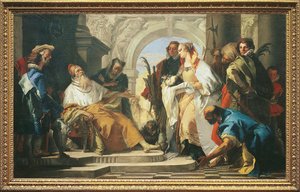
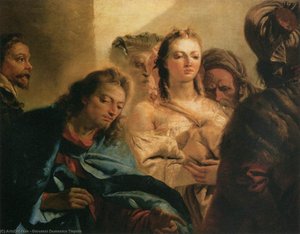
The Venetian Roots of Tiepolo's Genius
Venetian painting was a major force in Italian Renaissance painting and beyond. Beginning with the work of Giovanni Bellini (c. 1430–1516) and his brother Gentile Bellini (c. 1429–1507) and their workshops, the major artists of the Venetian school in...
Giambattista Tiepolo, a name synonymous with the effervescent grace and theatrical splendor of the Rococo period, was not born into a world of aristocratic privilege but rather within the bustling maritime republic of Venice. This vibrant city, steeped in artistic tradition yet undergoing subtle shifts in power and influence, profoundly shaped his aesthetic sensibility. Unlike the Florentine emphasis on linear precision or the Roman preoccupation with classical gravitas, Venetian painting prioritized color, light, and atmosphere – qualities that would become hallmarks of Tiepolo’s work. His father, though not an artist himself, belonged to a family possessing the esteemed name “Tiepolo,” affording young Giambattista access to a network of patrons and opportunities within the city's artistic circles. Early influences included Gregorio Lazzarini, but it was through independent study of masters like Sebastiano Ricci, Giovanni Battista Piazzetta, Tintoretto, and Veronese that Tiepolo forged his unique style – a synthesis of Baroque drama and Rococo lightness.
Venice in the early 18th century was a city of contrasts. While its political dominance waned, its cultural allure remained strong, attracting visitors from across Europe on the Grand Tour. This influx of discerning travelers created a demand for art that celebrated beauty, pleasure, and refined taste – a demand Tiepolo expertly fulfilled. The lagoon city’s unique environment—the diffused light, the shimmering water, the opulent palazzi—instilled in him a sensitivity to coloristic effects and spatial illusionism that would define his mature style. He absorbed the legacy of Venetian masters who had previously explored these themes, but he brought a new level of dynamism and narrative flair to their traditions.
Tiepolo’s Technique: Fresco, Color, and the Illusion of Space
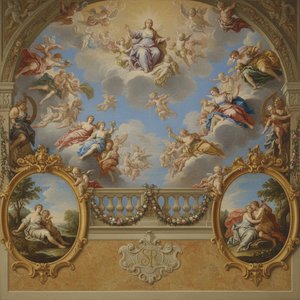
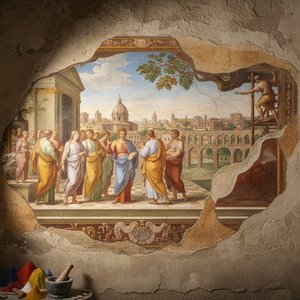
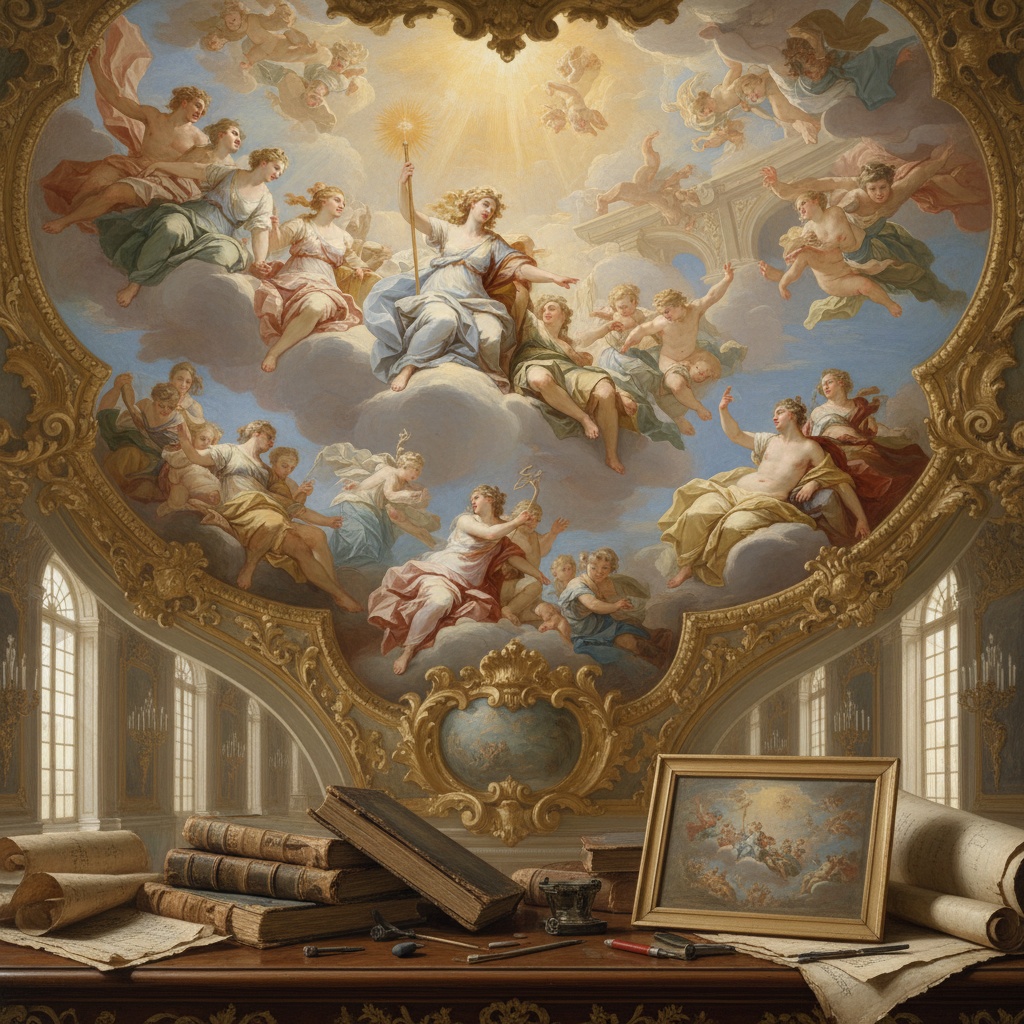
Tiepolo's mastery lay not merely in his imaginative compositions but also in his exceptional technical skill. He was foremost a fresco painter, transforming ceilings and walls into breathtaking vistas that seemed to dissolve the boundaries between reality and illusion. The process itself demanded meticulous planning and execution: sketching the *cartoni* (preparatory drawings), applying layers of *intonaco* (plaster), and rapidly executing the painting while the plaster remained wet – a technique known as *affresco*. His ability to create seamless transitions, atmospheric perspective, and convincing depth was unparalleled.
Central to Tiepolo’s technique was his masterful use of color. He employed a vibrant palette, favoring light blues, pinks, golds, and silvers that evoked a sense of airy luminosity. Unlike some contemporaries who built up layers of opaque paint, Tiepolo often worked with translucent washes, allowing the underlying plaster to contribute to the overall effect. This created a shimmering quality, particularly evident in his depictions of clouds, drapery, and celestial realms. His color choices weren’t arbitrary; they were carefully calibrated to enhance the narrative impact and emotional resonance of each scene. He understood how light could sculpt form, create drama, and guide the viewer's eye.
Beyond color, Tiepolo was a virtuoso of perspective. His compositions often feature complex architectural settings that recede into the distance with astonishing accuracy. This illusionistic skill wasn’t merely decorative; it served to heighten the sense of grandeur and theatricality, drawing the viewer into the world of the painting.
Commissioned Splendor: Key Works & Patronage
Tiepolo's career flourished thanks to a steady stream of prestigious commissions from aristocratic patrons across Europe. His early success in Venice led to opportunities in Milan, where he decorated the Palazzo Clerici with scenes inspired by classical mythology and history. However, it was his work at the Würzburg Residence (1751-1753) that cemented his international reputation. The frescoes adorning the palace’s staircase are considered among the most magnificent examples of Rococo painting – a dazzling display of allegorical figures, historical events, and architectural illusionism.
The patronage system played a crucial role in Tiepolo's artistic development. He cultivated relationships with powerful families who commissioned works that reflected their wealth, status, and cultural aspirations. For example, the Dolfin family were early supporters, commissioning his first masterpiece, *The Capture of Carthage*. Later commissions from the Prince-Bishop of Würzburg allowed him to create a truly monumental work, showcasing his full artistic potential. His ability to translate the desires and ideologies of his patrons into visually stunning artworks was key to his success.
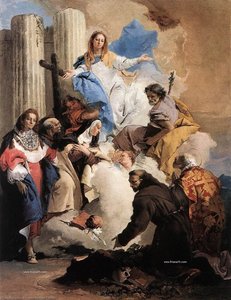
Another significant commission came from King Charles III of Spain, who summoned Tiepolo to Madrid in 1762 to decorate the Royal Palace. While he encountered some resistance from the more conservative Spanish court, he nonetheless produced a series of impressive frescoes that demonstrated his versatility and adaptability. Works like *St. Giuseppe da Leonessa and St. Fedele da Sigmaringen Stepping on Heresy* exemplify his dramatic compositions and skillful use of light and shadow.
The Influence of Mythology and History in Tiepolo’s Art
Tiepolo's subject matter was often drawn from classical mythology, history, and the Bible. However, he rarely approached these themes with strict historical accuracy or religious piety. Instead, he infused them with a sense of theatricality, elegance, and imaginative freedom. His mythological scenes are populated by graceful figures engaged in elaborate narratives, often imbued with allegorical meaning.
His depictions of history were similarly stylized, emphasizing the grandeur and drama of events rather than precise documentation. He frequently employed *quadratura* – a technique that seamlessly integrates painting with architectural elements – to create immersive environments that transported viewers to another time and place. The frescoes at Würzburg Residence are prime examples of this approach, depicting scenes from the life of the Prince-Bishop as if they were unfolding in the palace itself.
The Bible provided Tiepolo with a rich source of inspiration, but he often interpreted biblical stories through a Rococo lens, emphasizing their emotional and aesthetic qualities. His religious paintings are characterized by luminous colors, dynamic compositions, and a sense of spiritual upliftment. He wasn’t interested in conveying strict theological dogma; rather, he sought to evoke a feeling of awe and wonder.
Giovanni Domenico Tiepolo: A Son Follows in His Father's Footsteps
 Giovanni Domenico Tiepolo
Discover Giovanni Domenico Tiepolo, Rococo master & son of Giovanni Battista! Explore his Venetian frescoes & mythological paintings showcasing elegance & artistry.
Giambattista Tiepolo’s artistic legacy extended beyond his own prolific output. His son, Giovanni Domenico Tiepolo (1727-1804), followed in his father’s footsteps, becoming a skilled painter and printmaker in his own right. While he initially worked as his father's assistant, contributing to large-scale fresco projects, he eventually developed a distinctive style that reflected the changing artistic tastes of the late 18th century.
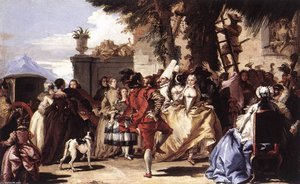
Giovanni Domenico’s work is characterized by its elegance, refinement, and attention to detail. He excelled at depicting Venetian life, creating scenes of bustling marketplaces, gondola rides, and festive celebrations. His mythological paintings are similarly graceful and sophisticated, often featuring delicate figures engaged in playful narratives. Unlike his father's monumental frescoes, Giovanni Domenico’s works tend to be smaller in scale and more intimate in character.
The younger Tiepolo also experimented with different media, producing a series of etchings that captured the charm and atmosphere of Venice. These prints were highly sought after by collectors and helped to disseminate his father's style throughout Europe. While Giovanni Domenico never achieved the same level of fame as his father, he nonetheless made a significant contribution to Rococo art.
Tiepolo’s Enduring Legacy and Modern Rediscovery
Despite initial criticism in the 19th century – some considered him frivolous and lacking in substance – Tiepolo's reputation has undergone a remarkable revival. The Impressionists, with their emphasis on light and color, recognized his genius and championed his work. Generations of critics have since reconstructed his vast output, reassembling his sketches and etchings to gain a deeper understanding of his artistic process.
Today, Tiepolo is celebrated as one of the greatest decorative painters of the 18th century – a master of illusionism, color, and narrative flair. His frescoes continue to inspire awe and wonder, transporting viewers to worlds of beauty, splendor, and imagination. His influence can be seen in the work of countless artists, from Neoclassical painters to contemporary muralists.
For collectors seeking exceptional examples of Rococo art, Tiepolo’s works represent a pinnacle of artistic achievement. At ArtsDot.com, we offer high-quality reproductions of his iconic paintings, allowing you to experience the beauty and grandeur of his art in your own home. Explore our collection today and discover the enduring legacy of Giambattista Tiepolo.