Early Life & Artistic Formation: From Icon Painting to Academic Promise
 Wikipedia: Ilya Repin
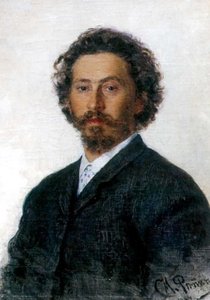
Ilya Yefimovich Repin (5 August [O.S. 24 July] 1844 – 29 September 1930) was a Ukrainian-born Russian painter. He became one of the most renowned artists in Russia in the 19th century. His major works include Barge Haulers on the Volga (1873), Religi...
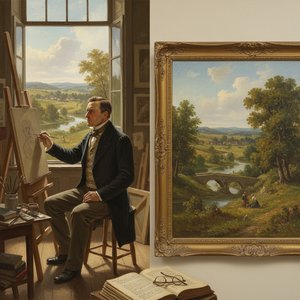
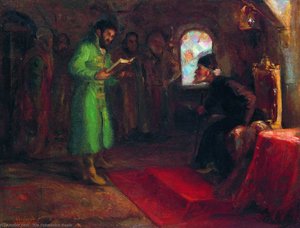
Ilya Yefimovich Repin’s journey began not amidst the grand salons of St. Petersburg, but in the humble Ukrainian town of Chuguev, a world away from the artistic centers that would eventually embrace him. Born in 1844, his early life was steeped in the traditions of rural Russia, an environment that profoundly shaped his later artistic vision. Initially apprenticed to local icon painters – a common path for aspiring artists of the time – Repin’s formative years were dedicated to mastering religious imagery and the meticulous techniques required for its creation. However, even within these constraints, a nascent talent began to emerge, hinting at a sensibility that extended beyond mere replication. This early exposure instilled in him a deep understanding of form, color, and composition, skills he would later deploy with revolutionary force.
The pull towards a more expansive artistic education proved irresistible, leading Repin to St. Petersburg in 1863. His initial attempts to enter the prestigious Imperial Academy of Arts were unsuccessful, yet this setback did little to dampen his resolve. He enrolled as a volunteer student, immersing himself in the study of classical art and honing his skills through diligent practice. The influence of artists like Vasily Perov – a pioneer of realist painting who fearlessly depicted the hardships of peasant life – began to resonate deeply with Repin’s own burgeoning artistic concerns. This period marked a crucial turning point, setting him on a path that would ultimately challenge the established norms of Russian art.
The Rise of Realism & The Peredvizhniki Movement: Challenging Convention
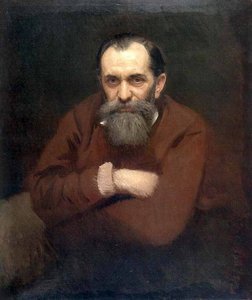 Vasily Perov
Vasily Perov (1834-1882) was a pivotal Russian Realist painter & founding member of the Peredvizhniki movement. Known for his poignant depictions of peasant life, social commentary, and psychological portraits like 'The Last Tavern at Town Gate'. Exp
Mid-19th century Russia was a nation in flux, grappling with social and political upheaval following the emancipation of the serfs. This climate of change fueled a growing desire for artistic expression that reflected the realities of everyday life, rather than idealized historical or mythological scenes. The rigid academic traditions of the Imperial Academy, however, proved increasingly out of step with this evolving sensibility. In 1863, a group of fourteen students – including Repin – bravely defied convention by leaving the Academy in protest, forming an artists’ cooperative that would become known as the Peredvizhniki, or “The Wanderers.”
This collective was united by a shared commitment to portraying Russian life with unflinching honesty and empathy. They rejected the constraints of academic art, choosing instead to travel throughout the countryside, documenting the lives of peasants, workers, and marginalized communities. The Peredvizhniki organized independent exhibitions – free from the control of the Academy – that brought their powerful and often unsettling works directly to the public. Artists like Grigoriy Myasoyedov, with his sympathetic portrayals of rural life, were instrumental in shaping this new artistic landscape. Repin quickly became a leading figure within the movement, embracing its ideals and pushing the boundaries of realist painting.
Iconic Works & Social Commentary: 'Barge Haulers on the Volga' and Beyond
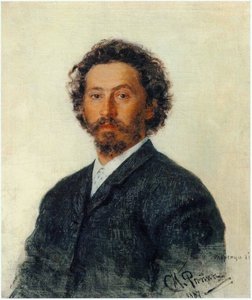 Ilya Yefimovich Repin
Discover Ilya Repin (1844-1930), Russia's leading realist painter. Explore iconic works like 'Barge Haulers on the Volga,' capturing Russian life, history & social commentary with powerful emotion.
Repin’s breakthrough came with 'Barge Haulers on the Volga' (1873), a monumental canvas that captured the brutal toil of men dragging barges along Russia’s mighty river. The painting is not merely a depiction of physical labor; it’s a searing indictment of social injustice, exposing the dehumanizing conditions endured by those at the bottom of Russian society. The figures are rendered with remarkable realism – their faces etched with exhaustion and despair – yet Repin avoids sentimentality, presenting them as individuals stripped bare by circumstance. The composition itself is masterful, drawing the viewer’s eye to the relentless struggle unfolding before them.
This work immediately established Repin as a leading voice of Russian Realism. He continued to explore themes of social inequality and political oppression in subsequent paintings, such as 'Religious Procession in Kursk Province' (1880-1883), which offered a critical commentary on the hypocrisy and corruption within the Orthodox Church. His ability to capture both the grandeur and the grim realities of Russian life – often within the same frame – set him apart from his contemporaries.
Portraying a Nation: Repin’s Psychological Portraits of Russian Intellectuals
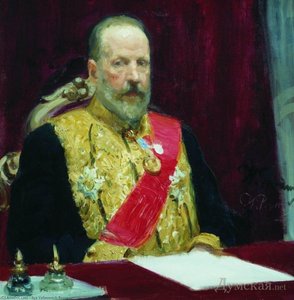
Beyond his large-scale historical and social canvases, Repin was also a gifted portraitist. He possessed an extraordinary ability to capture not only the physical likeness of his subjects but also their inner lives – their hopes, fears, and intellectual complexities. He painted portraits of many leading figures in Russian literature, music, and art, including Mikhail Glinka, Modest Mussorgsky, and Pavel Tretyakov. These are not simply flattering representations; they are penetrating psychological studies that reveal the character and spirit of each individual.
Perhaps his most famous portrait is that of Leo Tolstoy, with whom he developed a close friendship. Repin painted Tolstoy in various settings, capturing him as both a literary giant and a complex human being. These portraits offer a rare glimpse into the mind of one of Russia’s greatest writers, revealing his intellectual intensity and moral conviction. Repin's skill lay in his ability to move beyond surface appearances, delving into the depths of his subjects’ personalities.
Later Life, Artistic Evolution & Enduring Legacy: A Master of His Time
As Repin matured as an artist, his style continued to evolve, incorporating elements of Impressionism and Symbolism. While remaining firmly rooted in realism, he experimented with new techniques and approaches, seeking to capture the fleeting moments of light and emotion. His later works often reflected a growing sense of melancholy and disillusionment, perhaps stemming from the political turmoil that gripped Russia in the late 19th and early 20th centuries.
Ilya Repin died in 1930, leaving behind an extraordinary body of work that continues to resonate with audiences today. His paintings are celebrated for their technical brilliance, emotional depth, and unwavering commitment to social justice. He remains a towering figure in Russian art history – a master who captured the soul of his nation with unparalleled honesty and empathy. For those seeking to understand the complexities of 19th-century Russia, Repin’s works offer an invaluable window into its triumphs, tragedies, and enduring spirit. Explore the full breadth of his oeuvre at ArtsDot.com, where high-quality reproductions allow you to bring these masterpieces into your own home.