Early Life & Formation: Philadelphia Roots and the Call of the Frontier
James Otto Lewis (February 3, 1799 – November 2, 1858) was an American engraver and painter who was noted for his portraits of Native American leaders and other figures of the American frontier. Lewis began his engraving career in Philadelphia about ...
James Otto Lewis, born in Philadelphia in 1799, emerged from a city steeped in artistic tradition yet found his true calling not within its established studios but amidst the untamed landscapes of the American frontier. While initially trained as an engraver – a craft demanding precision and meticulous observation – it was a burgeoning fascination with the West that would ultimately define his legacy. Philadelphia at the turn of the 19th century offered a robust artistic ecosystem, yet Lewis’s early work hints at a restlessness, a desire to capture something beyond the confines of established portraiture. This yearning led him westward in 1819, accompanying Governor Lewis Cass on expeditions into the Michigan Territory, an experience that irrevocably altered his artistic trajectory. The meticulously rendered details he honed as an engraver would soon be applied not to the likenesses of Philadelphia’s elite, but to the faces and cultures of Native American tribes – a subject largely unexplored by artists of the time.
The Aboriginal Port Folio: Documenting Native American Culture Through Portraiture
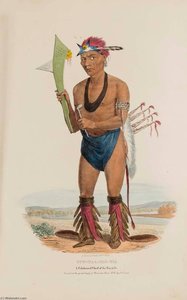 CUT TAA TAS TIA A Celebrated Chief of the Fox Tribe, from The Aboriginal Portfolio
Explore James Otto Lewis’s 1835 watercolor portrait of Chief Cut Taa Tas Tia! A detailed depiction of Native American culture, showcasing traditional attire & artistry.
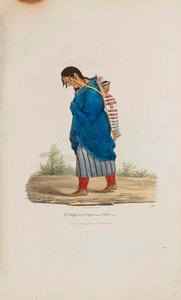
Lewis's most enduring contribution lies in his ambitious project, The Aboriginal Port Folio, published between 1835 and 1836. This collection wasn’t merely a series of portraits; it was an attempt to create a visual record of a way of life perceived as rapidly vanishing. Commissioned by the Bureau of Indian Affairs, Lewis spent over a decade traveling through present-day Indiana and Wisconsin, painstakingly documenting the leaders and customs of tribes like the Fox, Winnebago, and Menominee. The project’s significance lies in its ethnographic intent – Lewis wasn't simply creating aesthetically pleasing images; he was striving for accuracy, capturing details of dress, adornment, and bearing that would otherwise be lost to time. The lithographs, executed by Lehman & Duval, brought these portraits to a wider audience, offering a glimpse into cultures often misrepresented or ignored. Works like “Ma Che Ka Kat, a Menominee Chief” and “Cut Taa Tas Tia, A Celebrated Chief of the Fox Tribe” stand as powerful testaments to his dedication.
Lewis’s Artistic Process: Ethnographic Detail and the Pursuit of Realism
The creation of The Aboriginal Port Folio was a demanding undertaking. Lewis worked “on the spot,” sketching directly from life during treaty meetings and ceremonial gatherings. This commitment to direct observation is evident in the remarkable detail present in his portraits – the intricate beadwork on clothing, the specific patterns of facial paint, the subtle expressions that reveal character and dignity. While not without the inherent biases of a 19th-century observer, Lewis’s work distinguishes itself through its attempt at objectivity. He wasn't idealizing or romanticizing; he was striving for realism, capturing the individuals before him with a sensitivity rarely seen in contemporary depictions of Native Americans. The watercolor studies that preceded the lithographs reveal his meticulous process – layers of color built up to achieve nuanced skin tones and textures, careful attention paid to the play of light and shadow. His technique, while rooted in traditional portraiture, was adapted to suit the unique challenges of working outdoors and capturing subjects unfamiliar with artistic conventions.
Regional Identity in Lewis's Work: The Great Lakes as a Crucible of Style
Lewis’s extended sojourn in the Great Lakes region profoundly shaped his artistic style. The landscapes themselves – vast forests, shimmering lakes, and dramatic skies – subtly permeate his portraits, creating a sense of place that is integral to understanding his subjects. He wasn't merely documenting individuals; he was capturing them within their environment, acknowledging the inextricable link between culture and geography. The vibrant reds prevalent in many of his watercolors, for example, may reflect the importance of this color in Native American symbolism and ceremonial practices specific to the tribes of the region. Furthermore, Lewis’s work reflects a growing awareness of regional identity – a fascination with the unique characteristics of the American West that would become a defining theme in 19th-century art. He captured not just *who* these people were, but *where* they came from and what defined their existence within this specific landscape.
Beyond Representation: Tracing Modernist Tendencies in Lewis’s Oeuvre
While often categorized as a historical portraitist, a closer examination of James Otto Lewis's work reveals subtle yet significant modernist tendencies. His focus on capturing the essence of his subjects – their individual character and cultural identity – anticipates the psychological depth that would become central to 20th-century art. The deliberate rejection of idealized forms in favor of realistic representation aligns with the broader modernist impulse to challenge traditional artistic conventions. Moreover, Lewis’s emphasis on ethnographic detail can be seen as a precursor to the documentary style that emerged later in the century. His portraits aren't simply likenesses; they are attempts to understand and interpret a different worldview – a pursuit that resonates with the modernist fascination with subjectivity and cultural relativism. The very act of documenting a “vanishing” culture speaks to a growing awareness of social change and the fragility of tradition, themes that would become increasingly prominent in modernist art.
Legacy & Influence: James Otto Lewis and the American Art Landscape
James Otto Lewis’s legacy extends beyond the striking beauty and historical significance of The Aboriginal Port Folio. His work provided a valuable visual record of Native American cultures at a critical juncture in their history, offering insights into traditions that were rapidly being transformed. While his portraits are not without their limitations – shaped by the perspectives of a 19th-century observer – they remain powerful and evocative representations of individuals who played pivotal roles in the shaping of the American West. His influence can be seen in subsequent generations of artists who sought to capture the spirit of the frontier and document the diversity of American cultures. Today, Lewis’s work is held in esteemed collections such as the Smithsonian American Art Museum and continues to inspire scholars and art enthusiasts alike. Explore his captivating portraits at ArtsDot.com and discover a unique window into the heart of 19th-century America.