
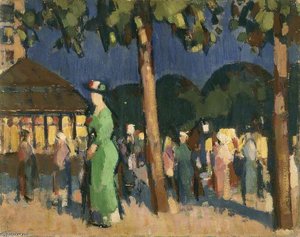
Early Life & Artistic Awakening: From Medical Aspirations to Self-Taught Painter
John Duncan Fergusson (9 March 1874 – 30 January 1961) was a Scottish artist and sculptor, regarded as one of the major artists of the Scottish Colourists school of painting. == Early life == Fergusson was born in Leith, Edinburgh, the first of fo...
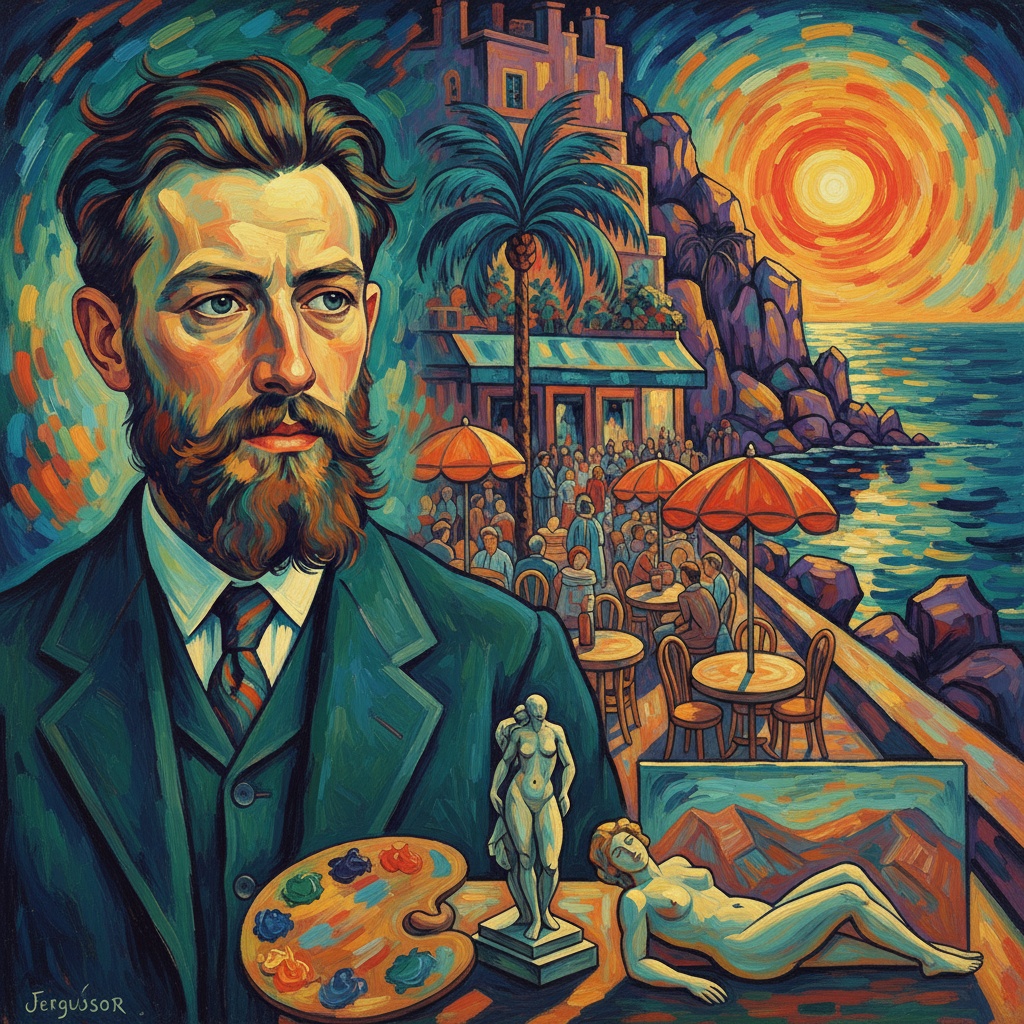
John Duncan Fergusson, born in Leith, Edinburgh, in 1874, initially embarked on a path far removed from the vibrant canvases that would ultimately define his legacy. Enrolled at the University of Edinburgh to study medicine, he soon discovered a calling that resonated with a deeper passion – painting. This wasn’t a gradual shift; it was a decisive turning away from the precision of anatomy towards the expressive freedom of art. Though briefly attending the Trustees Academy in Edinburgh, Fergusson quickly found its rigid academic structure stifling. He possessed an independent spirit, a refusal to be confined by convention, and chose instead to forge his own artistic path through self-directed study and extensive travel. This early rejection of established norms would become a hallmark of his career, shaping not only his technique but also his unwavering commitment to personal vision.
The burgeoning art scene in Glasgow, with its rebellious ‘Glasgow Boys’ challenging Victorian sensibilities, offered an initial point of reference. Artists like James Guthrie and John Lavery, with their impasto brushwork and darker palettes, provided a counterpoint to the academic tradition. However, Fergusson's true artistic awakening lay beyond the borders of Scotland, in the sun-drenched landscapes and vibrant cultures he would encounter on his travels.
The Influence of Travel: Morocco, Spain, and the Parisian Avant-Garde
Fergusson’s wanderlust proved pivotal. His first significant journey took him to Morocco in 1899, a destination already attracting artists captivated by its exotic light and atmosphere. He followed in the footsteps of Arthur Melville, whose watercolours inspired Fergusson to embrace a bolder approach to colour and composition. This initial foray into North Africa ignited a lifelong passion for travel as a source of artistic inspiration. Spain followed, offering an immersion in the works of masters like Velázquez, whose masterful use of light and shadow left a lasting impression.
But it was Paris that truly transformed Fergusson’s art. Arriving in the early 20th century, he found himself at the epicenter of modernism, mingling with luminaries such as Henri Matisse and Pablo Picasso. The city's artistic ferment – its cafes buzzing with debate, its galleries showcasing groundbreaking new styles – provided a fertile ground for experimentation. He absorbed the principles of Impressionism, initially drawn to its naturalistic depiction of light, but soon moved beyond it, seeking a more radical expression of colour and form.
Embracing Colour: Fergusson’s Fauvist Inspirations and the Birth of a Scottish Style
Post-Impressionism (also spelled Postimpressionism) was a predominantly French art movement which developed roughly between 1886 and 1905, from the last Impressionist exhibition to the birth of Fauvism. Post-Impressionism emerged as a reaction agains...
The encounter with Fauvism proved particularly influential. Artists like Matisse and Derain were liberating colour from its descriptive function, using it instead as an independent element of expression. This resonated deeply with Fergusson's own desire to move beyond mere representation. He began to experiment with bold, unmodulated colours, applied in a direct and expressive manner. His palette became increasingly vibrant, reflecting not just the visual world but also his emotional response to it.
Fergusson wasn’t simply imitating Fauvism; he was adapting its principles to his own unique sensibility. He retained a sculptural quality in his work, evident even in his paintings of figures and landscapes. This distinctive approach, combined with his love for travel and his Scottish heritage, led to the development of a uniquely personal style – one that would become central to the Scottish Colourist movement. He famously declared himself ‘Ecossais’ at Parisian exhibitions, proudly asserting his national identity within the international art world.
Key Works & Recurring Themes: Exploring Nudes, Portraits, and Still Lifes
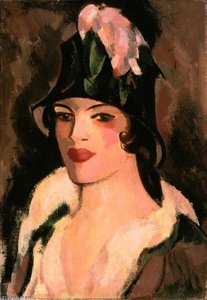
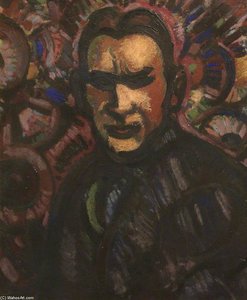
Fergusson's oeuvre is characterized by a recurring fascination with certain themes. The female nude, often depicted in Mediterranean settings, became a central motif, celebrating sensuality and the joy of life. These weren’t idealized representations; they were vibrant, earthy figures imbued with a sense of vitality and independence. His portraits, too, captured a similar spirit, focusing on strong, independent women – his partners Jean Maconochie and Margaret Morris being prominent examples.
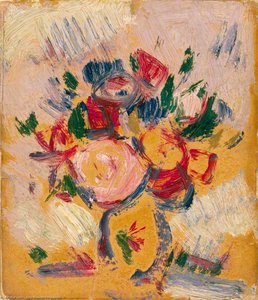
Still lifes also occupied an important place in his work, offering opportunities to explore colour and form in a more intimate setting. He often depicted everyday objects – flowers, fruit, cups – transforming them into luminous arrangements of shape and hue. Works like ‘The Log Cabin Houseboat’ exemplify his Post-Impressionist style, with its bold colours and expressive brushwork capturing the warmth of the Mediterranean sun. Similarly, ‘A Harbour In The South’ showcases his early Modernism’s geometric style and a celebration of everyday life.
Fergusson's Legacy & Place within the Scottish Colourist Movement
John Duncan Fergusson stands as a pivotal figure in British art history, particularly within the context of the Scottish Colourists. Alongside Samuel Peploe, George Leslie Hunter, and Francis Cadell, he redefined Scottish painting in the early 20th century. While all four artists shared a love for vibrant colour and expressive brushwork, Fergusson distinguished himself through his international connections and his unwavering commitment to personal vision.
His influence extended beyond his immediate circle of fellow artists. He championed modern art in Scotland, challenging conservative tastes and paving the way for future generations. Today, his paintings are celebrated for their bold colours, expressive style, and celebration of life. His work continues to resonate with audiences seeking a vibrant and optimistic vision of the world.
Collecting John Duncan Fergusson: A Guide for Enthusiasts
For those interested in acquiring works by John Duncan Fergusson, a range of options exists. Oil paintings command significant prices, reflecting their rarity and historical importance. However, prints offer a more accessible entry point into his oeuvre. ArtsDot.com provides high-quality reproductions of his key works, allowing enthusiasts to experience the vibrancy of his style firsthand.
When considering a purchase, it’s important to research provenance and condition. Look for paintings that have been authenticated by reputable sources and are in good condition. Understanding Fergusson's stylistic development – from his early Glasgow influences to his mature Fauvist-inspired works – will also aid in appreciating the unique qualities of each piece. Whether you seek a large-scale oil painting or a smaller print, John Duncan Fergusson’s art offers a timeless celebration of colour, light, and life.