Early Life and Influences: The Seeds of a Unique Vision
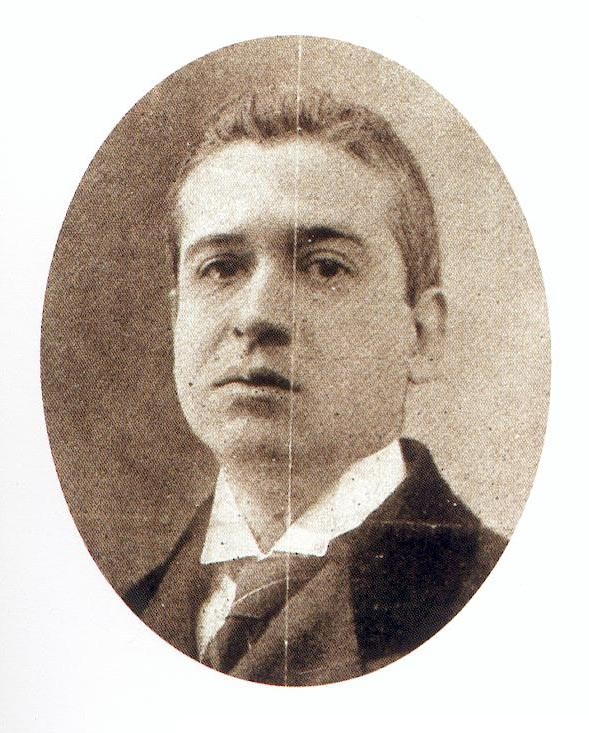 Wikipedia: José Gutiérrez Solana
José Romano Gutiérrez-Solana y Gutiérrez-Solana (28 February 1886, Madrid – 24 June 1945, Madrid) was a Spanish painter, engraver, and author. He usually signed his paintings as "J. Solana". Generally, he is considered to be an Expressionist, but his...
José Romano Gutiérrez-Solana, born in Madrid in 1886, was an artist profoundly shaped by the tumultuous currents of his time. His early life wasn’t one of idyllic artistic nurturing; rather, it was marked by personal tragedy and a keen observation of societal disparities that would later become central to his oeuvre. The son of a father who had emigrated from Mexico after inheriting wealth, Solana experienced a privileged upbringing initially, but this stability was soon disrupted. Early lessons came not from formal institutions, but from his uncle José Díez Palma, a drawing professor at the University of Salamanca, providing a foundational skill set that would be rigorously developed over time. However, it wasn’t merely technical proficiency that defined Solana's path; it was an innate sensitivity to the undercurrents of Spanish life – the poverty, religious fervor, and burgeoning social unrest – that truly ignited his artistic spark.
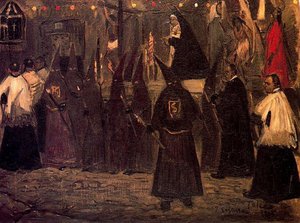
His formative years were spent navigating between Madrid and Cantabria, a geographical shift that exposed him to diverse landscapes and communities. Frequent travels through La Mancha, Aragón, and Andalucía proved particularly influential. He immersed himself in the vibrant chaos of carnivals, the solemnity of cemeteries, and the often-brutal realities of hospitals and bordellos. These experiences weren’t passive observations; Solana actively sketched and documented them, fueled by a personal fortune that allowed him to pursue his artistic passions without immediate financial constraint. This freedom enabled a deep engagement with Spanish culture, fostering a unique perspective that would distinguish his work from contemporaries.
The Dark Palette of Spain: Solana's Depiction of Social Realities
Social realism is work produced by painters, printmakers, photographers, writers, filmmakers and some musicians that aims to draw attention to the real socio-political conditions of the working class as a means to critique the power structures behind...
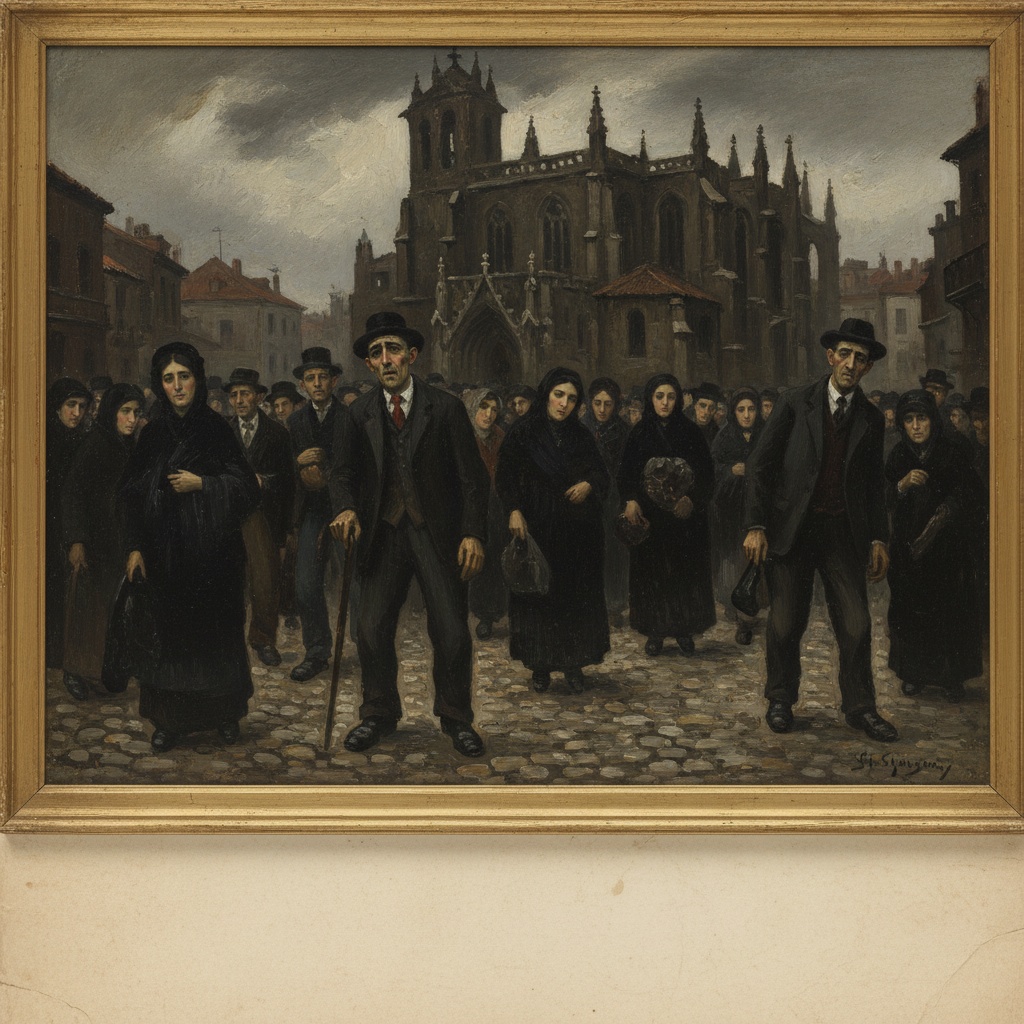
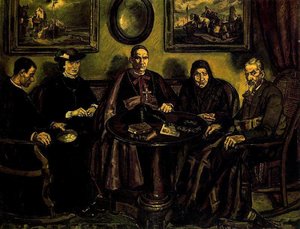
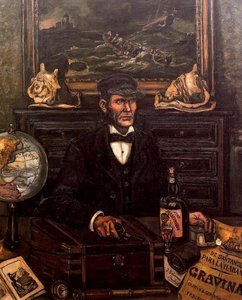
Solana’s paintings are not celebrations of beauty in the traditional sense; they are unflinching portrayals of a Spain grappling with modernization and its inherent contradictions. He eschewed idealized representations, instead focusing on the marginalized – the tavern dwellers, the showgirls (cupletistas), the laborers, and the victims of societal neglect. His palette is deliberately somber, often darker than even that of Goya, reflecting a perceived intensification of Spanish hardship in the early 20th century. He didn’t simply *show* poverty; he conveyed its weight, its desperation, and its corrosive effect on the human spirit.
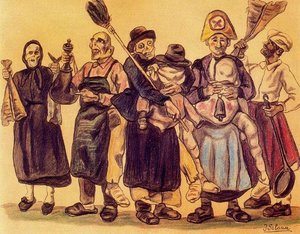
Works like “El Entierro de la Sardina” (The Burial of the Sardine) exemplify this approach. The painting isn't merely a depiction of a carnival tradition—a mock funeral for a sardine symbolizing the end of Lent—but a biting social commentary on the excesses and superficiality of Spanish society. The grotesque figures, the chaotic energy, and the underlying sense of melancholy reveal a profound disillusionment with the status quo. Similarly, his scenes of taverns and lunchrooms are not romanticized gatherings but claustrophobic spaces filled with loneliness and despair. Solana’s ability to capture these atmospheres—the dim lighting, the worn faces, the palpable tension—is what sets him apart.
Literary Pursuits and the 'España Negra': A Multifaceted Artist
Solana was not solely a painter; he was also a prolific writer, and his literary works are inextricably linked to his visual art. His two volumes of *Madrid, escenas y costumbres* (Madrid, Scenes and Customs), published in 1913 and 1918, offer detailed accounts of the city’s life, providing context for his paintings and revealing a sharp observational eye. However, it was his 1920 book, *La España negra* (Black Spain), that truly cemented his reputation as a chronicler of Spanish society.
This work is a scathing critique of the nation’s backwardness, exploring themes of religious hypocrisy, political corruption, and social injustice. It wasn't a romanticized vision of Spain; it was a brutally honest assessment of its flaws. The book resonated with intellectuals of the Generation of 1898, who shared Solana’s concerns about the country’s future. His literary endeavors weren’t merely supplementary to his art; they were an integral part of his overall project—a relentless attempt to understand and document the soul of Spain.
Expressionism, Goya, and El Greco: Navigating Artistic Styles
Expressionism is a modernist movement, initially in poetry and painting, originating in Northern Europe around the beginning of the 20th century. Its typical trait is to present the world solely from a subjective perspective, distorting it radically ...
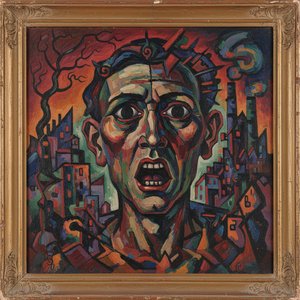
While often categorized as an Expressionist, Solana's style is far more complex than a simple label suggests. He absorbed influences from various sources, most notably El Greco and Francisco Goya. From El Greco, he adopted a sense of dramatic composition, elongated figures, and intense emotionality. The spiritual fervor and otherworldly quality present in El Greco’s work found echoes in Solana's depictions of religious processions and crucifixions.
However, it was Goya who exerted the most profound influence on his artistic vision. Like Goya, Solana wasn’t afraid to confront dark themes—violence, madness, and social decay. He drew inspiration from Goya’s *Black Paintings*, particularly their unsettling imagery and psychological depth. Yet, Solana's work isn’t merely imitative; he infused these influences with a distinctly modern sensibility, employing a bolder palette and a more direct engagement with contemporary Spanish life. His style is characterized by distorted forms, exaggerated features, and a sense of unease that reflects the anxieties of his time.
Key Works and Lasting Legacy: 'El Entierro de la Sardina' and Beyond
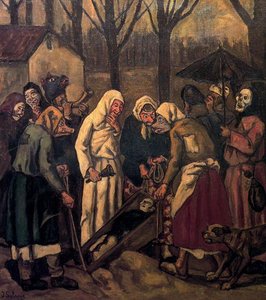 El entierro de la sardina
Discover "El entierro de la sardina" by José Gutiérrez Solana – a haunting Expressionist masterpiece depicting Spanish social life. Explore this unique artwork now!
“Peinadoras” (Combers), a detailed pencil drawing from the 1940s, showcases Solana’s mastery of line and form. The intimate salon scene captures a moment of quiet contemplation, revealing the artist’s ability to find beauty in everyday life, even amidst hardship. However, it is “El Entierro de la Sardina” that remains his most iconic work—a haunting masterpiece that encapsulates his social commentary and artistic vision.
Despite achieving fame throughout Europe by 1936, Solana’s career was disrupted by the Spanish Civil War. He sought refuge in Paris after a brief stay in Valencia, returning to Madrid only after the conflict ended. While he had no direct disciples or imitators, his fascination with Spain and its complexities continues to inspire artists and collectors alike. His work serves as a powerful reminder of the social realities of early 20th-century Spain—a nation grappling with modernization, political turmoil, and profound cultural shifts.
Solana’s enduring legacy lies in his unflinching honesty, his masterful technique, and his ability to capture the soul of a nation. His paintings are not merely historical documents; they are visceral experiences that continue to resonate with audiences today. At ArtsDot.com, we offer high-quality reproductions of Solana’s most iconic works, allowing you to experience the power and beauty of his art firsthand. Explore our collection and discover the captivating world of José Gutiérrez Solana—a true chronicler of Spanish society.