Early Life and Influences: The Foundations of Lowry’s Vision
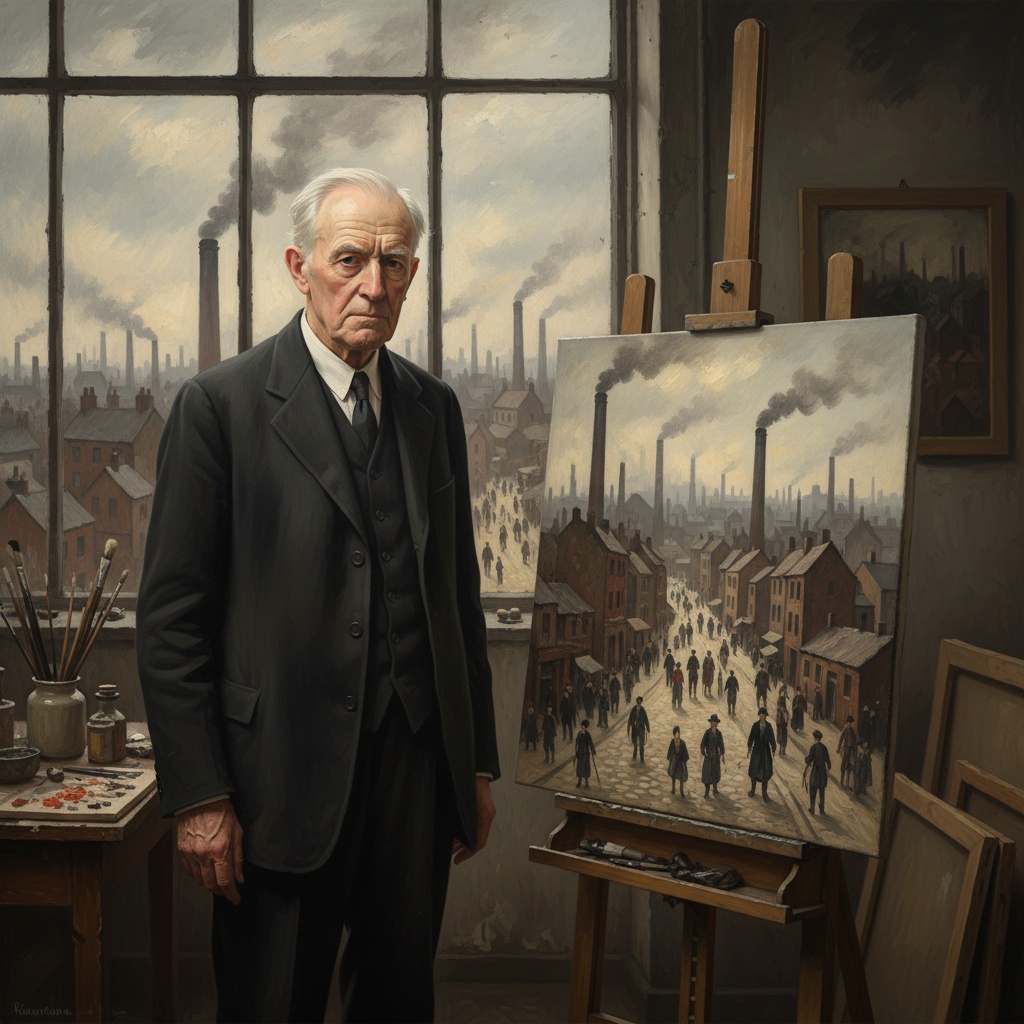
Laurence Stephen Lowry, born in 1887 in the industrial heartland of Lancashire, was an artist whose work became inextricably linked with the landscapes and lives of Northern England. However, to perceive his art solely as a documentary record would be a profound misjudgment. His beginnings were far from idyllic; a difficult birth and a reserved family life shaped a sensibility attuned to quiet observation and subtle melancholy. While his father remained a distant figure, it was his mother, Elizabeth, who exerted a powerful influence – though not through encouragement of artistic pursuits. Her aspirations for a more conventional life perhaps inadvertently fostered in Lowry a need for independent expression, a space where he could articulate the world as *he* saw it.
The early years spent in Victoria Park, Manchester, provided a contrast to the later industrial surroundings of Pendlebury. This initial exposure to a more verdant environment likely informed his later depictions of landscapes – not as idyllic retreats, but as spaces imbued with a particular Northern character. The move to Pendlebury at age 22 proved pivotal. Initially repelled by the mills and factories that dominated the horizon, Lowry’s perspective gradually shifted. He didn't immediately embrace the scene; rather, it was a slow process of absorption, culminating in a moment of revelation – witnessing the Acme Spinning Company mill bathed in the “sad, damp charged afternoon sky.” This wasn’t merely seeing an industrial site; it was *feeling* its weight, its atmosphere, and recognizing within it a strange, compelling beauty.
The Industrial Landscape: A Recurring Motif and Artistic Exploration
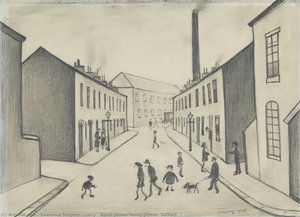
The ‘Industrial Landscape’ became more than just a subject for Lowry; it evolved into a deeply personal exploration of place, memory, and the human condition. These paintings weren't simply representations of factories and chimneys; they were distillations of an emotional response to the Northern urban environment. The Tate’s 1955 ‘Industrial Landscape’, for example, is not a specific location but rather a composite vision – a synthesis of observed details and internal feeling. The towering structures dominate the canvas, yet are rendered with a delicate touch, their harshness softened by the muted palette and subtle gradations of light.
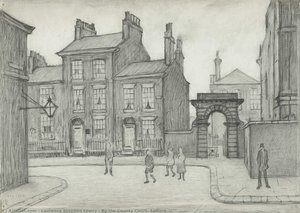
Lowry’s approach was unconventional. He eschewed traditional artistic training in favor of self-directed study, finding inspiration in Pierre Adolphe Valette at Manchester School of Art. This independence allowed him to develop a unique visual language – one that prioritized atmosphere and emotional resonance over precise realism. He wasn't interested in glorifying industry; instead, he sought to capture its impact on the lives of those who inhabited these spaces. The recurring motifs—the mills, the bridges, the terraced houses—become symbols of both opportunity and constraint, progress and alienation.
Figures in a Northern World: Capturing the Essence of Urban Life
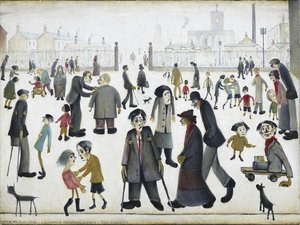
Central to Lowry’s vision are the figures that populate his landscapes – often referred to as ‘matchstick men’. These simplified forms aren't merely stylistic choices; they represent the collective humanity of the industrial North. They are anonymous, yet possess a quiet dignity, going about their daily lives amidst the imposing structures of industry. The paintings like “Figures in a Park” demonstrate his ability to convey complex emotions through minimal means. The muted tones and simplified forms create a sense of distance, but also intimacy – as if observing these scenes from afar, yet feeling deeply connected to the lives unfolding within them.
Lowry’s figures are rarely depicted with individual personalities or narratives. They exist as part of a larger whole, representing the working class communities he observed throughout his life. This anonymity isn't indifference; rather, it’s an attempt to capture the universal experiences of urban existence – the shared struggles, hopes, and quiet moments of connection.
Lowry's Unique Style: Simplicity, Melancholy, and 'Matchstick Men'
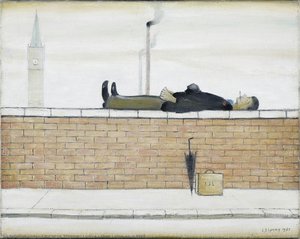
The distinctive style that defines Lowry’s work is a product of both technical skill and emotional sensibility. His use of simplified forms, muted tones, and subtle gradations of light creates a unique atmosphere – one characterized by melancholy, nostalgia, and quiet observation. The ‘matchstick men’, though often the subject of caricature, are integral to his artistic vision. They aren’t crude representations; rather, they are carefully considered symbols of collective humanity.
Critics initially dismissed Lowry as a “Sunday painter,” questioning the sophistication of his technique. However, this assessment overlooks the deliberate nature of his stylistic choices. He wasn't striving for photorealism; he was seeking to capture the *essence* of a place and its people. His paintings are not about precise detail but about emotional resonance – conveying the weight of industrial life through minimal means. The lack of shadows in many of his landscapes further contributes to this sense of timelessness, creating scenes that feel both familiar and otherworldly.
Beyond the Mills: Landscapes, Portraits, and Hidden Depths
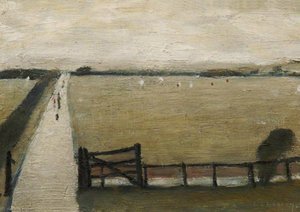
While best known for his depictions of industrial Northern England, Lowry’s artistic output was remarkably diverse. He also painted haunting unpopulated landscapes, brooding portraits, and a series of unpublished “marionette” works discovered after his death. These lesser-known pieces reveal a complexity often overlooked in discussions of his more iconic work.
His fascination with the sea, evident in pure seascapes depicting only sky and water from the 1940s onwards, offers a contrasting perspective to the industrial scenes. These works demonstrate his ability to capture atmospheric effects – the shifting light, the turbulent waves—with equal skill. The portraits, though less numerous, reveal a keen eye for character and psychological depth. And the “marionette” works, with their unsettling imagery, suggest a darker undercurrent beneath the surface of his seemingly simple depictions.
Legacy and Enduring Appeal: The Poignant Beauty of Everyday Existence
Laurence Stephen Lowry’s legacy extends far beyond the borders of Northern England. His work continues to resonate with audiences worldwide, captivating viewers with its poignant beauty and emotional depth. He rejected five offers of British honours, including a knighthood in 1968, perhaps valuing artistic independence above societal recognition.
Today, his paintings are displayed in museums around the world, most notably at The Lowry in Salford Quays – a purpose-built gallery dedicated to his work. The major retrospective that opened at Tate Britain in 2013 and his first solo exhibition outside the UK in Nanjing, China, in 2014 solidified his position as one of Britain’s most beloved artists. His enduring appeal lies in his ability to capture the essence of everyday existence – the quiet struggles, hopes, and moments of connection that define the human experience. At ArtsDot, we are proud to offer high-quality reproductions of Lowry's iconic works, allowing you to bring a piece of this poignant beauty into your own home. Explore our collection today and discover the timeless appeal of L.S. Lowry.