Introduction: The Echoes of History – Lech Jankowski’s Artistic Context
Whether as an obstacle to or an opportunity to artistic practice, the Polish state in the years after the war was unavoidable. ... after nearly ...
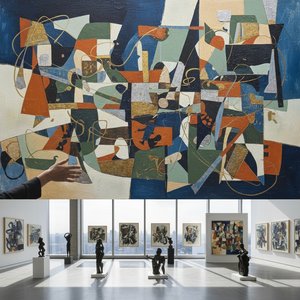
The aftermath of the Second World War cast a long shadow over Poland, not merely as physical devastation but as a profound psychic wound. From this fractured landscape emerged a generation of artists grappling with questions of national identity, political oppression, and the very nature of representation. Lech Jankowski (born 1943) stands as a pivotal figure within this context, though his work resists easy categorization. He wasn’t simply documenting trauma; he was attempting to *reconstruct* meaning from its fragments, employing an abstract visual language that spoke to the unspoken anxieties and resilient spirit of a nation rebuilding itself. Jankowski's artistic journey unfolded against a backdrop of socialist realism imposed by the state, yet his paintings consistently sought avenues for individual expression, subtly challenging conventional norms through form, texture, and symbolic content. Understanding his work requires acknowledging this complex interplay – the unavoidable weight of history coupled with an unwavering commitment to personal vision.
The Weight of Place: Jankowski's Response to Post-War Poland
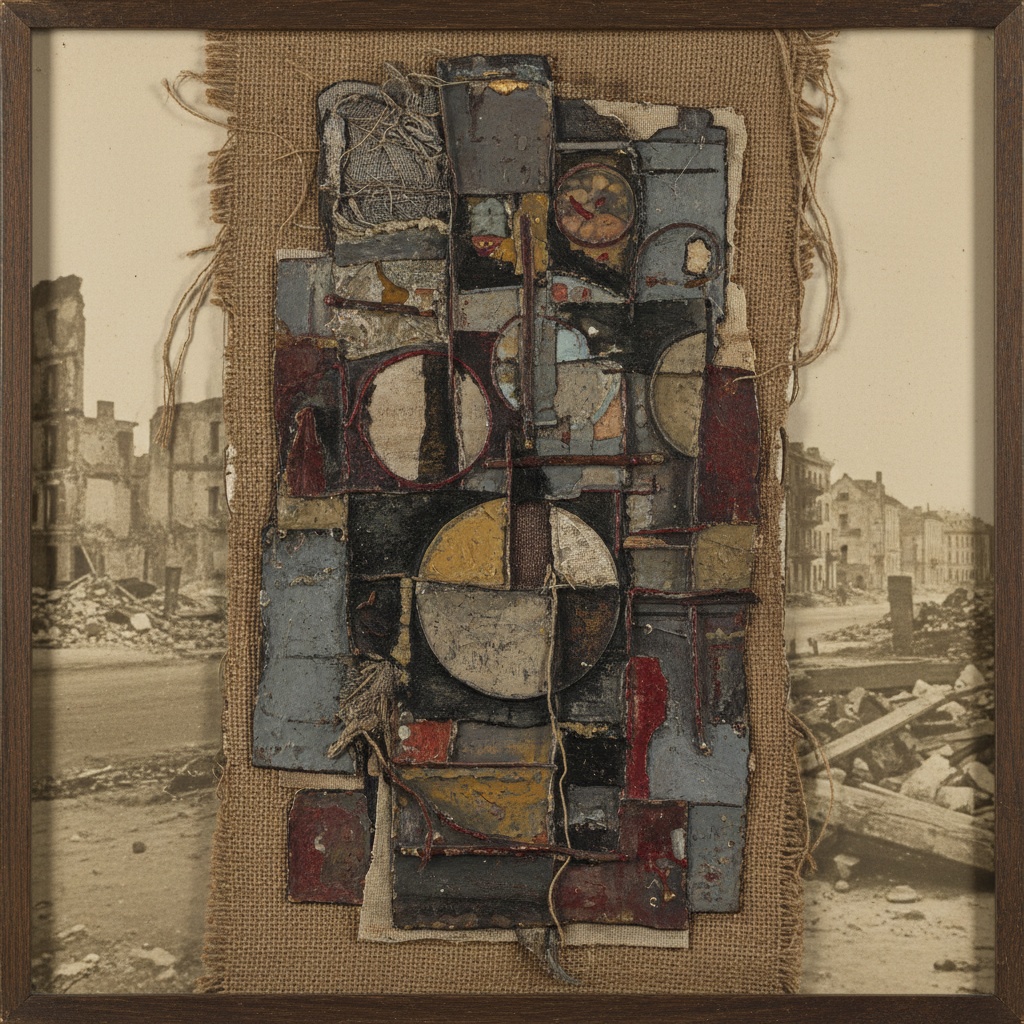
Poland’s post-war reality was one of imposed ideologies and limited freedoms. The initial embrace of socialist realism quickly gave way to a more nuanced, though still controlled, artistic environment. Artists were encouraged to depict idealized scenes of labor and progress, but Jankowski, along with others in the burgeoning Informel movement, found liberation in abstraction. This wasn’t an act of outright rebellion, necessarily, but rather a strategic withdrawal from direct political commentary into the realm of subjective experience. His canvases became spaces for exploring internal landscapes—spaces haunted by memory, loss, and a yearning for authenticity. The very materials he employed – often incorporating unconventional elements like sand, metal fragments, or found objects – can be interpreted as symbolic representations of the fragmented nation itself. The use of impasto, building up layers of paint to create tactile surfaces, suggests both the weight of history and the arduous process of rebuilding. It’s a physicality that resonates deeply with the lived experience of post-war Poland, where reconstruction wasn't merely architectural but fundamentally psychological.
Materiality as Meaning: Texture, Surface, and the Embodied Image
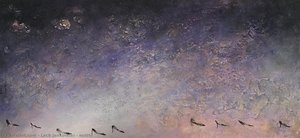
Jankowski’s distinctive style is profoundly rooted in his exploration of materiality. He doesn’t simply apply paint to canvas; he *builds* with it, creating richly textured surfaces that demand tactile engagement. This emphasis on physicality isn't merely aesthetic; it’s integral to the meaning of his work. The layering of pigments, often scraped and reworked, evokes a sense of palimpsest – a surface overwritten with traces of previous iterations, mirroring the complexities of memory and historical revision. His choice of materials is equally significant. Incorporating elements like metal or sand introduces an element of chance and unpredictability, disrupting the smooth perfection favored by socialist realism. This deliberate roughness can be seen as a rejection of imposed order, a celebration of imperfection and the inherent beauty of decay. Consider works like ‘Mnisi. Chór butelkowy 2.’ (Monks. Bottle Choir 2), where vibrant colors are juxtaposed with textured forms, creating a dynamic interplay between light and shadow that draws the viewer into a meditative state. The bottle shapes themselves hint at leisure and contemplation, yet their fragmented arrangement suggests an underlying sense of unease.
Surreal Landscapes of Leisure: Identity and Psychological Space in Jankowski’s Paintings
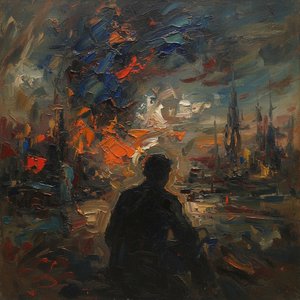
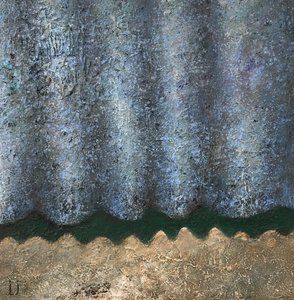
While rooted in abstraction, Jankowski's paintings often evoke recognizable forms—landscapes, architectural structures, even figures—though these are rarely depicted with photographic realism. Instead, they appear as distorted reflections, dreamlike fragments that hint at psychological states rather than concrete realities. A recurring motif is the depiction of leisure spaces – beaches, gardens, interiors – yet these scenes are often imbued with a sense of melancholy or alienation. This juxtaposition of idyllic settings with underlying tension speaks to the complexities of identity in post-war Poland. The pursuit of personal fulfillment was often overshadowed by political constraints and collective trauma. Works like ‘ku rtyna nad morzem’ (Towards the Curtain over the Sea) exemplify this dynamic, presenting an abstract seascape rendered in textured oils on metal. The impressionistic abstraction evokes a sense of nocturnal solitude, inviting contemplation on the vastness of the sea and the fragility of human existence. These aren't simply landscapes; they are psychological spaces—projections of inner turmoil and longing.
Beyond Informel: Jankowski’s Unique Voice within Polish Abstraction
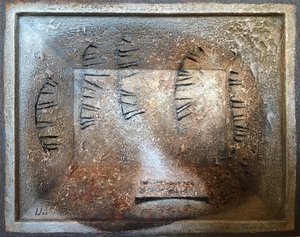
Although associated with the Czech Informel movement – a current of expressive structural abstraction that emerged in post-war Central Europe as a reaction against official art – Jankowski developed a distinctly personal style. While sharing Informel's emphasis on materiality and spontaneous expression, his work diverges in its subtle symbolism and recurring motifs. Unlike some of his contemporaries who embraced pure gestural abstraction, Jankowski consistently incorporated elements of figuration and narrative suggestion. His paintings aren’t simply about the act of painting itself; they are imbued with a sense of story, albeit one that remains fragmented and open to interpretation. The diptych ‘Niebioskości dyptyk’ (Heavenly Dyptych) exemplifies this approach, featuring dark blues and grays layered with impasto texture and linear staircases. These staircases evoke solitude and contemplation, suggesting a journey towards an unknown destination. Jankowski's ability to balance abstraction with symbolic content sets him apart as a unique voice within Polish art, one that transcends easy categorization.
Collecting Jankowski: A Legacy of Resilience and Artistic Innovation
Investing in the work of Lech Jankowski is not merely acquiring an aesthetically pleasing object; it’s embracing a legacy of resilience and artistic innovation. His paintings offer a powerful glimpse into a pivotal moment in Polish history, capturing the complexities of post-war identity with nuance and sensitivity. As a collector, you are supporting an artist who consistently challenged conventional norms and forged his own path despite political constraints. Jankowski's work is increasingly recognized for its historical significance and artistic merit, making it a valuable addition to any discerning collection. His paintings resonate not only with art historians but also with those seeking works that evoke emotion, provoke contemplation, and offer a profound connection to the human experience. ArtsDot.com offers high-quality reproductions of Jankowski’s iconic works, allowing you to bring his compelling vision into your home or office. Explore our collection today and discover the enduring power of Polish abstraction.