A Parisian Muse: Marie Laurencin's Early Life & Artistic Beginnings
 Wikipedia: Marie Laurencin
Marie Laurencin (31 October 1883 – 8 June 1956) was a French painter and printmaker. She became an important figure in the Parisian avant-garde as a member of the Cubists associated with the Section d'Or. == Biography == Laurencin was born in Paris...
Marie Laurencin’s story is one woven with the threads of bohemian Paris, a delicate rebellion against convention, and an unwavering pursuit of artistic expression. Born in 1883, her early life was marked by a certain ambiguity; raised primarily by her mother, a domestic servant, she carried a quiet independence that would later define both her art and her persona. Though never formally acknowledged, Laurencin believed in her Creole heritage through her maternal grandmother, an identity she embraced as part of her unique sensibility. This sense of otherness, perhaps, fueled her desire to forge a path distinct from the societal norms of the time.
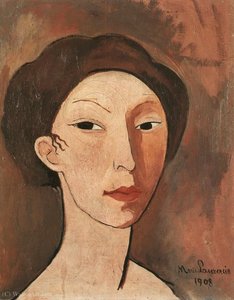
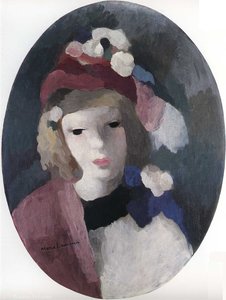
Her initial artistic training began with porcelain painting at Sèvres, a skill that instilled in her a meticulous attention to detail and an appreciation for refined surfaces. However, it was at the Académie Humbert where she truly found her calling, transitioning to oil painting and immersing herself in the vibrant art scene of Montmartre. This period wasn’t simply about mastering technique; it was about entering a world brimming with new ideas, challenging perspectives, and the intoxicating energy of artistic innovation. Laurencin's early works already hinted at the soft lines and delicate color palettes that would become her signature style – a subtle foreshadowing of the poetic vision she would soon fully realize.
Cubism, Collaboration, and the Section d’Or: Finding Her Voice in Avant-Garde Circles
Modernism was an early 20th-century movement in literature, visual arts, performing arts, and music that emphasized experimentation, abstraction, and subjective experience. Philosophy, politics, architecture, and social issues were all aspects of thi...
The dawn of the 20th century found Laurencin at the epicenter of artistic upheaval. She quickly became a prominent figure within the Parisian avant-garde, drawn to the revolutionary ideas of Cubism. Her association with Pablo Picasso and the artists of the Section d’Or – Jean Metzinger, Albert Gleizes, Robert Delaunay, Henri le Fauconnier, Francis Picabia – was pivotal in shaping her artistic development. Exhibiting alongside these masters at Salon des Indépendants and Salon d'Automne, she wasn’t merely present; she actively participated in the dialogue that redefined modern art.
However, Laurencin’s relationship with Cubism was complex. While embracing its formal experimentation – the fragmentation of form, the exploration of multiple perspectives – she never fully succumbed to its rigid structures. Her involvement was a period of intense learning and adaptation, but ultimately, she sought to infuse her own unique sensibility into the movement. This is where her romantic entanglement with Guillaume Apollinaire becomes significant. Apollinaire, a poet and influential art critic, became both her muse and advocate, encouraging her to develop a style that was distinctly *hers*. He recognized the potential for a uniquely feminine perspective within the avant-garde landscape.
The Feminine Aesthetic: Pastel Palettes, Delicate Forms, and a Rejection of Convention
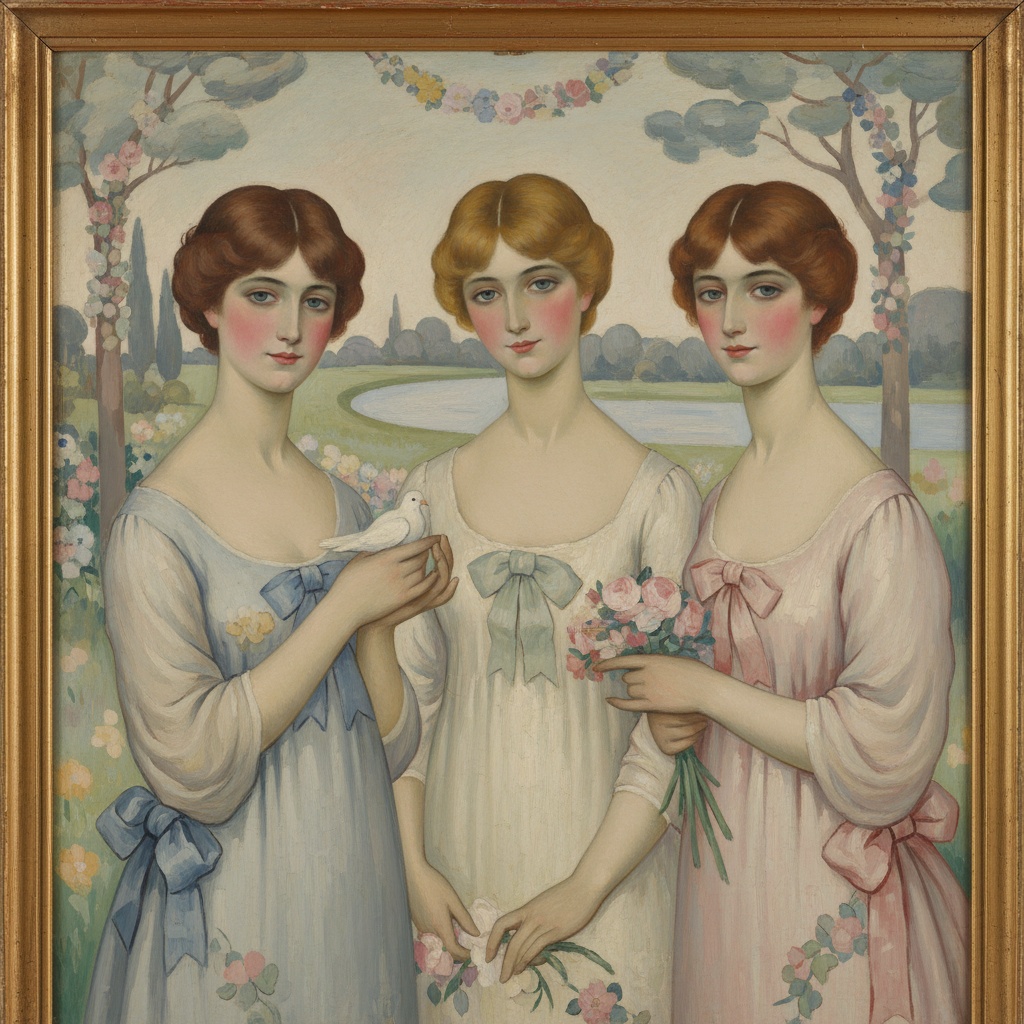
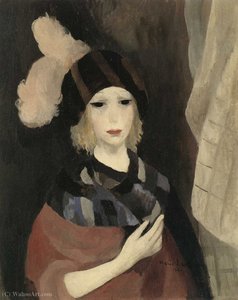
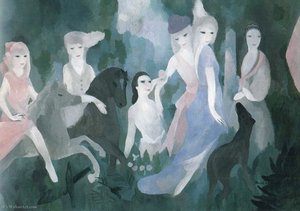
Laurencin’s artistic breakthrough lay in her deliberate rejection of traditional notions of representation. She moved away from the bold angularity often associated with Cubism, opting instead for soft lines, delicate curves, and an ethereal quality that permeated her canvases. Her palette shifted towards muted tones – grays, pinks, and pastel shades – creating a dreamlike atmosphere that was both alluring and melancholic. This wasn’t simply about aesthetics; it was a conscious effort to create a visual language that resonated with feminine sensibilities.
Her subjects were often youthful women, depicted in intimate settings, their gazes enigmatic and introspective. These weren't idealized portraits of societal beauty standards but rather explorations of inner life, vulnerability, and the complexities of female identity. She famously described her talent as “ranging between a flutter and a coo,” a self-deprecating yet insightful commentary on the subtle power of her work. This deliberate softness was not weakness; it was a strategic choice to challenge the dominant masculine gaze in art.
Intimacy and Identity: Exploring Themes of Womanhood & Sexuality in Laurencin’s Work
Beneath the delicate surfaces of Laurencin's paintings lies a profound exploration of intimacy, identity, and female desire. Her relationships – with both men and women – profoundly influenced her art. Her forty-year love affair with fashion designer Nicole Groult is particularly noteworthy, shaping her understanding of beauty, elegance, and the power dynamics within romantic connections. This personal life found its way onto the canvas, subtly challenging societal norms surrounding sexuality and representation.
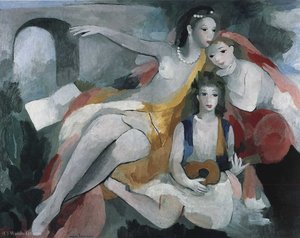
Laurencin’s depictions of groups of women are especially compelling. They often portray scenes of companionship, shared moments of quiet contemplation, and a sense of solidarity that was rare in early 20th-century art. These weren't simply gatherings; they were explorations of female agency, independence, and the creation of alternative spaces outside the confines of patriarchal structures. Her “balletic wraiths” and “sidesaddle Amazons,” as they’ve been described, offered a glimpse into a world where women defined their own narratives.
Laurencin's Enduring Legacy: Influence on Art Deco and Modern Portraiture
Art Deco, short for the French Arts décoratifs (lit. 'Decorative Arts'), is a style of visual arts, architecture, and product design that first appeared in Paris in the 1910s just before World War I and flourished internationally during the 1920s to ...
Though she distanced herself from the label of Cubist, Laurencin’s influence extended far beyond that movement. Her distinctive style – characterized by soft lines, delicate colors, and a focus on feminine subjects – resonated with the burgeoning Art Deco aesthetic. While not strictly an Art Deco artist, her work shared its emphasis on elegance, sophistication, and a celebration of modern life. The geometric patterns inherited from Cubism were replaced by light tones and undulating compositions, creating a uniquely enchanting visual language.
Her impact on modern portraiture is undeniable. She challenged traditional notions of representation, prioritizing psychological depth over mere physical likeness. Her portraits weren’t about capturing outward appearances; they were about revealing inner worlds, emotions, and the complexities of human connection. Today, Marie Laurencin stands as a testament to the power of artistic independence, a pioneer who forged her own path in a male-dominated world and left behind a legacy that continues to inspire.
Explore the delicate beauty of Marie Laurencin’s work at ArtsDot.com, where you can discover museum-quality reproductions of her iconic paintings and bring a touch of Parisian elegance into your home.