The Departure from Reality: Understanding the Roots of Abstraction
 Abstract art
Abstract art uses visual language of shape, form, color, and line to create a composition which may exist with a degree of independence from visual references in the world. Abstract art, non-figurative art, non-objective art, and non-representational...
To understand the profound impact of contemporary abstraction, one must first look back to the moment when the artist’s gaze shifted away from the mirror of reality. For centuries, Western art was anchored by the logic of perspective and a rigorous attempt to reproduce an illusion of visible reality. From the Renaissance through the mid-1uminescent 19th century, the canvas served as a window into a recognizable world. However, as the dawn of the 20th century approached, a seismic shift occurred in the collective consciousness. The rapid advancements in science, technology, and philosophy began to dismantle the certainty of the physical world, prompting many artists to seek a new kind of truth—one that did not rely on the imitation of nature but on the fundamental essence of sight itself.
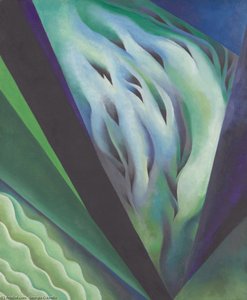
This departure was not an abrupt rejection but a gradual unfolding. Artists began to realize that by altering color or form, they could communicate deeper psychological truths. This movement toward non-representational art allowed for a visual language composed of shape, form, and line that could exist independently from any external reference. As we explore these masterpieces today, whether through a museum visit or by acquiring a hand-painted oil reproduction of a canonical work, we are participating in a dialogue that began when the boundaries of the physical world first started to dissolve.
Geometric Precision vs. Lyrical Emotion: The Dual Pillars of Abstract Language
 Geometric Abstraction's 10 Defining Masterpieces | Art for Your Home - ArtsDot
Introduction Imagine a world stripped bare to its essential forms – lines, colors, and shapes resonating with an almost mathematical purity. This is the realm of Geometric Abstraction, a movement that dared to abandon representational art in favor of...
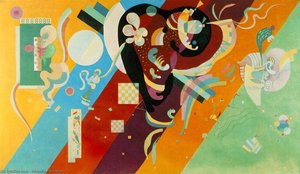
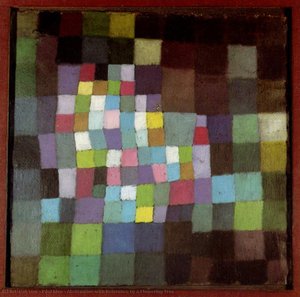
Within the vast landscape of abstraction, two distinct yet intersecting philosophies emerge: the structured rigor of geometry and the fluid spontaneity of lyricism. Geometric Abstraction represents a pursuit of mathematical purity and universal order. It is a realm where the world is stripped to its essential elements—lines, circles, and squares—resonating with an almost architectural clarity. Pioneers like Auguste Herbin and Gertrude Greene utilized this language to explore spatial relationships and structural tension, seeking a deeper truth through the elegance of simplicity. In these works, there is no room for the accidental; every edge and intersection is a deliberate act of construction.
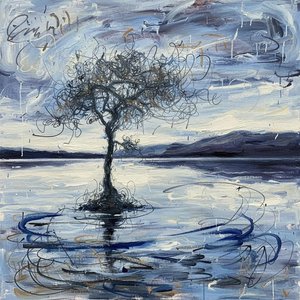
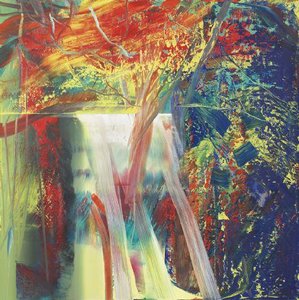
In stark contrast stands Lyrical Abstraction, often associated with the more emotive branches of Abstract Expressionism. Here, the brushstroke becomes a gestural record of the artist's internal state. Instead of the rigid boundary, we find the vibrant colors and textured layers seen in the works of artists like Mohamed Abla, where movement and emotion take precedence over form. This side of abstraction invites a visceral encounter, much like the way one might experience the light-drenched textures of a Christian Noiret masterpiece. While geometry offers us a sanctuary of order, lyricism offers us a mirror to our own turbulent emotions, creating a beautiful tension that continues to define the contemporary aesthetic.
The Legacy of the Avant-Garde: From Cubism to Abstract Expressionism
Abstract expressionism in the United States emerged as a distinct art movement in the aftermath of World War II and gained mainstream acceptance in the 1950s, a shift from the American social realism of the 1930s influenced by the Great Depression an...
The lineage of modern abstraction is a tapestry woven from the radical experiments of the early 20th-century avant-garde. The journey often began with Cubism, which provided the essential toolkit for fragmentation. By studying the works of masters like Picasso and Braque, artists learned to deconstruct objects into multiple perspectives, breaking the singular viewpoint that had dominated art since the Renaissance. This fragmentation served as a vital bridge, leading toward more total forms of abstraction where the subject matter disappeared entirely.
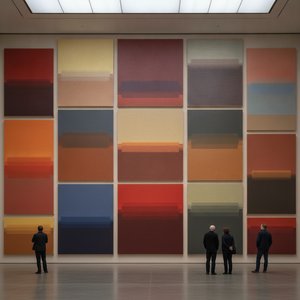
Following this, the mid-20th century witnessed the rise of Abstract Expressionism, particularly in the United States. This movement, characterized by the "New York School," shifted the center of the art world from Paris to New York. Artists such as Jackson Pollock and Mark Rothko utilized much larger scales and more aggressive or meditative techniques to evoke profound responses. This era was not merely about paint on canvas; it was about the act of creation itself—the spontaneous, the subconscious, and the monumental. For the art student or the dedicated collector, understanding this progression is essential to appreciating how a single brushstroke can carry the weight of historical revolution.
Texture and Light: The Visceral Experience of Non-Representational Art
 Top 25 Masterpieces by Christian Noiret: A Journey Through Abstract Texture and Light
Introduction To step into the world of Christian Noiret is to abandon the safety of recognizable forms and surrender to a profound, silent dialogue between light and matter. As one wanders through his most significant works, one does not merely obser...
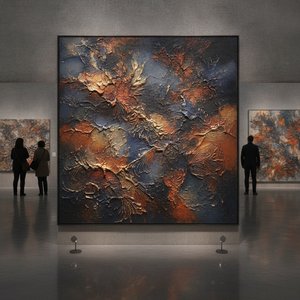
To truly engage with abstract art, one must move beyond the intellectual concept and enter the sensory realm. Abstraction demands presence. When we observe works that focus on the interplay between light and matter, we are no longer looking at a subject; we are experiencing the medium itself. In the practice of contemporary masters like Christian Noiret, the canvas becomes a sculptural entity. Through the meticulous layering of pigment and the manipulation of impasto textures, light is caught in ridges of paint or lost in deep, velvety shadows.
This tactile quality creates a profound, silent dialogue between the viewer and the work. The way light interacts with a thick layer of oil paint can change the mood of a room, offering moments of both stillness and energy. This is why a hand-made oil reproduction offers an experience that a digital print simply cannot replicate; it is the physical depth of the brushstrokes and the richness of the tonal range that allow the artwork to breathe. Whether it is the rhythmic tension of a geometric plane or the raw power of a textured composition, the true power of abstraction lies in its ability to bypass the intellect and speak directly to our senses.
The Modern Canvas: How Contemporary Abstraction Redefines Visual Dialogue
 Contemporary art
Contemporary art is generally art created from the 1970s onwards. Contemporary artists work in a globally influenced, culturally diverse, and technologically advancing world. Their art is a dynamic combination of materials, methods, concepts, and sub...
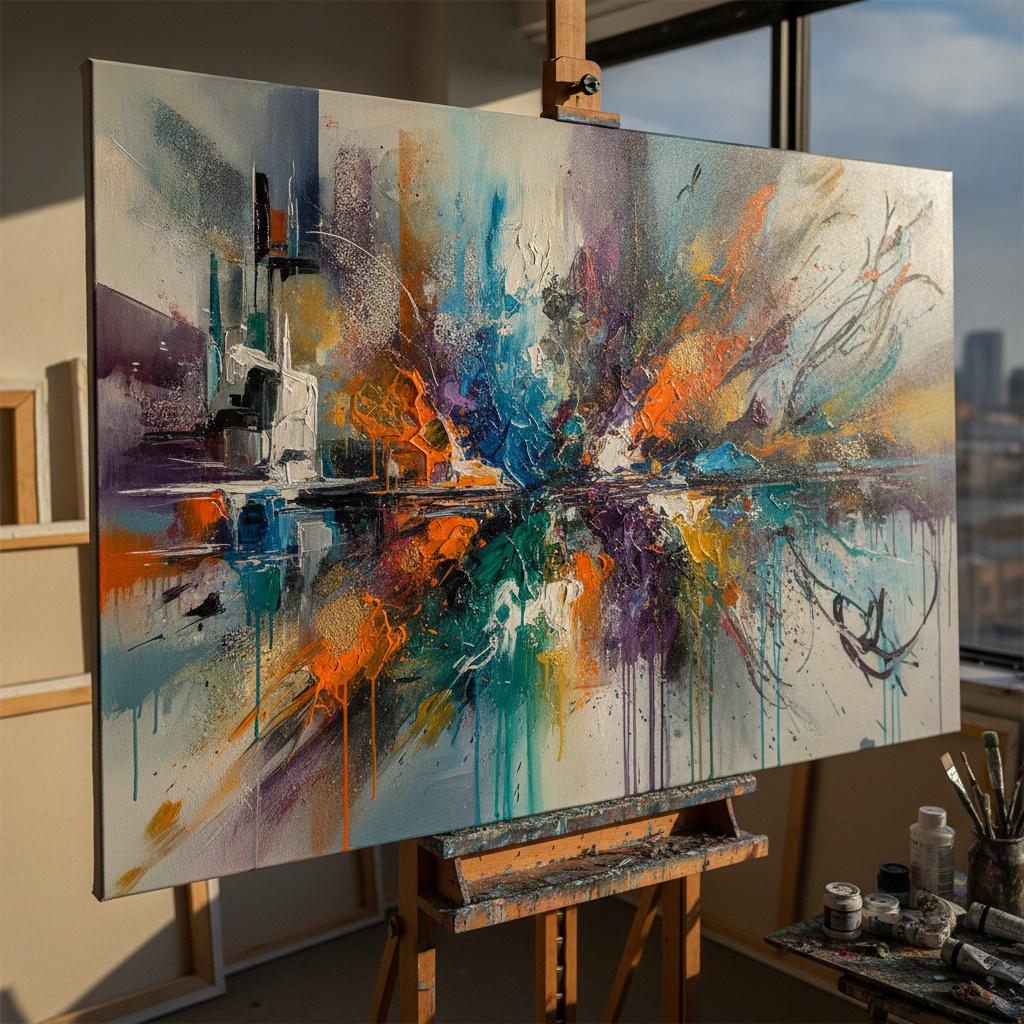
Today, contemporary art continues to challenge the boundaries established by its predecessors. We live in a globally influenced, technologically advancing world where the definition of "art" is constantly being renegotiated. Contemporary abstraction does not adhere to a single, unifying ideology; rather, it is an eclectic collection of voices that utilize new materials and methods to explore personal and cultural frameworks. It is a period of profound experimentation, where the digital and the physical often intersect.
As we look toward the future, the essence of abstraction remains rooted in its ability to provide a space for contemplation in an increasingly chaotic world. Whether through the Neo-Abstract Geometry of artists like Laurent Fabre or the architectural explorations of space, the movement continues to offer us a way to find meaning in the intangible. At ArtsDot.com, we celebrate this enduring legacy by providing access to the world's most iconic visual languages. Through our Professional Digital Mockup Service and our commitment to academic excellence, we allow collectors and students alike to bring the profound power of these abstract movements into their own lives, ensuring that the dialogue between form and emotion never fades.