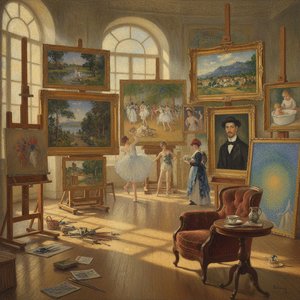
The Genesis of Impressionism: From Le Havre to the Parisian Revolution
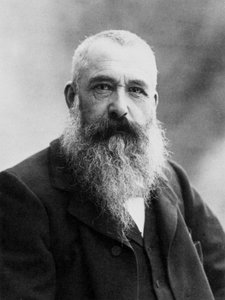 Claude Monet
A Life Immersed in Light: The World of Claude Monet Oscar-Claude Monet, a name synonymous with Impressionism, wasn't merely a painter of landscapes; he was a chronicler of fleeting moments, a poet of light and color. Born in Paris on November 14, 184...
To understand the seismic shift that Claude Monet brought to the art world, one must first look toward the rugged, salt-sprayed coasts of Normandy. Born Oscar-Claude Monet in 1840, his early life was far removed from the refined salons of Paris. The young artist’s talent first manifested not in grand landscapes, but in the spirited charcoal caricatures he sold locally in Le Havre. This early entrepreneurial spark, paired with a profound innate skill, laid the foundation for a man who would eventually challenge the very foundations of the French Academy.
The transition from a promising student to a revolutionary leader was catalyzed by pivotal encounters, most notably with Eugène Boudin. It was Boudin who introduced Monet to the concept of
en plein air painting—the practice of stepping out of the dim, controlled studio and into the unpredictable, vibrant reality of nature. As Monet moved through the turbulent years of the Franco- Precisely during this era, his experiences in London, absorbing the atmospheric mastery of J.M.W. Turner, refined his ability to perceive light not as a static element, but as a living, breathing force. When he returned to France and joined forces with contemporaries like Renoir, the stage was set for the 1874 exhibition that would inadvertently give the Impressionist movement its name through his work,
Impression, Sunrise.
En Plein Air: The Revolutionary Technique of Capturing Fleeting Light
 En plein air
En plein air (pronounced [ɑ̃ plɛ.n‿ɛʁ]; French for 'outdoors'), or plein-air painting, is the act of painting outdoors. This method contrasts with studio painting or academic rules that might create a predetermined look. The theory of 'En plein air' ...
The essence of Monet’s genius lies in his refusal to adhere to the rigid, photographic realism demanded by the 19th-century art establishment. Instead, he sought to capture the "impression"—the subjective, sensory experience of a moment before the mind has time to categorize it. This required a radical departure from traditional methods; rather than smooth, invisible brushstrokes and dark, blended shadows, Monet utilized visible, broken strokes of pure, unmixed color. By placing colors side-by not by blending them on a palette, but by allowing the viewer's eye to perform the optical mixing, he achieved a luminosity that seemed to vibrate upon the canvas.
This technique was inextricably linked to his commitment to painting outdoors. To paint
en plein air is to engage in a race against time. A cloud passing over the sun, a shift in the wind, or the creeping shadows of dusk can fundamentally alter the color temperature of a landscape in mere minutes. Monet’s work captures this very breath of life. His canvases do not merely depict a scene; they document the way morning mist clings to water or how the setting sun dissolves a horizon into a haze of violet and gold. For those who seek to bring this tactile depth into their own homes, our handmade oil reproductions on 100% cotton canvas meticulously recreate these physical brushstrokes, offering a much deeper tonal range and texture than any mere print could ever achieve.
The Power of Series: Exploring Subjectivity through Repetition and Time
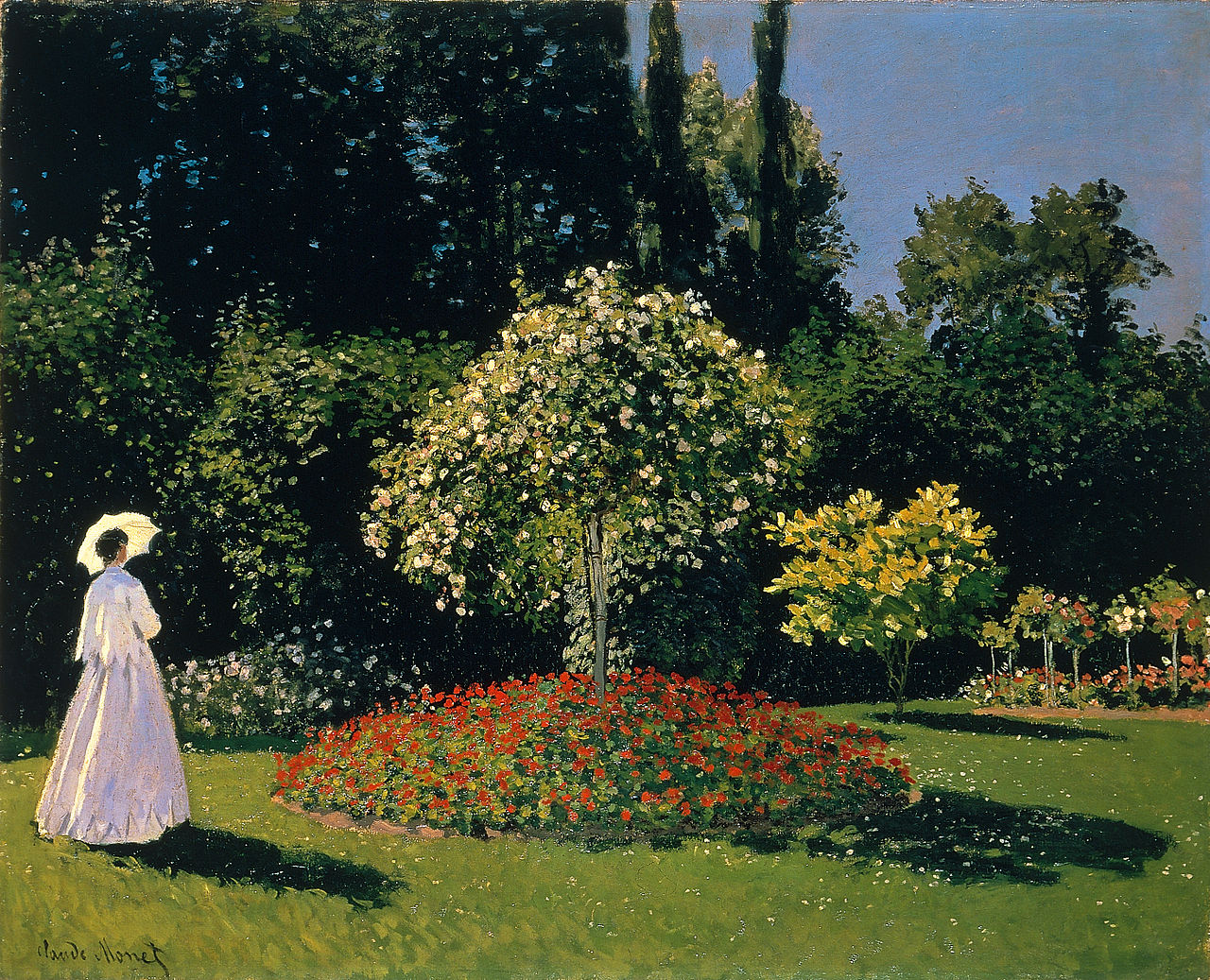 List of paintings by Claude Monet
This is a list of works by Claude Monet (1840–1926), including all the extant finished paintings but excluding the Water Lilies, which can be found here, and preparatory black and white sketches. Monet was a founder of French impressionist painting, ...
Perhaps Monet’s most profound contribution to the evolution of modernism was his groundbreaking use of series paintings. He moved beyond the idea of a single, definitive depiction of a subject, choosing instead to explore how a single theme could be transformed by the passage of time and the changing qualities of light. By painting the same subject—be it haystacks, poplars, or the Rouen Cathedral—at different hours of the day and under varying weather conditions, he turned the canvas into a scientific yet poetic study of atmospheric change.
In these series, the subject itself becomes secondary to the light that illuminates it. The
Haystacks or the
Rouen Cathedral series are not just landscapes; they are chronicles of duration. One can witness the transition from the cool, blue shadows of dawn to the searing, golden intensity of midday. This repetitive study allowed Monet to push the boundaries of form, eventually leading toward a near-abstract state where the subject begins to dissolve into pure sensation. It is this very ability to transform the mundane into the monumental that makes his work so enduringly relevant for modern collectors looking to add a sense of timeless elegance and intellectual depth to their interior spaces.
Giverny and the Water Lilies: A Symphony of Color and Atmosphere
 Water Lilies (Monet series)
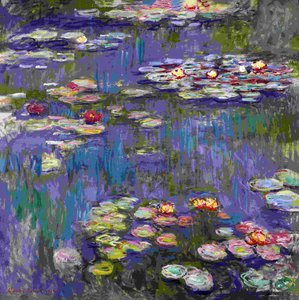
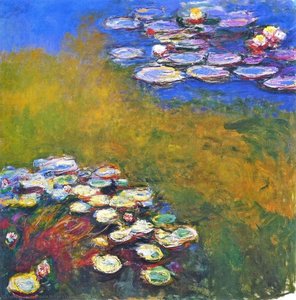
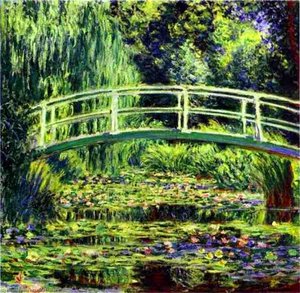
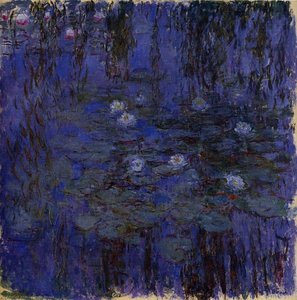
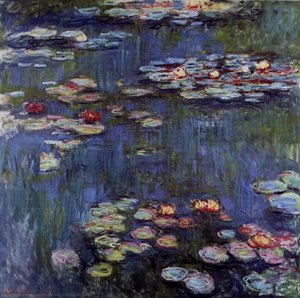
Water Lilies (French: Nymphéas [nɛ̃.fe.a]) is a series of approximately 250 oil paintings by French Impressionist Claude Monet (1840–1926). The paintings depict his flower garden at his home in Giverny, and were the main focus of his artistic product...
In the later decades of his life, Monet’s world narrowed in physical scope but expanded infinitely in artistic vision as he settled in Giverny. Here, he became more than a painter; he became an architect of nature itself, designing a water garden that would serve as his greatest masterpiece. The
Water Lilies (
Nymphéas) series, comprising approximately 250 oil paintings, represents the pinnacle of his career and a monumental achievement in art history. These works, painted during the final thirty-one years of his life, focus intensely on the reflections, shadows, and floating flora of his pond.
As Monet’s eyesight began to fail due to cataracts, his work underwent a profound transformation. The colors became more vibrant, yet the forms grew more ethereal and immersive. The
Water Lilies invite the viewer to lose themselves in an endless expanse of water and light, where the distinction between sky, earth, and water is blurred. These late works are almost sculptural in their emotional weight, pushing the boundaries of what a landscape could be. At ArtsDot.com, we hold a deep reverence for this period, offering high-quality reproductions that allow you to experience the immersive, meditative atmosphere of Givernetic beauty within your own sanctuary.
Monet’s Emotional Resonance: Beyond Landscapes to Human Connection
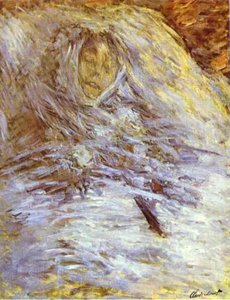 Camille Monet on Her Deathbed
The Artist: Claude Monet Claude Monet , born Oscar-Claude Monet (1840-1926), was a French artist who played a pivotal role in founding Impressionist painting, significantly influencing modernism. His philosophy, primarily based on capturing immediate...
While Monet is celebrated as the master of light, his work is deeply rooted in profound human emotion and personal history. His life was marked by both immense joy and poignant loss. The painting
Camille Monet on Her Deathbed stands as a heartbreaking testament to his devotion to his first wife and muse, capturing a moment of vulnerability and intimacy that challenges the often-detached nature of landscape art. Even in his floral studies, such as the vibrant
Chrysanthemums, there is an underlying theme of the ephemeral—the beauty of the bloom intertwined with the inevitable decay of autumn.
Furthermore, the influence of those around him, including his second wife Blanche Hoschedé Monet, added layers to the aesthetic of Giverny. Blanche, a student and devoted assistant, helped document the changing seasons, ensuring that the legacy of the garden was preserved through a shared passion for
plein air observation. This emotional depth is what allows Monet’s work to transcend mere decoration; it speaks to the universal human experience of witnessing beauty in its most fleeting forms. Whether through a custom portrait commissioned in his style or a carefully selected reproduction, the goal remains the same: to capture a heartbeat of history and emotion.
Bringing the Masterpiece Home: Preserving the Impressionist Spirit
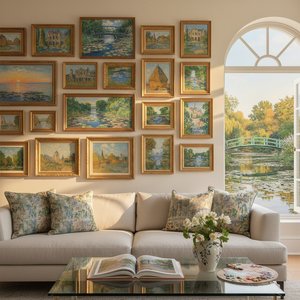 Monet's Masterpieces: 25 Iconic Artworks to Transform Your Home
Introduction Imagine stepping into a world bathed in dappled sunlight, where water lilies shimmer and fields of poppies dance in the breeze. Claude Monet’s art isn't merely about depicting scenes; it’s about capturing an *impression* – a fleeting mom...
To live with the works of Claude Monet is to invite a sense of tranquility, light, and continuous movement into one's environment. His art encourages us to slow down, to breathe deeply, and to notice the subtle shifts in the world around us. For the classic art enthusiast, acquiring a piece of this legacy is an investment in both aesthetic beauty and cultural heritage.
At Most-Famous-𝓹aintings.com, we specialize in bridging the gap between the museum and the home. We do not merely offer prints; we provide meticulously handcrafted oil reproductions that honor the academic excellence of the Impressionist tradition. Our artists, holders of prestigious Fine Arts degrees, use 100% cotton canvas and professional-grade oils to ensure that every brushstroke carries the weight and texture of the original. From the initial digital mockup to the final application of protective Damar varnish, our six-step process is designed to provide a museum-grade experience. Whether you are looking for a large-scale mural to transform a room or a delicate multi-panel set to adorn a staircase, we invite you to explore our collection and bring the luminous world of Monet into your life.