The Language of the Sacred: Understanding Christian Iconography
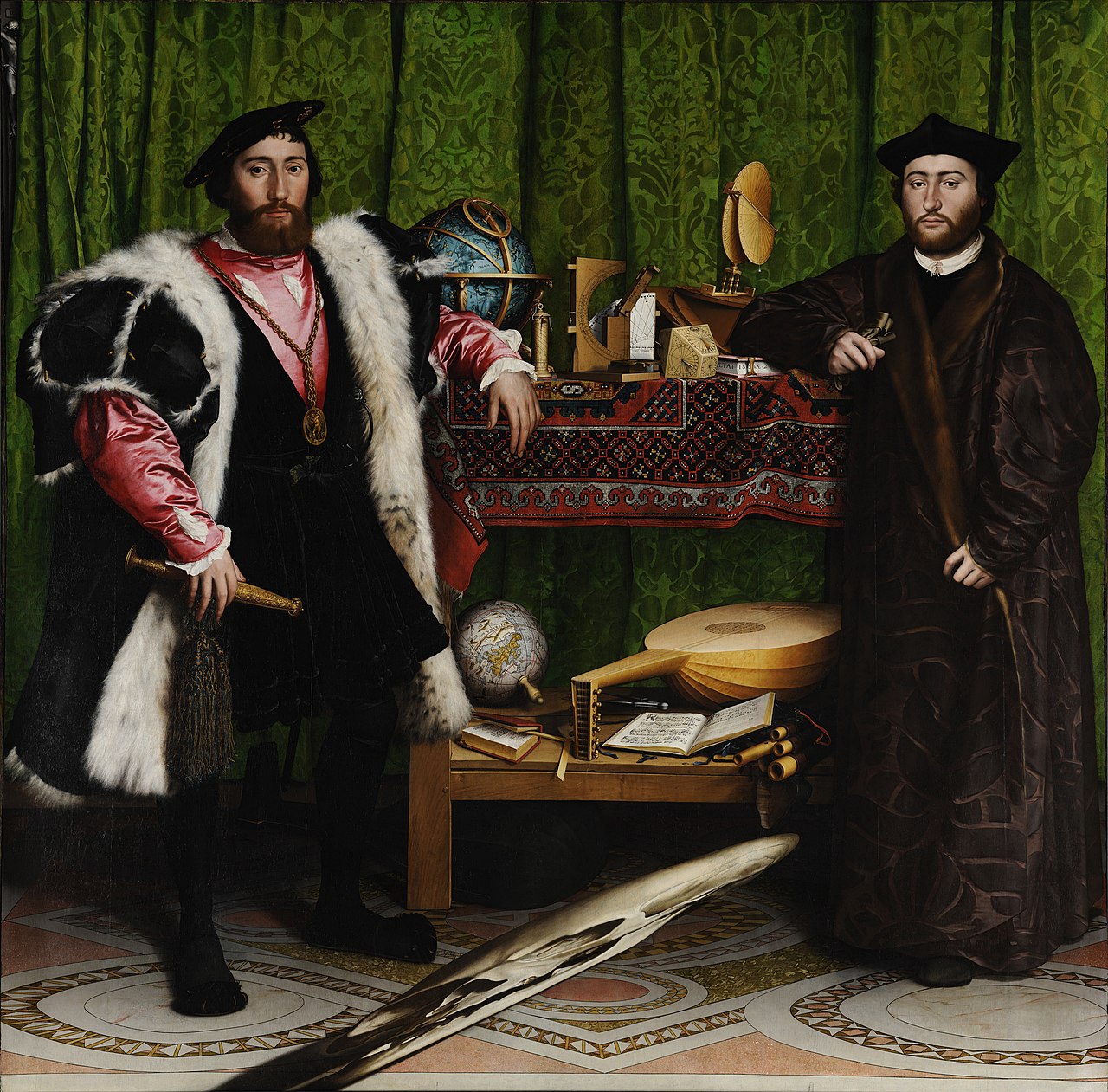 Iconography
Iconography, as a branch of art history, studies the identification, description and interpretation of the content of images: the subjects depicted, the particular compositions and details used to do so, and other elements that are distinct from arti...
To gaze upon a religious masterpiece is to engage in a silent dialogue with centuries of tradition. The study of iconography—derived from the Greek
eikon, meaning image, and
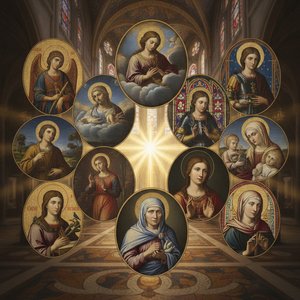
graphein, to write—is far more than a mere cataloging of subjects; it is the art of reading the divine. In the realm of sacred art, every gesture, every placement of a figure, and every subtle shadow serves as a deliberate syllable in a larger theological narrative. For the historian, an icon is not simply a painting but a text written in color and light. This tradition reaches its most profound expression in the Byzantine and Orthodox traditions, where the production of icons serves as a liturgical act, bridging the gap between the earthly observer and the celestial realm.
Understanding this visual language requires an eye for detail that transcends mere aesthetic appreciation. When we observe the composition of a work, such as Duccio di Buoninsegna’s
The Three Marys at the Tomb, we see how the arrangement of figures establishes a spiritual hierarchy. The presence of an angelic figure with outstretched wings does not merely provide drama; it radiates authority and guides the viewer's eye toward the intersection of the human and the divine. This structured approach to composition ensures that the theological message remains legible across generations, allowing the art to function as a window into the soul of the faithful.
Windows to the Divine: Analyzing Masterpieces of Sacrifice and Devotion
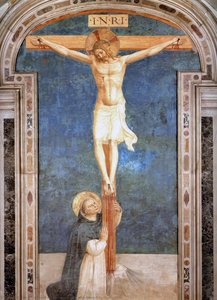 Christ on the Cross Adored by St. Dominic
Powerful Depiction of Sacrifice and Devotion This exquisite artwork captures the profound moment of Christ’s crucifixion, a central event in Christian faith that symbolizes sacrifice, redemption, and divine love. The scene is rendered with meticulous...
The most enduring moments in art history are often those that capture the raw, visceral essence of sacrifice. Throughout the centuries, artists have sought to give form to the formless, capturing the profound weight of redemption through meticulous anatomical realism and emotive lighting. Consider the hauntingly beautiful pencil sketch by Victor Vasnetsov,
Savior in the Crown of Thorns. Here, the intense focus on Christ’s face invites a moment of deep reflection, where the jagged, textured lines of the thorns contrast sharply with the smooth, luminous rendering of the skin, emphasizing both the physical agony and the divine compassion inherent in the narrative.
This theme of devotion is equally palpable in the works of the early Renaissance, such as Fra Angelico’s
Christ on the Cross Adored by St. Dominic. In this piece, the artist utilizes a balanced palette of muted earth tones and soft natural hues, punctuated by the brilliant gold of halos, to elevate a scene of profound suffering into one of grace. The kneeling figure, captured in a posture of intimate mourning, serves as a surrogate for the viewer, inviting us to participate in the spiritual contemplation of the Crucifixion. Such works remind us that religious art is not merely a record of events but an invitation to experience the emotional resonance of faith through the mastery of light and texture.
From Gothic Shadows to Baroque Light: The Evolution of Saintly Depictions
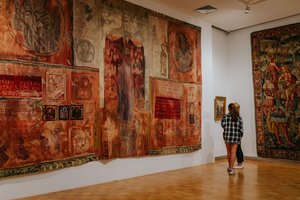 Keresztény Múzeum
A Sanctuary of Faith and Artistic Legacy In the heart of Eger, Hungary, where the shadows of history dance upon ancient stone, lies the Keresztény Múzeum—a profound sanctuary that transcends the boundaries of a traditional gallery. To enter this muse...
The trajectory of religious art is a fascinating study of shifting human consciousness, moving from the symbolic stillness of the Middle Ages to the dramatic theatricality of the Baroque. In the late Gothic period, particularly in regions like Hungary, paintings often possessed a quiet, solemn intensity. Museums such as the
Keresztény Múzeum in Eger preserve this era's legacy, showcasing how Byzantine influences merged with local sensibilities to create works of profound piety. These pieces, characterized by their intricate details and spiritual gravity, reflect an age where art was an essential vessel for communal devotion.
As we transition into the Renaissance and eventually the Baroque, the approach to the sacred undergoes a radical transformation. The Renaissance brought a renewed focus on humanism and scientific accuracy, applying contemporary knowledge of anatomy and perspective to sacred subjects. This evolution reached a crescendo in the Baroque era, where the dramatic interplay of light and shadow—chiaroscuro—was used to evoke awe and movement. This period saw the rise of artists who could depict the profound moral complexities of their time, much like Christian Sell’s later explorations of the German soul, though even within the strictly religious sphere, the goal remained the same: to use the evolving techniques of realism to make the miraculous feel tangibly present within our world.
Symbolism in Bloom: Deciphering Plants and Attributes in Religious Art
 Plants in Christian iconography
In Christian iconography plants appear mainly as attributes on the pictures of Christ or the Virgin Mary. Christological plants are among others the vine, the columbine, the carnation and the flowering cross, which grows out of an acanthus plant surr...
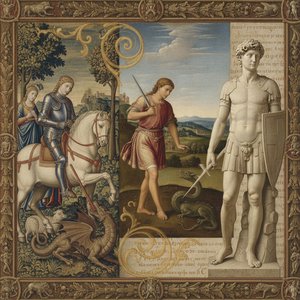
Beyond the human figures and grand architectural settings, a subtle botanical language flourishes within Christian iconography. To the untrained eye, a lily or a rose may appear as mere decoration; to the historian, they are essential attributes that define the identity of the saints. Christological symbols, such as the vine, the columbine, and the flowering cross, weave themes of sacrifice and eternal life into the very fabric of the composition. Meanwhile, Mariological symbols—the rose, the lily, the olive, and the cypress—offer a coded way to honor the Virgin Mary’s purity and sorrow.
These botanical elements often serve as attributes for saints, particularly martyrs and virgins, providing clues to their specific hagiographies. The presence of an acanthus plant or a particular flowering cross can transform a landscape from a simple background into a complex theological map. This meticulous use of nature allows the artist to embed layers of meaning within the scenery, ensuring that even the smallest detail contributes to the overarching narrative of sanctity and divine presence.
Preserving the Eternal: The Art of Collecting and Reproducing Sacred Masterpieces
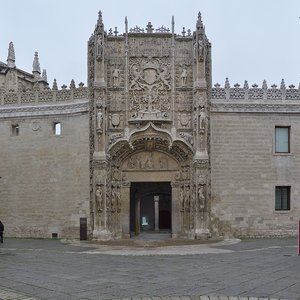 National Museum of Religious Carvings
A Sanctuary of Sacred Splendor In the heart of Valladolid, where the echoes of Spain’s imperial past still linger in the air, lies the National Museum of Religious Carvings—a profound sanctuary dedicated to the spiritual and artistic soul of a nation...
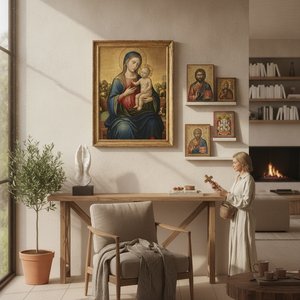
The preservation of these profound visions is a responsibility shared by historians, collectors, and artists alike. While the original masterpieces reside in the hallowed halls of museums like the National Museum of Religious Carvings in Valladolid, the legacy of these works lives on through high-quality reproductions that allow their spiritual power to enter our private spaces. At
ArtsDot.com, we honor this tradition by offering hand-painted oil reproductions that capture the true soul of the original. Unlike mere prints, our 100% hand-painted works on cotton canvas retain the visible brushstrokes and deep tonal ranges that define the masters.
Whether you seek a large-scale mural to recreate the grandeur of a Renaissance ceiling or a bespoke commission that reimagines a personal moment in the style of Rembrandt, our mission is to maintain the academic excellence of the past. We understand that art is a lasting memory, and through our meticulous six-step process—from digital mockup to final varnish—we ensure that each piece serves as a faithful window to the divine. By bringing these iconic visions into the modern home, we continue the centuries-old tradition of using art to bridge the gap between the earthly and the eternal.