
The Essence of Impressionist Realism: Defining the Intersection of Light and Form
To understand the profound allure of Impressionist Realism, one must look beyond the mere depiction of subjects and instead observe the very atmosphere that surrounds them. This movement does not seek to replicate a photographically sterile reality; rather, it strives to capture the perceptual truth of a moment. While traditional realism focused on the rigid anatomical precision and historical accuracy of the Old Masters, Impressionist Realism introduces a more fluid, sensory experience. It is an art of the ephemeral, where the boundaries between object and environment begin to dissolve under the weight of shifting sunlight.
At its core, this style represents a delicate equilibrium. It retains the structural integrity and recognizable forms found in classical traditions but breathes life into them through a heightened sensitivity to optical phenomena. The artist becomes an observer of change—noting how a shadow is never truly black, but rather a deep violet or a cool cerulean, and how a sunlit meadow is composed of a thousand vibrating hues. This intersection of light and form creates a sense of presence that feels both intimately familiar and breathtakingly transient, inviting the viewer to experience the world not as a static image, but as a living, breathing entity.
Luminous Techniques: The Role of Impasto and Color Theory in Capturing Atmosphere
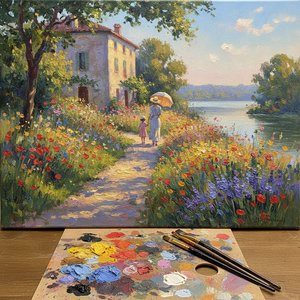
The magic of this movement resides within the physical application of pigment. One cannot discuss the luminosity of Impressionist Realism without addressing the impasto technique—the bold, thick application of oil paint that rises from the canvas in sculptural ridges. When light hits these textured surfaces, it does not simply rest upon the painting; it interacts with it. The raised edges of the brushstrokes create micro-shadows and highlights, adding a three-dimensional vitality that flat, printed reproductions can never replicate. This tactile depth allows the artist to mimic the way light scatters across a surface, much like the shimmering effect seen on water or the soft glow of morning mist.
Complementing this texture is a sophisticated mastery of color theory. The Impressionist palette moved away from the heavy, earth-toned shadows of previous centuries, embracing instead the brilliance of pure, unblended pigments. By placing complementary colors in close proximity—such as a warm orange highlight against a deep blue shadow—artists achieved a visual vibration that mimics the natural energy of light. This technique ensures that even the most subtle subject, such as a single dandelion seed or a snow-covered haystack, possesses an internal radiance, capturing what scholars often call the eternal truth of nature's brilliance.
Masters of the Moment: Analyzing Claude Monet and Joaquín Sorolla’s Natural Illumination
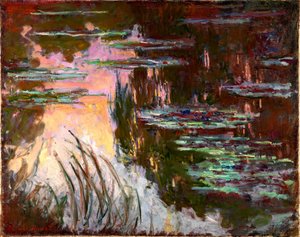
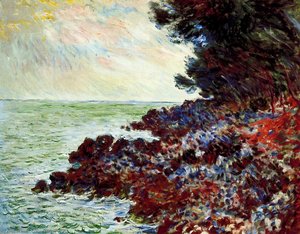
The history of this movement is best understood through the works of its most luminous practitioners. Consider the incomparable Claude Monet, whose series explorations—from the iconic Water Lilies to his studies of the Rouen Cathedral—demonstrate an almost scientific devotion to light. In his Haystacks: Snow Effects, Morning, we see how the subject itself becomes secondary to the atmosphere; the hay is merely a canvas upon which the cool, blue-tinted light of a winter dawn performs its silent dance. Monet teaches us that the subject is not what we see, but how the light reveals it.
In a similar vein, the Spanish master Joaquín Sorolla brought an unparalleled intensity to the depiction of Mediterranean sunlight. His works, such as History Scene, showcase a vibrant energy where figures are bathed in a natural illumination so potent it feels as though the warmth of the sun could radiate from the canvas itself. Sorolla’s ability to capture the interplay of bright highlights and deep, colorful shadows provides a masterclass in capturing life's vitality. Through these masters, we learn that true realism is found not in the meticulous recording of detail, but in the faithful reproduction of the light that defines our existence.
Beyond the Canvas: How Impressionistic Textures Transform Modern Interior Spaces
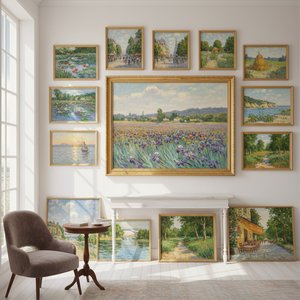
In the context of contemporary interior design, the inclusion of Impressionist Realism offers a sophisticated way to introduce movement and soul into a room. Unlike the starkness of modern minimalism or the heavy weight of traditional period pieces, an impressionistic work acts as a window into a more sensory world. The visible brushstrokes and rich textures provide a focal point that commands attention through subtlety rather than through sheer scale or loud color. A well-placed landscape, characterized by its soft edges and luminous tones, can soften the hard lines of modern architecture, creating a sanctuary of calm and reflection.
Furthermore, these works possess a unique ability to harmonize with diverse color palettes. Because Impressionist Realism relies on the nuanced interplay of light and shadow, these paintings often contain a spectrum of subtle hues that can pull together disparate elements of a room's decor. Whether it is a large-scale multi-panel set spanning a grand staircase or a singular, intimate still life in a study, the presence of such art elevates a space from a mere living area to a curated gallery of personal taste and historical appreciation.
Preserving the Legacy: The Art of Acquiring Museum-Quality Oil Reproductions
For the discerning collector, the desire to surround oneself with the beauty of the masters often meets the practical challenge of accessibility. While original works by Monet or Sorolla reside behind the protective glass of the world's most prestigious museums, the tradition of the hand-painted oil reproduction allows for a profound connection to these legacies within the home. A true reproduction is not a mere copy; it is a labor of academic excellence, where skilled artists use the same techniques—layering oils on cotton canvas and utilizing thick impasto—to recreate the soul of the original.
At ArtsDot.com, we specialize in bridging this gap between history and the modern collector. Our process is rooted in a deep respect for the masters, ensuring that every brushstroke serves to honor the light and truth found in the original works. We offer more than just replicas; we offer the opportunity to "remix" art history, allowing for custom commissions that can transform personal memories into the style of the greats. Whether you are seeking a museum-quality piece to anchor a room or a bespoke creation that captures a moment in time, our commitment to authenticity and craftsmanship ensures that the luminous legacy of Impressionist Realism continues to shine in homes across the globe.