The Primal Mark: A History of Charcoal from Prehistoric Caves to the Renaissance
 The Lion of St Mark
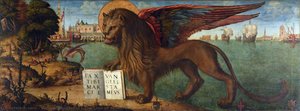
Discover Vittore Carpaccio’s ‘The Lion of St Mark,’ a stunning Renaissance tempera painting showcasing Venetian grandeur & symbolism. Explore its rich history & artistic significance.
To touch charcoal is to touch the very dawn of human consciousness. Long before the invention of complex pigments or the refinement of oils, our ancestors engaged with the world through the soot-stained walls of prehistoric caves. This medium, born of fire and wood, represents one of the most ancient and primal forms of human expression, tracing a direct lineage from the first charcoal sketches in deep caverns to the sophisticated studies found in the great museums of Europe. There is an almost mystical gravity to this material; it carries the weight of millennia within its blackened, carbonized remains.
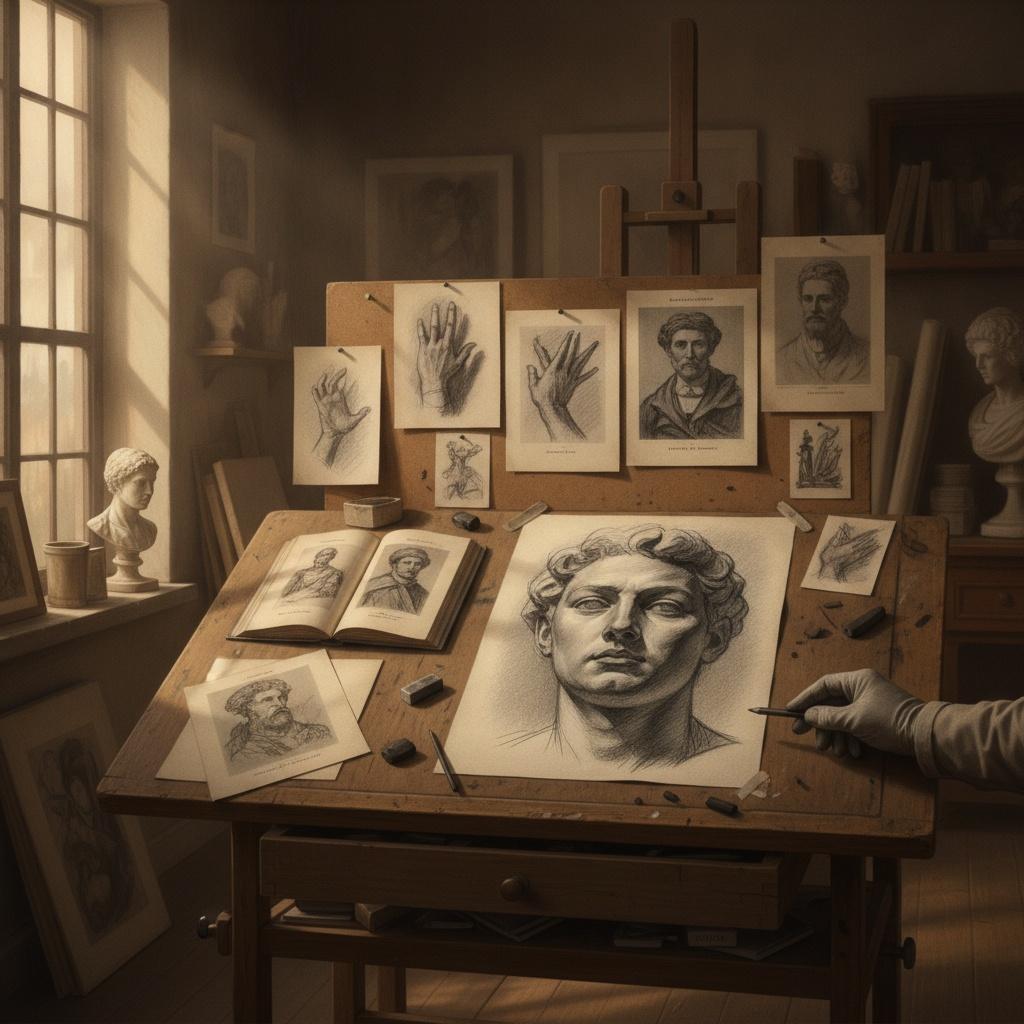
As civilization progressed, the use of charcoal evolved from mere cave markings into a vital preparatory tool for the masters of the Renaissance. During this era, artists did not merely use charcoal for finished works but relied upon it to develop initial ideas, create preliminary outlines, and establish the foundational shadows of their compositions. It served as the skeletal structure upon which the flesh of oil painting was later draped. This historical transition from a primitive tool to a sophisticated academic instrument allowed for the development of complex spatial depth, setting the stage for the dramatic innovations that would define Western art history.
The Alchemy of Carbon: Understanding Willow, Vine, and Compressed Charcoal
For the dedicated student of fine art, mastering charcoal requires an intimate understanding of its chemical and physical variations. The medium is not a monolith but a spectrum of textures and densities. At the most delicate end of this spectrum lies Willow and Vine charcoal. These are produced by heating twigs of willow or vine in an enclosed vessel without oxygen, a process that yields a soft, lightweight stick. Because these sticks lack a binding agent, they are incredibly ephemeral; they sit lightly upon the tooth of the paper, making them the perfect medium for those ghostly, initial sketches that establish a composition's soul before any permanent marks are made.
In stark contrast to the ethereal nature of vine charcoal stands Compressed charcoal. This variety is created by mixing crushed charcoal with a binding agent, resulting in a much denser, more permanent, and intensely black mark. While willow charcoal allows for easy erasure and soft transitions, compressed charcoal demands a more decisive hand, offering a deep, velvety void that can anchor a drawing with profound weight. For the artist seeking fine detail within these dark masses, charcoal pencils offer a way to harness this intense pigment through a controlled tip. The choice between these materials is not merely technical but an aesthetic decision that dictates the atmospheric quality of the final work.
Chiaroscuro and Contrast: Mastering the Drama of Light and Shadow
The true power of charcoal lies in its ability to engage in the high-stakes drama of chiaroscuro. Derived from the Italian words for "light-dark," chiaroscuro is the technique of using extreme contrasts to model three-dimensional forms and evoke emotional tension. In a monochrome world, there is no color to distract the eye; there is only the battle between presence and absence. By strategically placing deep, velvety blacks against the stark, unblemated light of the paper, an artist can direct the viewer's gaze, creating focal points that feel as though they are illuminated from within.
This mastery of contrast allows for a level of storytelling that color often obscures. We see this profound interplay in the sketches of masters like Vincent van Gogh, where tonal variation through hatching and cross-hatching creates a sense of vibrating depth. When working with charcoal, one must learn that darkness is not merely the absence of light, but a tool used to define it. The deep shadows provide the necessary gravity to make the highlights appear brilliant and ethereal. To master this technique is to understand how the darkness defines the light, creating an illusionistic space that breathes life into the two-dimensional surface.
Additive and Subtractive Techniques: The Art of Building and Erasing Form
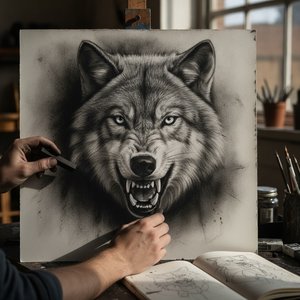
Unlike the clinical precision of graphite, charcoal thrives on a certain level of beautiful chaos. It is a medium of movement, where the artist employs both additive and subtractive methods to sculpt an image. Additive drawing involves the application of carbon to the surface, building up layers of tone, texture, and mass. Through sweeping gestures or soft smudging, the artist introduces darkness into the light. However, the true magic often occurs through subtractive drawing—the process of covering a surface with charcoal and then using tools to "draw" by removing it.
This subtractive approach is essential for creating the appearance of reflected light or fine highlights. Using a kneaded or putty eraser, an artist can manipulate the pigment into custom shapes, lifting away the dark to reveal the bright paper beneath. This technique allows for a much more painterly approach to drawing, where the artist acts as both creator and sculptor. By combining these two opposing forces—adding shadow and subtracting light—the student learns to navigate the complex topography of form, creating a sense of volume that feels tangible and real.
Expressive Textures: From Soft Smudges to Bold, Architectural Strokes
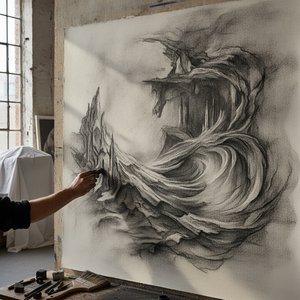
The tactile nature of charcoal offers an unparalleled range of expressive textures. Because the particles are relatively large and lack a binder, they readily crumble and spread across the paper, allowing for a vast diversity of marks. An artist can use the side of a charcoal stick to create broad, atmospheric masses, or use a finger, chamois cloth, or even a piece of leather to blend the dust into seamless, smoky gradients. This ability to manipulate the "smudge" is what gives charcoal its unique emotional impact, capable of conveying everything from profound melancholy to explosive energy.
Yet, charcoal can also be used to achieve architectural precision. Through the use of sharp edges and controlled pressure, one can produce crisp, linear effects that provide structure to a composition. The interplay between these soft, blurred edges and hard, defined lines creates a visual rhythm that keeps the viewer engaged. Whether it is the soft, ethereal landscape reminiscent of 19th-century French masters or the bold, heavy textures found in contemporary works, the versatility of charcoal lies in its ability to respond to the artist's touch with unyielding honesty.
The Monochrome Legacy: How Black and White Art Defines Modern Aesthetics
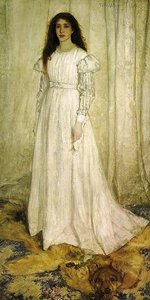 Symphony in White Number 1, The White Girl
Explore James Abbott McNeill Whistler's iconic 'Symphony in White,' a Tonalist masterpiece capturing ethereal beauty and challenging traditional painting norms. Discover its history, symbolism & artistic significance.
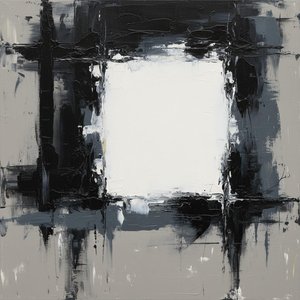
In our modern, color-saturated world, the monochrome aesthetic of charcoal remains a powerful anchor of prestige and visual cohesion. By stripping away the distractions of a full palette, charcoal art directs the eye toward the fundamental elements of creation: form, texture, and volume. This reductionist approach is not a limitation but a liberation, allowing for a focus on the essential character of the subject. It is this very quality that makes monochrome works so effective in sophisticated architectural design, providing a sense of quiet contemplation and timeless luxury.
As we look upon the masterpieces preserved in our collections, we see how the legacy of charcoal continues to influence contemporary sensibilities. From the meticulous studies of the Old Masters to the experimental textures of modernists, the medium remains a vital part of the human artistic dialogue. At ArtsDot.com, we celebrate this enduring legacy by offering high-quality, hand-painted reproductions and museum-grade prints that bring the profound depth and dramatic power of these monochrome masterpieces into your own space. Whether you are seeking to transform a room with a large-scale charcoal study or looking for a custom commission that reimagines a personal memory through the lens of historical technique, our mission is to make the timeless beauty of fine art accessible to all.