
The Soul of the Stroke: Understanding the Duality of Precision and Fluidity
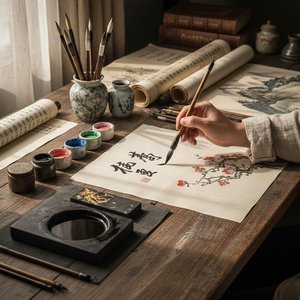
To witness a master at work with ink is to observe a profound tension between control and surrender. In the realm of ink on paper, there exists no room for hesitation; the medium demands an absolute presence of mind where every movement is a permanent testament to the artist's intent. This art form is defined by a delicate duality: the precision required to execute sharp, decisive lines and the fluidity necessary to allow the ink to breathe, bleed, and dance across the fibers of the page. It is a rhythmic dialogue where the brush acts as an extension of the breath, capturing the very essence of a moment before it vanishes.
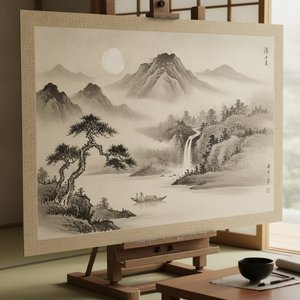
When we speak of precision, we refer to the disciplined architecture of the stroke—the ability to anchor a character or a landscape with structural integrity. Yet, without flow, such work risks becoming sterile and lifeless. The true mastery lies in the transition, the way a heavy, saturated deposit of ink tapers into a ghostly, translucent whisper. This movement creates a visual pulse, a kinetic energy that guides the viewer's eye through the composition, much like a melody moves through a musical score. It is within this ephemeral balance that the soul of the artwork resides, inviting the observer to find stillness within the motion.
Ink and Paper: A Historical Dialogue Through Calligraphic Traditions
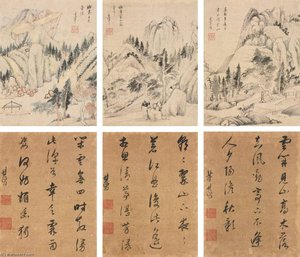
The history of ink on paper is not merely a chronicle of technique, but a profound record of human thought and cultural exchange. Across the centuries, different civilizations have utilized this medium to bridge the gap between the physical and the spiritual. In the East, calligraphy has long been regarded as more than mere writing; it is a meditative practice where the character of the scribe is revealed through the weight and velocity of their hand. We see this reflected in the exquisite Japanese traditions, such as the record of a haiku exchange on kaishi writing paper by the legendary Matsuo Basho, where the brevity of the poem finds its perfect companion in the delicate, absorbent nature of the paper.
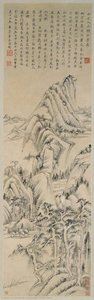
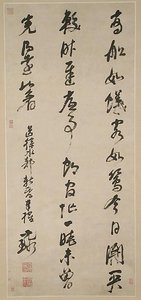
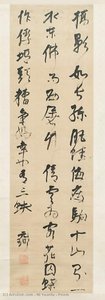
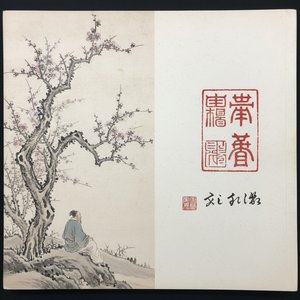
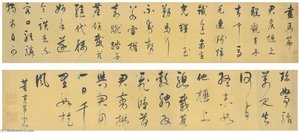
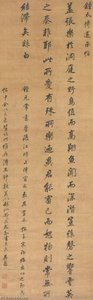
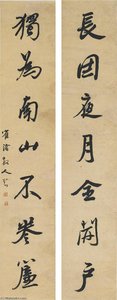
Similarly, the Chinese tradition offers a breathtaking display of calligraphic evolution. The works of the Ming Dynasty, such as Ni Yuanlu’s Calligraphy Couplet in Running Script, demonstrate how ink wash painting and calligraphy can merge into a single, seamless expression of symbolism and elegance. Here, the brushwork is dynamic, capturing a sense of organic life that feels both ancient and immediate. In contrast, the more formal, symmetrical compositions found in Dong Qichang’s Calligraphy in Running Script remind us that ink can also serve as a pillar of order and monumental dignity. These historical dialogues prove that while styles may shift from the spontaneous to the structured, the fundamental language of ink remains a universal constant.
The Alchemy of Materials: From Kaishi Paper to Ancient Soot Inks
The magic of an ink masterpiece is deeply rooted in the chemistry of its components. The artist does not simply use tools; they engage with a curated alchemy of earth, water, and fire. The creation of traditional soot ink is a laborious process involving the collection of fine carbon particles, often from the smoke of pine wood or vegetable oils, which are then meticulously processed into solid sticks. When ground upon an ink stone with a small amount of water, this substance transforms into a liquid of infinite gradations, capable of producing everything from the deepest, most impenetrable blacks to the softest, most ethereal greys.
The substrate—the paper—is equally vital to this alchemical process. The choice of paper dictates the behavior of the ink; for instance, the use of aged kaishi paper provides a unique texture that allows for a controlled absorption, making it ideal for the delicate nuances of haiku and short-form poetry. The interaction between the thirsty fibers of the paper and the viscosity of the ink creates a third element: the "spread." This subtle bleeding at the edges of a stroke is where the artist’s mastery is truly tested, as they must anticipate how the liquid will migrate through the grain to achieve the desired atmospheric effect.
Mastering the Flow: Techniques of Running Script and Semicursive Elegance
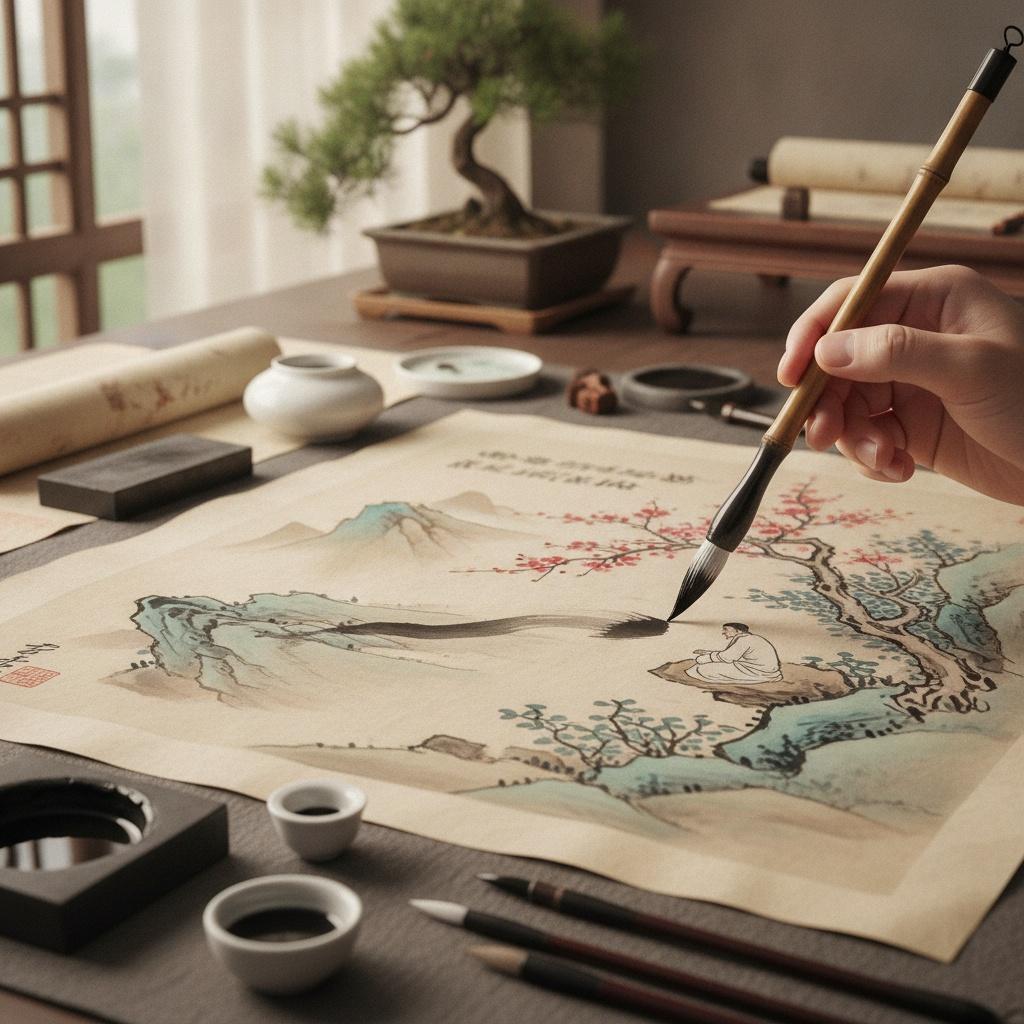
To master the flow of ink, one must study the spectrum of scripts, ranging from the rigid Kaishu (regular script) to the highly expressive Sosho (cursive script). The intermediate stages, such as the running script or semicursive elegance, represent perhaps the most captivating challenge for the practitioner. In this style, the characters retain their recognizable forms, yet they are connected by "ligatures" of invisible energy—traces of movement where the brush barely touches the paper, leaving behind a trail of momentum.
< Responding to the call of the brush requires a mastery of pressure and speed. A sudden increase in velocity can create a "flying white" effect, where the bristles separate and allow the paper to show through the stroke, suggesting wind or rapid motion. Conversely, a slow, deliberate press can build up a rich, velvety texture that anchors the composition. This technique demands an intimate understanding of the running script, where the artist must navigate the tension between maintaining legibility and embracing the spontaneous, rhythmic flow that characterizes the most celebrated calligraphic traditions.The Enduring Legacy: How Ink Art Shapes Modern Visual Perception
In our contemporary era of digital saturation, the timeless art of ink on paper offers a necessary sanctuary of authenticity. The tactile nature of the medium—the visible grain of the paper, the subtle scent of the ink, and the physical depth of the brushstrokes—provides a sensory experience that no screen can replicate. This enduring legacy continues to influence modern visual culture, from graphic design to fine art, reminding us of the power of minimalism and the beauty of intentionality.
As we look toward the future, the principles of precision and flow remain as relevant as ever. Whether through the preservation of ancient manuscripts or the creation of new, experimental works, the dialogue between ink and paper continues to evolve. It teaches us that true sophistication is found not in complexity, but in the mastery of the essential. By studying these classical traditions, we gain a deeper appreciation for the delicate balance of life itself: the ability to remain disciplined and precise while still allowing ourselves the grace to flow with the changing currents of time.
At ArtsDot.com, we are dedicated to preserving this legacy of human creativity. Our mission is to make the grandeur of fine art accessible to a global audience, offering everything from authentic reproductions of Old Masters to bespoke, hand-painted commissions that breathe new life into historical styles. Whether you are seeking a museum-quality print or a custom oil painting that reimagines your own memories through the lens of history, we invite you to explore the profound beauty of the artistic tradition.