The Dawn of Chiaroscuro: Defining Light and Shadow in 17th-Century Holland
To step into the world of the Dutch Golden Age is to enter a realm where light does not merely illuminate, but narrates. During the seventeenth century, the Dutch Republic experienced an unprecedented flowering of artistic expression, driven by a burgeoning middle class that sought beauty in the tangible and the everyday. Unlike the grand, often religious-centric narratives of the Italian Baroque, the Dutch masters turned their gaze inward, toward the domestic, the maritime, and the terrestrial. At the heart of this movement lies the profound manipulation of chiaroscuro—the dramatic interplay between intense light and deep, enveloping shadow.
This technique was far more than a stylistic choice; it was a philosophical tool used to carve form out of nothingness. By strategically placing highlights against dark, receding backgrounds, artists could direct the viewer's eye with surgical precision, creating a sense of three-dimensional volume on a two-dimensional surface. This era saw the birth of a visual language where shadows held as much weight and meaning as the light itself, allowing for a level of realism that felt both startlingly immediate and spiritually resonant. It was an age where the flicker of a single candle or the soft glow of a window could transform a simple room into a stage for profound human emotion.
The Master of Drama: Rembrandt van Rijn and the Psychological Depth of Darkness
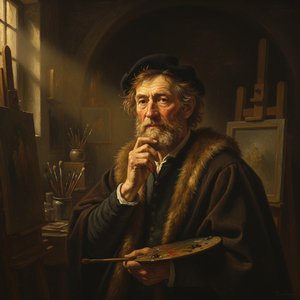
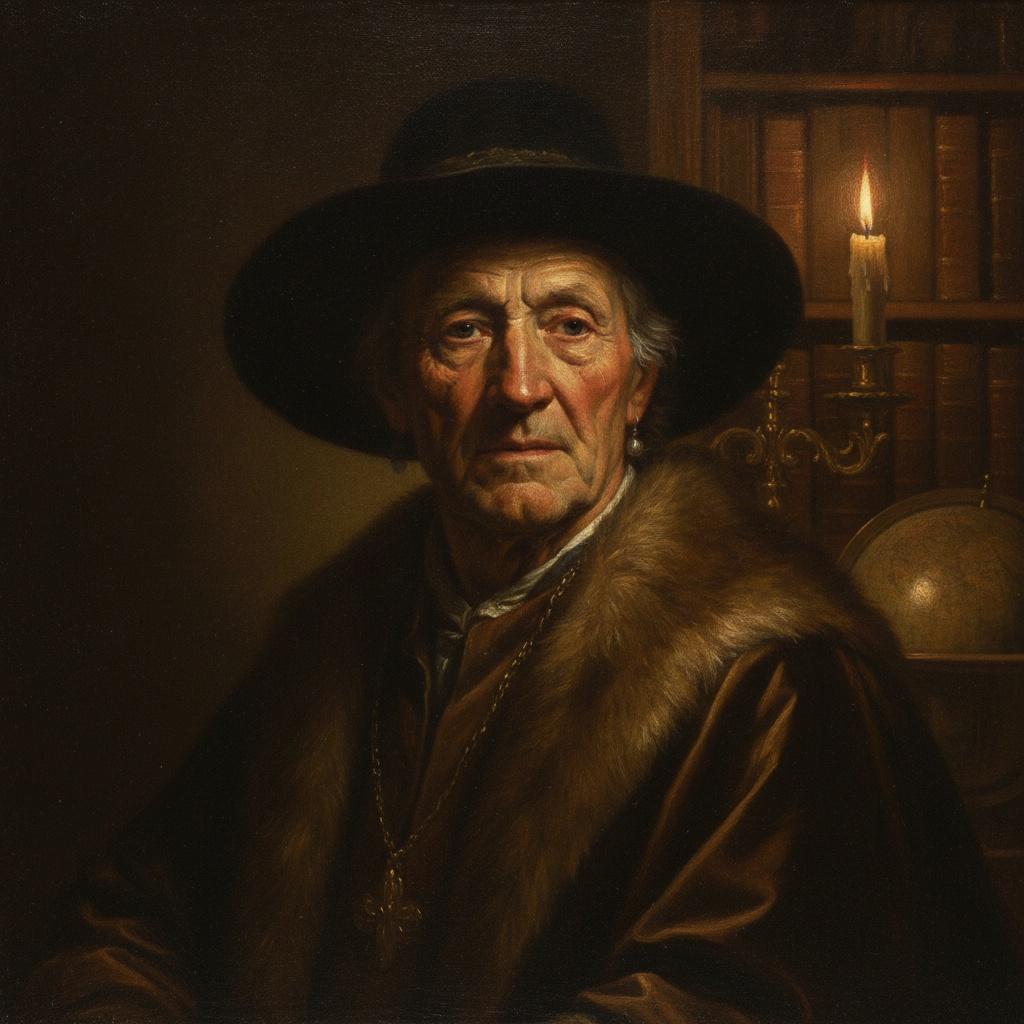
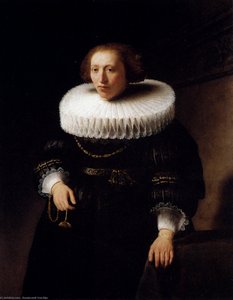
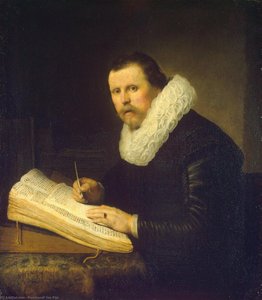
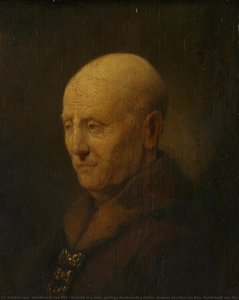
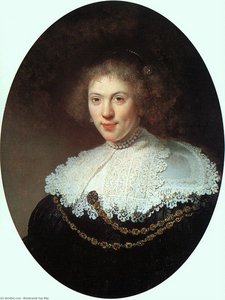
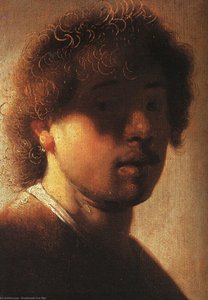
No name is more inextricably linked to the mastery of shadow than Rembrandt van Rijn. For Rembrandt, light was not merely an external force but an internal revelation. His approach to chiaroscuro went beyond mere contrast; he utilized a technique often described as "sculpting with light." In his portraits, such as the iconic depictions of his subjects or his more complex group compositions, the darkness is never truly empty. Instead, it is a thick, textured atmosphere that seems to press against the illuminated flesh, creating a palpable sense of psychological tension and intimacy.
Rembrandt’s genius lay in his ability to use light to reveal the soul. By allowing certain features—a furrowed brow, a glint in the eye, or the curve of a cheekbone—to emerge from the gloom, he invited the viewer into a private dialogue with the subject. This was not the polished, idealized light of the Renaissance, but a rugged, honest illumination that embraced the imperfections of the human condition. His use of heavy impasto and layered glazes allowed him to capture the way light catches on textured surfaces, making his works feel alive with breath and movement. To study a Rembrandt is to witness the very moment where shadow gives way to consciousness.
Capturing the Everyday: Genre Painting and the Intimacy of Natural Light
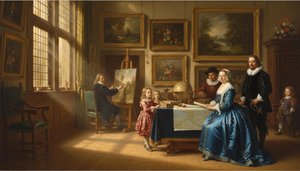
While Rembrandt explored the depths of the human psyche, other masters of the Golden Age applied this luminous mastery to the quietude of daily life. The genre painting—scenes of domesticity, music-making, and tavern life—became a cornerstone of Dutch art. Artists like Gerard ter Borch brought a meticulous realism to these intimate settings. In works such as Le Duo: Chanteuse et Joueur de Luth Théorbe, one can observe the delicate way light falls upon the sheen of a satin sleeve or the subtle reflection on a musical instrument, creating a sense of quiet, suspended time.
This era of painting celebrated the "extraordinary ordinary." The light in these scenes often feels naturalistic, as if streaming through an unseen window to touch a carafe of wine or a letter left on a table. This soft, diffused illumination creates a sense of peace and stability, grounding the viewer in the physical reality of the 17th-century home. There is a profound dignity in how these artists treated light; it sanctified the mundane, turning a simple moment of domestic repose into a timeless masterpiece of composition and color. Through this lens, the viewer is not just an observer but a silent participant in the quiet rhythms of Dutch life.
Atmospheric Landscapes: The Play of Sky, Water, and Horizon in Dutch Mastery
The Dutch landscape tradition offered a different, more expansive application of light and shadow. For painters such as Jacob van Ruisdael and Jan van de Capelle, the canvas was a theater for the elements. In landscapes like The Windmill at Wijk bij Duurstede, the mastery of atmospheric perspective is on full display. Here, light is used to create depth, with closer elements rendered in sharper contrast and receding into softer, hazier tones as they approach the horizon.
The Dutch sky, often heavy with dramatic cloud formations, served as a primary source of light and shadow. The interplay between sun-drenched patches of meadow and the dark, brooding shadows cast by passing clouds creates a dynamic, ever-changing composition. In maritime scenes, such as those by Abraham Storck or Van de Capelle, the challenge was even greater: capturing the reflective, translucent quality of water. The ability to paint the glint of sunlight on a wave or the murky depths of an estuary required an unparalleled understanding of how light interacts with different textures and densities. These landscapes are not merely depictions of land and sea; they are studies in the ephemeral nature of light itself.
Technical Brilliance: The Alchemy of Oil, Pigment, and Glazing Techniques
The breathtaking results of the Dutch Golden Age were made possible by a sophisticated understanding of the chemistry of art. The masters were alchemists of sorts, blending pigments with oils to achieve a range of textures and transparencies that remain unsurpassed. A key component of their success was the use of glazing—the application of multiple thin, transparent layers of oil paint over a dried underpainting. This technique allowed light to pass through the upper layers and reflect off the lower ones, creating a luminous, "inner" glow that cannot be replicated by single-layer painting.
The physical construction of these works also played a vital role. The use of flexible gessoes and specific oils, such as safflower for whites to prevent yellowing, ensured the longevity of their brilliance. Artists manipulated the viscosity of their paint to create everything from the smooth, porcelain-like skin in portraits to the thick, tactile impasto used to capture the ruggedness of a landscape or the heavy folds of a garment. This technical mastery allowed them to control how light was absorbed, reflected, and refracted, turning a flat canvas into a window of infinite depth.
Preserving the Golden Age: Bringing Masterpiece Luminosity into the Modern Home
The legacy of the Dutch masters continues to resonate in the contemporary era, offering a sense of permanence and profound beauty in an increasingly digital world. For the modern collector or enthusiast, the challenge lies in how to honor this heritage within a modern interior. While the original masterpieces reside in the hallowed halls of the Rijksmuseum, the Mauritshuis, and The Leiden Collection, the spirit of the Golden Age can be brought into one's own space through high-quality, hand-painted reproductions.
At ArtsDot.com, we specialize in preserving this luminous tradition. Our artists, many of whom hold degrees from prestigious Fine Arts academies, recreate these works using the same dedication to light and texture found in the originals. Each piece is 100% hand-painted on cotton canvas, ensuring that the visible brushstrokes and deep tonal ranges characteristic of the Baroque period are fully realized. Whether you seek a dramatic Rembrandt-style portrait or a serene landscape by Van de Capelle, our museum-quality reproductions allow you to experience the transformative power of Dutch light every day. We invite you to explore our collection and find the masterpiece that speaks to your soul.