

Introduction
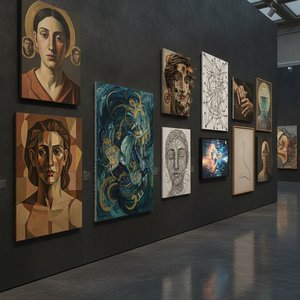
To step into a gallery of portraiture is to engage in a silent, centuries-old conversation with the souls of those who came before us. A portrait is far more than a mere recording of facial features or a display of aristocratic finery; it is an intimate attempt to capture the ephemeral essence of humanity—the flicker of a thought, the weight of a secret, or the quiet dignity of a fleeting moment. Throughout history, from the rigid, symbolic icons of the Renaissance to the emotive, swirling textures of the Impressionist era, artists have used the human face as a canvas to explore power, vulnerability, and the very nature of identity.
As we traverse the timeline of art history, we see how cultural shifts have fundamentally altered the gaze. In eras of absolute monarchy, portraits served as instruments of political propaganda, designed to project permanence and divine right. Yet, as the centuries progressed, the focus shifted inward. The advent of psychological realism allowed painters to peel back the layers of social status, revealing the raw, unvarnette emotions beneath. These works remain profoundly meaningful today because they mirror our own modern struggle to be truly seen and understood in an increasingly fragmented world.
In this curated exploration, we invite you to walk alongside us through ten definitive masterpieces that define the genre. Each selection has been chosen not only for its technical brilliance—the masterful use of chiaroscuro or the delicate application of glaze—but for its ability to transcend time. Whether it is a haunting gaze from a Dutch Master or a revolutionary reimagining of form, these paintings offer a window into the human condition that continues to resonate with every viewer who stands before them.
The Blue Boy (Jonathan Buttall) - Thomas Gainsborough
 The Blue Boy (Jonathan Buttall) - Thomas Gainsborough
To encounter The Blue Boy by Thomas Gainsborough is to witness the pinnacle of 18th-century British elegance, a work that stands as a cornerstone in our exploration of the world's greatest portraiture. This masterpiece transcends simple likeness, offering instead a profound study of youthful poise and aristocratic grace. Gainsborough utilizes a breathtaking palette of cerulean and azure silks, set against a dramatic, atmospheric landscape that whispers of the Romantic era’s emotional depth.
The painting's inclusion in this collection is earned through its technical brilliance; the fluid, alla prima brushwork creates a tactile luminosity that captures both the sheen of satin and the fleeting nature of youth. The subject's confident yet melancholic gaze invites a deep, personal connection, making it an evocative centerpiece for any refined interior. For the discerning collector, owning a hand-painted reproduction of this icon allows one to bring this legacy of light and texture into a modern space, preserving the timeless prestige of the Rococo period within a contemporary architectural setting.
Bildnis Fritza Riedler, 1906 - Österreichische Galerie, Vienna - Gustav Klimt
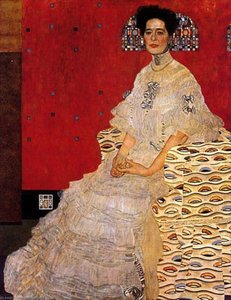 Bildnis Fritza Riedler, 1906 - Österreichische Galerie, Vienna - Gustav Klimt
While many recognize Gustav Klimt for the ethereal embrace of The Kiss , his 1906 masterpiece, Bildnis Fritza Riedler , reveals a more enigmatic side of the Vienna Secession movement. Beyond the surface of Viennese high society, Klimt utilized a revolutionary technique, layering oil pigments with shimmering gold to create a mosaic-like texture that feels almost tactile. This portrait is not merely a likeness; it is a psychological landscape where the subject’s aloof gaze meets an overwhelming sea of organic patterns and eye-like motifs.
The technical genius lies in his ability to balance the heavy, decorative ornamentation of the Art Nouveau style with the profound, quiet melancholy of the sitter. The deep, saturated reds and luminous golds create a sense of prestige and weight, transforming a simple seated figure into a modern icon. For the discerning collector, bringing such a commanding presence into a study or home office provides more than just decoration; it establishes an atmosphere of intellectual depth and sophisticated focus, much like the focused ambition required to master such complex, symbolic compositions.
Benefits Supervisor Sleeping (also known as Big Sue) - Lucian Freud
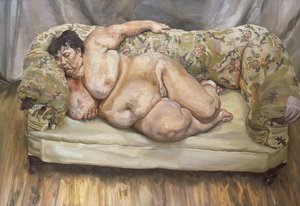 Benefits Supervisor Sleeping (also known as Big Sue) - Lucian Freud
To encounter Benefits Supervisor Sleeping is to confront the raw, unvarnished truth of human existence, stripped of all artifice. In this 1995 masterpiece, Lucian Freud transcends traditional portraiture, moving beyond mere likeness to capture a visceral, psychological weight. As one of our most profound selections in this exploration of portraiture, the work earns its place through an unflinching commitment to realism that challenges every conventional standard of beauty.
Freud utilizes a heavy, tactile impasto technique, where layers of oil paint build a landscape of flesh and fabric. The subject, Sue Tilley, reclines amidst a sea of floral patterns, her form rendered with such anatomical honesty that the viewer feels the very temperature of the skin. This painting does not merely observe; it demands an emotional reckoning with vulnerability and presence. At ArtsDot.com, we believe such transformative power should not be confined to museum walls. Through our meticulous, hand-painted oil reproductions, you can bring this monumental study of light, texture, and human depth into your own home or private gallery, allowing Freud’s uncompromising legacy to anchor your personal space with its profound, quiet intensity.
Women of Algiers (Version O) - Pablo Picasso
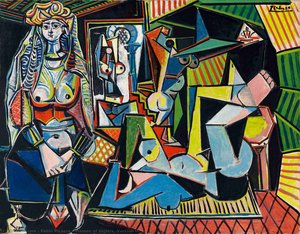 Women of Algiers (Version O) - Pablo Picasso
Step into a world where the boundaries of identity dissolve into a kaleidoscope of color and geometry. In Women of Algiers (Version O) , Pablo Picasso does not merely paint portraits; he deconstructs the very essence of the human figure. This 1955 masterpiece serves as a radical dialogue with history, reimagining Delacroix’s Romanticism through the lens of Synthetic Cubism. The canvas vibrates with an electric energy, where cool, architectural blues and grays collide with fiery bursts of orange and yellow.
As you observe the fragmented planes and intersecting lines, the traditional portraiture dissolves into a sensory exploration of form and light. The figures emerge from a chaotic yet rhythmic arrangement of shapes, inviting the viewer to piece together a narrative of femininity and modern tension. This painting is more than an academic triumph; it is a commanding presence. For the discerning collector, bringing such a dynamic work into a contemporary space offers an unparalleled focal point—a window into the revolutionary spirit of Picasso that inspires profound reflection and intellectual vitality in any room.
The Venus of Urbino - Titian
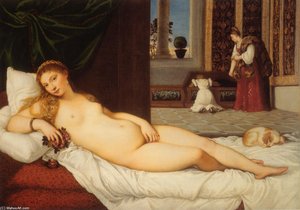 The Venus of Urbino - Titian
To encounter Titian’s Venus of Urbino is to step into a realm where the warmth of Venetian light meets the profound intimacy of the human soul. As we curate the most essential works in the history of portraiture, this 1538 masterpiece stands as an irreplaceable pillar due to its revolutionary fusion of mythological grandeur and startlingly realistic presence. Titian transcends the boundaries of traditional likeness, using his legendary mastery of color and sfumato to create a subject that feels not like a distant deity, but a living, breathing woman whose direct gaze commands the viewer's attention.
The painting’s influence on visual culture is immeasurable, setting the standard for how light, texture, and sensuality are captured on canvas. The rich reds and luminous skin tones offer a timeless aesthetic that continues to inspire modern interior elegance. At ArtsDot.com, we believe such transformative beauty should not be confined to museum walls. Through our meticulous, hand-painted oil reproductions, you can bring the commanding presence and historical depth of Titian’s genius into your own home or private gallery, preserving this legacy of Renaissance splendor for generations.
Double Portrait of Jean de Dinteville and Georges de Selve (also known as The Ambassadors) - Hans Holbein the Younger
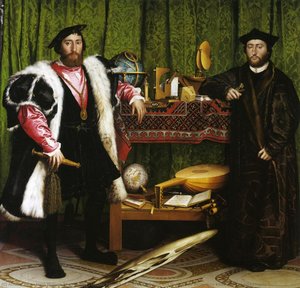 Double Portrait of Jean de Dinteville and Georges de Selve (also known as The Ambassadors) - Hans Holbein the Younger
In Hans Holbein the Younger’s 1533 masterpiece, The Ambassadors , light does not merely illuminate the subjects; it acts as a silent narrator of the Northern Renaissance. As you stand before this double portrait of Jean de Dinteville and Georges de Selve, you feel the weight of an era defined by political tension and intellectual awakening. Holbein composes the light to dance across opulent textures—the heavy sheen of silk, the tactile softness of fur, and the cold, precise surfaces of scientific instruments.
This painting is a profound exploration of portraiture, where every object serves as a symbolic language. From the celestial globe representing worldly power to the haunting, anamorphic skull that whispers a memento mori , Holbein invites us to look beyond the surface. The broken lute string hints at religious discord, while the meticulous realism pulls you into the Tudor court's very atmosphere. This is why it remains a cornerstone of art history: it does not just reflect reality; it invents a profound, layered truth. You can bring this sense of historical mystery into your own space with a hand-painted oil reproduction , capturing every meticulous brushstroke and enigmatic shadow.
The Gross Clinic - Thomas Eakins
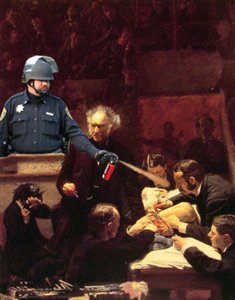 The Gross Clinic - Thomas Eakins
Imagine stepping into a dimly lit theater of human struggle, where the air is heavy with the scent of antiseptic and the palpable tension of life hanging in the balance. In The Gross Clinic , Thomas Eakins transcends traditional portraiture to capture a profound intersection of scientific triumph and raw human vulnerability. This 1875 masterpiece does not merely depict Dr. Samuel D. Gross performing surgery; it immortalizes the very moment where anatomical precision meets emotional gravity.
Eakins earns its place among the greatest portraits through his unflinching American Realism, using dramatic chiaroscuro and deep, earthy tones to draw the viewer into the surgical circle. The composition is a masterclass in psychological depth, contrasting the surgeon's focused intellect with the silent, grieving presence of the patient's mother. Such powerful imagery serves as a reminder that art can anchor a modern room with historical weight and intellectual rigor. Bringing a hand-painted reproduction of this iconic work into your home allows you to surround yourself with a legacy of resilience and the enduring beauty of the human spirit.
Nana - Édouard Manet
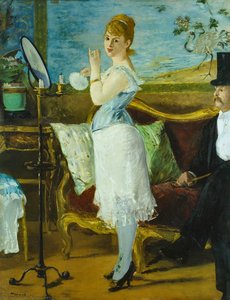 Nana - Édouard Manet
In the pantheon of 19th-century portraiture, Édouard Manet’s Nana (1877) stands as a profound exploration of identity and the gaze. As a pivotal figure bridging Realism and Impressionism, Manet moves beyond mere likeness to capture the psychological tension of modern Parisian life. The painting places us within an intimate boudoir, where the central figure—a woman lost in the vanity of her own reflection—is observed by a man whose presence adds a layer of social complexity.
This work earns its place among the greatest portraits through its masterful use of light and texture; the luminous whites of her lace and the soft, diffused glow from the window create a sensory experience that feels both fleeting and eternal. Manet’s visible brushwork and vibrant yet muted palette invite us to contemplate the duality of appearance versus reality. For the discerning collector, bringing a hand-made oil reproduction of Nana into a home offers more than decor; it introduces a timeless conversation about perception, beauty, and the enduring human fascination with the self.
Charles I in Three Positions - Sir Anthony van Dyck
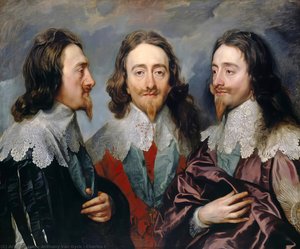 Charles I in Three Positions - Sir Anthony van Dyck
In the pantheon of 17th-century portraiture, few works achieve the analytical depth found in Charles I in Three Positions by Sir Anthony van Dyck. This masterpiece transcends simple likeness, serving as a profound study of identity through movement and perspective. By presenting the King in profile, full-face, and three-quarter view, Van Dyck invites us to contemplate the multifaceted nature of power and the human persona—a concept that remains central to how we perceive ourselves today.
The painting’s inclusion in our selection of top portraiture is earned through its technical brilliance; the dramatic chiaroscuro and the tactile rendering of lace and velvet demonstrate the pinnacle of Baroque mastery. It was not merely an aesthetic triumph but a functional blueprint for Bernini’s sculptural work, bridging the worlds of painting and marble. For the modern collector or interior designer, this work offers more than historical prestige; its rich, somber palette and commanding presence provide a timeless anchor for sophisticated spaces, turning a room into a curated dialogue between history and contemporary elegance.
A Lady Drinking and a Gentleman and The Glass of Wine - Johannes Vermeer
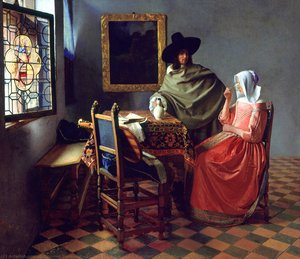 A Lady Drinking and a Gentleman and The Glass of Wine - Johannes Vermeer
Owning A Lady Drinking and a Gentleman and The Glass of Wine by Johannes Vermeer isn’t merely a purchase; it is an inheritance of the Dutch Golden Age. In this masterwork, Vermeer transcends simple genre painting to offer a profound exploration of portraiture, capturing not just faces, but the very soul of human connection. The scene unfolds in a quiet, sun-drenched interior where the soft glow from a stained-glass window illuminates a moment of shared intimacy between two figures.
Vermeer’s technical brilliance is on full display through his meticulous use of light and shadow, creating a tactile realism that makes the textures of fine fabric and polished wood feel almost tangible. The composition balances scholarly contemplation with domestic grace, using a rich palette to draw the eye toward the subtle interplay of courtship and quietude. To bring this lineage of taste into your own home, our museum-grade, handmade oil reproductions capture every delicate brushstroke and luminous glaze of the original. It is an opportunity to transform your walls into a private gallery, where every glance serves as a sophisticated nod to the masters.
Conclusion
As we draw the curtain on this exploration of portraiture, we are reminded that these masterpieces are far more than mere historical artifacts or static images frozen in time; they are living presences. To gaze into the eyes of a subject from the Renaissance or to trace the heavy, emotive brushstrokes of a later era is to engage in a silent, centuries-old dialogue. Each portrait serves as a bridge across the chasm of time, connecting the intimate vulnerabilities of the artist with the enduring spirit of the admirer. These works do not merely document faces; they capture the very essence of human experience—the fleeting glance, the weight of sorrow, and the quiet dignity of existence.
In our modern spaces, these paintings continue to breathe, shaping the atmosphere of our homes and inspiring new waves of creativity. They offer a sense of continuity in an ever-changing world, inviting us to pause and find ourselves reflected in the gaze of the past. Whether through the meticulous detail of a classical oil reproduction or the bold texture of a contemporary tribute, the conversation between the creator and the viewer remains unbroken. We invite you to continue this journey of discovery and bring these timeless souls into your own sanctuary by exploring our full collection .