

Introduction
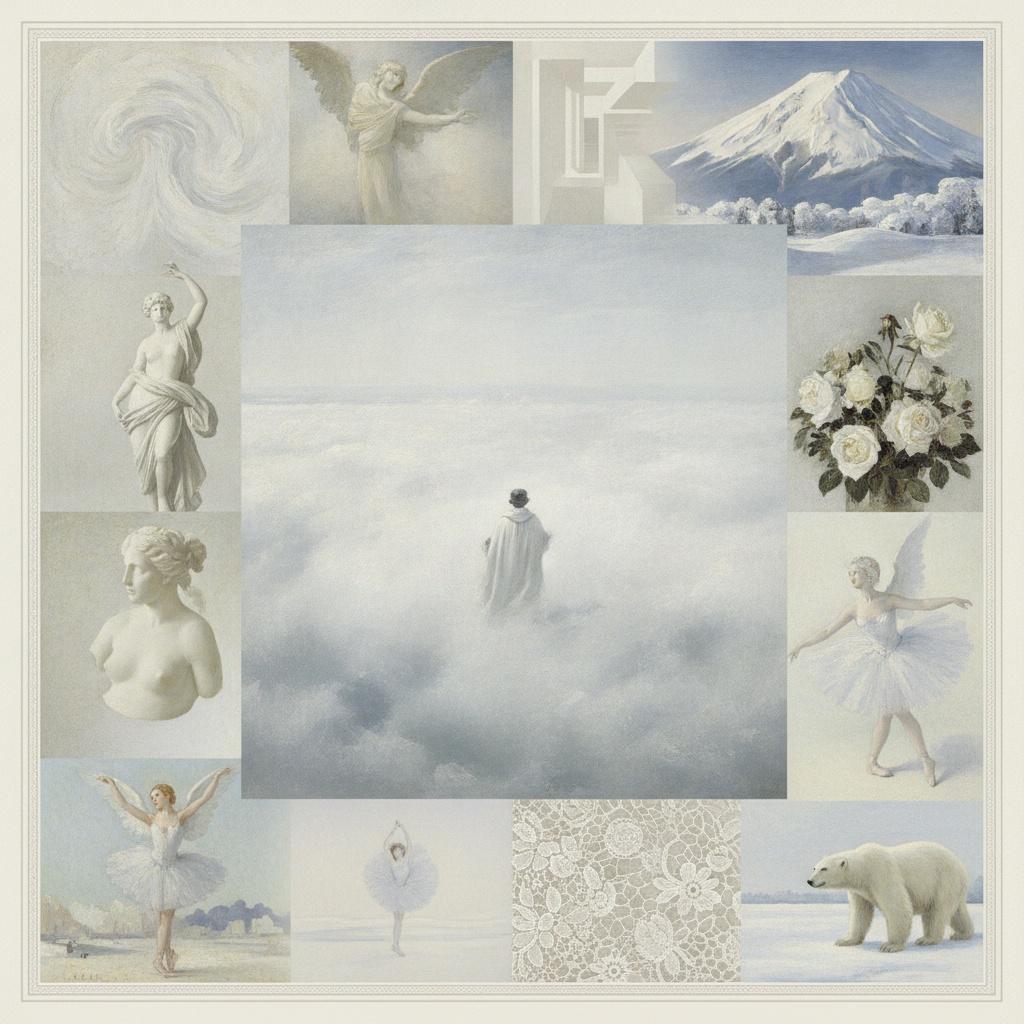
To step into a gallery of light is to experience a profound silence. When we speak of paintings dominated by white tones, we are not merely discussing the absence of color, but rather the presence of something much more elusive: luminosity, atmosphere, and the very breath of the canvas. In the history of Western art, the mastery of white has served as the ultimate test of an artist's technical prowess. It is a delicate dance of pigments—where titanium, lead, or zinc meet the subtle shadows of grey, cream, and pearl to create the illusion of depth, texture, and divine radiance.
Throughout the centuries, from the ethereal, light-drenched landscapes of the Impressionist movement to the stark, structural brilliance of Neoclassicism, artists have used a pale palette to evoke specific emotional landscapes. A white sky can suggest the blinding heat of a Mediterranean noon or the melancholic stillness of a winter morning; a white gown can embody both virginal purity and the heavy, sculptural weight of aristocratic status. These works transcend simple aesthetics; they capture the way light interacts with our physical world, inviting us to feel the temperature of the air and the texture of the cloth.
Today, these masterpieces remain deeply meaningful because they offer a sanctuary of clarity in an increasingly visually cluttered world. They remind us that brilliance often resides in subtlety and that strength can be found in the lightest of touches. As we prepare to journey through this curated selection, we invite you to look beyond the surface. We will explore ten canonical works where white is not just a color, but a protagonist—a force that defines form, captures movement, and illuminates the soul of the human experience.
In the following list, you will encounter:
- The interplay of light and shadow in 19th-century landscapes.
- The architectural majesty found within monochromatic compositions.
- The transformative power of texture, from heavy impasto to delicate glazes.
Ciphers and Constellations, in Love with a Woman - Joan Miró
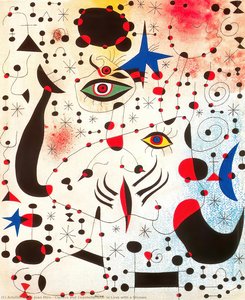 Ciphers and Constellations, in Love with a Woman - Joan Miró
In Ciphers and Constellations, in Love with a Woman , Joan Miró orchestrates a celestial ballet where the vastness of the void meets the intimacy of human passion. As a cornerstone of our exploration into the top 10 famous paintings dominated by white tones , this 1941 masterpiece utilizes a creamy, off-white expanse not as empty space, but as a luminous stage for the subconscious. Within this pale atmosphere, Miró’s signature biomorphic symbols—piercing eyes, vibrant red pulses, and delicate black lines—float like wandering stars in a dream.
Part of his profound Constellations series, the work transcends mere abstraction to evoke the cosmic interconnectedness of all living things. The stark contrast between the ethereal background and the rhythmic, dark ciphers creates a sense of weightless movement that remains strikingly modern. For the contemporary collector, this piece offers an unparalleled architectural elegance; its minimalist palette and sophisticated use of negative space allow it to anchor a room with a sense of quiet, intellectual mystery, bringing the profound depth of Surrealism into the light of a modern interior.
The Ruins of the Old Kreuzkirche in Dresden - Bernardo Bellotto
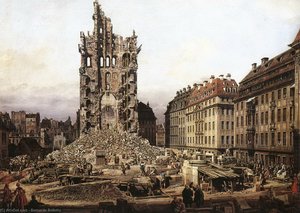 The Ruins of the Old Kreuzkirche in Dresden - Bernardo Bellotto
In The Ruins of the Old Kreuzkirche in Dresden , Bernardo Bellotto utilizes a palette of bone-whites, pale grays, and sun-bleached ochres to transform a scene of devastation into a luminous meditation on resilience. While many associate white tones with purity, here they represent the skeletal remains of history—the chalky dust of crumbled stone and the ghostly light reflecting off debris. This 1765 masterpiece captures a pivotal moment in Dresden's architectural saga, where the stark, bright fragments of ruined masonry contrast against the somber shadows of the surrounding cityscape.
There is a gaze in this work that follows you—not with judgment, but with understanding . It does not merely show destruction; it captures the light of recovery. This painting acts as a mirror to our own capacity for renewal. Imagine this interplay of light and architectural texture in your own collection; it serves as a profound reminder that even amidst the fragments of the past, there is a luminous strength waiting to be rebuilt. For those seeking to curate a space defined by historical depth, this work offers an unparalleled atmospheric presence.
Over the town - Marc Chagall
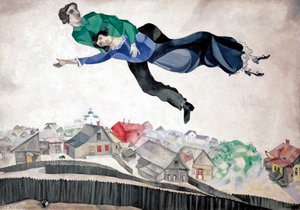 Over the town - Marc Chagall
In Marc Chagall’s 1918 masterpiece, Over the town , the boundaries between the terrestrial and the celestial dissolve into a luminous dreamscape. While many of the top 10 famous paintings dominated by white tones rely on starkness, Chagall utilizes a pale, ethereal luminosity to evoke a sense of weightless transcendence. The painting captures a profound moment of romantic liberation, where two figures float above a stylized cityscape, their ascent suggesting a spiritual escape from the historical upheavals of the Russian Revolution.
The visual language here is one of soft light and symbolic depth; the pale, almost bleached quality of certain architectural elements creates a ghostly, nostalgic atmosphere that resonates deeply with modern minimalist aesthetics. This use of light-drenched space makes the work a captivating focal point for contemporary collectors seeking to introduce poetic movement into a curated interior. For those looking to bring this sense of soaring hope into their own homes, we offer exquisite hand-made oil reproductions that preserve every delicate brushstroke and the ethereal, light-filled soul of Chagall’s vision.
Campbell's soup cans - Andy Warhol
 Campbell's soup cans - Andy Warhol
In Andy Warhol’s 1962 masterpiece, Campbell's Soup Cans , the concept of white tones transcends mere color; it becomes a structural necessity for the Pop Art revolution. The composition relies on the stark, clinical white of the labels and the surrounding negative space to anchor its repetitive grid. This brightness provides the essential canvas for the vibrant reds and rhythmic typography to pop, creating a visual pulse that mimics the industrial heartbeat of American consumerism.
To possess Campbell's Soup Cans by Andy Warhol is not simply a purchase; it is an inheritance of the most significant cultural shift of the 20th century. It represents a lineage of taste that bridges the gap between the supermarket aisle and the museum pedestal. At ArtsDot.com, we allow this legacy to reside on your walls through meticulous hand-painted oil reproductions. Our artists capture every sharp edge and flat color field, ensuring that the clean, bright aesthetic of Warhol’s mechanical vision is preserved in a tactile, brushstroke-rich medium that honors the original's profound impact on modern history.
Broadway Boogie Woogie - Piet Mondrian
 Broadway Boogie Woogie - Piet Mondrian
In Broadway Boogie Woogie by Piet Mondrian, the frantic pulse of Manhattan is frozen into a rhythmic dance of light and geometry. This masterpiece earns its place among the top 10 famous paintings dominated by white tones not through emptiness, but through the strategic use of a vast, luminous white ground that allows the primary colors to vibrate with unprecedented intensity. The stark, clean canvas acts as the silent stage for a syncopated performance of yellow, red, and blue squares, mimicking the neon energy of New York City streets and the infectious tempo of jazz.
The composition breathes through its precise, orthogonal grid, where black lines intersect like urban arteries against an expansive, airy backdrop. This interplay of structured order and chromatic vitality offers a sophisticated aesthetic that transcends decades; it brings a sense of intellectual clarity and modern dynamism to any contemporary interior. To possess a hand-painted oil reproduction of this work is to invite the very essence of modern progress and rhythmic harmony into your home, capturing the meticulous precision of Mondrian’s Neoplastic vision.
Crucifix - Cimabue
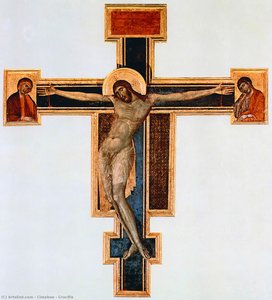 Crucifix - Cimabue
In Cimabue’s Crucifix (c. 1287), the profound use of pale whites and creams serves as a spiritual anchor amidst a sea of somber, liturgical tones. While the composition is anchored by deep blues and rich golds, it is the luminous, stark whiteness of the perizoma—the cloth draped around Christ—that commands the viewer's gaze. This intentional use of light-toned pigments creates a striking focal point, cutting through the heavy Byzantine influence to introduce an early Renaissance sense of anatomical volume and divine presence.
This mastery of contrast earns its place among the top 10 famous paintings dominated by white tones because it uses brightness not just for visibility, but for emotional transcendence. For the modern collector, integrating a high-quality reproduction of this piece into a dining room or study can introduce a sense of solemnity and light. The interplay between the pale highlights and the dark, wooden textures allows you to curate an atmosphere of contemplative elegance, perfect for spaces designed for quiet reflection or sophisticated architectural statements.
Summertime - Edward Hopper
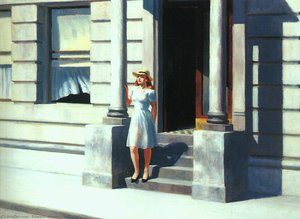 Summertime - Edward Hopper
What story does the sun-drenched, stark environment in Summertime by Edward Hopper tell? Painted in 1943 amidst the global uncertainty of World War II, this masterpiece utilizes a palette dominated by brilliant, high-key tones to explore the quiet tension of American urban life. The composition is anchored by the blindingly bright, white architectural elements of the classical building, which serve as a stark, geometric stage for the solitary figure in light blue.
Hopper’s mastery lies in his ability to use these luminous, pale surfaces to cast deep, dramatic shadows, creating a sensory experience of heat and stillness. For the modern collector, bringing such a work into a home offers more than mere decoration; it provides a curated escape into a moment of profound contemplation. The interplay of light and bone-white stone creates an airy, expansive atmosphere that can transform a living space into a gallery of quiet introspection. Whether you are drawn to the historical weight of American Realism or seeking a centerpiece defined by luminous clarity, this painting remains a pinnacle of atmospheric storytelling.
All Saints day I - Wassily Wassilyevich Kandinsky
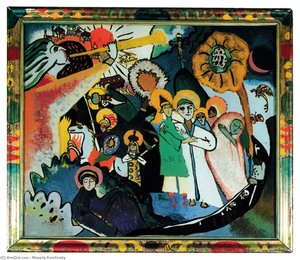 All Saints day I - Wassily Wassilyevich Kandinsky
In All Saints Day I , Wassily Kandinsky orchestrates a celestial dance of geometry and spirit. While the palette is famously vibrant, the composition relies on a structural harmony where swirling diagonal lines and sharp geometric shapes—circles, triangles, and rectangles—intersect against luminous, ethereal backdrops. This intricate arrangement of overlapping planes creates a sense of timeless perfection, anchoring its place among the most significant works in our exploration of paintings dominated by light and white tones.
The artwork’s internal balance achieves a profound equilibrium; the chaotic energy of the religious iconography is stabilized by a central, sun-like orb that radiates light throughout the canvas. This sophisticated interplay between movement and stillness mirrors the principles of modern minimalist design, offering a grounding force for contemporary interiors seeking a clean, intellectual aesthetic. For the discerning collector, a hand-made oil reproduction of this masterpiece brings not just color, but a palpable texture of impasto brushstrokes that captures Kandinsky's spiritual intensity. Whether you are drawn to its expressionist soul or its architectural precision, this work remains a cornerstone of abstract history.
Still life no. 20 - Tom Wesselmann
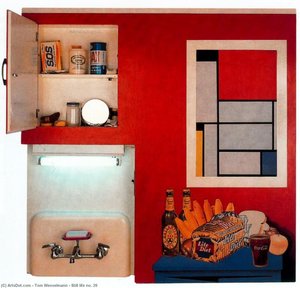 Still life no. 20 - Tom Wesselmann
Step into the vibrant, electric pulse of 1960s America, where the mundane is elevated to the monumental. In Tom Wesselmann’s Still Life No. 20 , one does not merely view a collection of objects; one experiences the glossy, high-energy optimism of post-war consumerism. The composition captures a fragmented domesticity, where the clinical purity of white porcelain and bright packaging meets a defiant, saturated red backdrop.
This work earns its place among the top paintings dominated by white tones through its masterful use of stark, clean highlights on everyday items—from toothpaste tubes to ceramic surfaces—which provide a necessary visual breath amidst the Pop Art chaos. Wesselmann uses these bright, neutral accents to anchor the eye, creating a rhythmic interplay between light and shadow that defines the era's aesthetic. It is a profound meditation on how mass-produced objects inhabit our personal histories.
Bringing such a bold, graphic energy into your own home allows you to celebrate the intersection of modern life and fine art. Whether through a hand-painted oil reproduction or a curated print, Wesselmann’s precision can transform a contemporary space into a sophisticated gallery of cultural dialogue.
Allegory of 'Sculpture' - Gustav Klimt
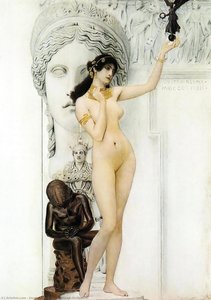 Allegory of 'Sculpture' - Gustav Klimt
In Gustav Klimt’s 1889 masterpiece, Allegory of 'Sculpture' , light does not merely illuminate the canvas; it acts as a silent narrator. Before the world knew him for the gilded opulence of his Golden Phase, Klimt utilized a palette dominated by ethereal whites, soft creams, and marble-like tones to compose a visual sonata of classical elegance. The way the light interacts with the smooth, alabaster skin of the central figure creates a sense of profound translucency, as if the subject were carved from moonlight itself.
This work stands as a pinnacle of early Symbolism, where the brilliance of white tones serves to highlight the tension between realistic anatomical precision and dreamlike, architectural decay. The interplay of diffused light against the intricate, pale reliefs evokes a sense of serene melancholy. To possess a hand-made oil reproduction of this piece is to invite that very same luminous atmosphere into your space, allowing the subtle textures and pearlescent highlights to transform your walls into portals of historical inspiration.
Conclusion
As we conclude our journey through these luminous canvases, we find that the use of white is far more than a mere choice of pigment; it is an exploration of light, breath, and the infinite. These masterpieces do not exist solely within the silent halls of museums or the dusty pages of history books. Instead, they act as living presences, bridging centuries to engage in a timeless conversation with every soul that pauses before them. Each delicate layer of impasto and every subtle shadow cast by a pale hue carries the heartbeat of the artist—a profound, enduring connection that transcends time and geography.
To bring such works into your own environment is to invite this historical dialogue into your daily life. Whether it is the ethereal glow of an Impressionist landscape or the stark, dramatic clarity of a Baroque portrait, these paintings possess the unique power to shape the atmosphere of a home, offering a sense of serenity and intellectual depth. They remind us that even in the simplest palette, there is a universe of emotion waiting to be discovered.
We invite you to continue your exploration of light and luminosity by browsing our full collection . May these enduring works of art continue to inspire your creativity and serve as a window into the sublime beauty of the human spirit.