

Introduction
To step into the world of Henri de Toulouse-Lautrec is to descend into the flickering gaslight of late 19th-century Montmartre, where the scent of absinthe, the swirl of dancehall dust, and the raw energy of the Parisian night converge. His work does not merely observe the Belle Époque; it inhabably breathes its pulse. As we prepare to journey through his top twenty-five masterpieces, we are not just looking at paint on canvas, but witnessing a profound act of empathy captured through a master’s line.
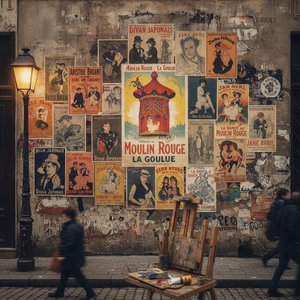
Born into French aristocracy but spiritually tethered to the bohemian fringes, Toulouse-Lautrec possessed a rare, piercing gaze. While his contemporaries often sought the idealized beauty of the Salon, Lautrec found his muse in the marginalized—the dancers of the Moulin Rouge , the weary performers of the circus, and the vibrant, often scandalous characters of the cabaret. His style, heavily influenced by the bold silhouettes of Japanese woodblock prints, utilized sweeping lines and a sophisticated, atmospheric palette to convey the fleeting movement of a dancer’s skirt or the melancholic exhaustion behind a performer's smile.
These artworks remain deeply resonant today because they transcend their historical moment. They are studies in human vulnerability, resilience, and the theatricality of existence. In an era of digital perfection, there is something profoundly moving about his visible, expressive brushwork and his ability to find dignity in the shadows. Whether through a sweeping lithograph or an intimate oil portrait, Lautrec captures the universal truth of the human condition: our desire to be seen, even in the dimmest light.
In the following curation, we will explore twenty-five pivotal works that define his legacy. From his most iconic posters that revolutionized graphic design to his deeply personal portraits that reveal the souls of Paris, each piece serves as a window into a vanished world—a world that continues to haunt and inspire the modern imagination.
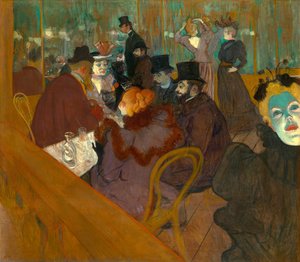
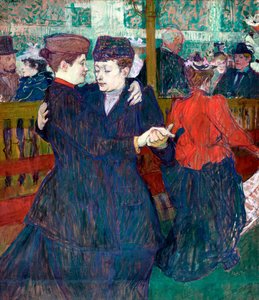
at the moulin rouge - henri de toulouse-lautrec
Step into the flickering gaslight of 1892 with At the Moulin Rouge , a work that does not merely depict a scene but invites you to inhabit the very pulse of Montmartre. In this Post-Impressionist masterpiece, Henri de Toulouse-Lautrec captures the intoxicating chaos of the Belle Époque, where the boundaries between performer and patron dissolve into a sea of movement. The composition is a sensory feast; thick, energetic impasto brushstrokes create a tactile reality, while a palette of warm golds, deep purples, and vibrant oranges evokes the smoky, amber glow of the cabaret.
As you observe the crowded interior, notice how the flattened perspective and loose, expressive lines prioritize emotional atmosphere over rigid realism. There is a profound intimacy in the way the artist renders the diverse figures—clowns, dancers, and drinkers—all caught in fleeting moments of connection or introspection. To possess a handmade oil reproduction of this piece is to bring the decadent spirit of Parisian nightlife into your own home, transforming a simple wall into a window onto a lost era of artistic liberation.
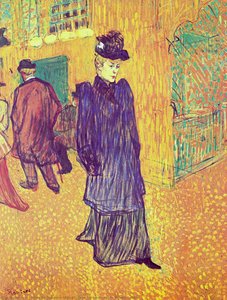
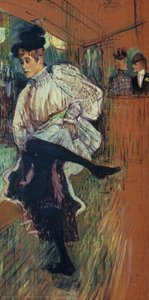
Jane Avril Dancing - henri de toulouse-lautrec
 Jane Avril Dancing - henri de toulouse-lautrec
Imagine stepping into the smoky, gaslit atmosphere of a 1892 Montmartre cabaret, where the air vibrates with the frantic energy of the can-can and the scent of perfume and absinthe. In Jane Avril Dancing , Henri de Toulouse-Lautrec does not merely paint a performer; he captures the very pulse of the Belle Époque. The canvas breathes with the restless spirit of Paris, utilizing bold, expressive brushstrokes and a vibrant palette to immortalize Jane Avril amidst the swirling shadows of the Moulin Rouge.
This masterpiece earns its place among the top 25 artworks of Toulouse-Lautrec through its profound ability to balance flamboyant glamour with an underlying sense of vulnerability. The dancer’s poised yet slightly off-balance stance mirrors a society in flux, caught between decadence and uncertainty. To possess a hand-painted oil reproduction of this work is to invite that same electric, nocturnal energy into your own home, transforming a modern space into a sanctuary of historical depth and artistic passion.
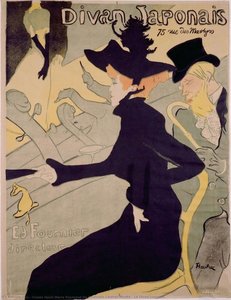
Le Divan Japonais - henri de toulouse-lautrec
 Le Divan Japonais - henri de toulouse-lautrec
In Le Divan Japonais , there is a gaze that follows you—not with judgment, but with a profound sense of understanding . This masterpiece by Henri de Toulouse-Lautrec does not merely present a scene from a Montmartre café-concert; it acts as a mirror to the soul of Belle Époque Paris. As you look upon the figures seated near the namesake divan, the hazy atmosphere of gaslight and cigarette smoke seems to drift from the canvas into your own room.
Lautrec masterfully employs a broken color palette and rhythmic, visible brushstrokes to capture the ephemeral energy of the night. The contrast between the sophisticated silhouettes and the bustling, blurred background creates a tension between intimacy and public spectacle. To possess a hand-painted oil reproduction of this work is to invite that nocturnal mystery into your home. Whether you choose a textured impasto finish or a classic style, this painting serves as a constant reminder: in the grand tapestry of art history, every fleeting moment is seen, and every shadow tells a story.
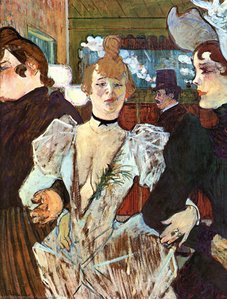
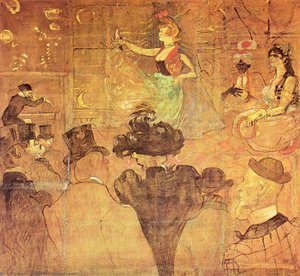
La Goulue Dancing (also known as Les Almees) - henri de toulouse-lautrec
 La Goulue Dancing (also known as Les Almees) - henri de toulouse-lautrec
To encounter La Goulue Dancing (also known as Les Almees) is to step directly into the electric, smoke-filled pulse of 1895 Montmartre. As one of the most captivating entries in our collection of the top 25 artworks of Henri de Toulouse-Lautrec, this masterpiece transcends mere depiction; it is a visceral experience of the Belle Époque. The painting centers on the legendary dancer Goulue, captured amidst the swirling, theatrical energy of the cabaret. Through bold, expressive brushstrokes and a dramatic interplay of artificial light and deep shadow, Toulouse-Lautrec achieves a snapshot-like immediacy that feels remarkably modern.
The palette—rich with warm golds, ochres, and deep browns—creates a decadent atmosphere that resonates powerfully within refined, contemporary interiors. The celestial motifs of the crescent moon and stars add a layer of dreamlike illusion, making this work a profound study of movement and social intimacy. For the discerning collector, owning a high-quality oil reproduction of this piece means bringing the soulful, bohemian legacy of Paris into one's private gallery, preserving a fragment of history that remains as vibrant today as it was over a century ago.
Rue des Moulins - The Medical Inspection - henri de toulouse-lautrec
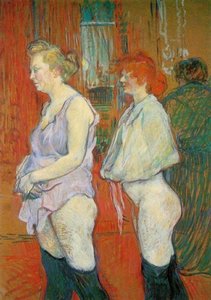 Rue des Moulins - The Medical Inspection - henri de toulouse-lautrec
In Rue des Moulins - The Medical Inspection by Henri de Toulouse-Lautrec, a deep, regal purple dominates the canvas, casting a mood of nocturnal mystery and quiet intensity. This masterful use of saturated violet, contrasted against stark blacks and fiery reds, is precisely why this work stands among the top 25 artworks of Henri de Toulouse-Lautrec . The palette does not merely depict clothing; it captures the heavy, atmospheric weight of a Parisian dusk, where the glow of gaslight meets the shadows of Montmartre.
For the discerning collector, integrating this piece into a modern interior offers a profound way to curate emotional lighting. The painting’s dramatic interplay of light and shadow can anchor a dining room or lounge, providing a sophisticated focal point that evokes a sense of historical prestige and bohemian elegance. Whether you are drawn to the raw Post-Impressionist energy or seeking a high-end hand-made oil reproduction to add depth to your walls, this work brings the soulful, flickering spirit of 19th-century France into the contemporary home.
Aristide Bruant in his cabaret - henri de toulouse-lautrec
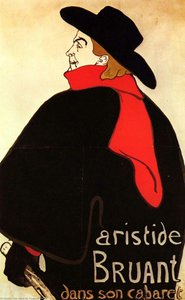 Aristide Bruant in his cabaret - henri de toulouse-lautrec
In Aristide Bruant in his Cabaret , Toulouse-Lautrec captures more than a mere performance; he freezes the very pulse of Montmartre. The viewer is immediately drawn to the commanding presence of Bruant, whose posture—leaning into his guitar with a defiant, soulful intensity—serves as a window into the raw, uninhibited spirit of the Parisian nightlife. Through bold outlines and a masterful use of light, the artist evokes the smoky, amber-hued atmosphere of the cabaret, where the boundaries between performer and patron dissolve.
This work stands as a cornerstone among the top 25 artworks of Henri de Toulouse-Lautrec because it transcends simple portraiture to offer a profound psychological study of passion and rebellion. The tactile quality of the brushwork, particularly in the vibrant red of Bruant's scarf, brings a sensory richness that makes the scene feel alive. Bringing such an evocative piece into your home can transform a personal sanctuary into a space of cultural prestige and deep reflection, allowing the boisterous energy of 19th-century France to resonate within your modern walls. For those seeking to own this piece of history, our hand-painted oil reproductions capture every essential stroke and emotional depth of the original masterpiece.
The toilette, Musee D'Orsay - henri de toulouse-lautrec
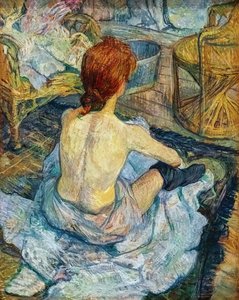 The toilette, Musee D'Orsay - henri de toulouse-lautrec
What story does the quiet, sun-drenched environment of The Toilette tell about the hidden rhythms of Belle Époque Paris? In this 1896 masterpiece held at the Musée d’Orsay, Henri de Toulouse-Lautrec moves away from the raucous energy of Montmartre's cabarets to capture a profound moment of domestic solitude. The scene unfolds with a deceptive simplicity: a woman, her back turned to us, engages in a private ritual of preparation. Through a sophisticated Post-Impressionist palette of warm ochres, ambers, and soft rose tones, the artist transforms a mundane morning into a sacred, poetic tableau.
The composition is anchored by the tactile reality of everyday objects—a patterned rug, a simple chair, and the gentle play of light filtering through an unseen window. This sense of intimate, atmospheric stillness offers a perfect 'escape' for the modern collector; hanging a high-quality oil reproduction of this work in your home brings a sense of historical depth and tranquil elegance to any room. It is a testament to why this piece remains one of the top 25 artworks of Toulouse-Lautrec, inviting viewers to find extraordinary beauty within the ordinary.
Carmen Gaudin - henri de toulouse-lautrec
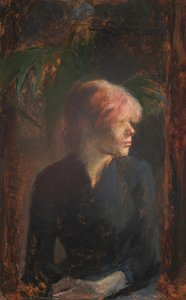 Carmen Gaudin - henri de toulouse-lautrec
In the quiet stillness of Carmen Gaudin , Henri de Toulouse-Lautrec captures a fleeting moment of introspection that feels as intimate today as it did in 1885. This work earns its place among the top 25 artworks of Henri de Toulouse-Lautrec by offering a rare, tender departure from the frenetic energy of Montmartre’s nightlife, focusing instead on the profound psychological depth of a single soul.
The painting breathes with a soft, melancholic light filtering through the window, illuminating the subject's vibrant red hair and the somber elegance of her black dress. Through masterful, textured brushstrokes and a deliberate use of tonal contrast, Toulouse-Lautrec creates a sensory experience where the weight of the shadows meets the warmth of human contemplation. The composition possesses a timeless sophistication, making it an exquisite centerpiece for modern interiors seeking to evoke calm and intellectual depth. Whether viewed as a study in Post-Impressionist light or a window into the Parisian spirit, this masterpiece remains a cornerstone of the artist's enduring legacy.
The big Maria, Venus Mintmartre - henri de toulouse-lautrec
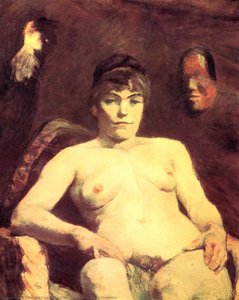 The big Maria, Venus Mintmartre - henri de toulouse-lautrec
Step into the dimly lit, intoxicating atmosphere of 1884 Montmartre with The Big Maria, Venus Montmartre . In this arresting work, Henri de Toulouse-Lautrec captures a raw, cinematic moment of Parisian life that feels both profoundly intimate and hauntingly voyeuristic. The subject sits with an unapologetic openness, her pensive gaze and elegant hat creating a sense of mystery that draws the viewer into the shadows of the demimonde .
Toulouse-Lautrec moves away from academic perfection, utilizing a Post-Impressionist palette of muted ochres, deep browns, and subtle crimsons to evoke the smoky air of a cabaret. The deliberate use of flattened perspective and rapid, confident brushstrokes lends an incredible sense of immediacy to the scene. This masterpiece does more than document a figure; it captures the very soul of the bohemian underground. Bringing a high-quality oil reproduction of this piece into your home offers a sophisticated window into history, providing a focal point of dramatic texture and soulful reflection that can transform any modern interior into a space of deep cultural resonance.
Portrait of Miss May Belfort - henri de toulouse-lautrec
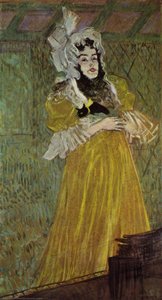 Portrait of Miss May Belfort - henri de toulouse-lautrec
In the Portrait of Miss May Belfort , Henri de Toulouse-Lautrec captures a profound moment of quietude amidst the frenetic energy of Montmartre. This work stands as a cornerstone in our collection of the top 25 artworks of Henri de Toulouse-Lautrec because it transcends mere portraiture; it is an intimate study of character and light. The striking contrast between her vibrant yellow gown and the delicate black bow creates a visual rhythm that exemplifies the Post-Impressionist mastery of color and line.
The painting’s emotional depth—seen in her introspective, downward gaze—offers a soulful counterpoint to the artist's more famous, boisterous cabaret scenes. For the modern collector, this piece brings a sophisticated, nocturnal elegance to any interior, echoing contemporary tastes for bold, monochromatic accents paired with warm, luminous tones. Whether you are drawn to the historical significance of May Belfort herself or the masterful brushwork, this piece serves as a timeless window into the heart of Parisian nightlife. You can bring this piece of history into your home through our hand-painted oil reproductions , meticulously crafted to preserve every expressive stroke.
Monsieur Louis Pascal from the Rear - henri de toulouse-lautrec
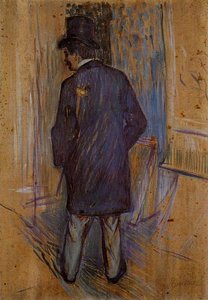 Monsieur Louis Pascal from the Rear - henri de toulouse-lautrec
In Monsieur Louis Pascal from the Rear , Henri de Toulouse-Lautrec captures a profound moment of quiet introspection that transcends mere portraiture. Painted in 1893, this work stands as a vital entry in the top 25 artworks of Henri de Toulouse-Lautrec because it moves away from the frenetic energy of the Moulin Rouge to explore the psychological weight of the Parisian bohemian experience. Through a masterful use of Post-Impressionist technique, the artist employs loose, textured brushstrokes and a somber, tonal palette to render the heavy fabrics of Pascal’s coat and the stark silhouette of his top hat.
The composition, focusing on the subject from behind, invites the viewer to share in his downward gaze, evoking a sense of melancholy and social disillusionment characteristic of the Montmartre era. For the modern collector, this piece offers an unparalleled atmospheric depth; its muted tones and structural elegance make it a sophisticated focal point for contemporary interiors seeking a touch of historical gravity. Whether you are drawn to the raw emotion of his subject or the masterful interplay of light and shadow, this painting remains a timeless testament to the human condition.
At La Bastille (Portrait of Jeanne Wenz) - henri de toulouse-lautrec
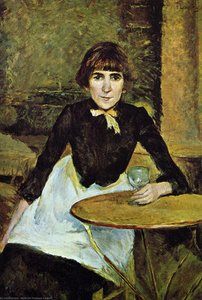 At La Bastille (Portrait of Jeanne Wenz) - henri de toulouse-lautrec
In At La Bastille (Portrait of Jeanne Wenz) , Henri de Toulouse-Lautrec captures a profound sense of quietude amidst the legendary chaos of Montmartre. The gaze of Jeanne Wenz, a celebrated figure of the Parisian night, is not one of performance, but of deep, introspective stillness. As she holds her wine glass, the painting transcends mere portraiture to become a universal mirror of human experience—capturing that fleeting, private moment of contemplation that exists even in the most crowded cabaret.
Toulouse-Lautrec utilizes a masterful interplay of light and color, where the rich ochres and deep shadows evoke the smoky, gaslit atmosphere of 1889 Paris. The technical precision of his brushwork brings a tactile reality to the scene, from the delicate reflections on the glassware to the heavy texture of the background architecture. Bringing this powerful emotional resonance into your home can transform a personal sanctuary into a space for profound reflection. Whether you seek a museum-quality oil reproduction or a striking Giclée print, owning one of the top 25 artworks of Henri de Toulouse-Lautrec allows you to preserve the soulful, bohemian spirit of the Belle Époque within your own walls.
Man`s Head - henri de toulouse-lautrec
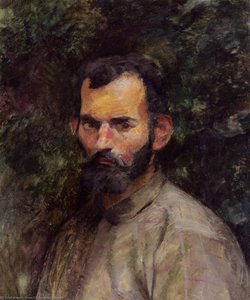 Man`s Head - henri de toulouse-lautrec
What story does the shadowed, dense background of Man’s Head by Henri de Toulouse-Lautrec tell about the artist's early introspective years? Painted in 1883, this profound work serves as a window into the psyche of a young master before he became the definitive chronicler of Montmartre’s neon-lit nightlife. The composition, a three-quarter portrait, utilizes a muted palette of rich browns, beiges, and subtle greens to evoke a sense of quiet, atmospheric depth. Unlike his later, more vibrant lithographs, this piece leans into the heavy textures of Post-Impressionism, using thick impasto brushstrokes to define the subject's features with emotional weight rather than photographic precision.
For the modern collector, bringing such a piece into a home offers a sophisticated escape into the soul of late 19th-century France. The painting’s ability to capture mood through light and shadow makes it a cornerstone among the top 25 artworks of Henri de Toulouse-Lautrec . Whether you are seeking a focal point for a study or a conversation piece for a gallery wall, our handmade oil reproductions allow you to possess this tactile piece of history, complete with the visible, expressive brushwork that defines Lautrec's legendary hand.
En Cabinet particulier - au Rat Mort - henri de toulouse-lautrec
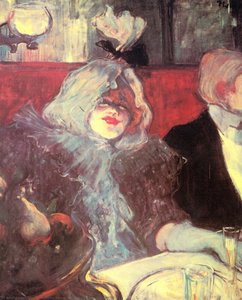 En Cabinet particulier - au Rat Mort - henri de toulouse-lautrec
In En Cabinet particulier – au Rat Mort , there is a gaze that follows you—not with judgment, but with a profound, quiet understanding . This work is far more than a mere depiction of a Parisian evening; it acts as a mirror to the soul of Montmartre. As we stand before this masterpiece, we see a woman seated at a table, her posture draped in both elegance and a haunting melancholy, surrounded by the smoky, intimate atmosphere of a private club.
Toulouse-Lautrec uses bold, expressive lines and a palette of muted tones punctuated by sudden light to capture the transient nature of pleasure. The presence of the wine glass and the subtle, dark symbolism of the titular "dead rat" remind us of the fleeting beauty found in the bohemian underworld. As one of the top 25 artworks of Henri de Toulouse-Lautrec , this painting invites you to bring that same sense of historical depth into your home. Imagine this evocative scene in your gallery; it does not merely watch you, but reminds you that you are part of this timeless, unfolding story.
La Toilette: Madame Fabre - henri de toulouse-lautrec
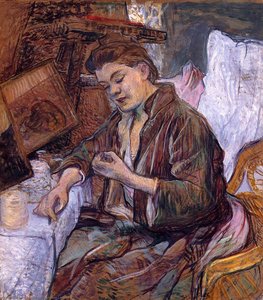 La Toilette: Madame Fabre - henri de toulouse-lautrec
In La Toilette: Madame Fabre , Henri de Toulouse-Lautrec demonstrates a profound mastery of soft, directional light that transforms a mundane private moment into a cinematic study of intimacy. The illumination gently washes over the subject as she sits upon her bed, creating a delicate play of highlights and subtle shadows that breathe life into the cluttered, lived-in atmosphere of her Parisian chamber. This sophisticated command of light—capturing the quiet glow of a private morning—is precisely what secures this work's place among the top 25 artworks of Henri de Toulouse-Lautrec .
The artist uses light not merely to reveal form, but to evoke a sense of psychological depth and stillness amidst the bohemian bustle of Montmartre. For the discerning collector, owning a handmade oil reproduction of this piece allows one to bring that same atmospheric warmth into a modern interior. When rendered with our signature visible brushstrokes on cotton canvas, the interplay of light and shadow in La Toilette adds an unparalleled layer of texture and historical luxury to any contemporary wall, serving as a window into the soul of 19th-century France.
Admiral Viaud - henri de toulouse-lautrec
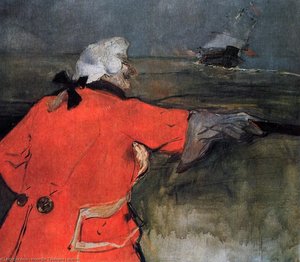 Admiral Viaud - henri de toulouse-lautrec
In Admiral Viaud , Henri de Toulouse-Lautrec demonstrates a profound command of dramatic illumination, utilizing a sharp, theatrical light that pierces the smoky atmosphere of the Belle Époque. The way the light catches the vibrant red of the subject's garment and glints off the metallic edge of the firearm creates a striking chiaroscuro effect, pulling the viewer into this moment of high tension. This masterful interplay between sudden brightness and deep, enveloping shadows is precisely what secures this work's place among the top 25 artworks of Henri de Toulouse-Lautrec ; it captures not just a figure, but an palpable sense of danger and nocturnal mystery.
When choosing a high-quality oil reproduction of this masterpiece, the visible brushstrokes and rich tonal range allow that signature light to breathe on your walls. A faithful hand-painted version brings a sophisticated depth to a contemporary interior, where the interplay of shadow and crimson can serve as a luxurious focal point, echoing the raw, electric energy of 19th-century Montmartre.
The Last Crunbs - henri de toulouse-lautrec
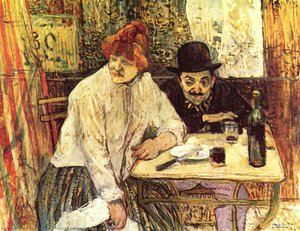 The Last Crunbs - henri de toulouse-lautrec
In The Last Crumb , Henri de Toulouse-Lautrec demonstrates a masterful command of light that transcends mere observation, turning a quiet moment in Montmartre into a profound study of atmosphere. The painting is anchored by a delicate play of chiaroscuro; the soft glow illuminating the woman’s white dress and fiery red hair contrasts sharply with the deep, velvety shadows pooling around the table. This intentional use of illumination does more than define form—it creates an intimate, almost voyeuristic window into the fin de siècle Parisian nightlife, capturing the flickering energy of a world caught between elegance and decadence.
It is this sophisticated manipulation of light and shadow that secures its place among the top 25 artworks of Henri de Toulouse-Lautrec . When captured in a handmade oil reproduction , the depth of these tonal shifts becomes even more palpable. The visible brushstrokes and rich textures of an oil painting allow the light to dance across the canvas, adding a layer of historical luxury and emotional weight to any contemporary interior. Owning such a piece is not merely about decor; it is about bringing the soulful, flickering candlelight of 1891 into the modern home.
Allegory Springtime of Life - henri de toulouse-lautrec
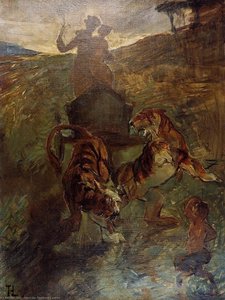 Allegory Springtime of Life - henri de toulouse-lautrec
In Allegory Springtime of Life , painted in 1883, we encounter a rare, vibrant precursor to the gritty Montmartre scenes that would later define Toulouse-Lautrec. This work is a breathtaking exploration of vitality and the primal tension between civilization and untamed instinct. The canvas is anchored by the powerful presence of a horse, stretching across the composition, accompanied by two magnificent tigers whose focused gazes create an electric sense of anticipation. The rider, poised with a bow, embodies a spirit of adventure, bridging the gap between human skill and raw, natural passion.
Toulouse-Lautrec utilizes a rich palette of deep greens, earthy browns, and sudden flashes of orange to capture the energy of a new season. Through loose, expressive brushwork, the artist breathes life into the musculature of the animals and the lushness of the grassy field, symbolizing fertile potential and rebirth. To bring this transformative masterpiece into your own collection, our hand-painted oil reproductions capture every textured stroke and symbolic depth, allowing you to surround yourself with the legendary soul of Parisian genius.
Reclining nude - henri de toulouse-lautrec
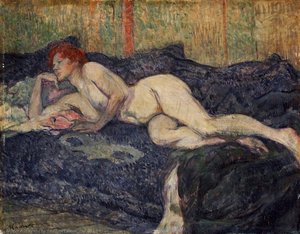 Reclining nude - henri de toulouse-lautrec
In the 1897 masterpiece Reclining Nude , Henri de Toulouse-Lautrec invites us into a private, hushed corner of Montmartre, far from the neon glare of the Moulin Rouge. This work is not merely a depiction of bodies; it is an intimate study of shared repose and quiet vulnerability. The composition captures two figures entwined in a moment of profound stillness, where the soft light plays across skin and the presence of a discarded book suggests a narrative interrupted by intimacy.
Toulouse-Lautrec’s genius lies in his ability to find dignity within the bohemian fringes of Paris. Through bold lines and an evocative palette, he transforms a transient moment into a lasting legacy of human connection. Owning a reproduction of this Reclining Nude is more than a decorative choice; it is an inheritance of the Post-Impressionist spirit. At ArtsDot.com, we allow you to bring this lineage of taste into your own home through our museum-grade, hand-painted oil reproductions, ensuring that the raw, emotional depth of Lautrec’s vision remains a living presence on your walls.
At the Cafe. The Customer and the Anemic Cashier - henri de toulouse-lautrec
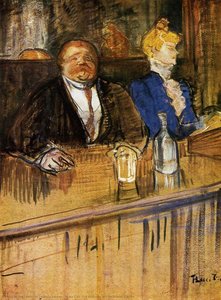 At the Cafe. The Customer and the Anemic Cashier - henri de toulouse-lautrec
In At the Cafe. The Customer and the Anemic Cashier , there is a gaze that follows you—not with judgment, but with understanding . This piece serves as more than a mere depiction of a Parisian nocturne; it is a mirror reflecting the weary, flickering soul of Montmartre. Through Toulouse-Lautrec’s signature Post-Impressionist lens, we are drawn into a dimly lit establishment where the heavy, organic shapes of the seated patron and the pale, exhausted figure of the cashier collide under artificial light.
The artist utilizes loose, expressive brushstrokes and a flattened perspective to capture the palpable tension and melancholy of urban life. The interplay of deep shadows and sudden highlights creates a tactile, almost restless energy on the canvas. As one of the top 25 artworks of Henri de Toulouse-Lautrec , this painting invites you to inhabit the smoky atmosphere of the Belle Époque. Imagine bringing this profound sense of human connection into your own home; it does not merely watch you, but reminds you that even in the most fleeting, mundane moments, we are all part of a larger, beautiful story.
At the Cirque Fernando. Rider on a White Horse - henri de toulouse-lautrec
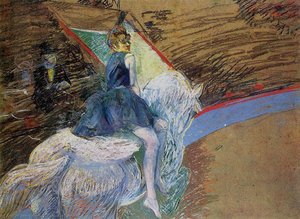 At the Cirque Fernando. Rider on a White Horse - henri de toulouse-lautrec
Acquiring At the Cirque Fernando. Rider on a White Horse by Henri de Toulouse-Lautrec is more than an acquisition of art; it is an investment in the enduring legacy of Post-Impressionist mastery and refined taste. As one of the top 25 artworks of Henri de Toulouse-Lautrec, this piece captures the raw, electric pulse of late 19th-century Montmartre. The composition presents a striking juxtaposition: a woman in a vibrant blue dress clings to a powerful white horse, her form rendered with the artist's signature, energetic brushwork. Lautrec utilizes a shimmering, almost pointillist technique to capture the fleeting light and the restless energy of the circus ring.
Beyond its historical significance as a window into Parisian bohemian life, the painting’s dramatic movement and bold color palette offer immense aesthetic authority. For the discerning collector, a high-quality, hand-painted oil reproduction serves as a profound focal point in modern luxury interiors, bringing the sophisticated, atmospheric soul of the Belle Époque into a contemporary architectural setting.
Hangover - henri de toulouse-lautrec
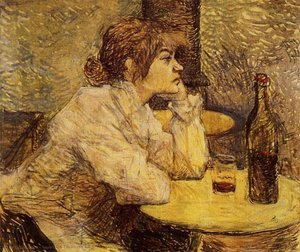 Hangover - henri de toulouse-lautrec
In the quiet, heavy stillness following a night of Montmartre revelry, Hangover emerges as a profound cinematic moment captured by Henri de Toulouse-Lautrec. The scene is intimate and raw; we find Suzanne Valadon, a frequent subject in the artist's circle, lost in a solitary, melancholic trance. As she tilts a wine bottle toward her lips, the world around her seems to dissolve into the smoky, dim atmosphere of a late-night Parisian salon.
Toulouse-Lautrec masterfully employs deep, saturated tones—rich reds and shadowed blues—to evoke the lingering glow of gaslight. His signature loose brushwork creates a sense of movement even in this moment of stasis, capturing the texture of the tabletop and the delicate ribbon in her hair with an impressionistic touch. This masterpiece does more than depict a weary model; it invites a sense of reflective depth into a modern home. Whether displayed as a large-format oil reproduction or a striking multi-panel set, the painting’s moody elegance provides a sophisticated focal point that inspires quiet contemplation and adds a layer of historical soul to any contemporary interior.
Jockeys - henri de toulouse-lautrec
 Jockeys - henri de toulouse-lautrec
To gaze upon Jockeys is to experience a sudden, breathless encounter with the pulse of 19th-century Paris. In this early work, Henri de Toulouse-Lautrec captures more than just a winter scene; he freezes a moment of kinetic energy where the elegance of sport meets the raw, snowy atmosphere of the street. The striking contrast of the riders' red jackets against the muted, wintry landscape creates a visual rhythm that is both startling and deeply evocative.
This piece earns its place among the top 25 artworks of Henri de Toulouse-Lautrec because it foreshadows his mastery of line and his ability to find drama in the everyday. It serves as a vital precursor to his later, more famous explorations of Montmartre, showcasing an early fascination with movement and social strata. At ArtsDot.com, we honor this legacy through our hand-painted oil reproductions . Our artists meticulously recreate every bold stroke and tonal shift on 100% cotton canvas, allowing you to bring the vibrant, historical soul of Toulouse-Lautrec’s Paris into your own private collection with museum-grade authenticity.
Old Man at Celeyran - henri de toulouse-lautrec
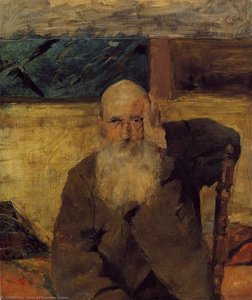 Old Man at Celeyran - henri de toulouse-lautrec
In Old Man at Celeyran , painted in 1882, we encounter a profound departure from the frenetic energy of Montmartre, finding instead a poignant meditation on aging and rural dignity. This early work captures a moment of heavy stillness; an elderly gentleman sits enveloped in a muted palette of ochres and deep shadows, his weathered features illuminated by a soft, contemplative light. The presence of birds within the composition serves as a delicate symbol of observation and the fleeting nature of life, inviting the viewer into a silent dialogue with the subject's inner world.
As one of the most evocative pieces among the top 25 artworks of Henri de Toulouse-Lautrec , this painting resonates deeply with modern sensibilities that value authenticity and the beauty found in quiet, unadorned moments. The textured, expressive brushwork—a precursor to his later Post-Impressionist mastery—creates a tactile depth that is perfectly preserved in our hand-painted oil reproductions . For collectors seeking to bring a sense of historical gravity and soulful reflection to their homes, this masterpiece offers an enduring connection to the artist's empathetic gaze.
The morisca dance - henri de toulouse-lautrec
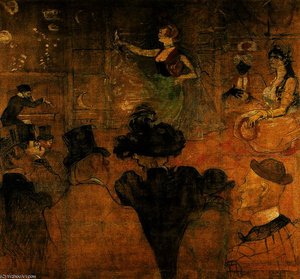 The morisca dance - henri de toulouse-lautrec
In The Morisca Dance , Henri de Toulouse-Lautrec does not merely depict a social gathering; he composes a visual sonata of Montmartre’s nocturnal pulse. The light within this masterpiece is not simply illumination—it is a language. Through a masterful use of broken color, Lautrec invites the eye to dance across deep reds and shimmering golds, capturing the artificial glow of gaslight that defines the Parisian cabaret era. The central figure, lost in the rhythm of the performance, serves as the emotional anchor amidst a sea of captivated onlookers.
Every brushstroke vibrates with the energy of the Belle Époque, utilizing bold lines and flattened perspectives inspired by Japanese prints to create an immersive, theatrical atmosphere. This work stands among the top 25 artworks of Toulouse-Lautrec because it captures the very soul of bohemian intrigue. For the discerning collector, owning a hand-painted oil reproduction of this piece means bringing that electric, historical vitality into your own space, transforming a simple wall into a portal to the vibrant streets of 19th-century Paris.
Conclusion
To wander through the works of Henri de Toulouse-Lautrec is to walk through the flickering gaslight of a bygone era, feeling the pulse of Montmartre as if the music of the cabaret were still playing just beyond the frame. These twenty-five masterpieces are far more than mere historical artifacts or relics of the Belle Époque; they are living presences that continue to breathe life into our modern world. Each stroke of his brush—capturing the weary grace of a dancer or the sharp, observant gaze of a café regular—serves as a bridge across time, connecting the bohemian soul of 19th-century Paris to the contemporary heart.
When we bring these works into our own spaces, we do not merely decorate a wall; we invite a timeless conversation into our homes. There is a profound, quiet magic in how a single canvas can transform a room, offering a window into the resilience and vibrant humanity that Toulouse-Lautrec so tenderly documented. His legacy reminds us that art is an enduring dialogue between the artist’s hand and the admirer’s eye, a continuous loop of emotion that refuses to fade with the passing centuries.
As we conclude this journey through his most iconic visions, we invite you to continue exploring the shadows and lights of his extraordinary world. Whether you seek to capture the movement of a Parisian night or the intimate stillness of a portrait, you may discover your next inspiration within our full collection . May these works continue to move your heart, shape your surroundings, and remind you of the beautiful, shared humanity that binds us all.