Introduction
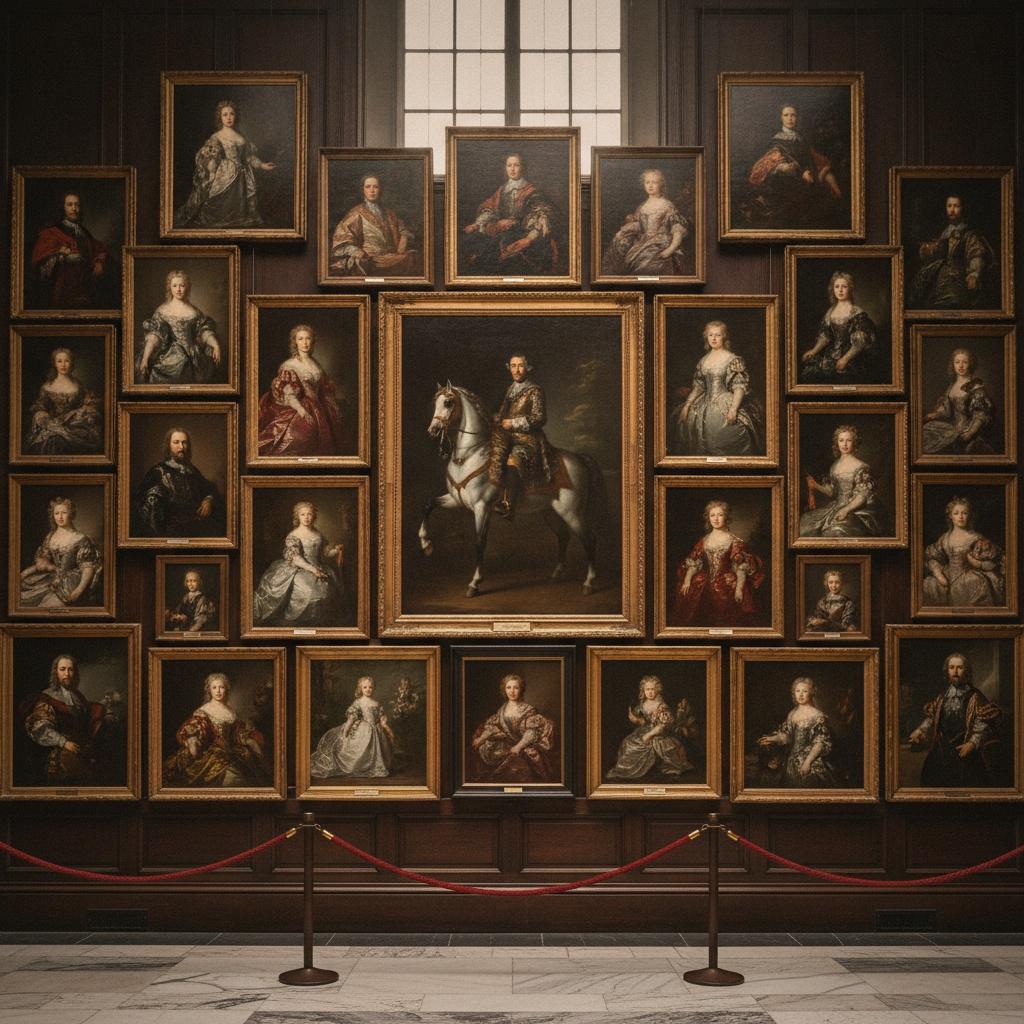
To step into the world of Sir Anthony van Dyck is to enter an era of unparalleled grace, where the heavy textures of the Baroque period meet a newfound, ethereal elegance. As you wander through this curated selection of his top twenty-five masterpieces, you are not merely looking at portraits; you are witnessing the birth of a visual language of nobility. Van Dyck possessed a singular, almost magical ability to capture the sprezzatura —that effortless, studied nonchalance—of the European aristocracy. Through his brush, silk becomes luminous, lace becomes intricate architecture, and the very air around a sitter seems to shimmer with social prestige and quiet intellect.
Born in Antwerp and shaped by the vigorous influence of Peter Paul Rubens, Van Dyck’s journey took him from the vibrant workshops of Flanders to the sun-drenched palazzos of Genoa, and ultimately to the prestigious court of King Charles I in England. This movement across Europe allowed him to synthesize the muscular energy of the Flemish tradition with the sophisticated, elongated refinement found in Italian Mannerism. His work became the definitive standard for royal portraiture, establishing a legacy that would influence generations of painters, from Gainsborough to Velázquez.
These artworks remain profoundly meaningful today because they transcend simple documentation. They are studies in human dignity and the psychological depth of the sitter. In an age of fleeting digital images, Van Dyck’s canvases offer a permanent, tactile encounter with history—a way to feel the weight of velvet and the solemnity of a gaze that has survived centuries. Whether it is the commanding presence of a monarch or the tender intimacy of a family group, his mastery of light and shadow continues to stir the modern soul.
In the following pages, we invite you to explore this definitive collection. From his most iconic royal commissions to his delicate character studies, each piece in this list represents a pinnacle of Baroque achievement. Prepare to encounter the man who did not just paint history, but gave it its most beautiful face.
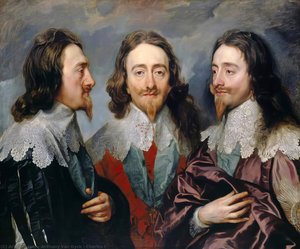
Charles I in Three Positions - Sir Anthony van Dyck
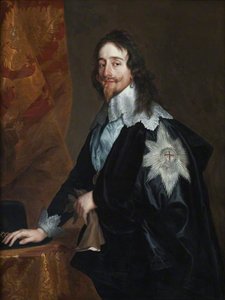
In Charles I in Three Positions , Sir Anthony van Dyck achieves a rare feat of psychological and technical virtuosity, capturing the very essence of sovereign dignity through a multi-perspective lens. This masterpiece stands as a cornerstone of his top 25 works because it transcends traditional portraiture; rather than a single moment, it offers a rhythmic study of a monarch’s presence, presenting the King in profile, face-on, and three-quarter view. The dramatic chiaroscuro illuminates the intricate textures of lace and velvet, while the somber, regal palette creates an atmosphere of profound gravity.
Beyond its historical role as a reference for Bernini’s sculpture, the painting’s sophisticated use of light and triangular composition offers timeless inspiration for modern interior curation. The interplay of deep shadows and luminous skin tones provides a dramatic focal point that complements both classical and contemporary architectural spaces. For collectors seeking to bring the opulence of the English court into a private residence, this work serves as an unparalleled symbol of status and refined aesthetic grace.
Portrait of the Princes Palatine Charles-Louis I and his Brother Robert - Sir Anthony van Dyck
 Portrait of the Princes Palatine Charles-Louis I and his Brother Robert - Sir Anthony van Dyck
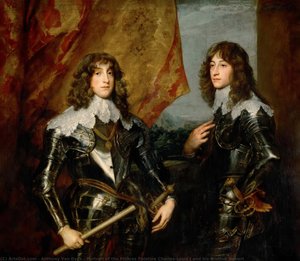
What story does the atmospheric backdrop of the Portrait of the Princes Palatine Charles-Louis I and his Brother Robert by Sir Anthony van Dyck tell about the weight of royal expectation? Painted in 1637, this masterwork emerged from a period where portraiture served as the ultimate instrument of political legitimacy. Van Dyck utilizes dramatic chiaroscuro to sculpt the young princes from deep shadows, highlighting the metallic brilliance of their engraved armor and the opulent crimson drapery that surrounds them.
The composition is a profound study in texture and status, where the cold steel of breastplates meets the soft, luminous skin tones characteristic of his refined Baroque style. For the modern collector seeking an escape into historical grandeur, this painting offers more than mere decoration; it provides a window into an era of unparalleled aristocratic splendor. Integrating such a piece into a curated interior allows one to evoke a sense of timelessness and disciplined strength. Whether you are drawn to the meticulous detail of the fine embroidery or the subtle landscape visible through the window, this work remains a cornerstone among the top 25 artworks of Sir Anthony van Dyck , bringing a palpable sense of history and nobility into the contemporary home.
Self-Portrait - Sir Anthony van Dyck
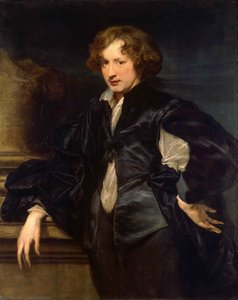 Self-Portrait - Sir Anthony van Dyck
In his 1622 Self-Portrait , the tactile brilliance of Van Dyck’s early mastery is immediately evident in the way the light catches the heavy, dark textures of his attire. One can almost feel the weight of the fabric and the meticulous precision of the brushstrokes that define the subtle sheen of his clothing and the commanding posture of his hands on his hips. This work is a cornerstone of the top 25 artworks of Sir Anthony van Dyck because it captures the exact moment a young prodigy began to transcend the exuberant influence of Rubens, moving toward a more refined, psychological elegance.
The painting’s power lies in its atmospheric depth and the direct, soulful gaze that engages the viewer across centuries. At ArtsDot.com, we strive to preserve this three-dimensional soul for your private collection. Our handmade oil reproductions utilize authentic, visible brushwork on 100% cotton canvas, ensuring that the dramatic chiaroscuro and the velvety textures of this Flemish masterpiece are translated into a physical, tactile experience that brings the grandeur of the Hermitage Museum directly into your home.
Samson and Delilah - Sir Anthony van Dyck
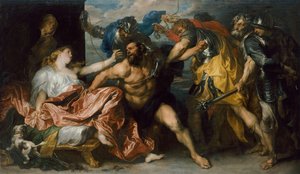 Samson and Delilah - Sir Anthony van Dyck
What story does the heavy, shadow-drenched atmosphere of Samson and Delilah by Sir Anthony van Dyck tell us about the fragility of power? Created around 1630, this work stands as a pinnacle among the top 25 artworks of Sir Anthony van Dyck because it transcends mere biblical illustration to become a psychological thriller in oil. Van Dyck utilizes a masterful chiaroscuro to sculpt the tension between Samson’s vulnerable repose and Delilah’s calculated betrayal, capturing the exact moment where divine strength meets human treachery.
The painting’s rich textures—from the luminous sheen of skin to the heavy, luxurious fabrics—offer a sensory escape into the Baroque era. For the modern collector, possessing a hand-painted reproduction of this masterpiece allows one to bring this profound sense of historical drama and emotional depth into a contemporary space. Whether through the visible brushstrokes of an oil painting or a large-format mural, integrating such a high-stakes narrative into your home decor evokes a sophisticated connection to the eternal struggle between faith and doubt.
Deposition - Sir Anthony van Dyck
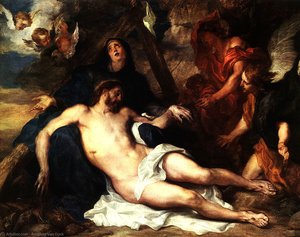 Deposition - Sir Anthony van Dyck
In the profound stillness of Sir Anthony van Dyck’s Deposition (1634), time appears to suspend itself, capturing a moment of unparalleled spiritual and human gravity. As one of the most significant entries in our collection of the top 25 artworks of Sir Anthony van Dyck, this masterpiece exemplifies the Flemish Baroque tradition by blurring the boundaries between the divine and the earthly. Through a masterful application of chiaroscuro , Van Dyck sculpts figures from deep, velvety shadows, using light to illuminate the tearful expressions of Mary Magdalene and the soulful gaze of John the Apostle.
The painting transcends mere religious iconography; it is a meditation on mortality, sacrifice, and the enduring weight of grief. The rhythmic drama of the composition—where heavy, luminous drapery meets the tactile reality of physical suffering—invites viewers to contemplate the very essence of human empathy. For the sophisticated collector, bringing a reproduction of this work into a modern space creates a timeless conversation between historical grandeur and contemporary decor, offering a focal point of profound intellectual and aesthetic depth that anchors any curated environment.
Portrait of Mary Ruthven, wife of the artist - Sir Anthony van Dyck
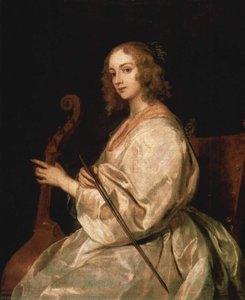 Portrait of Mary Ruthven, wife of the artist - Sir Anthony van Dyck
In the Portrait of Mary Ruthven, wife of the artist , Sir Anthony van Dyck invites us into the most intimate sanctum of his private life. Painted in 1640, this work transcends mere portraiture; it is a profound study of grace and quiet dignity. As you observe Mary seated with her hands resting upon the strings of a violin, you feel the palpable atmosphere of a life shaped by both aristocratic lineage and the burgeoning prestige of the Flemish master. Van Dyck utilizes his legendary chiaroscuro technique to sculpt her form, allowing a soft, ethereal light to dance across the delicate textures of her gown while the background recedes into a mysterious, velvety shadow.
This masterpiece captures more than a likeness; it captures a social ascent. Through the masterful handling of light and the impressionistic fluidity of his late brushwork, van Dyck immortalizes a union that bridged Scottish nobility with the heights of the English court. To possess a hand-painted oil reproduction of this work is to bring this very sense of historical intimacy into your own home, transforming a simple wall into a gallery of the soul.
Virgin with Donors - Sir Anthony van Dyck
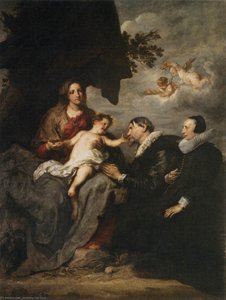 Virgin with Donors - Sir Anthony van Dyck
In Virgin with Donors , Sir Anthony van Dyck captures a profound intersection of divine grace and earthly prestige. This 1630 masterpiece transcends simple religious iconography, serving as a breathtaking tableau where the ethereal meets the aristocratic. The painting radiates a quiet, luminous sanctity; the Virgin Mary is bathed in a soft, celestial light that seems to emanate from within her very skin, cradling the Christ Child with an almost palpable tenderness.
As you observe the kneeling donors, you witness the Baroque fascination with hierarchy and devotion. Van Dyck utilizes a sophisticated sfumato technique to blur the boundaries between the heavenly angels and the mortal patrons, creating a seamless, atmospheric dreamscape. This interplay of rich textures—from the delicate folds of drapery to the soft glow of angelic presence—remains a powerful cultural touchstone for those seeking elegance in modern interiors. For collectors of the top 25 artworks of Sir Anthony van Dyck, this piece represents the pinnacle of his ability to infuse portraiture with spiritual depth. To bring this era of refined nobility into your own collection, consider our museum-quality handmade oil reproductions, which preserve every delicate brushstroke and tonal nuance of this Flemish treasure.
Saint Rosalie Interceding for the City of Palermo - Sir Anthony van Dyck
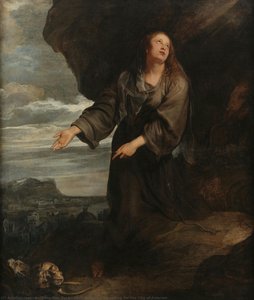 Saint Rosalie Interceding for the City of Palermo - Sir Anthony van Dyck
In Saint Rosalie Interceding for the City of Palermo , the viewer is immediately struck by the profound tactile contrast between the somber, shadowed textures of the cavern and the luminous, ethereal glow enveloping the Saint. Van Dyck employs a masterful Baroque technique, using dramatic chiaroscuro to animate the scene; notice how the light catches the delicate petals of the rose crown and the stark, bone-white texture of the skeletal remains. This interplay of light and shadow does more than depict a miracle; it captures the very breath of divine intervention during the Sicilian plague.
As one of the most significant entries in our collection of the top 25 artworks of Sir Anthony van Dyck , this piece demands a medium that respects its emotional weight. At ArtsDot.com, we strive to preserve this three-dimensional soul through our handmade oil reproductions. Our artists utilize thick, visible brushstrokes and rich impasto to recreate the physical depth of Van Dyck’s original vision, ensuring that the spiritual intensity and the heavy, atmospheric textures of this 1630 masterpiece are tangibly present in your own home.
Untitled (D2X2RT) - Sir Anthony van Dyck
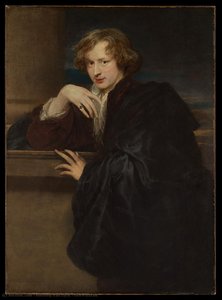
To gaze upon Untitled (D2X2RT) is to encounter the quiet, introspective soul of a master at the dawn of his greatness. In this 1620 self-portrait, we witness Sir Anthony van Dyck not as the celebrated court painter of Charles I, but as a young, ambitious virtuoso capturing his own essence through a lens of profound dignity. The painting resonates with a universal sense of self-reflection; the way his gaze drifts downward, framed by the soft, diffused light of an architectural backdrop, invites us into his private moment of contemplation.
This work earns its place among the top 25 artworks of Sir Anthony van Dyck because it serves as a technical blueprint for the Baroque era. Through meticulous glazes and a masterful command of chiaroscuro, Van Dyck imbues the black robes and subtle jewelry with a tactile, luminous reality that defines his legendary style. At ArtsDot.com, we honor this legacy by offering hand-painted oil reproductions that preserve these very textures—the visible brushstrokes and deep tonal ranges—allowing you to bring the sophisticated elegance of the Flemish Baroque into your own contemporary space.
Genoese Noblewoman - Sir Anthony van Dyck
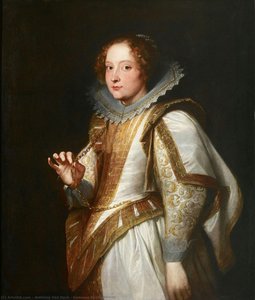 Genoese Noblewoman - Sir Anthony van Dyck
In the quiet depths of Genoese Noblewoman by Sir Anthony van Dyck, time seems to suspend itself within a single, luminous breath of light and shadow. This masterpiece stands among the top 25 artworks of Sir Anthony van Dyck because it captures the very essence of Baroque sophistication, blending the raw energy of his mentor Rubens with a new, refined grace. The painting breathes with sensory richness; one can almost feel the crisp texture of the intricate lace and the heavy, luxurious weight of the embroidered silk farthingale. Van Dyck employs a masterful chiaroscuro , where soft light sculpts the subject's delicate features against a profound, velvety darkness, imbuing the portrait with an intimate, theatrical soul.
For the modern collector, this work offers more than historical insight; it brings a sense of dignified composure and timeless elegance to a contemporary space. Whether displayed as a large-scale oil reproduction or a focused study, its harmonious balance of deep tones and radiant highlights provides a sophisticated anchor for any refined interior. It is not merely a portrait of wealth, but a window into the enduring beauty of the human spirit.
Venus in der Werkstatt des Vulkan (Thetis empfängt von Hephaistos die Waffen für Achill) - Sir Anthony van Dyck
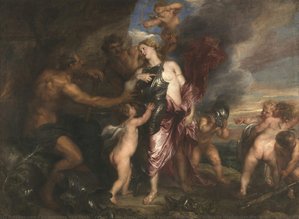 Venus in der Werkstatt des Vulkan (Thetis empfängt von Hephaistos die Waffen für Achill) - Sir Anthony van Dyck
Before he became the definitive voice of the English court, Sir Anthony van Dyck was refining a dramatic intensity that could transform a mere mythological scene into a visceral experience. In Venus in der Werkstatt des Vulkan , we witness this peak Baroque mastery. The painting captures the high-stakes moment where the goddess Thetis receives the celestial armor for Achilles, set within the sweltering, subterranean forge of Hephaestus. Van Dyck orchestrates a breathtaking dance of chiaroscuro , where deep, velvety shadows collide with the brilliant, golden glint of polished shields and unsheathed swords.
The composition is a dense, vibrant tapestry of divine industry; angels and nymphs move through a haze of heat and light, their forms rendered with a regal palette of crimson and burnished gold. This work stands as one of the top 25 artworks of Sir Anthony van Dyck because it transcends simple storytelling to evoke the very weight of destiny. For the modern professional, such a masterpiece offers more than decoration; hanging this profound display of craftsmanship in a study or home office provides an atmosphere of monumental grandeur and focused, creative ambition.
Rinaldo and Armida - Sir Anthony van Dyck
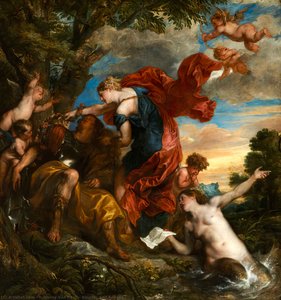 Rinaldo and Armida - Sir Anthony van Dyck
To step before Rinaldo and Armida is to be swept into the heart of a Baroque tempest, where the boundaries between enchantment and duty dissolve. Created in 1629, this masterpiece stands as a definitive highlight among the top 25 artworks of Sir Anthony van Dyck , capturing the artist at the height of his expressive power. The scene, drawn from Tasso’s epic poetry, vibrates with a theatrical energy; the sorceress Armida commands the canvas in flowing, crimson drapery, her gestures as commanding as they are seductive. Van Dyck employs a masterful chiaroscuro , allowing brilliant highlights to dance across muscular figures and soft skin, while deep, velvety shadows shroud the surrounding mythological beings.
The palette is a rich tapestry of golds, deep blues, and intense reds, applied with a brushwork that feels both fluid and monumental. As you observe the swirling movement of the cherubs and the dramatic sunset landscape in the background, the painting transcends mere myth to become a profound exploration of human passion. Bringing such a work into a modern collection offers more than decoration; it introduces a timeless, soulful gravity that transforms any room into a sanctuary of historical grandeur.
Frans Snyders - Sir Anthony van Dyck
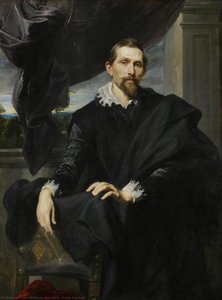 Frans Snyders - Sir Anthony van Dyck
To gaze upon Frans Snyders is to witness a profound moment of human aspiration captured in oil. In this 1620 masterpiece, Sir Anthony van Dyck does more than record a likeness; he orchestrates a symphony of status and shadow. The portrait captures the quiet, dignified confidence of Snyders, a master of the still life, draped in the luxurious blacks and crisp whites that defined the Antwerp elite. It earns its place among the top 25 artworks of Sir Anthony van Dyck through its exquisite use of chiaroscuro , where dramatic light sculpts the sitter's features against a velvety darkness, creating an atmosphere of palpable prestige.
The technical brilliance—the tactile rendering of lace and the heavy, soulful drapery—serves as a testament to Van Dyck’s early genius under Rubens. This painting is not merely a historical relic but a living study of texture and light. At ArtsDot.com, we honor this legacy through our hand-painted oil reproductions . Our artists meticulously recreate every visible brushstroke and tonal depth on 100% cotton canvas, allowing you to bring the commanding elegance of the Flemish Baroque into your own private collection.
Pentecost - Sir Anthony van Dyck
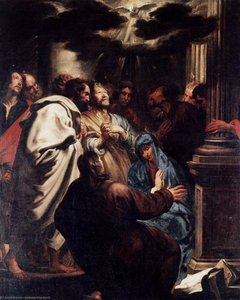 Pentecost - Sir Anthony van Dyck
In observing Pentecost by Sir Anthony van Dyck, one is immediately struck by the luminous vitality of the brushwork, where the artist’s early mastery of light begins to emerge from the shadows of his training under Rubens. The texture of the oil on canvas captures a profound spiritual tension; notice how the radiant, divine glow interacts with the heavy, tactile folds of the drapery and the architectural weight of the classical columns. This work stands as a vital entry in our collection of the top 25 artworks of Sir Anthony van Dyck because it captures the precise moment where religious fervor meets Baroque elegance, utilizing chiaroscuro to animate the apostles' faces with awe and devotion.
At ArtsDot.com, we strive to preserve this exact sensory experience. Our handmade oil reproductions are meticulously crafted to honor the three-dimensional quality of Van Dyck’s original vision. Through visible brushstrokes and a rich, deep tonal range on 100% cotton canvas, we bring the dramatic revelation of this masterpiece into your private collection, ensuring the spiritual and physical depth of the Flemish Master remains palpable in your home.
Margareta de Vos - Sir Anthony van Dyck
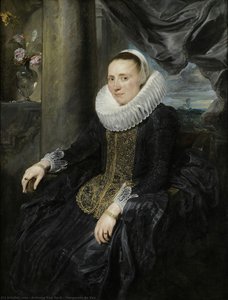 Margareta de Vos - Sir Anthony van Dyck
Acquiring a piece such as Margareta de Vos by Sir Anthony van Dyck is an investment in a profound legacy of taste and aristocratic refinement. As one of the most significant works within the top 25 artworks of Sir Anthony van Dyck, this 1620 masterpiece serves as a vital link to the Flemish Baroque tradition. The painting captures a moment of quiet prosperity, where the subject's modest, clasped hands and dignified gaze are illuminated by a soft, window-side light that highlights the intricate textures of her ruffled collar.
The true virtuosity lies in the foreground, where a glass vase brimming with vibrant blossoms showcases Van Dyck’s unparalleled mastery of light refraction and color theory. The interplay of buttery yellows and deep blues creates a sensory experience that has captivated collectors for centuries. For the modern connoisseur, this work offers an unmatched aesthetic authority; a high-quality oil reproduction brings this historical splendor into contemporary luxury interiors, allowing the painting's timeless elegance and symbolic richness to anchor a sophisticated living space with the prestige of the Old Masters.
Nicolas Lanier - Sir Anthony van Dyck
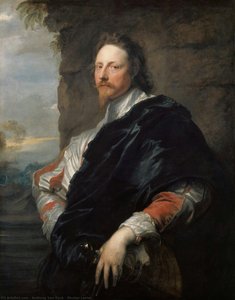 Nicolas Lanier - Sir Anthony van Dyck
To gaze upon Nicolas Lanier is to witness the very essence of 17th-century nobility captured in a single, breathless moment of poise. In this 1628 masterpiece, Sir Anthony van Dyck does more than record a likeness; he breathes life into the concept of sprezzatura —that elusive, effortless grace that defined the Stuart court. The way the light dances across the crisp white linen and settles into the deep, velvety shadows of Lanier’s attire evokes a profound sense of quiet authority and timeless elegance.
This work earns its place among the top 25 artworks of Sir Anthony van Dyck through its masterful use of chiaroscuro and its profound emotional resonance. Van Dyck utilizes a rich, dramatic palette and atmospheric perspective to transform a formal portrait into a window onto a vanished era of splendor. At ArtsDot.com, we believe such historical grandeur should not be confined to museum walls. Our hand-painted oil reproductions are meticulously crafted by skilled artists to preserve every visible brushstroke and luminous glaze, allowing you to invite the sophisticated soul of the Baroque era into your own private collection.
Jacqueline van Caestre - Sir Anthony van Dyck
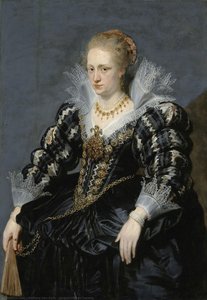 Jacqueline van Caestre - Sir Anthony van Dyck
To stand before a masterpiece is to witness the precise moment where history meets human emotion. In 1622, a young and ascending Sir Anthony van Dyck captured such a moment in Jacqueline van Caestre . This portrait serves as a profound testament to the artist's early mastery of the Baroque aesthetic, long before he reached the heights of the English court. The painting is a breathtaking study in chiaroscuro ; a soft, ethereal light sweeps across the canvas from the left, sculpting the subject’s features and illuminating the opulent gold embroidery of her sumptuous black gown.
Every brushstroke reveals Van Dyck's obsession with texture—from the delicate, translucent lace at her neckline to the lustrous sheen of pearls against her skin. The muted blue background provides a serene stage, ensuring that Jacqueline’s direct, engaging gaze remains the emotional anchor of the work. As one of the top 25 artworks of Sir Anthony van Dyck , this piece transcends mere documentation of status; it is a living embodiment of grace. Bringing such a reproduction into a modern home allows the dramatic light and aristocratic dignity of the 17th century to transform any space into a private gallery of timeless elegance.
Portrait of Anna Dalkeith, Countess of Morton, and Lady Anna Kirk - Sir Anthony van Dyck
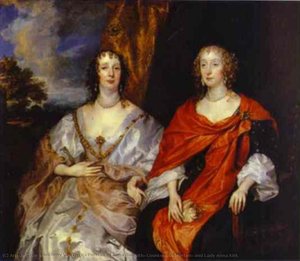 Portrait of Anna Dalkeith, Countess of Morton, and Lady Anna Kirk - Sir Anthony van Dyck
In the Portrait of Anna Dalkeith, Countess of Morton, and Lady Anna Kirk , a profound sense of regal warmth is established through the striking dominance of deep, crimson red. This rich hue, found in the Countess’s velvet gown, anchors the composition, creating an atmosphere of dignified passion and historical weight that immediately draws the viewer into the 17th-century Scottish court. Van Dyck’s mastery lies in how this intense red interacts with the luminous, pristine white silk of Lady Anna’s attire, a coloristic tension that exemplifies his place among the top 25 artworks of Sir Anthony van Dyck.
The interplay of light and shadow—the classic chiaroscuro —infuses the scene with a soft, ethereal glow, making the textures of lace and jewel feel almost tactile. For the modern collector, this painting offers incredible inspiration for interior curation; the sophisticated palette of deep reds and creamy whites can be used to anchor a dining room or study, providing an emotional depth that evokes timeless elegance. Whether you are admiring the original at the Hermitage or seeking a high-quality oil reproduction to bring this Baroque splendor into your home, Van Dyck’s ability to capture both nobility and quiet grace remains unparalleled.
The Lamentation - Sir Anthony van Dyck
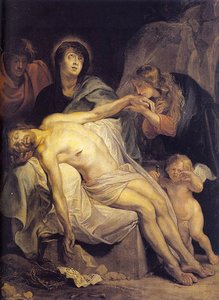 The Lamentation - Sir Anthony van Dyck
In The Lamentation , painted in 1620, we witness the raw, burgeoning genius of a young Sir Anthony van Dyck. Before he became the refined chronicler of English royalty, he was a master of profound, visceral emotion. This work is not merely a depiction of grief; it is a symphony of shadows and light. The artist does not simply illuminate the mourning figures—the Virgin Mary, Saint John, and the others—he composes the light to act as a silent narrator of sorrow.
The dramatic chiaroscuro creates a theatrical stage where every highlight on a tear-streaked face or a heavy fold of drapery feels like a sudden intake of breath. Through a pyramidal composition and a palette of somber reds and deep golds, Van Dyck captures the weight of divine loss. This masterpiece stands in our collection as a testament to the Baroque era's power to move the soul. For those seeking to bring this profound historical gravity into their own spaces, our hand-painted oil reproductions capture every expressive brushstroke and textured detail, allowing this portal of spiritual intensity to reside permanently within your home.
Lady Elizabeth Thimbelby and her Sister - Sir Anthony van Dyck
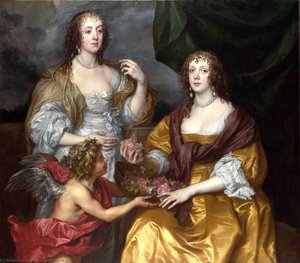 Lady Elizabeth Thimbelby and her Sister - Sir Anthony van Dyck
To gaze upon Lady Elizabeth Thimbelby and her Sister is to encounter a profound sense of tenderness and aristocratic poise that defines the very essence of Sir Anthony van Dyck’s genius. The painting captures an intimate, almost celestial moment; as one sister cradles a newborn while the other holds delicate blossoms, their expressions reflect a quiet, shared devotion that transcends the centuries. Van Dyck masterfully weaves together the earthly and the divine, using hovering angels and lush botanical motifs to elevate this courtly portrait into a universal meditation on lineage, nurturing, and the fleeting beauty of life.
The technical brilliance—the luminous skin tones contrasted against deep, jewel-toned velvets—creates a sensory experience that is both opulent and deeply moving. As one of the top 25 artworks of Sir Anthony van Dyck, this piece offers more than mere historical documentation; it provides an emotional anchor for the home. Bringing a hand-painted oil reproduction of this masterpiece into your personal sanctuary can transform a room into a space of profound reflection, surrounding you with the timeless elegance and serene grace of the English Baroque era.
Prince charles louis, count palatine - Sir Anthony van Dyck
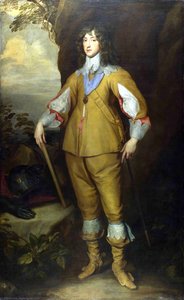 Prince charles louis, count palatine - Sir Anthony van Dyck
To gaze upon Prince Charles Louis, Count Palatine by Sir Anthony van Dyck is to be transported into a realm of profound aristocratic poise and Baroque theatricality. This masterpiece earns its place in our curated selection of the top 25 artworks of Sir Anthony van Dyck through its breathtaking ability to blend human character with symbolic grandeur. Van Dyck utilizes a sophisticated chiaroscuro, where light sculpts the sitter's blue jacket and crisp white linen against a soft, naturalistic backdrop, creating an almost three-dimensional presence that commands the viewer's attention.
The inclusion of the black bear adds a layer of enigmatic symbolism, perhaps representing strength or the mastery of nature, which elevates the portrait from a mere likeness to a complex narrative of power. This work exemplifies the artist's unparalleled gift for capturing the very essence of status. At ArtsDot.com, we believe such beauty should be accessible to all; through our meticulous, hand-painted oil reproductions, you can bring this transformative presence and the opulent spirit of the seventeenth-century court into your own home, office, or personal gallery.
The Vision of the Blessed Hermann Joseph - Sir Anthony van Dyck
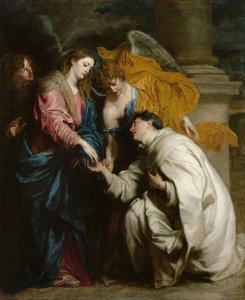 The Vision of the Blessed Hermann Joseph - Sir Anthony van Dyck
Acquiring a piece as profound as The Vision of the Blessed Hermann Joseph by Sir Anthony van Dyck is more than an aesthetic choice; it is an investment in a legacy of spiritual and artistic excellence. As one of the most significant works within the top 25 artworks of Sir Anthony van Dyck, this 1630 masterpiece stands as a testament to the artist's ability to transcend the muscular dynamism of Rubens in favor of a more intimate, luminous grace. The painting captures the ecstatic moment of Saint Hermann Joseph’s celestial encounter, utilizing a sophisticated technique of broken color to create an ethereal glow that seems to emanate from within the canvas itself.
The composition, rich with angelic figures and soft, divine light, offers a sense of quiet prestige that remains timeless. For the discerning collector, a high-quality, hand-painted oil reproduction of this work brings the same atmospheric authority and historical weight to a modern luxury interior as it did to the Jesuit Confraternity in Antwerp. It serves as a breathtaking focal point, commanding respect through its delicate textures and profound emotional depth.
Emperor Theodosius Forbidden by St Ambrose To Enter Milan Cathedral - Sir Anthony van Dyck
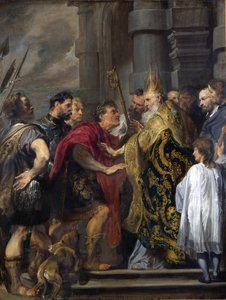 Emperor Theodosius Forbidden by St Ambrose To Enter Milan Cathedral - Sir Anthony van Dyck
In this breathtaking 1620 masterpiece, Sir Anthony van Dyck transcends the boundaries of traditional portraiture to present a visceral tableau of spiritual defiance and imperial tension. Emperor Theodosius Forbidden by St Ambrose To Enter Milan Cathedral is not merely a historical record; it is a profound exploration of the collision between earthly sovereignty and divine authority. Through the masterful use of chiaroscuro , Van Dyck sculpts a scene where dramatic shadows dance across thirteen meticulously rendered figures, pulling the viewer into the very heart of the conflict.
The atmosphere is thick with unspoken drama; one can almost feel the heavy weight of the Emperor’s hesitation as he confronts the unyielding dignity of St. Ambrose. The textures of rich, heavy fabrics and the luminous, flickering light create a sensory experience that transforms your viewing into a moment of historical immersion. To possess a hand-painted oil reproduction of this work is to invite this quiet prestige and narrative depth into your own home, turning a simple wall into a gallery of the soul where the triumphs and tribulations of history live on through every visible brushstroke.
The Wife and Daughter of Colyn de Nole - Sir Anthony van Dyck
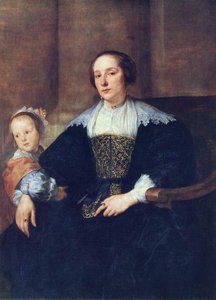 The Wife and Daughter of Colyn de Nole - Sir Anthony van Dyck
In The Wife and Daughter of Colyn de Nole , the true genius of Sir Anthony van Dyck reveals itself through the tactile interplay of light and texture. As you observe the canvas, your eyes are drawn to the meticulous rendering of the mother’s black gown; the way the light catches the subtle sheen of silk and the intricate, raised patterns of gold embroidery is nothing short of breathtaking. Van Dyck utilizes a masterful chiaroscuro technique, sculpting the figures from the shadows to create a profound sense of three-dimensionality that breathes life into the lace collars and delicate ruffles.
This painting stands within the top 25 artworks of Sir Anthony van Dyck because it captures a rare, intimate dignity through revolutionary brushwork. At ArtsDot.com, our mission is to preserve this very materiality for your collection. Our handmade oil reproductions are meticulously painted on cotton canvas, ensuring that the visible brushstrokes and deep tonal ranges—the soul of the Baroque era—are captured with an authenticity that digital prints simply cannot replicate. Bring the luminous, textured elegance of the Flemish Master into your own home.
Lucas van Uffel (died 1637) - Sir Anthony van Dyck
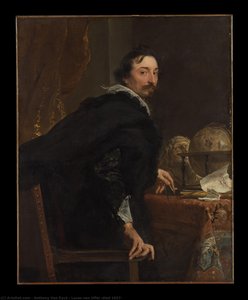 Lucas van Uffel (died 1637) - Sir Anthony van Dyck
In the quiet depths of Sir Anthony van Dyck’s 1622 masterpiece, Lucas van Uffel , we encounter more than a mere likeness; we step into a meticulously curated world of intellectual fervor and Baroque elegance. Painted during his formative Italian period, the canvas breathes with the vibrant energy of the Venetian High Renaissance. There is a gaze in this portrait that follows you—not with judgment, but with an profound understanding . As Van Uffel sits contemplating the objects before him, the masterful use of chiaroscuro pulls the viewer into a textured interior where candlelight illuminates the very essence of human curiosity.
The table serves as a silent dialogue of erudition, featuring a celestial globe, drafting tools, and musical instruments that symbolize the Renaissance humanist spirit. This painting is not merely a portrait; it is a mirror reflecting our own desire for knowledge and beauty. For those looking to anchor a room with historical depth, this work offers an unparalleled sense of gravitas. Imagine this commanding presence in your own collection—not just watching you, but reminding you that you are part of this timeless, unfolding story.
Conclusion
To wander through the visual legacy of Sir Anthony van Dyck is to step into a world where elegance is not merely an aesthetic, but a profound way of being. His brush did more than capture the likenesses of kings and aristocrats; it breathed a sense of eternal grace into the very fabric of the Baroque era. As we reflect on these twenty-five masterpieces, we find that they are far more than static relics of a bygone courtly life. They remain living presences, possessing a quiet power to transform the atmosphere of a modern room, inviting a moment of stillness and a deeper connection to the history of human dignity.
The soft interplay of light on silk, the dignified weight of a velvet sleeve, and that unmistakable, refined composure continue to resonate within our contemporary spaces. When we bring these works into our homes through a hand-painted reproduction, we are not simply decorating a wall; we are participating in an enduring dialogue between the past and the present. We allow the sophisticated shadows and luminous textures of the Flemish Master to shape our surroundings, turning a house into a sanctuary of culture and contemplation.
As the sun sets on our gallery tour, let us carry with us the wonder of van Dyck’s ability to immortalize the human spirit. Whether you are drawn to the regal authority of his royal portraits or the intimate character found in his lesser-known studies, there is a piece of this history waiting to be rediscovered. We invite you to explore the full collection and find the masterpiece that speaks to your own story, ensuring that the elegance of the seventeenth century continues to inspire the lives of the twenty-first.