The Essence of Naive Art: Defining the Beauty of Unfiltered Vision
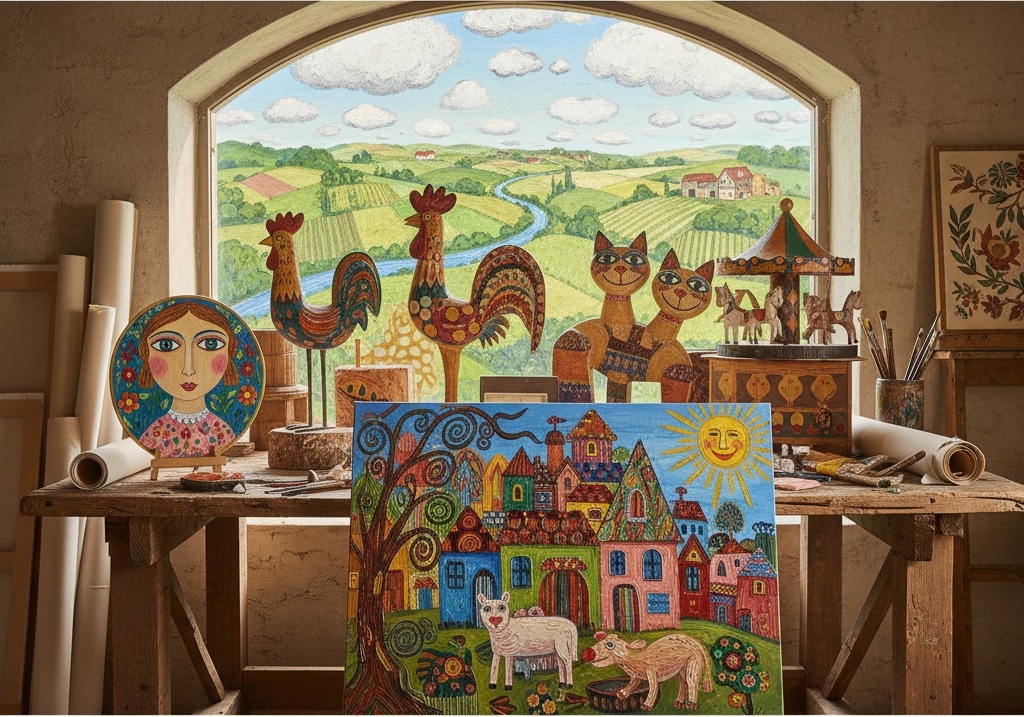
To step into the world of Naive Art is to rediscover a sense of wonder that often escapes the rigorous confines of academic training. Unlike the highly structured movements born from prestigious academies, Naive Art emerges from an unfiltered, spontaneous connection between the artist and their subject. It is a genre characterized by a profound sincerity, where the absence of traditional perspective or anatomical precision does not signify a lack of skill, but rather a deliberate focus on emotional truth and pure, unadulterated observation. This movement invites the viewer to bypass the intellectual complexities of formal art theory and instead engage with the raw, vibrant pulse of life as it is perceived through an innocent lens.
At its heart, this style celebrates the beauty of the "unlearned." There is a certain liberation in the way Naive artists approach their canvas, unburdened by the weight of classical rules regarding light, shadow, or scale. This freedom allows for a unique kind of storytelling, where colors are chosen for their emotional resonance rather than their optical accuracy, and compositions are arranged to emphasize narrative impact over spatial realism. For the classic art enthusiast, Naive Art offers a refreshing departure from the heavy shadows of the Baroque or the strict proportions of the Renaissance, providing instead a luminous, dreamlike quality that resonates with the soul's innate desire for simplicity and joy.
Mastering Simplicity: The Technical Characteristics of Primitivist Works
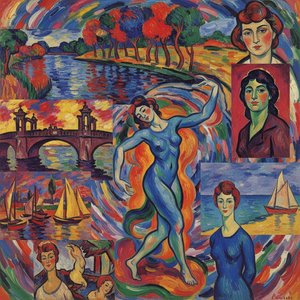
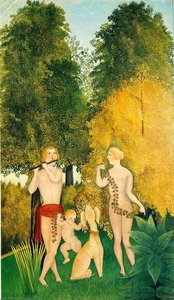
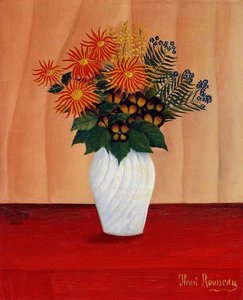
While the term "primitive" or "naive" might suggest a lack of technical sophistication, a closer examination reveals a highly disciplined approach to color and form. The technical hallmark of these works lies in their distinctive use of flatness and vibrant palettes. Without the reliance on chiaroscuro to create depth, artists utilize bold, saturated hues to define boundaries and separate elements within a composition. This creates a striking, almost graphic quality that makes every leaf in a jungle scene or every figure in a folk tale stand out with startling clarity.
The texture of Naive Art often possesses a tactile, rhythmic quality. Whether through the meticulous application of fine details or the broader, more expressive strokes seen in certain Primitivist traditions, there is an undeniable presence of the artist's hand. The use of simplified forms—where complex organic shapes are distilled into their most essential geometric components—creates a sense of stability and iconographic power. This technical simplicity serves to amplify the symbolic weight of the subject matter, ensuring that the viewer’s attention remains fixed on the narrative essence rather than being lost in the intricacies of realistic rendering.
Visionaries of the Unlearned: Exploring Henri Rousseau and Teofil Ociepka
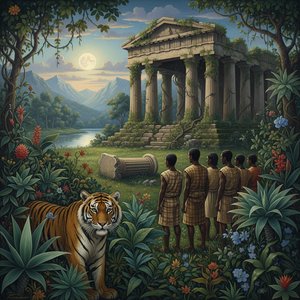
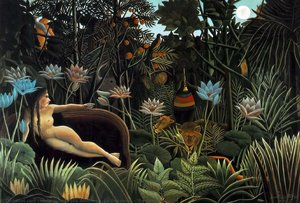
No discussion of Naive Art is complete without honoring the legendary Le Douanier, Henri Rousseau. A self-taught French visionary, Rousseau’s work, such as his mesmerizing Tropical Forest with Apes & Snake, transports the observer into a lush, dreamlike jungle that feels both exotic and intimately familiar. His ability to layer dense, verdant foliage with a sense of structured mystery remains one of the most captivating achievements in art history. In works like The Fishermen and the Biplane, we see his unique ability to blend the contemporary with the primordial, creating a surrealist atmosphere through purely Naive techniques.
Parallel to this French tradition, we find the mystical contributions of artists like Teofil Ociepka. A Polish self-taught painter, Ociepka infused his work with deep spiritual and occult themes, blending elements of folk art with complex symbolism. His canvases are windows into a world of mysticism and theosophy, where bold colors and dreamlike imagery serve to illustrate the unseen forces of the universe. Both Rousseau and Ociepka exemplify the power of the self-taught master: they did not seek to replicate the world as it appears to the eye, but rather to reconstruct it as it feels to the spirit.
Symbolism and Storytelling: The Deeper Narratives Within Simple Forms
Beneath the charming surface of Naive Art lies a complex web of symbolism and narrative depth. Because these artists are not preoccupied with the mechanics of realism, they are free to utilize objects, animals, and landscapes as potent metaphors. A single predator in a jungle scene might represent the primal forces of nature, while the arrangement of figures in a pastoral landscape can mirror larger social or spiritual hierarchies. This creates a layered viewing experience where the "simple" image reveals deeper, often more profound, meanings upon repeated contemplation.
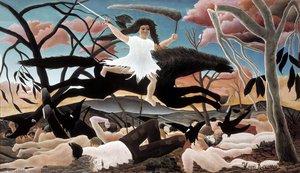
This storytelling capability is what allows Naive Art to bridge the gap between folk tradition and high art. The works often function as modern myths, capturing universal themes of conflict, peace, growth, and transformation. For instance, in pieces that touch upon primal struggle, such as War or The Ride of Discord, the simplified forms serve to heighten the sense of drama and cosmic importance. The lack of anatomical detail allows the emotion of the scene—the terror, the triumph, or the serenity—to become the primary subject, making these masterpieces deeply communicative across cultural and temporal boundaries.
Bringing Naive Charm to Modern Interiors: Curation and Display Strategies
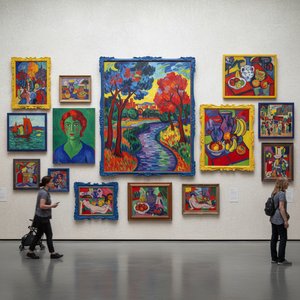
Integrating Naive Art into a contemporary or classic interior requires an appreciation for its unique energy. Because of their vibrant colors and strong compositions, these pieces act as magnificent focal points that can breathe life into a room. For the discerning collector, displaying a reproduction of a Rousseau masterpiece can introduce a sense of organic warmth to a minimalist space, while more symbolic works by artists like Ociepka can add an air of intellectual mystery to a study or library.
When curating your collection, consider the following strategies for maximum impact:
- Contrast and Complement: Use the bold colors of Naive Art to contrast with neutral wall tones, or select pieces that echo the existing color palette of your room for a more harmonious integration.
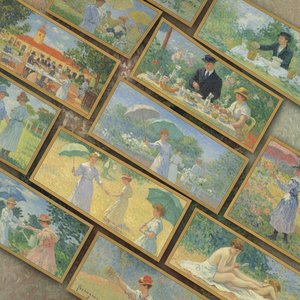
- Scale and Placement: Large-format reproductions, such as murals or multi-panel sets, can transform an entire wall into a window into another world, making them ideal for grand hallways or living areas.
- Framing for Impact: A classic gold leaf or deep espresso frame can lend an air of museum-grade authority to a Naive piece, grounding its whimsical nature with a sense of historical permanence.
Ultimately, the beauty of Naive Art lies in its ability to evoke emotion without pretense. Whether through a carefully selected Giclée print or a meticulously handcrafted oil reproduction, bringing these simple masterpieces into your home allows you to surround yourself with a vision of the world that is as profound as it is enchanting.
At ArtsDot.com, we are dedicated to preserving this legacy of human creativity. From exquisite hand-painted oil reproductions that capture every tactile brushstroke to high-quality Giclée prints designed for longevity, our mission is to make the world's most captivating art accessible to all. Whether you are looking to transform a personal photo into a masterpiece or seeking an expert consultation to find the perfect piece for your collection, ArtsDot provides the quality, transparency, and passion that true art lovers deserve.