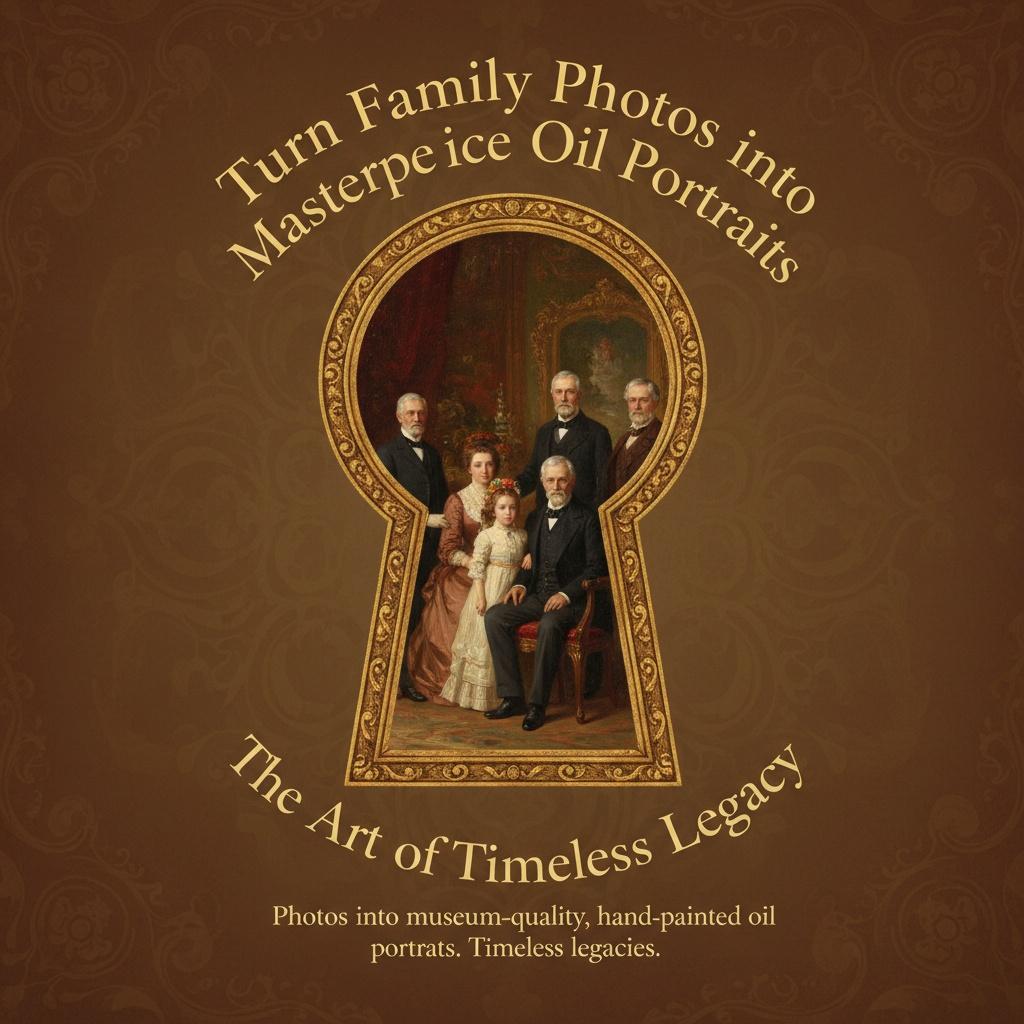



The Essence of Heritage: Why Oil Portraits Transcend Digital Photography
In an era defined by the ephemeral nature of digital pixels, there exists a profound longing for something permanent, something that breathes with the weight of history. We live in a world of infinite scrolling and fleeting snapshots, where a thousand images are captured in a single afternoon only to be lost in the vast, cold archives of a cloud server. Yet, the human soul craves more than mere documentation; it seeks legacy. This is the fundamental distinction between a photograph and an oil portrait. While a camera captures a moment in time, a masterfully executed oil painting captures the very essence of a person’ and their place within the lineage of their family.
The medium of oil on canvas possesses a tactile depth that no digital screen can replicate. It is found in the subtle interplay of light and shadow, known as chiaroscuro, which lends a sculptural presence to the subject. When we look upon the works of the Old Masters, such as the dramatic lighting seen in Charles Smith’s neoclassical portraits or the rich, dark hues of Ammi Phillips, we are not merely seeing faces; we are witnessing the soul rendered through layers of pigment and time. An oil portrait does not just record a likeness; it elevates a family member to the status of an icon, transforming a contemporary individual into a figure of historical significance that will command respect for generations.
From Snapshot to Masterpiece: The Alchemy of Custom Commissioning
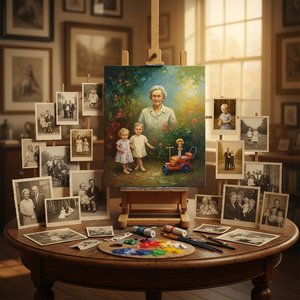
The transformation of a modern photograph into a museum-quality masterpiece is nothing short of alchemical. It begins with the recognition that a simple image holds the seed of greatness. The process of custom commissioning is an intimate collaboration between the patron and the artist, a journey where a contemporary memory is meticulously reinterpreted through the lens of classical technique. This is not a mere reproduction; it is a reimagining. The artist looks beyond the surface of the digital file to find the underlying character, utilizing the physical properties of oil paint—its viscosity, its translucency, and its ability to hold light—to breathe life into the composition.
This creative metamorphosis requires a delicate balance of precision and artistry. It involves more than just copying features; it requires an understanding of how texture can convey emotion. The subtle application of impasto can suggest the ruggedness of a patriarch, while thin, glazed layers can evoke the ethereal softness of a child’s skin. Through this bespoke process, the boundaries of time are blurred, allowing the modern subject to inhabit the grandeur of a bygone era. It is a service designed for those who understand that true luxury lies in the ability to curate one's own history, turning the mundane into the magnificent.
Curating the Aesthetic: Selecting Historical Styles and Period Shifts
To commission a portrait is to engage in a dialogue with art history itself. One of the most enchanting aspects of this bespoke service is the ability to perform a period shift—the intentional movement of a subject from the present day into a specific historical aesthetic. A patron may choose to have a contemporary wedding portrait reimagined through the soft, light-drenched impressionism of Monet, or perhaps they desire the dramatic, somber elegance of a 17th-century Rembrandt. This level of customization allows for a profound level of personal expression, where the chosen style serves as a reflection of the family's values and aesthetic sensibilities.
The possibilities are limited only by one's imagination. One might request the meticulous detail and formal dignity found in 18th-century British portraiture, or even explore more avant-garde territories such as Cubism or Surrealism through modern technological aids. This curation extends to the very color palette of the piece; a selection of muted, antique tones can evoke a sense of ancient wisdom, while bolder, more vibrant pigments can celebrate the vitality of a new generation. By selecting a specific movement, the patron is not just choosing a painting, but is instead choosing the emotional vocabulary through which their family story will be told.
The Artisan’s Touch: A Journey Through the Six-Step Painting Process
The creation of a bespoke oil portrait is a disciplined ritual, a slow and deliberate progression that honors the traditions of the great academies. It begins with the initial connection, where a confirmation of the vision is established. The second stage involves the development of a digital mockup, a crucial moment of clarity where colors, compositions, and even the placement of subjects can be refined. This ensures that the final physical work aligns perfectly with the patron's expectations before a single drop of oil touches the canvas.
Once the vision is perfected, the true labor of passion begins. Over a period of several weeks, the artist works upon 100% cotton canvas, building layers of pigment that require time to cure and settle. This stage is characterized by a commitment to excellence, where every brushstroke is intentional. As the painting nears completion, a pre-shipment photograph is presented for the patron's final approval, allowing for any last-minute adjustments to be made. Only after this rigorous quality control is the work framed in exquisite wood—perhaps finished in gold leaf or deep espresso—and carefully packaged for its global journey. This structured approach ensures that the final result is not just a painting, but a verified masterpiece of academic excellence.
Architectural Integration: Displaying Legacy in Modern Luxury Interiors
A true masterpiece does not merely hang on a wall; it defines the space it inhabits. For the discerning collector, the integration of fine art into a modern architectural environment is an exercise in balance and scale. Large-format works, such as custom murals or multi-panel group paintings, can serve as the focal point of a grand staircase or a sprawling salon. The trend of splitting a single, cohesive image across three, four, or even five panels allows for a contemporary, rhythmic flow that complements modern minimalist or neoclassical interiors alike.
The placement of such significant works requires an understanding of light and shadow within the home. A portrait should be positioned to catch the natural luminescence of the room, highlighting the texture of the brushwork and the depth of the glazes. Whether it is a single, commanding portrait in a private study or a series of coordinated pieces that create a visual narrative throughout a hallway, the art must feel as though it was always intended to be part of the architecture. When executed with precision, these works transform a house into a curated gallery, reflecting the sophisticated taste and enduring legacy of its inhabitants.
Preserving the Future: The Science of Longevity and Art Conservation
The ultimate value of an oil portrait lies in its ability to endure. To create a piece that lasts for centuries, one must respect the chemistry of art. This involves the use of high-quality materials, such as flexible gesso to prevent cracking and specific oils like safflower to ensure that whites remain pure and free from yellowing over time. The final protective layer—a coat of Damar varnish—acts as a shield against the atmospheric pollutants, dust, and moisture that threaten the integrity of the pigment.
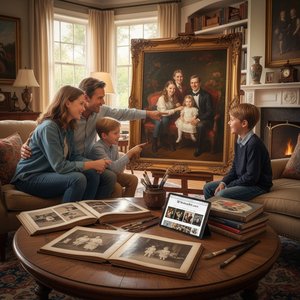
However, preservation is a shared responsibility between the artist and the custodian. To protect this investment, collectors are advised to avoid the harshness of direct sunlight and to utilize acid-free matting when framing prints. By understanding the science behind the canvas, we ensure that the vibrant colors and profound textures of the portrait remain as striking for our grandchildren as they are today. In the end, a hand-painted oil reproduction is more than an object of beauty; it is a vessel of memory, engineered to withstand the passage of time and carry the flame of family heritage into the infinite future.
At ArtsDot.com, we specialize in this intersection of history and modernity. From custom photo transformations to large-scale architectural frescoes, our mission is to make the grandeur of the Old Masters accessible to the modern connoisseur. Whether you are seeking a personalized gift or a centerpiece for your collection, our master artists are dedicated to preserving human creativity through every brushstroke.